
Quick Take
- The creature most people picture when they hear "daddy long legs" isn't actually a spider at all, and that difference turns out to matter more than you'd think. Untangle the confusion →
- One of these six spiders is probably found in nearly every U.S. home right now, yet most people have no idea what it's actually called. Meet the mystery spider →
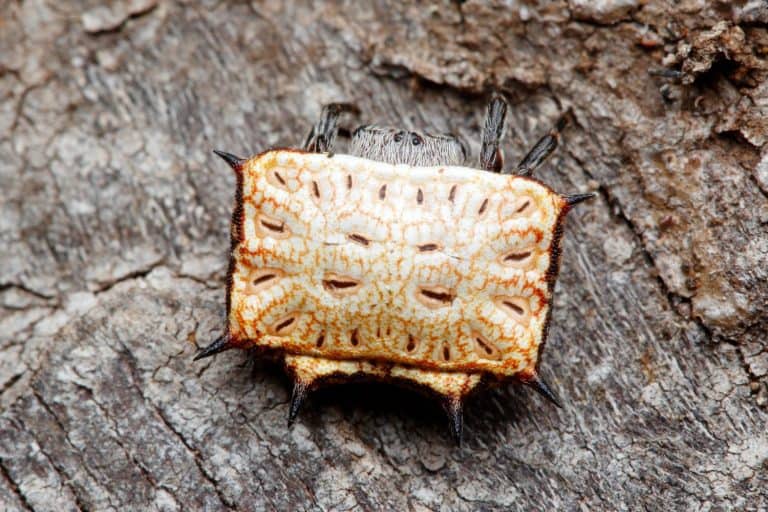
- There's a daddy long legs spider nicknamed the 'box spider,' and its bizarre body shape explains exactly why it earned that name. See the box-shaped body →
- The largest species on this list lives in tropical jungles yet has quietly spread into homes across Europe and the Americas. Discover the giant species →
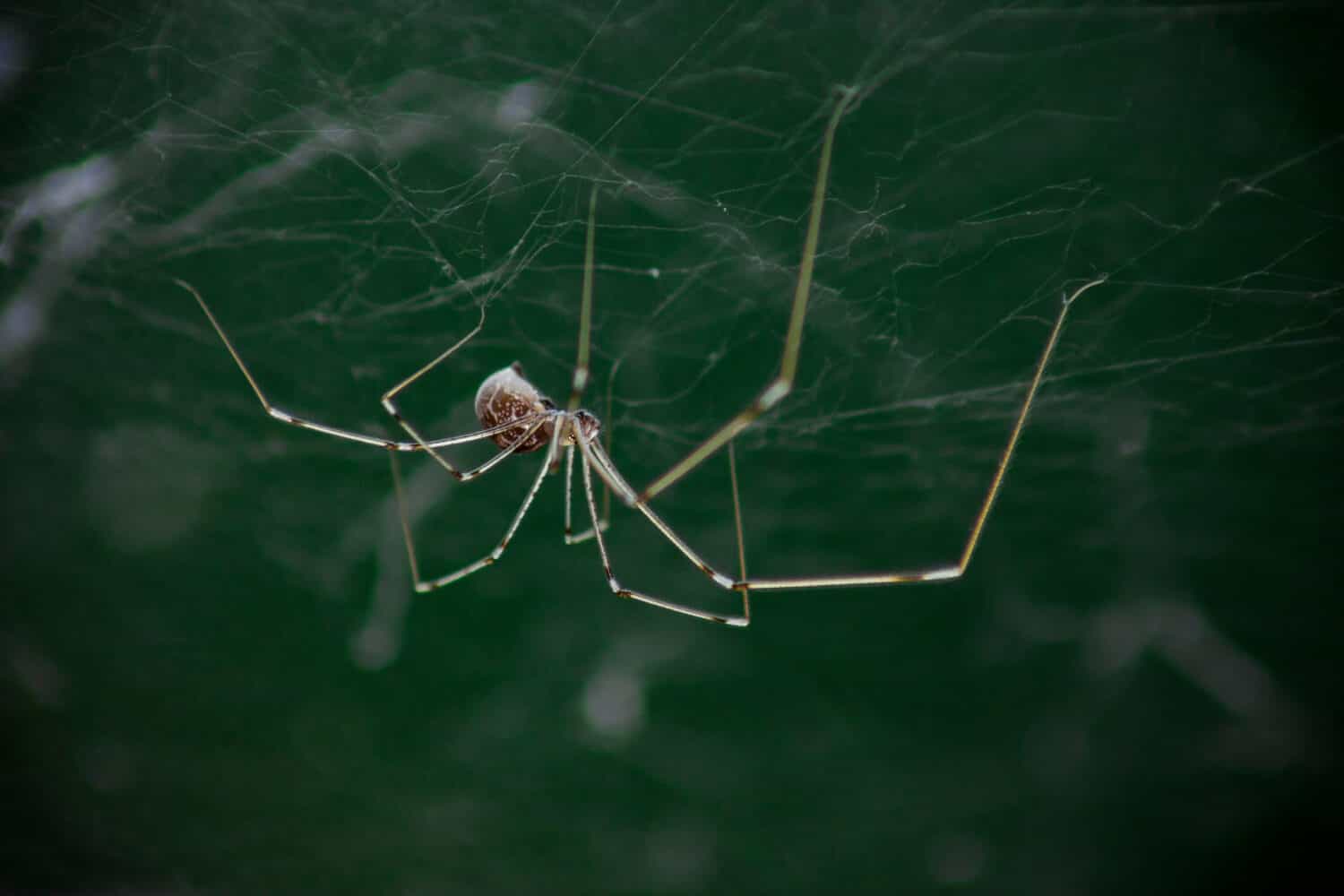
The name “daddy long legs” often refers to invertebrates with long, thin legs and tiny bodies. Spiders are among the few creatures sometimes called daddy long legs, but not every spider is referred to by this name. In this article, you will discover 6 spiders that can be called a daddy long legs.
What Is a Daddy Long Legs?
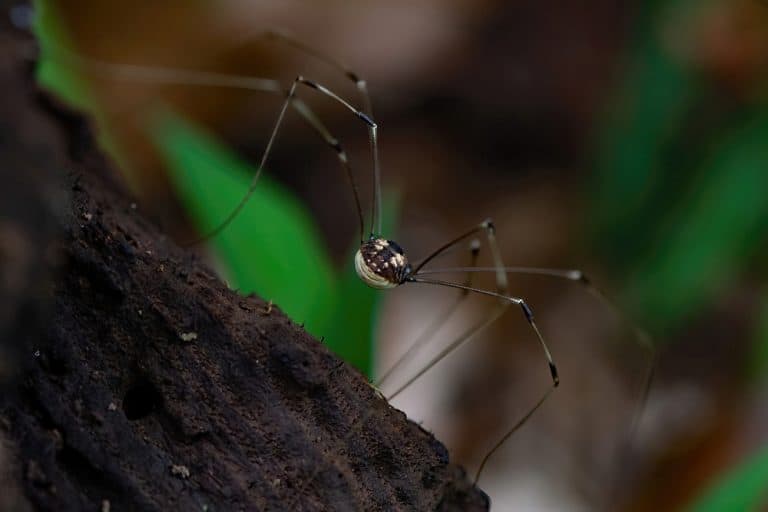
The term itself can be confusing. It most commonly refers to harvestmen, which are arachnids. However, they are not considered true spiders; they are actually opilionids. Opilionids are not venomous and do not spin silk. Long-legged cellar spiders that belong to the spider family Pholcidae are also typically referred to as daddy long legs.
1. Marbled Cellar Spider (Holocnemus pluchei)
The marbled cellar spider is one of the many types of spiders that look like, and are called daddy long legs. This spider has a large global range, as it is found in North Africa, Europe, the Mediterranean, and the United States. In the U.S. this spider’s range covers the North Pacific region, and it is common in California.
Marbled cellar spiders get their name from the marble pattern that appears on their abdomen. They have gray coloring, with thin legs, and black markings on their joint. They typically have a body size that ranges from 0.19 to 0.27 inches. This spider is a web builder that creates a messy tangle of webs. They sometimes live with other family members, creating large communal webs. Their messy webs are used to catch insects like fruit flies, houseflies, and craneflies.
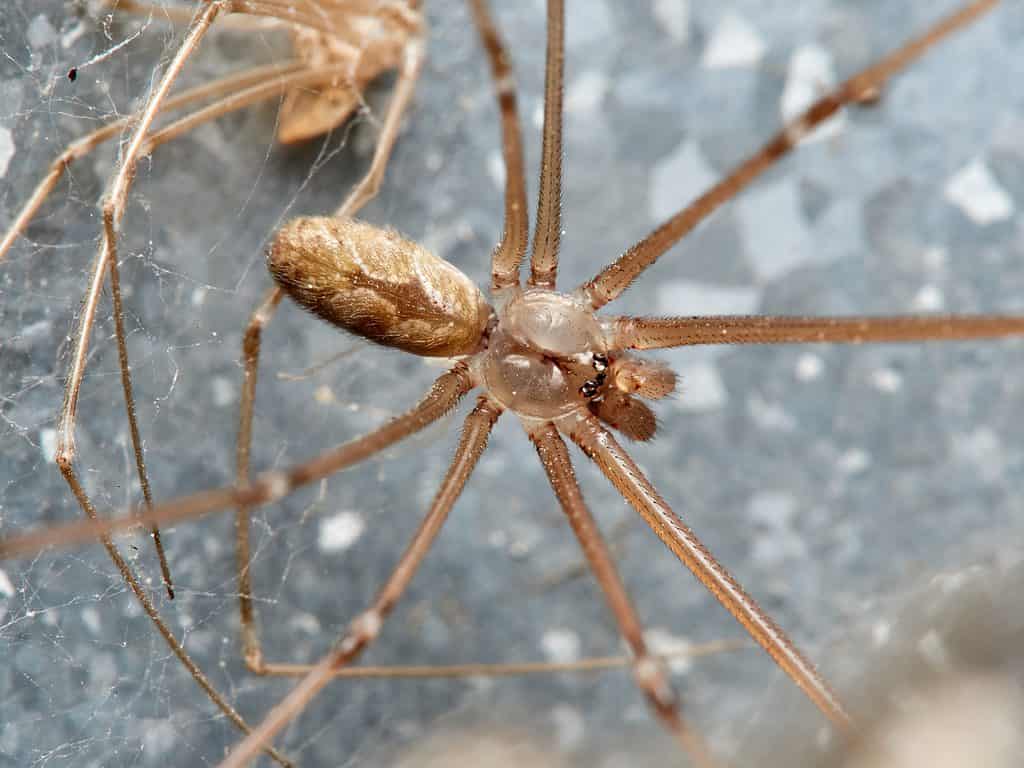
Marbled cellar spiders get their name from the marble pattern that appears on their abdomen.
©Macronatura.es/Shutterstock.com
2. Long-Bodied Cellar Spider (Pholcus phalangioides)
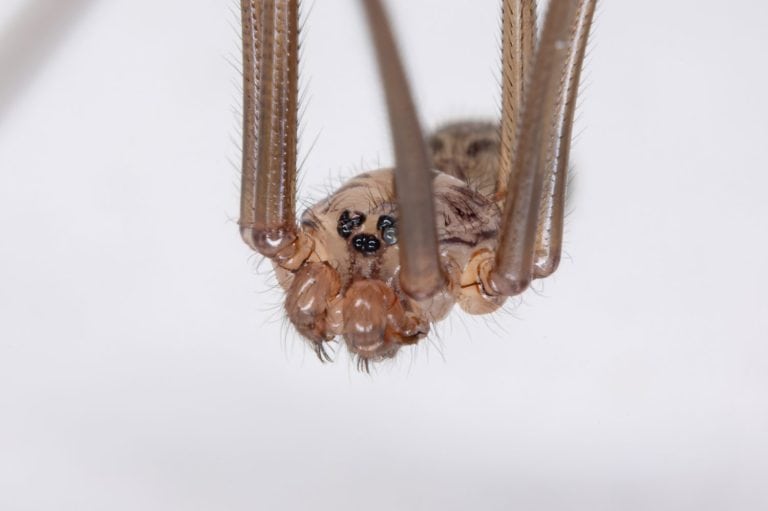
The long-bodied cellar spider is one of the most common spiders in the United States. They are active year-round, found in the corners of homes, sides of houses, garages, basements, under stones, caves, and other similar places. They build messy webs and are sometimes found in communal webs with other family members.
The long-bodied cellar spider is named after its elongated pill-shaped body. They are yellowish-brown, with a nearly translucent appearance, and dark markings on their bodies. This spider’s body ranges from around 0.2 to 0.31 inches and it has a leg span of around 2 inches.
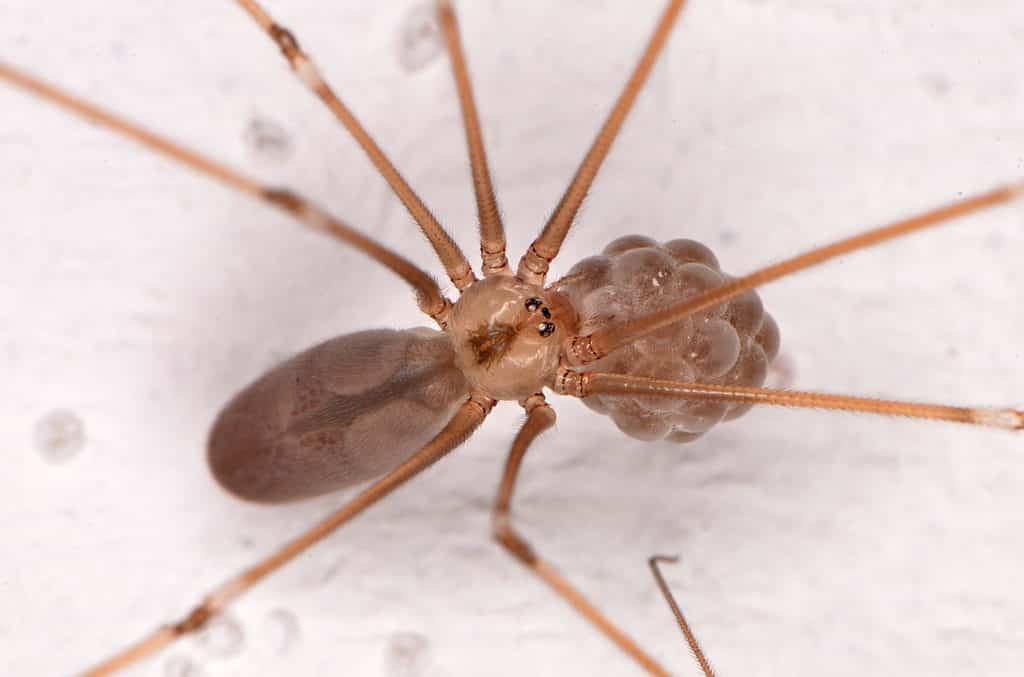
The long-bodied cellar spider is named after its elongated pill-shaped body.
©Marek Velechovsky/Shutterstock.com
3. Short-Bodied Cellar Spider (Pholcus globosus)
Short-bodied cellar spiders are found in most parts of the world. Like other cellar spiders, they get their name from their habitat, as they are frequently found in dark areas such as cellars or basements. They prefer warm environments and can also be found in caves and woodlands.
Short-bodied cellar spiders, like other spiders called daddy long legs, have thin, long legs. They have small bulbous bodies that measure around 0.2 inches and a 0.5-inch leg span. Their long legs make them look much larger, and there are dark bands on their joints. A black line runs down this spider’s carapace, and its eyes are grouped together on the hump of its face.
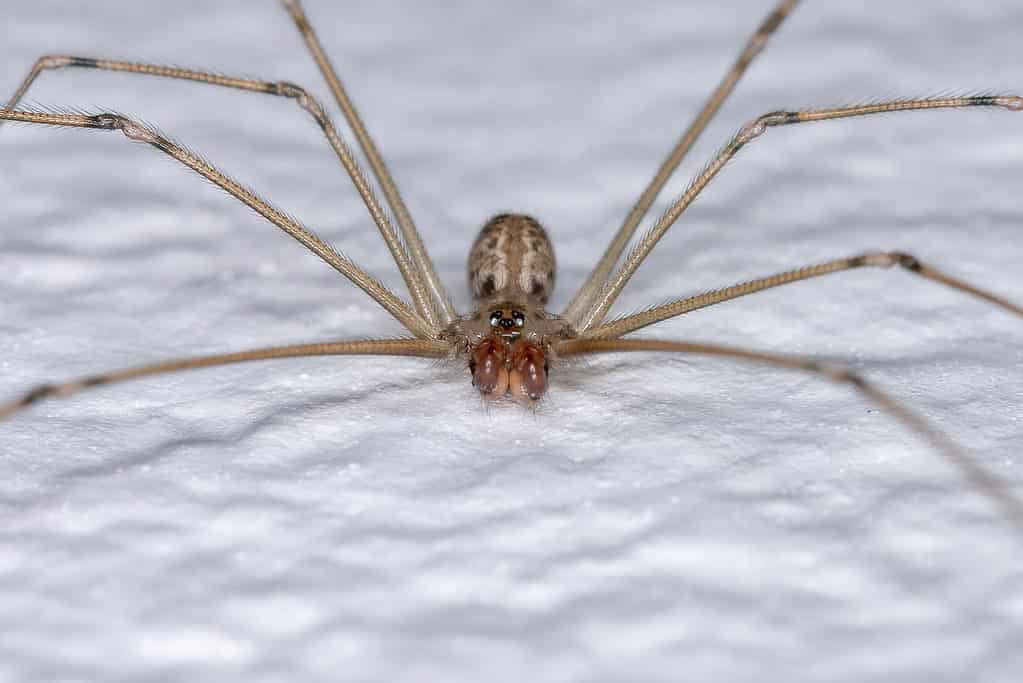
Short-bodied cellar spiders have small bulbous bodies with dark bands on their joints.
©Vinicius R. Souza/Shutterstock.com
4. Pale Daddy Longleg Spider (Smeringopus pallidus)
The pale daddy long legs is one of the many types of cellar spiders found across the world. Like other similar species, these spiders build messy webs in dusty, secluded corners of buildings. They are also found in areas like gardens and drains.
This spider has a body that reaches up to 0.27 inches. They have an elongated cylindrical body and long thin legs. When measured with their legs, daddy long leg spiders can reach up to 1.97 inches in size. Purplish spots cover this spider’s abdomen, and it is covered in many tiny hairs that allow it to feel vibrations in its web.
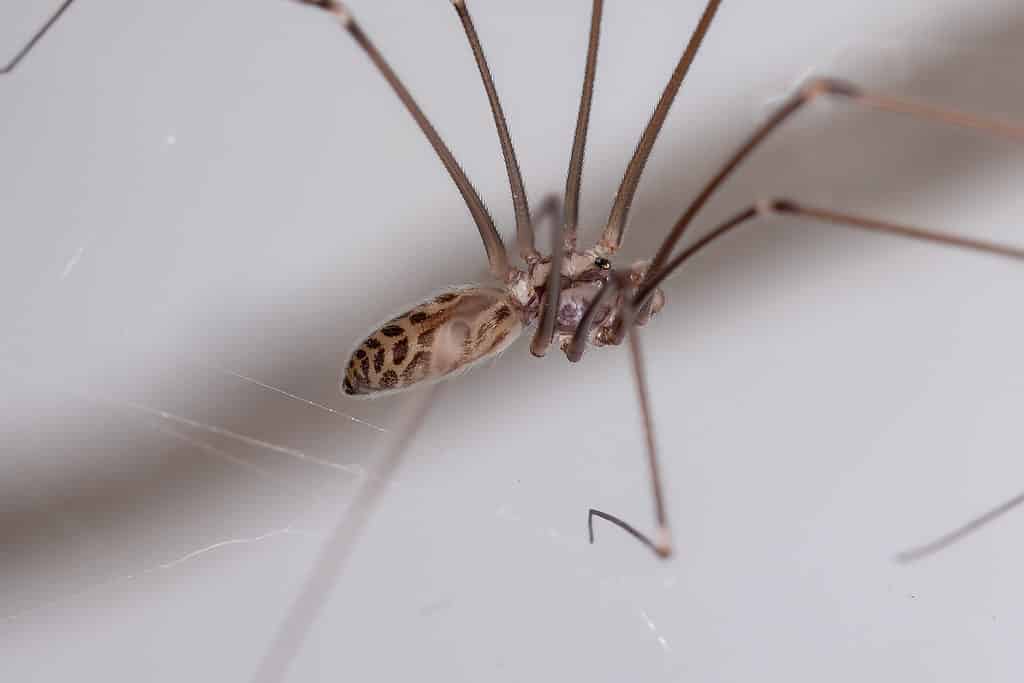
The pale daddy long legs spider has purplish spots covering its abdomen.
©Vinicius R. Souza/Shutterstock.com
5. Tailed Cellar Spider (Crossopriza lyoni)
The tailed cellar spider is sometimes called the box spider because its abdomen is pointed at the top and rear, making it look somewhat square when seen from the side. Tailed cellar spiders range from 0.098 to 0.28 inches in body size with very long legs that can measure up to 2.4 inches.
They are grey to amber in color, with both light and dark markings. They have a large range and are found in Australia, Asia, Africa, Europe, and the Americas. This spider builds large, messy webs in the corners and ceilings of buildings, garages, and sheds.
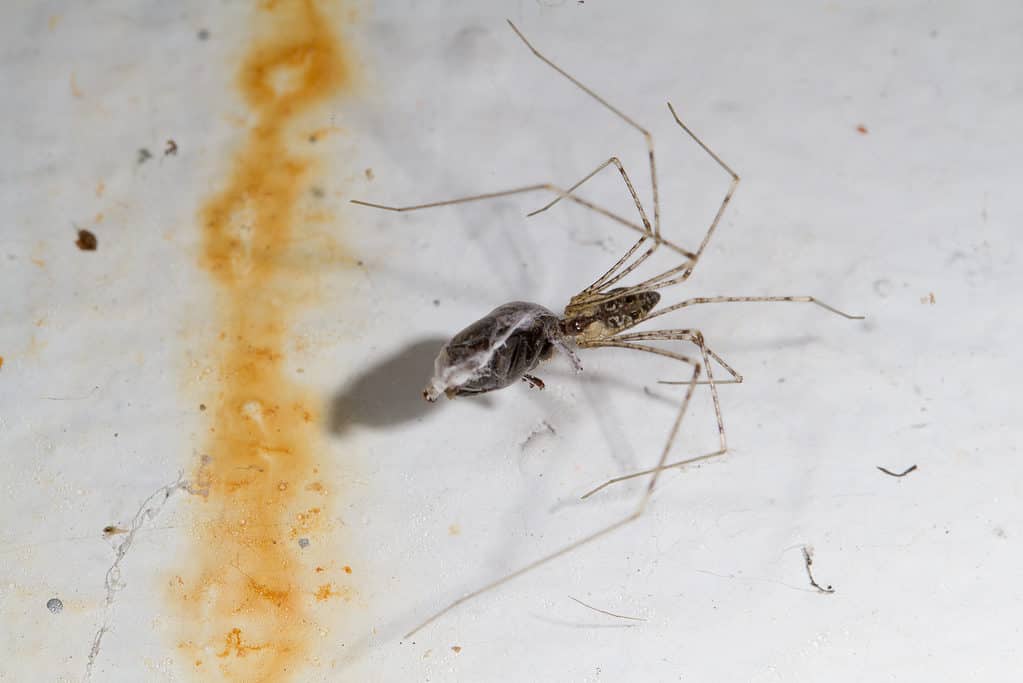
The tailed cellar spider is grey to amber in color and has a more pointed abdomen.
©Elliotte Rusty Harold/Shutterstock.com
6. Giant Cellar Spider (Artema atlanta)
The giant cellar spider is the largest cellar spider species in the world. Their size is intimidating, as their bodies measure between 0.31 and 0.43 inches, and their leg span can reach up to 2 inches. They have a round, bulbous abdomen and bands on their long legs.
Giant cellar spiders typically live in tropical regions like Vietnam, Brazil, India, and Australia. However, they have also been introduced in Europe and the Americas. Like other cellar spiders, they live on or near human structures and are often found in basements of homes or inside other buildings. They spin domed sheet webs with messy, non-sticky trap threads above them.
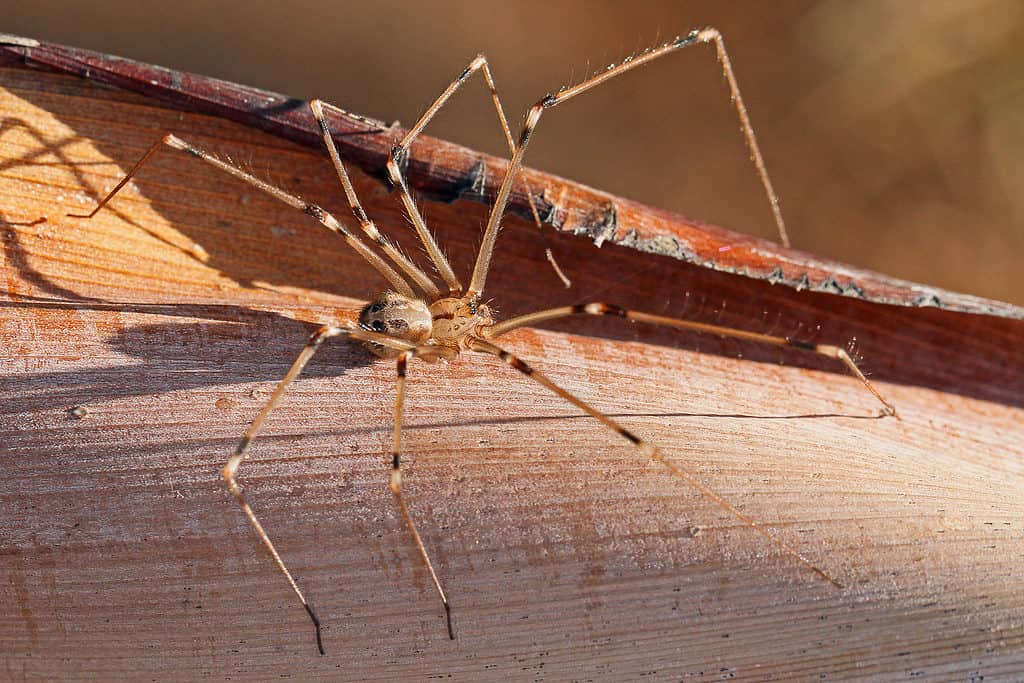
The giant cellar spider has a leg span that can reach up to 2 inches.
©Eugene Troskie/Shutterstock.com