
Quick Take
- Most spiders have soft, flexible abdomens, but the box kite spider wears something closer to a suit of armor. Why would that be? See why armor helps →
- The same hardened body feature that gives this spider its name also does something unexpected in a fight for survival. Explore the hardened shield →
- This spider's common names sound more like a snack menu than a field guide, and there is a surprisingly logical reason why. Discover the snack-like names →
- A trait normally associated with a completely different creature entirely ended up defining one of the spider world's most distinctive body structures. See the shared body traits →
Box kite spiders are a species of orb-web spiders. However, this particular spider is very distinctive looking, resembling a tiny shield.
Why Box Kite Spiders Have Bodies That Look Like Tiny Shields
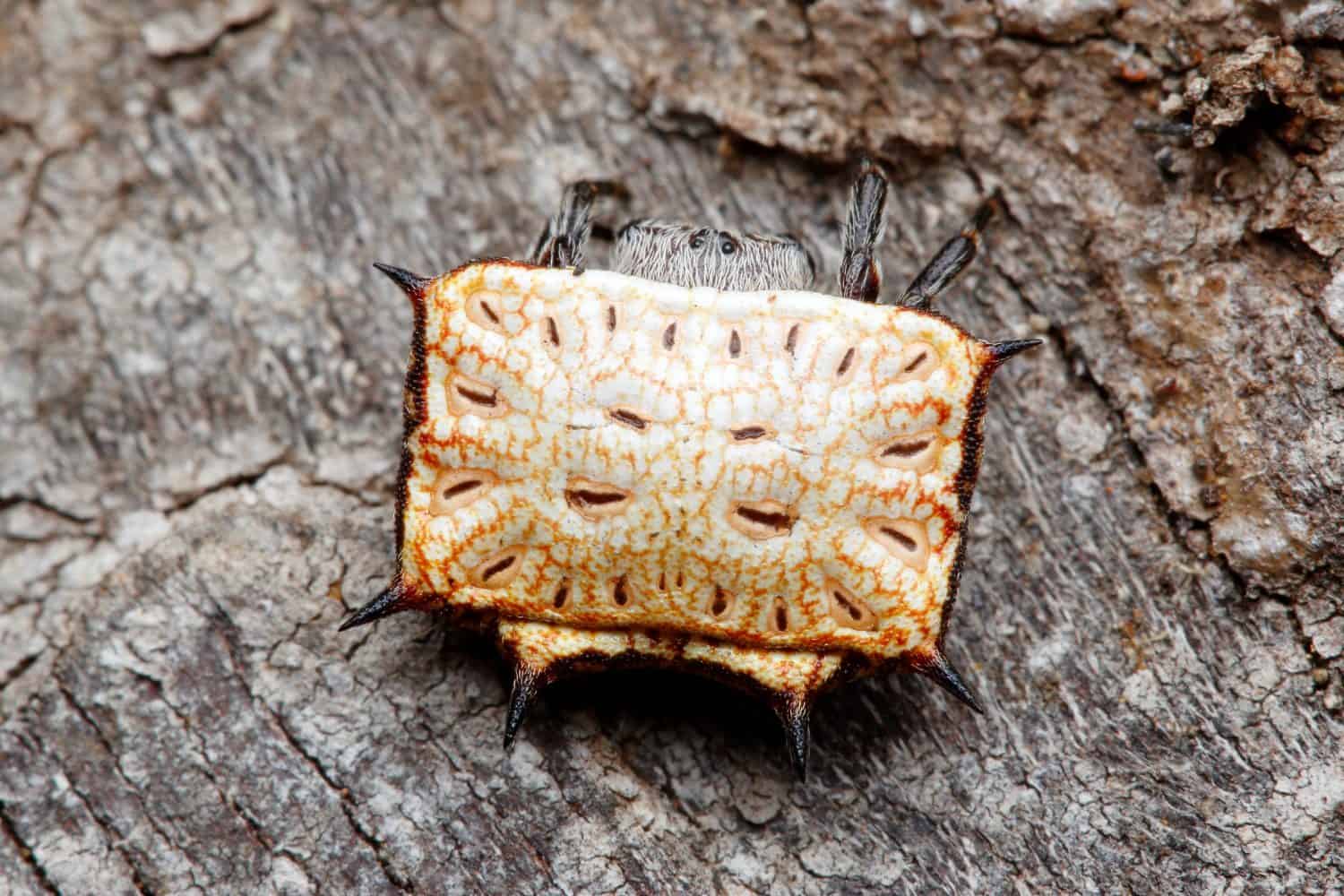
Box kite spiders may be one of the most visually interesting spiders. Unlike other spider species that feature round, soft abdomens, box kite spiders are covered in armor.
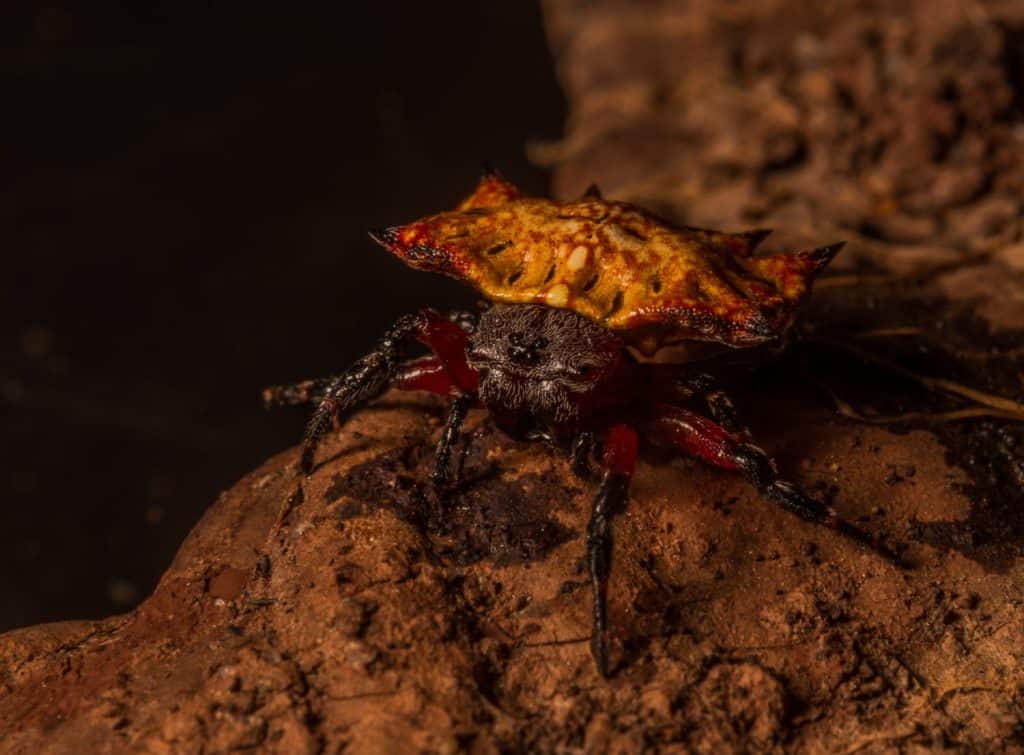
Box kite spiders’ bodies are covered with a dorsal abdominal shield.
©Tim Gould/Shutterstock.com
Box kite spiders are relatively small, measuring between three and seven millimeters. However, thanks to their dorsal abdominal shield, they appear much larger. The brightly colored, sclerotized abdominal shield has six total spines.
Each of the 17 different species of box kite spiders has its own unique look. Their shields help the spiders both blend in with their environment and look more intimidating than they truly are.
What is a Sclerotized Abdominal Shield?
All box kite spiders have sclerotized abdominal shields. This is a common trait among aphids, but not typically seen in spiders. Instead, many spider species have a flexible abdomen.
The “shielded” portion of the spider is the dorsal side of the abdomen, which has a hardened, rigid section made of chitin.
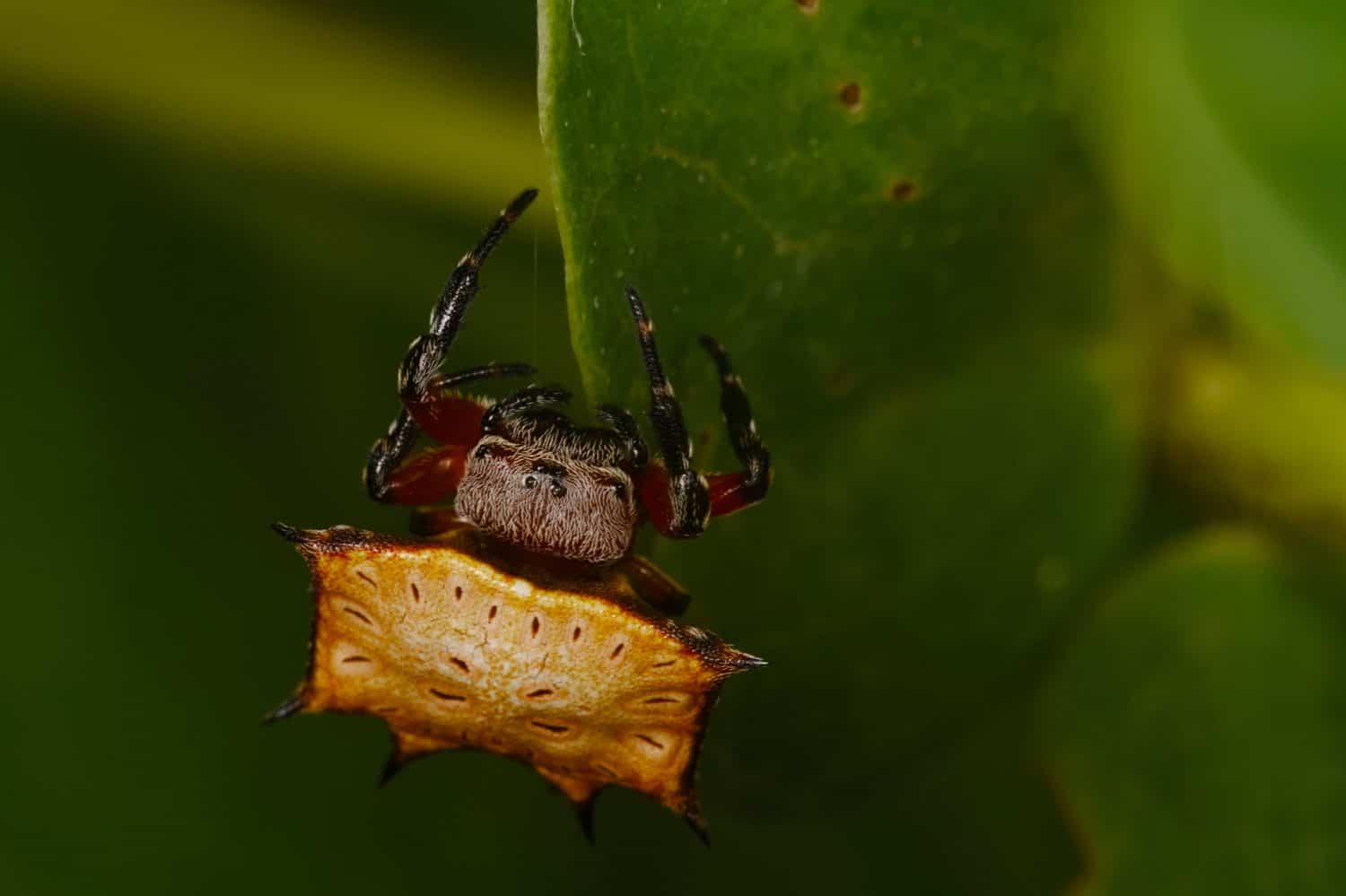
A sclerotized abdominal shield, or a section of the abdomen hardened thanks to chitin.
©Philip Carstens/Shutterstock.com
It is due to the shape of the abdominal shield that the box kite spider gets its name. The shield’s rigidity protects the spider from predators and makes it appear larger than it really is. The goal of the sclerotized abdominal shield is to make the box kite spiders more resistant to predation and bodily harm.
How Box Kite Spiders Fit into the Gasteracanthinae Subfamily
Box kite spiders are part of the Gasteracanthinae subfamily of Araneidae. The reason these spiders are classified as such has to do with the way they look and behave.
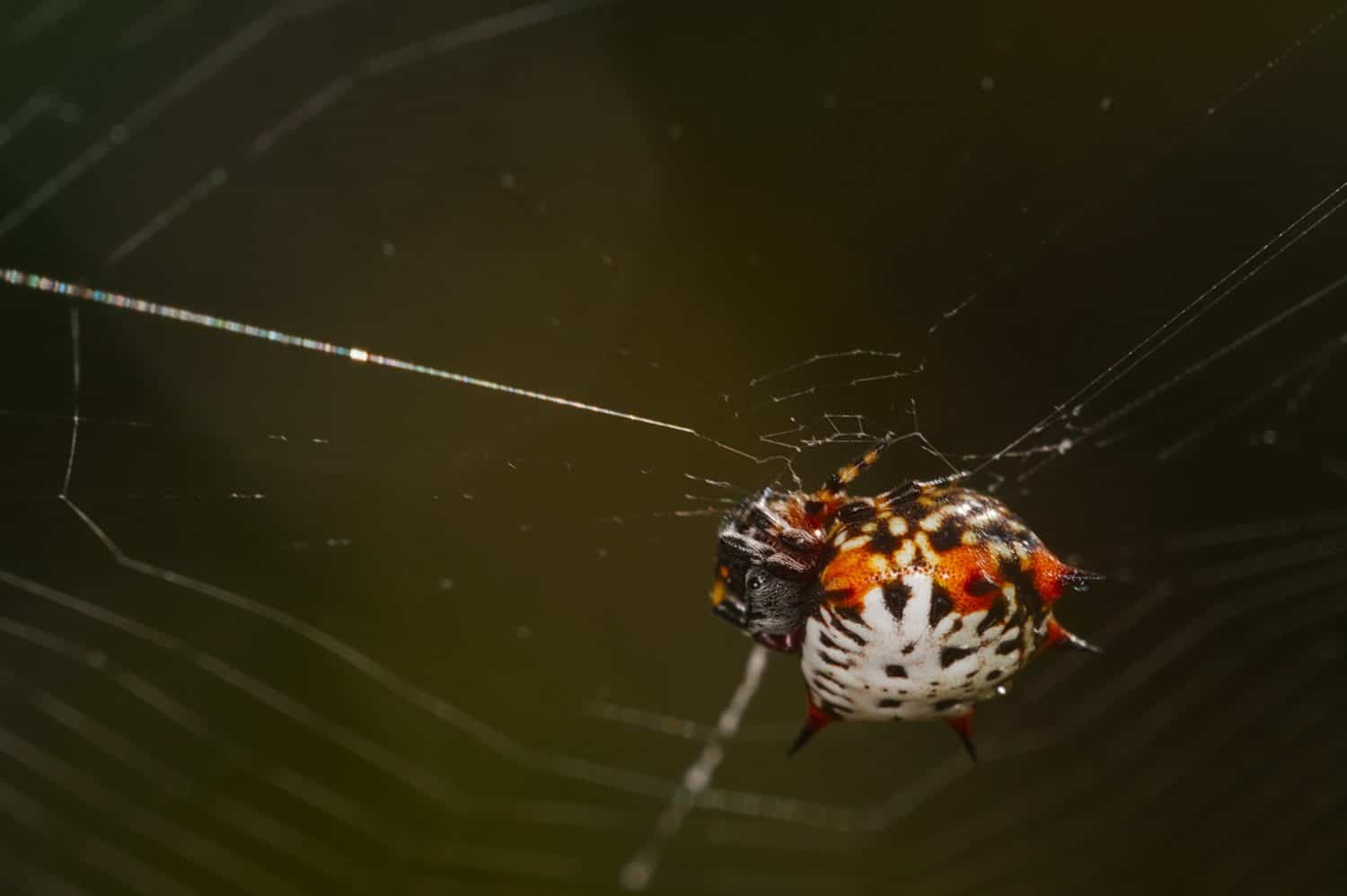
Box kite spiders have a carapace that is as long as it is wide and create large orb-webs.
©Philip Carstens/Shutterstock.com
Box kite spiders have six short spines on their abdomen. This characteristic is shared with others in Gasteracanthinae. The fused head and thorax of the spider, also known as the carapace, is as long as it is wide. It is common for this portion of the body to be patterned or have bright colors that range from red to black, yellow, and white.
These spiders, like others in the Araneidae family, create orb-webs that can be large enough to stretch between trees, with tufts of silk woven in. The spiders can easily strike prey caught in their webs, making them efficient hunters.
Why Box Kite Spiders Have Descriptive Common Names
Like many spiders, box kite spiders have been given common names. Unlike other species, the common names are very descriptive, helping those without a background in arachnology easily identify the spider when it is present.
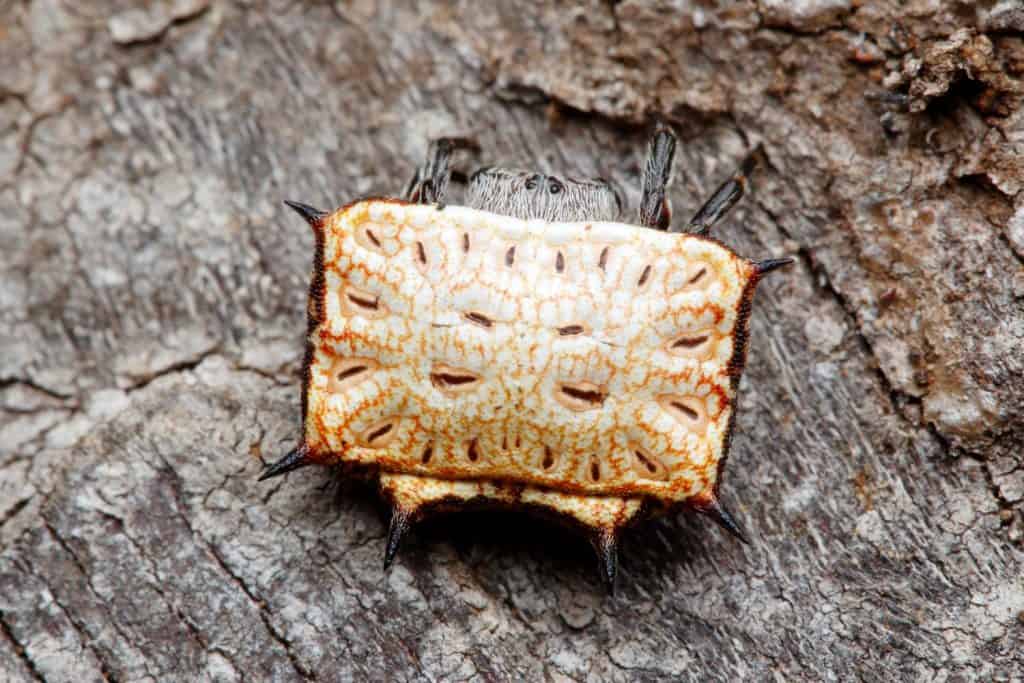
The biscuit box kite has a body resembling a biscuit.
©Ondrej Michalek/Shutterstock.com
Some examples of common names for box kite spiders include:
- Biscuit box kite: Spider has a body that is shaped like a biscuit
- Winegum box kite: The color of the spider is akin to red wine varietals
- Marbled box kite: Spider has a marbled body
- Inkblot box kite: Markings on the spider’s body look like an inkblot test
- Shield box kite: Refers to the shield covering the spider’s lower dorsal region of the body
Thanks to these common names, it is easy to identify which box kite spider is being observed. Fortunately, none are poisonous to people, meaning these orb spiders are harmless and can be left alone.