
There are over 40 spider species in Tennessee, but most are harmless and rarely bite humans. However, there are a few spiders that are considered medically significant, which means their venom can cause injuries that require prompt medical care. Whether you’re a resident of the state or you’re just visiting, you may be wondering which spiders are the most dangerous. Fortunately, these spiders generally avoid human contact, but they may bite when threatened. So, keep reading to learn how to identify these dangerous spiders if you spot them in or around your Tennessee home.
4. Brown Widow Spider
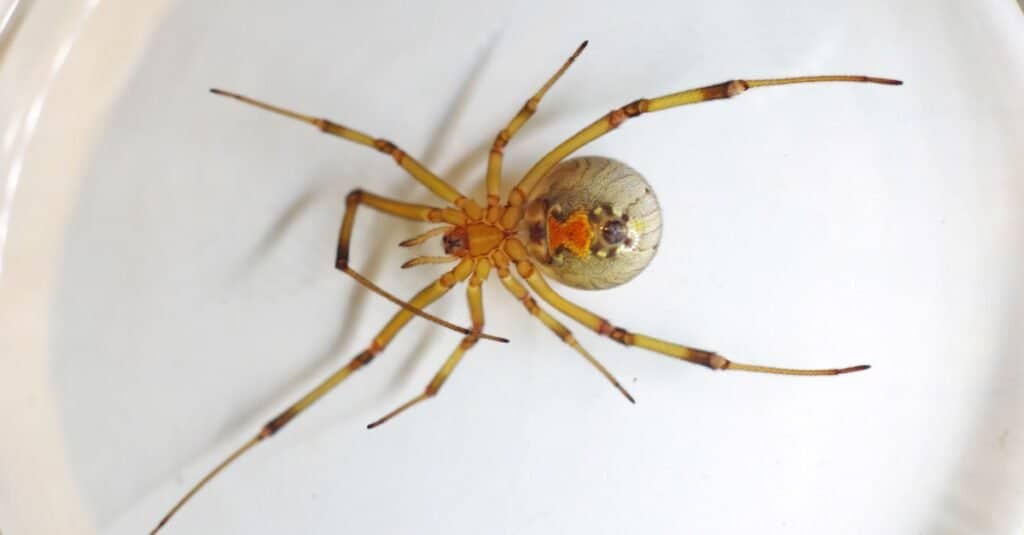
The brown widow has a reddish-orange hourglass on the underside of its abdomen.
©Decha Thapanya/Shutterstock.com
Where to Find the Brown Widow
Brown widow spiders (Latrodectus geometricus) are not native to the U.S. They are thought to have originated in South Africa, but are now found in the Southeast, as well as California. They are not yet fully established in Tennessee, but there have been sightings across the state, so it is important to know where they are found and how to identify them. These spiders favor tropical conditions and typically build their webs in dark, secluded corners or crevices around human structures.
How to Identify Brown Widow Spiders
Like most spiders, female brown widows are larger than males. However, the males have longer legs. Females measure 0.47-0.63 inches in body length, while males only measure 0.24-0.31 inches. Their color varies depending on habitat and can range from almost white to almost black, with shades of gray and brown in between. Brown widows also have the characteristic hourglass shape on the underside of their abdomens, but it is more of a reddish-orange. Light-colored spiders have outlined geometric shapes on the upper side of their abdomens. They can also be identified by the alternating light and dark bands on their legs. Instead of a round egg sac like black widows, brown widow egg sacs have spiky silk protrusions, resembling the head of a medieval mace.
How Dangerous Is Their Bite?
Adult female brown widows can bite humans, but they are not aggressive, and their bites are reportedly not as severe as those of a black widow. While the brown widow’s venom is twice as potent, scientists think brown widows inject less venom than black widows. Researchers have found that about 15% of bites lack venom. Symptoms such as pain, redness, swelling, and itching are generally localized to the bite area. However, more severe reactions can occur. Seek medical attention as soon as possible if you experience severe pain, fever, difficulty breathing, or signs of an infection.
3. Brown Recluse Spider
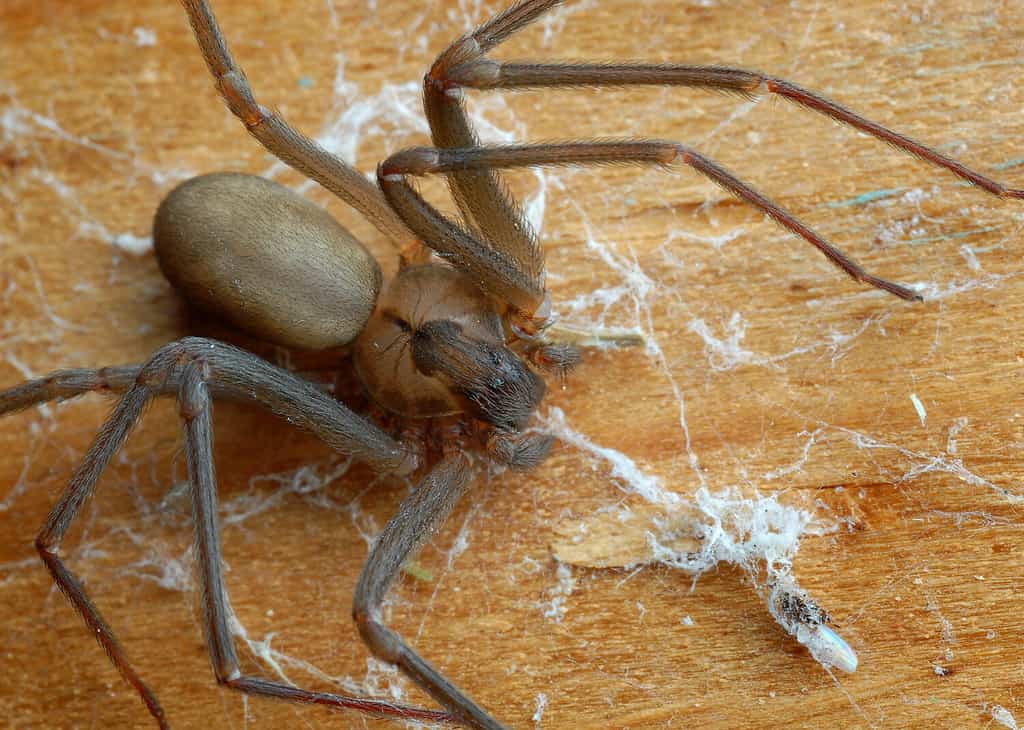
Brown recluse spiders have a violin shape on the cephalothorax, with the violin body starting behind the spider’s eyes.
©Miles Boyer/Shutterstock.com
Where Are Brown Recluses Found?
Next to the black widow, the brown recluse (Loxosceles reclusa) is the most dangerous spider in Tennessee. These spiders are native to the south-central and Midwestern U.S. They prefer to hide in dark, dry, secluded areas. Outdoors, they can be found in wood and rock piles or under hollow logs or debris. Indoors, they are often found in dark storage areas such as cupboards, closets, attics, basements, and garages. Outdoor spiders typically hibernate in the winter, so most bites occur from March through October when their habitat is accidentally disturbed.
Identifying Characteristics of the Brown Recluse
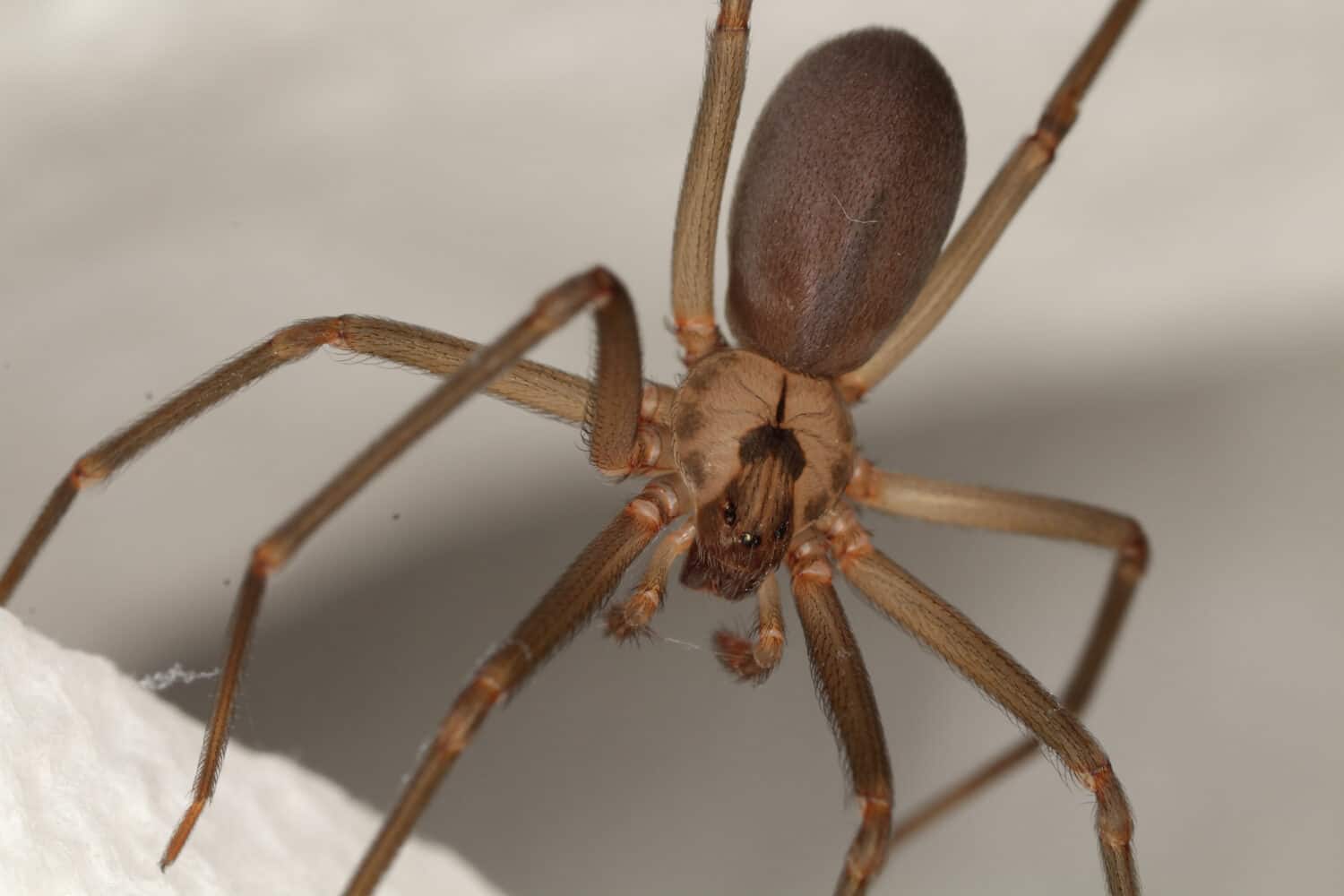
Female brown recluses can measure up to 0.5 inches in body length, with a 1-inch leg span. Males are smaller, measuring only about 0.35 inches. These spiders are a greyish to yellowish-brown color, with a characteristic violin-shaped marking on the cephalothorax. The body of the violin starts behind the spider’s eyes, with the neck of the violin extending toward the abdomen. They have long, slender legs that are darker than their bodies. These spiders can also be identified by their eyes. Most spiders have eight eyes, but brown recluses have six eyes arranged in three pairs forming a semicircle.
How Dangerous Are They?
Both males and females can bite, but confirmed brown recluse bites are relatively rare. This spider is not aggressive and only bites when it feels threatened. Most people only experience only swelling, redness, itchiness, and tenderness at the bite site. However, more severe reactions can include fever, nausea, headache, and chills. About 10% of bites cause necrotic skin lesions that can take months to heal. Less than 1% of bites cause systemic symptoms such as red blood cell damage, platelet damage, and kidney injuries. Fatalities are very rare and have only occurred in children. If you believe you have been bitten by a brown recluse, seek medical attention without delay.
2. Northern Black Widow Spider
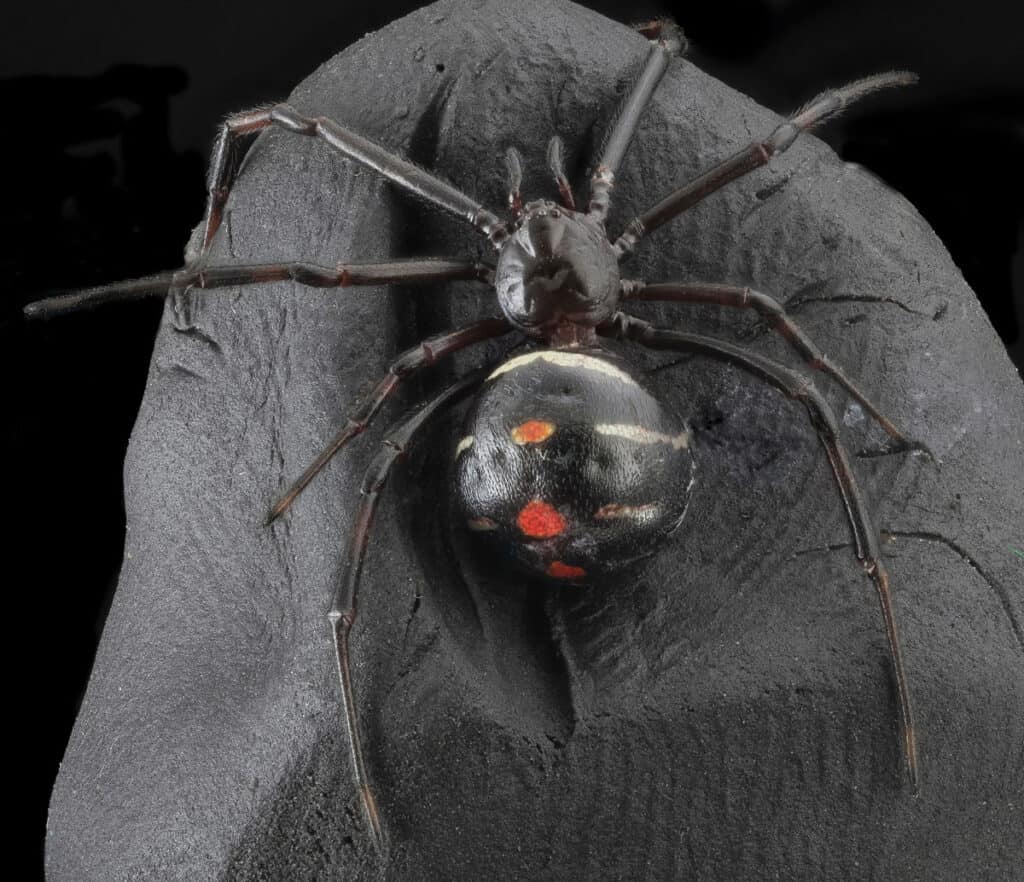
The northern black widow commonly has a row of red spots down the top of its abdomen.
©Porco_Rosso/Shutterstock.com
The Northern Black Widow Habitat
Northern black widow spiders (Latrodectus variolus) primarily inhabit the eastern U.S., including Tennessee. These spiders are typically found in outdoor habitats. Northern black widows can be found in places like hollow logs and tree stumps or under rocks and brush piles. They can also be found in rodent burrows. Indoors, they prefer dark, cluttered, secluded areas like attics, basements, garages, and sheds.
Identifying Features of the Northern Black Widow
The northern black widow can measure up to 0.5 inches in body length, with a leg span of 1-2 inches. Males are only one-quarter to one-half the size of females. This spider has a shiny black body, but unlike its southern cousins, the northern black widow has a separated red hourglass marking on the underside of its abdomen. They also commonly have a row of red spots running down the top of their abdomens. Males may have red and white stripes down the sides of their abdomens.
How Toxic Is the Venom of the Northern Black Widow?
Although these spiders are fairly common, bites are rare. Only the females can bite, but these timid spiders prefer to flee and hide when their habitat is disturbed. Scientists have found that the venom of a Latrodectus spider is 15 times more toxic than rattlesnake venom, but the northern black widow is thought to be slightly less toxic than the southern black widow. The toxin affects the nervous system, but symptoms vary depending on the person’s health and the severity of the bite. Localized pain, redness, swelling, and abdominal cramping are common. However, it can lead to systemic issues, including nausea, vomiting, sweating, tremors, and difficulty breathing. Fatal bites occur in less than 1% of cases, but if you suspect you or someone you know has been bitten, seek medical treatment immediately.
1. Southern Black Widow Spider
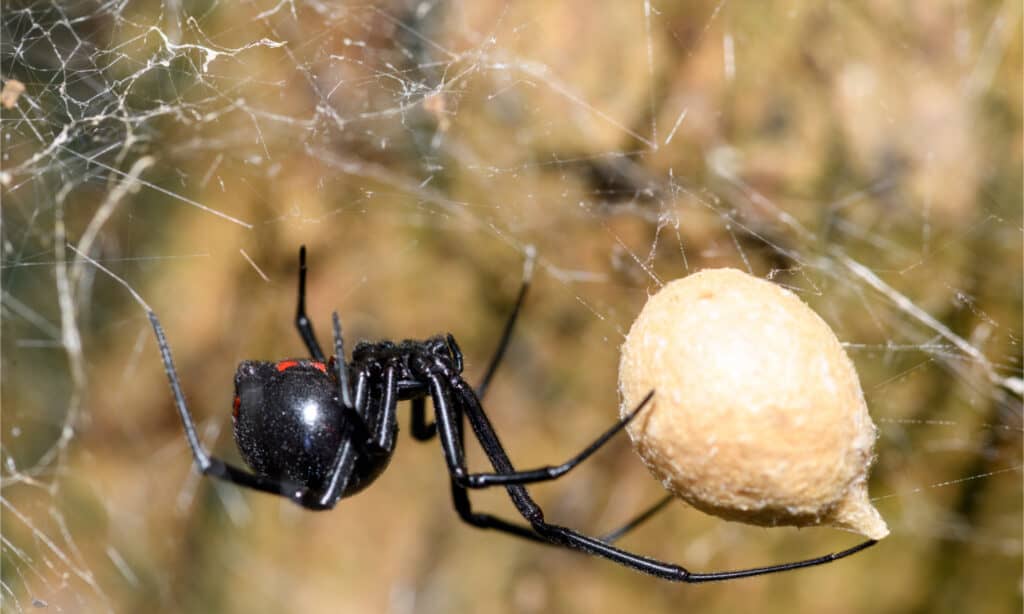
The venom of a black widow spider is 15 times more potent than a rattlesnake’s./
©Jeff W. Jarrett/Shutterstock.com
Where Are Southern Black Widow Spiders Found?
Southern black widows (Latrodectus mactans) are the most dangerous venomous spiders native to Tennessee. They are native to the South and Southeast, but their range extends into the Midwest and as far north as Massachusetts. Outdoors, they are found in sheltered locations such as rodent burrows, hollow stumps, logs, and under rocks or wood piles. They can also be found inside homes and other buildings, including sheds, garages, basements, crawl spaces, and other storage areas.
How to Know If It Is a Southern Black Widow
Female southern black widows are well known for their distinctive, glossy black coloring and red hourglass markings on the underside of their rounded abdomens. They are about the same size as their northern kin, measuring up to 0.5 inches in body length, with a leg span of between 1-2 inches. Male southern black widows are also significantly smaller, reaching only half the size of the female at most. Males may also be more brownish in color, with white or red markings.
How Dangerous Is the Bite of a Southern Black Widow?
Like northern black widows, only the females are capable of biting humans, as the males are too small to break the skin. Black widows are not aggressive and prefer to avoid humans. They will only bite in self-defense. Symptoms of a southern black widow bite include pain, redness, and swelling at the bite site, as well as muscle pain and cramping within the first hour. A bite can lead to systemic problems, including nausea, vomiting, sweating, respiratory distress, and autonomic dysfunction. Only 1.4% of cases present with life-threatening effects. According to Penn State, no one has died from a black widow bite in the U.S. since 1983. However, you should seek medical attention immediately if you believe you have been bitten by a southern black widow.