
Quick Take
- One of Wisconsin's three dangerous spiders isn't actually from Wisconsin, and the way it gets into homes might surprise you. How it enters homes →
- Wisconsin has roughly 500 spider species, but only a few can actually harm you, and the one most likely hiding in your home right now is probably not the one you'd expect.
- Black widow venom is a powerful neurotoxin, yet Wisconsin's native species is considered less dangerous than its reputation suggests. There is, however, a key distinction worth understanding. Venom effects explained →
- Spotting a brown recluse comes down to one unusual physical trait most people have never heard of, and that trait has nothing to do with the famous violin marking. The real identifying trait →
Wisconsin’s wildlife runs the gamut from large mammals like white-tailed deer, black bears, and gray wolves to microscopic insects and aquatic life thriving across its thousands of lakes. Wisconsin is also home to approximately 500 spider species. Although the large number of these eight-legged creatures might seem intimidating, most are completely harmless. In fact, only three species in the state are considered medically significant to humans: native Northern Black Widows, native Northern yellow sac spiders, and the non-native Brown Recluse. Although Northern yellow sac spiders are common throughout the state, black widows and brown recluses are much less frequently seen. Continue reading to learn more about these three venomous spiders.
Northern Black Widow
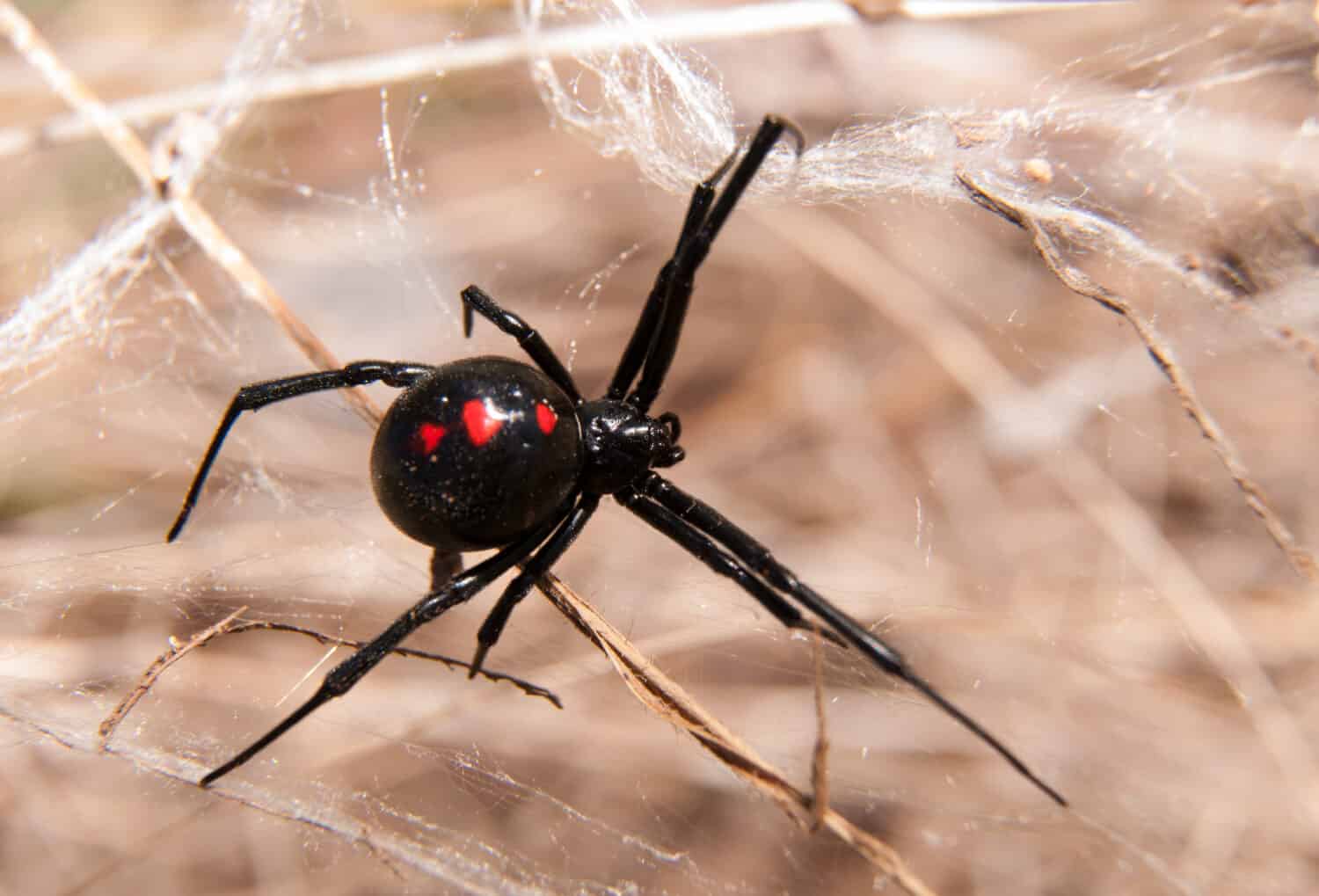
The Northern black widow (Latrodectus variolus) is the only native black widow species found in Wisconsin, where it is exceedingly rare. Adult females have a body length between 0.35 and 0.5 inches and a total leg span of up to 1.5 inches, while the lighter-colored males are roughly half that size.
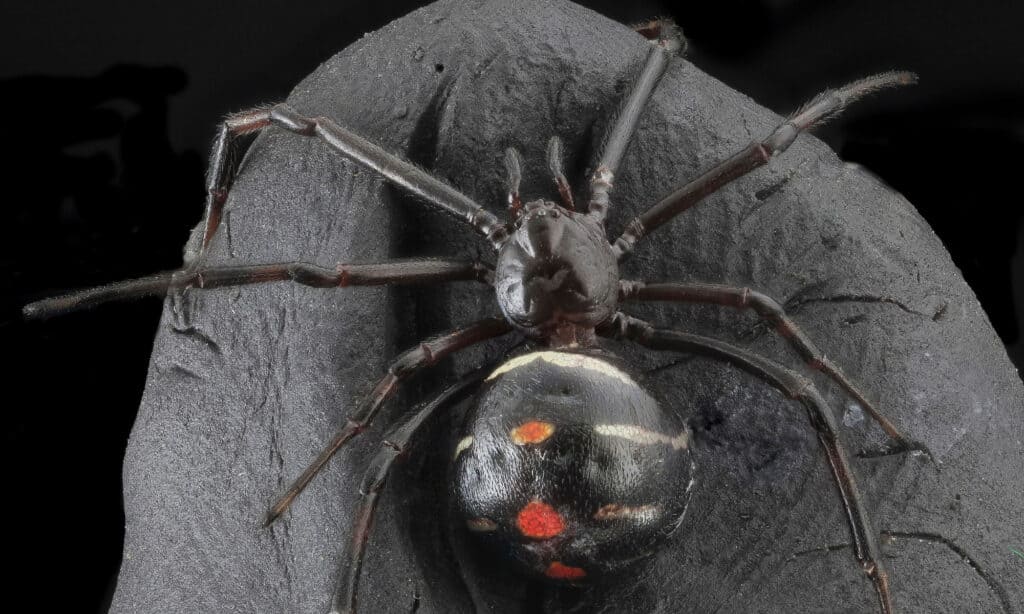
Unlike other black widows, Northern black widows have a broken hourglass-shaped marking on their abdomens.
©Porco_Rosso/Shutterstock.com
The female features a shiny, jet-black body with a round abdomen, which is marked with two separate red or orange triangles, and it often has a row of red spots along the top of its back. Although it is native to the state, the Northern black widow has been documented in fewer than 10 Wisconsin counties, with the vast majority of sightings concentrated in the East-central region.
A black widow‘s bite is dangerous to humans but is rarely fatal. Their venom is a highly potent neurotoxin, and a black widow bite usually causes a painful condition called latrodectism, which includes symptoms such as severe pain, muscle cramps and spasms, sweating, vomiting, nausea, and high blood pressure. While a Northern black widow’s bite can cause severe reactions, it is not considered a life-threatening emergency.
Brown Recluse
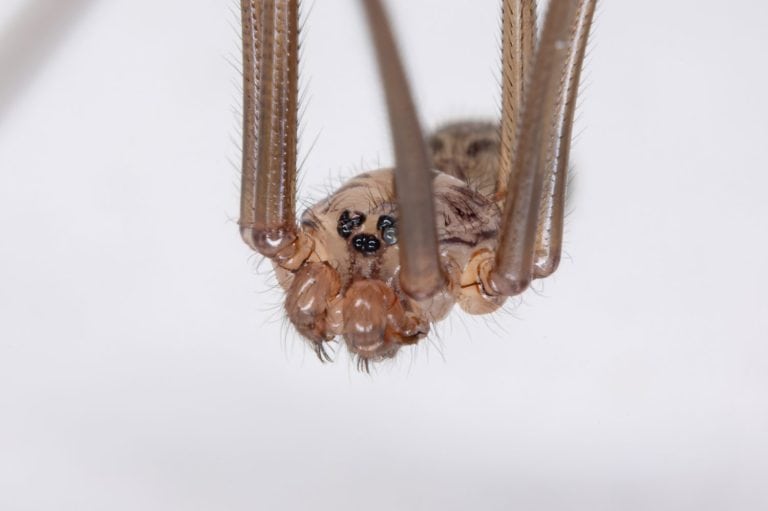
The brown recluse spider (Loxosceles reclusa) is not native to Wisconsin and is exceptionally rare within the state. This small arachnid features a body length of between 1/4 and 1/2 inches and an overall leg span of 1 to 1.5 inches. Brown recluses are tan to medium brown, with long, smooth legs that lack distinct spines or bands. Its most famous characteristics are the dark, violin-shaped marking on its cephalothorax and a unique arrangement of six eyes grouped into three pairs, instead of the eight eyes found on most other spiders.
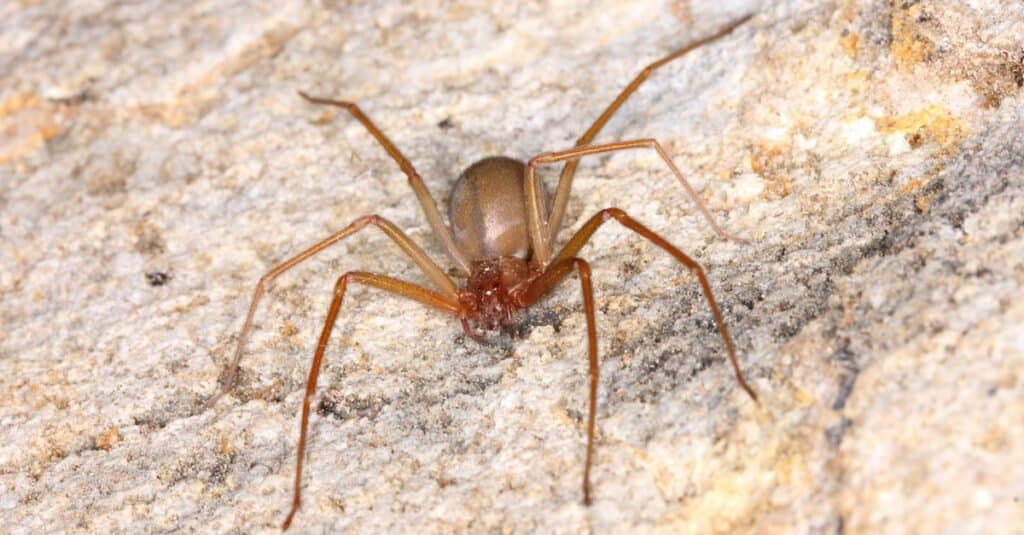
The brown recluse spider is one of the most dangerous spiders in the United States. Its venom destroys the walls of blood vessels near the site of the bite, sometimes causing a large skin ulcer.
©Pong Wira/Shutterstock.com
Because Wisconsin is north of the spider’s native range, the brown recluse does not have an established population and is not found in any specific region of the state. The few verified brown recluse spiders found in Wisconsin arrived in household cargo, boxes, or furniture transported from their native range, which includes the South-Central and Midwestern United States.
A brown recluse spider bite is rarely deadly to humans. Although their venom is highly potent and toxic, these spiders are small and inject only a tiny amount of venom when they bite.
Northern Yellow Sac Spider
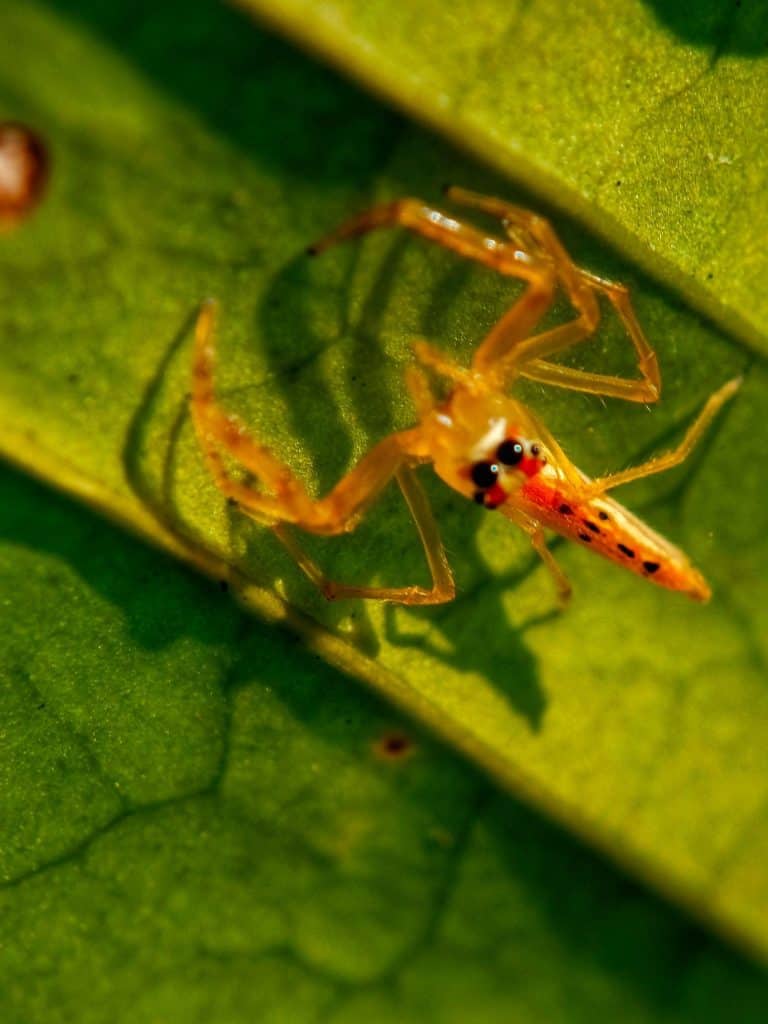
The Northern yellow sac spider (Cheiracanthium mildei) is a small but commonly encountered spider in Wisconsin. These spiders have a body length of 1/4 to 3/8 inch and a total leg span of up to 1 inch. Northern yellow sac spiders are light yellow to cream-colored with a subtle greenish tinge on the abdomen and a faint, darker vertical stripe running down their back.
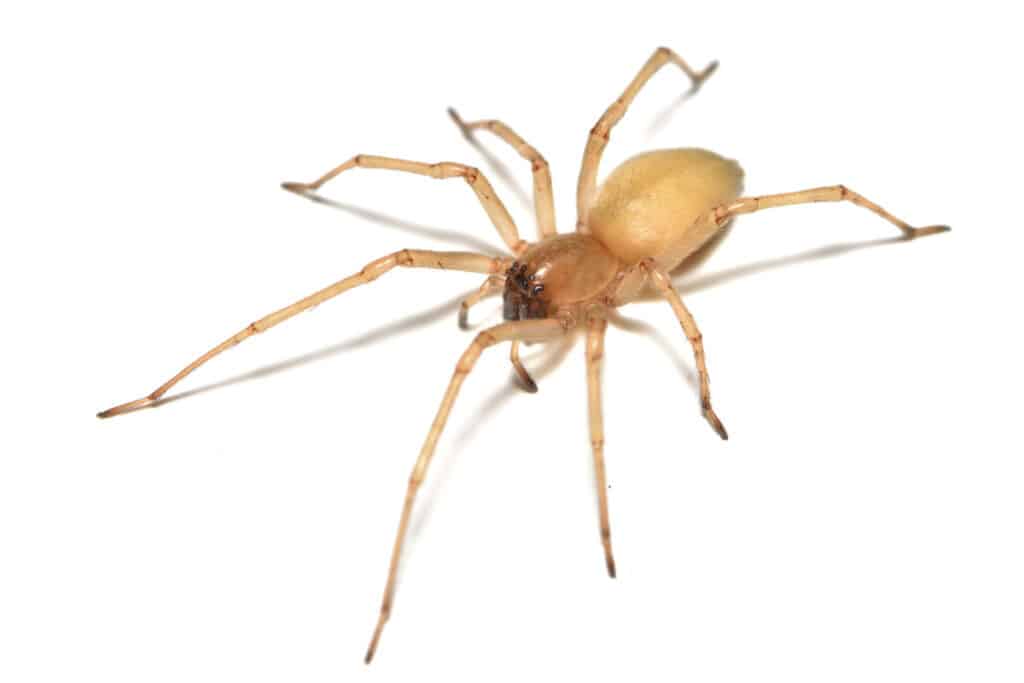
The northern yellow sac spider only bites when it is threatened
©Tobias Hauke/Shutterstock.com
In Wisconsin, these spiders are found statewide in both outdoor and indoor environments. Although they live in gardens, trees, and shrubs during the warmer months, they move into residential homes, garages, and commercial buildings for warmth in late summer and autumn.
The Northern yellow sac spider is venomous, but its bite is not considered medically dangerous to humans. Like nearly all spiders, its venom is designed to subdue small prey.