
New Hampshire is a small state with abundant wildlife: Black bears roam the wilderness, and there are occasional sightings of moose, but it’s also interesting to look at some of the relatively smaller creatures that inhabit this area. Of the over 50,000 spider species worldwide, 41 have been recorded in New Hampshire. Although some are relatively small, others are large enough to be startling. Continue reading to discover the five biggest spiders in New Hampshire.
5. Long-Bodied Cellar Spider
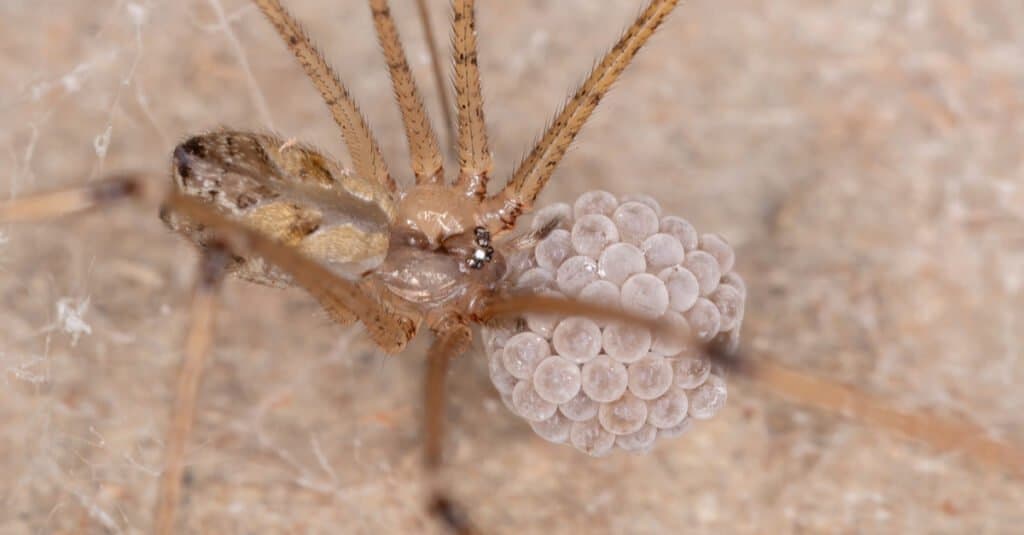
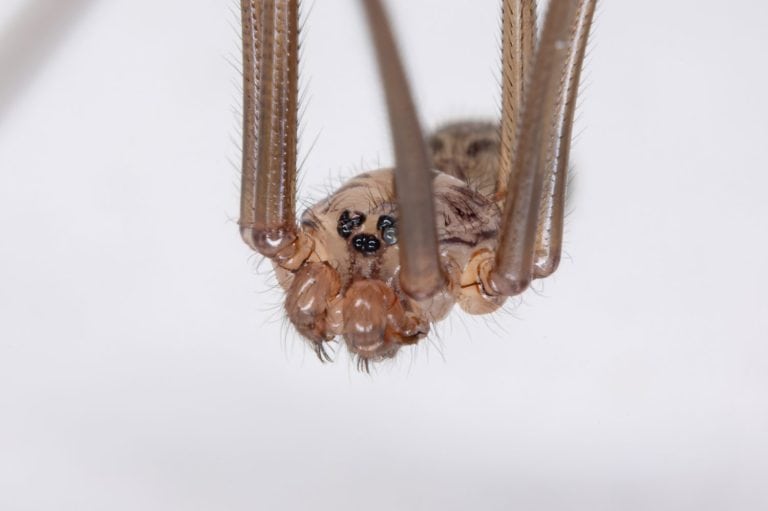
Cellar spiders are translucent
©iStock.com/ViniSouza128
| Scientific Name | Size | Danger to Humans |
|---|---|---|
| Pholcus phalangioides | 1-2 inches | A bite may cause a mild burning sensation. |
The long-bodied cellar spider is a common spider that lives in the dark recesses of homes, such as cellars, garages, attics, or vacant rooms. Although it has a small body, the cellar spider has very long legs, sometimes measuring 2 inches long.
Long-bodied cellar spiders have peanut-shaped, translucent bodies. They’re usually a grayish-brown color and have dark markings on their cephalothorax. The markings resemble a skull, which is why this species is sometimes called a skull spider.
These spiders are not harmful to humans. Their bite may momentarily sting and could leave a small bump.
4. Striped Fishing Spider
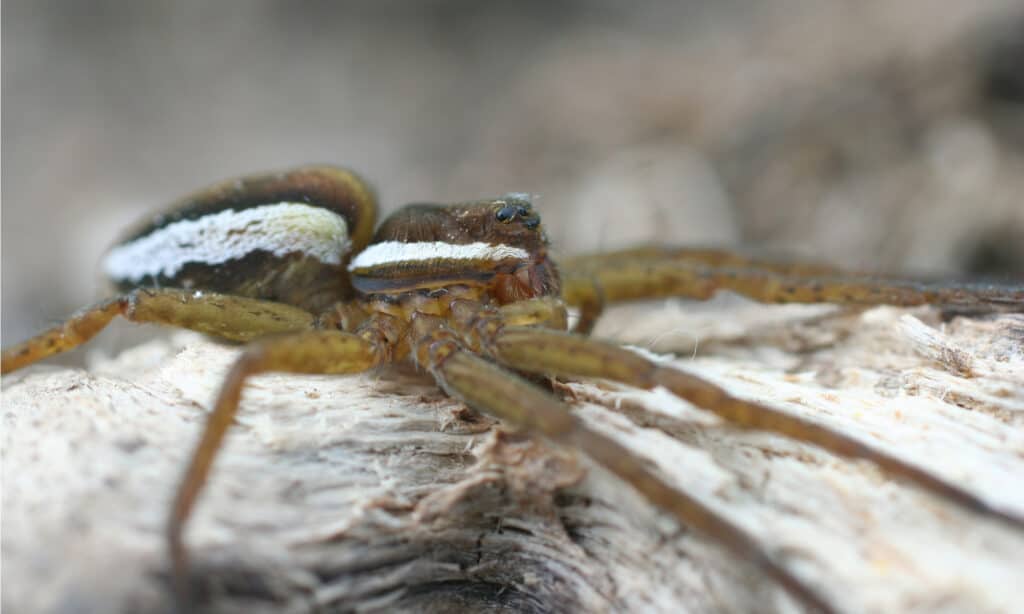
The striped fishing spider is easily noticed by its light stripes.
©Oleg Nikonov/Shutterstock.com
| Scientific Name | Size | Danger to Humans |
|---|---|---|
| Dolomedes scriptus | 1- 2.4 inches | A bite can cause pain and swelling much like a bee or wasp sting or bite. |
The striped fishing spider is one of many species in the Dolomedes genus found in New England. Striped fishing spiders have many colors, including brown, light brown, and gray. They have a gray or light brown stripe down both sides of their body. They have light and dark banding down their legs along with various markings on their body, including a light “W-shaped” one on their abdomen.
These spiders spend much of their time near water. They can be found running along the surface or hiding out by the docks. They feed on small aquatic insects and fish.
The striped fishing spider’s bite can be painful and may swell, but is not medically significant, absent any allergies to the venom.
3. Carolina Wolf Spider
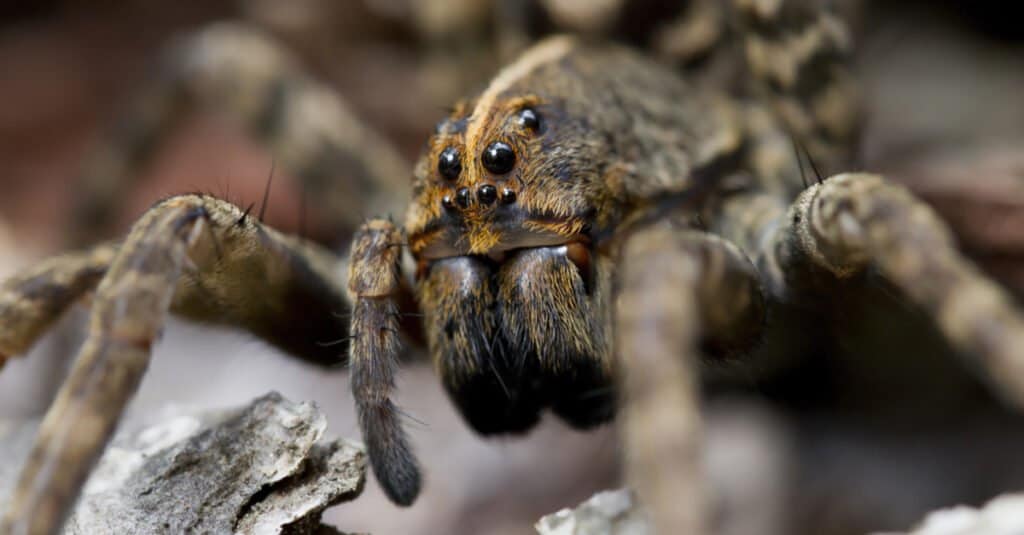
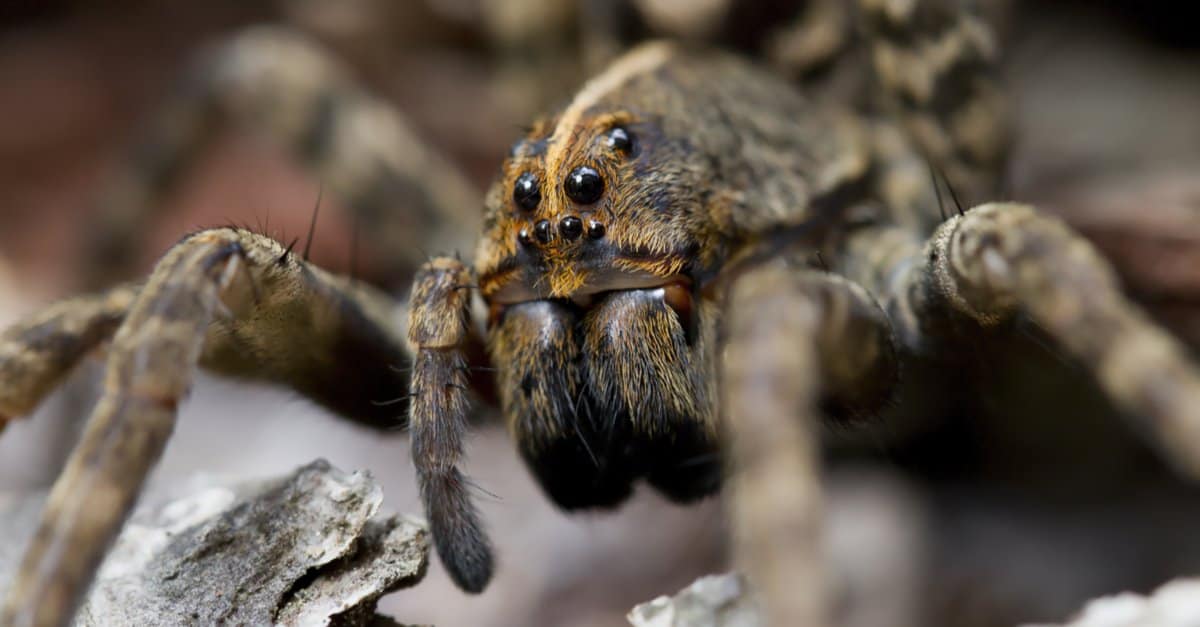
The Carolina wolf spider is the biggest wolf spider in North America.
©Will E. Davis/Shutterstock.com
| Scientific Name | Size | Danger to Humans |
|---|---|---|
| Hogna carolinensis | 2-4 inches | The bite causes local pain and swelling. |
The Carolina wolf spider is the largest member of the Hogna genus in the U.S. Females, in particular, can have a leg span of up to 4 inches long on a body that measures about 1 to 1.5 inches. These are large spiders with bulbous abdomens.
Carolina wolf spiders range in color, with some of them being sandy brown, gray, dark brown, or nearly black. Some individuals may also display additional colors on their abdomens. Males may have orange hair on their abdomens.
Although they can look imposing, especially when they are carrying their young on their backs, these spiders aren’t aggressive. They can, however, deliver an unpleasant bite that may cause pain and swelling.
2. American Nursery Web Spider
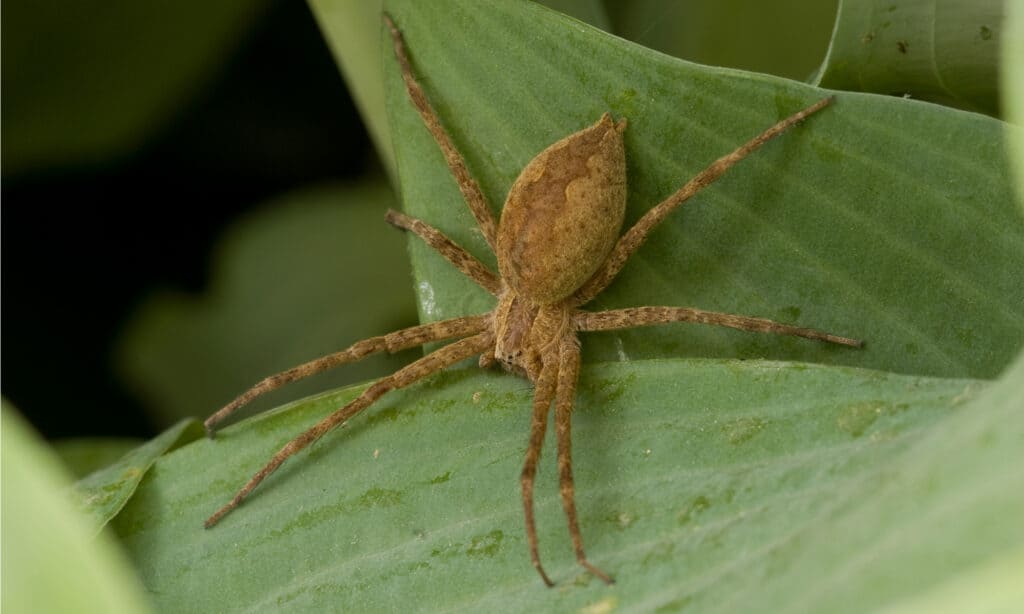
Male American nursery web spiders will tie females’ legs during mating to avoid being eaten afterward.
©SDeming/Shutterstock.com
| Scientific Name | Size | Danger to Humans |
|---|---|---|
| Pisaurina mira | 1-3 inches | Has a bite that is mostly harmless to humans, with pain and swelling common. |
The American nursery web spider can have a leg span approaching 3 inches, but the body length is usually less than 0.7 inches, with females being larger than males.
American nursery web spiders have a reddish-brown body with a brown stripe running down the middle of the cephalothorax and abdomen. These spiders have unique, U-shaped eye placement with four eyes on the bottom, two eyes in the middle, and two eyes on the top.
The nursery web spider is known for creating a nursery web to hold her eggs before they hatch. This fascinating behavior involves creating large egg sacs. American nursery web spiders live in tall grass. The American nursery web spider’s bite is not harmful to humans.
1. Dark Fishing Spider
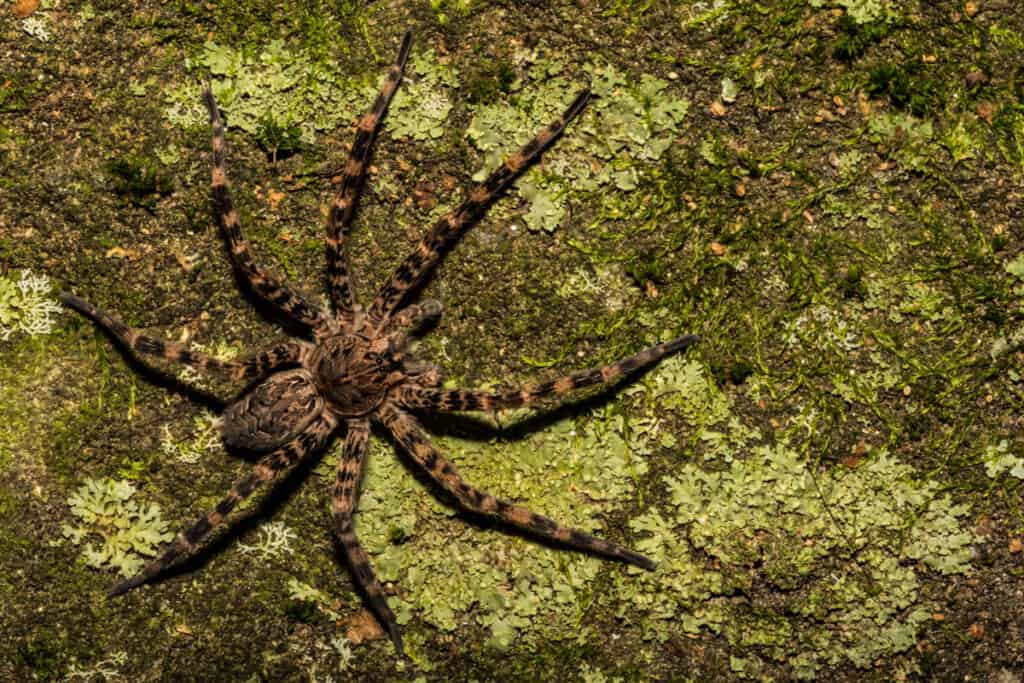
The dark fishing spider is often found near forests rather than in the water.
©iStock.com/JasonOndreicka
| Scientific Name | Size | Danger to Humans |
|---|---|---|
| Dolomedes tenebrosus | 3.5-4.5 inches | Can bite humans and cause a reaction similar to a bee sting. |
The dark fishing spider spends most of its time in the woods, despite its name. Still, this is the biggest spider in New Hampshire, measuring up to 4 inches across.
These arachnids have hairy bodies with a variety of colors. Dark fishing spiders can be light brown, brown, dark brown, and even black. Their large cephalothorax features dark central markings, and their legs have light and dark chevrons near the top, which transition into banded patterns toward the bottom.
Although they are big, these spiders can’t do much harm to humans. Typically, a bite from them is similar to a bee sting.