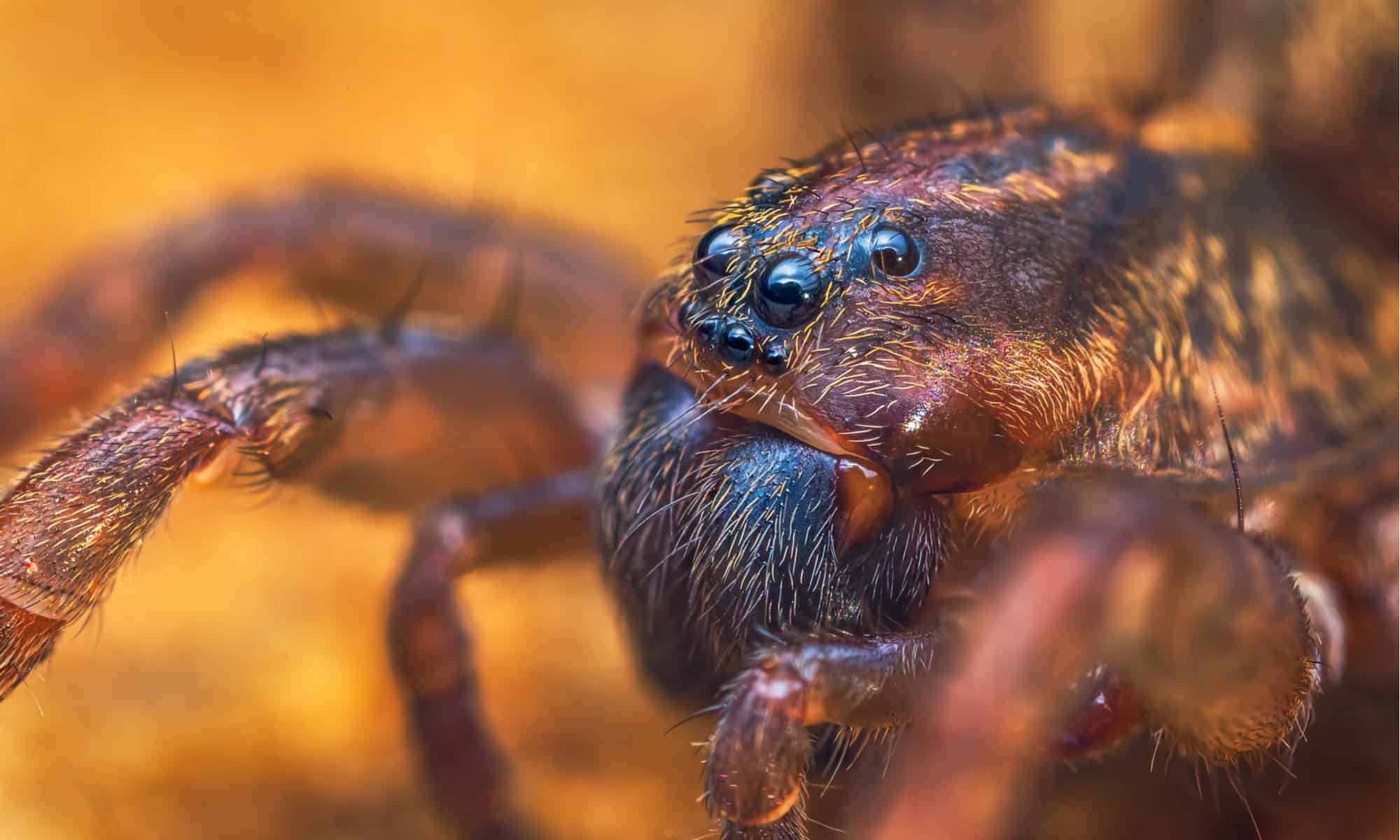

Washington State is known for its rainy weather, mountain ranges, and cityscapes. This state’s diversity of landscapes is matched by its diversity of animals, including arachnids. Of the 50,000 species of spiders, Washington is home to over 500 spider species, from tiny jumping spiders to species with leg spans measuring several inches. Continue reading to learn about the five biggest spiders in Washington.
5. Trapdoor Spider
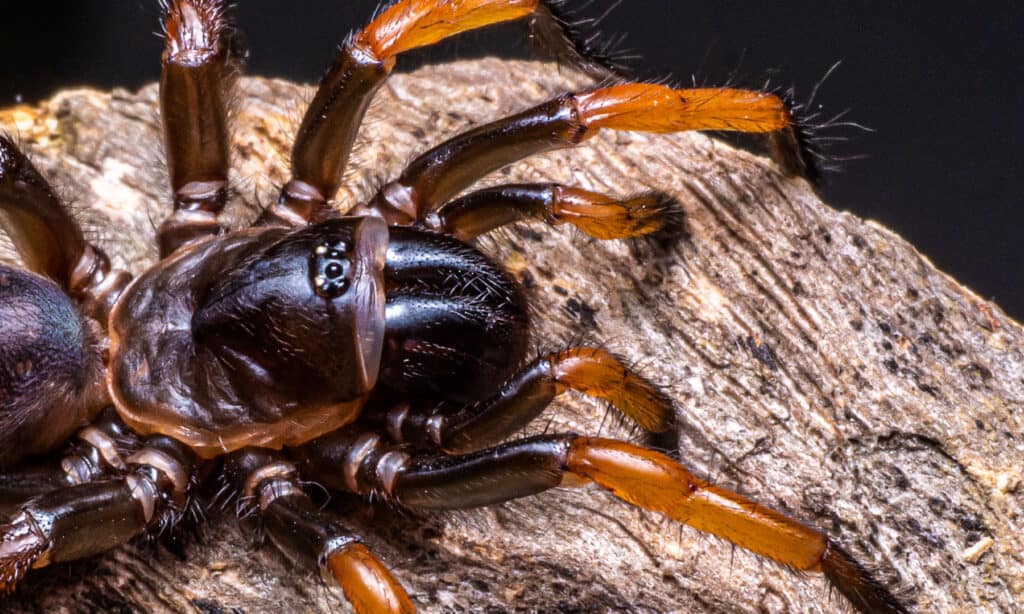
Spending a good portion of their lives underground, the likelihood of being bitten by a trapdoor spider is low.
©nokkaew/Shutterstock.com
| Scientific Name | Size | Danger to Humans |
|---|---|---|
| Ummidia Genus | 1-2 inches | Delivers a mildly painful bite. |
Trapdoor spiders spend most of their lives living below ground level in a burrow. This species uses its web-lined burrow to catch prey. As their name suggests, these spiders create a web-lined burrow with a trapdoor.
Trapdoor spiders ensnare prey by constructing a silk-lined, soil-covered trapdoor at the entrance of their burrow. They wait for vibrations from passing insects or small vertebrates, which trigger the spider to suddenly emerge from the burrow to capture its prey. The spider then drags its prey into the burrow.
Although they may look similar to tarantulas due to their shiny black or brown carapaces and legs, trapdoor spiders only reach about 2 inches in length. Most of that length is due to their bodies, as they do not have particularly long legs.
A trapdoor spider bite is generally low-risk and non-toxic to humans, but it can cause pain and swelling at the bite site
4. Long-Bodied Cellar Spider
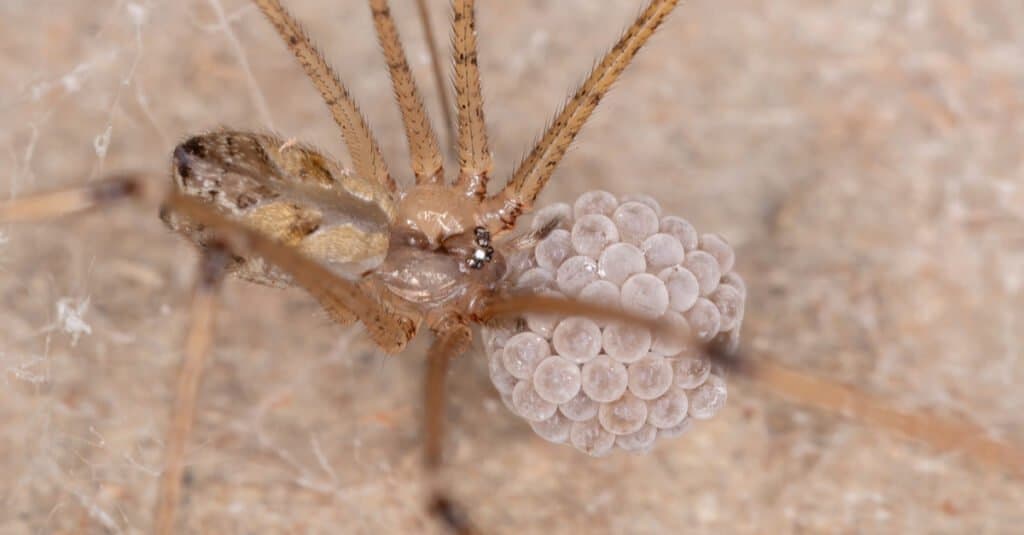
Cellar spiders have translucent bodies.
©iStock.com/ViniSouza128
| Scientific Name | Size | Danger to Humans |
|---|---|---|
| Pholcus phalangioides | 1-2 inches | A bite may cause a mild burning sensation. |
The long-bodied cellar spider lives in basements, garages, and other dark, out-of-the-way places where it will be left alone. This spider is typically brown, tan, or grayish brown, and it possesses a somewhat translucent body with thin legs.
Cellar spiders have long legs relative to their small, peanut-shaped body. While they might look scary, this species is not harmful to humans. A long-bodied cellar spider bite poses no medical threat to humans. Their venom is too weak to affect people, and their fangs are too small to penetrate human flesh effectively, making bites extremely rare and harmless.
3. Hobo Spider
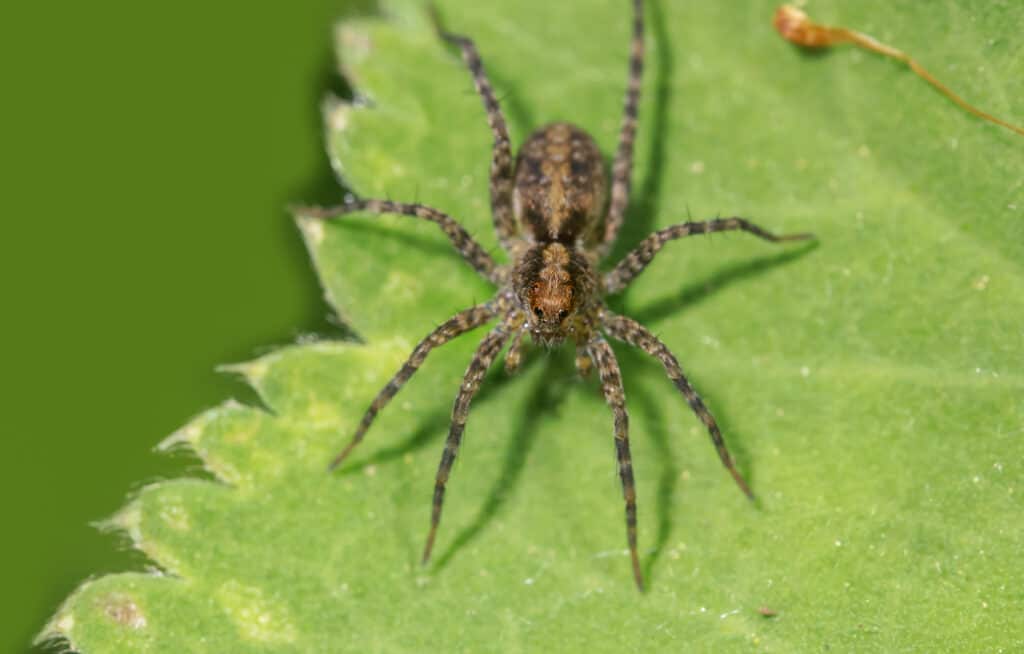
Hobo spiders are often confused for brown recluses.
©SNEHIT PHOTO/Shutterstock.com
| Scientific Name | Size | Danger to Humans |
|---|---|---|
| Eratigena agrestis | 1-2 inches | A bite can cause moderate pain and some redness at the site, but they’re not deadly. |
With a 2-inch leg span, hobo spiders are roughly twice the size of the brown recluse (Loxosceles reclusa), a species for which they are sometimes mistaken. However, brown recluse spiders are not native to Washington, and there are no known established populations in the state.’
Hobo spiders like to live in dark areas where they can make their webs across gaps and cracks. You’ll find them in gardens, window wells, basements, woodpiles, and home foundations.
Scientists once believed that hobo spider bites could cause necrotic wounds, but modern research has shown that their bites are not medically significant to humans.
2. Ground Wolf Spider
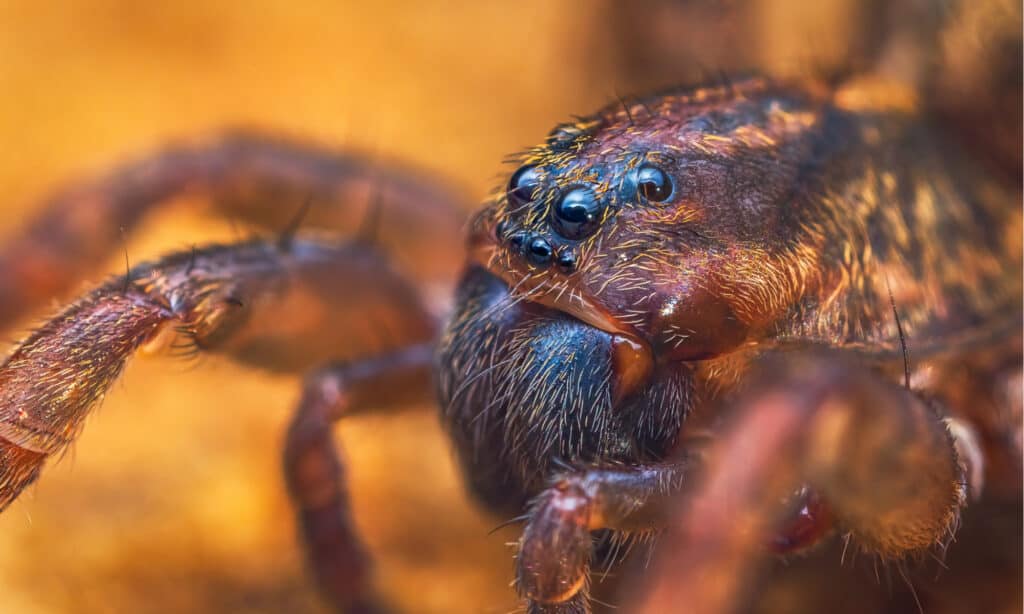
The ground wolf spider hunts at night.
©Lukas Jonaitis/Shutterstock.com
| Scientific Name | Size | Danger to Humans |
|---|---|---|
| Trochosa terricola | 2-3 inches | Delivers a mildly painful bite that leaves a bump. |
Ground wolf spiders are among the biggest spiders in Washington State, possessing a 3-inch leg span and a body that measures over an inch. These spiders have the usual light brown midband on the cephalothorax, along with two dark spots and a dark cardiac mark on the abdomen. The rest of the abdomen is light and darkly patterned.
These spiders hunt at night. They prefer to hide in moist and dark habitats where they can wait to ambush their prey.
Wolf spider bites are mildly painful and typically leave a bump that can be red and itchy.
1. Giant House Spider
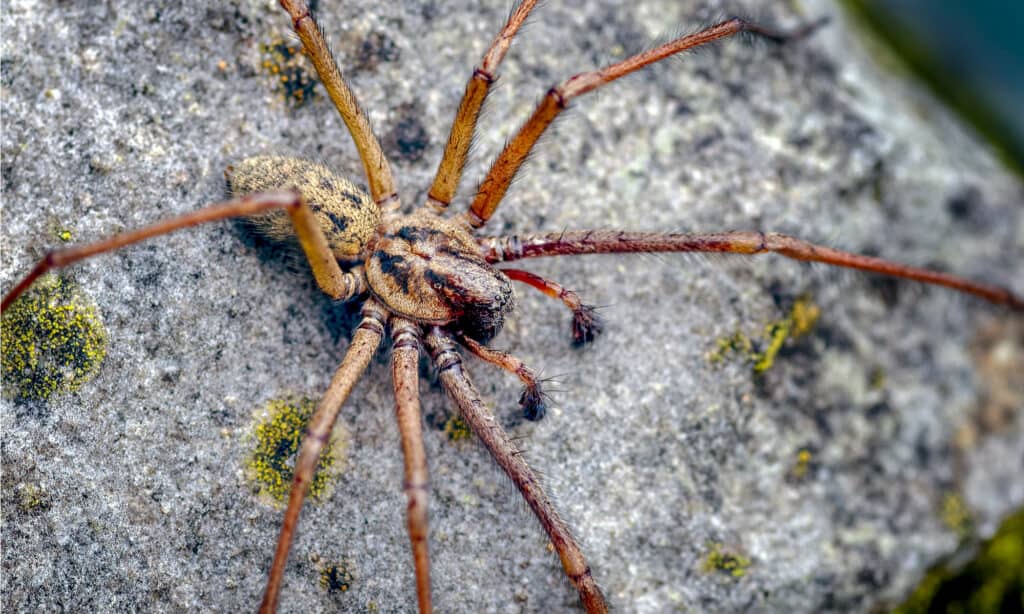
Among the fastest spiders, giant house spiders can scurry away at lightning speed.
©R K Hill/Shutterstock.com
| Scientific Name | Size | Danger to Humans |
|---|---|---|
| Eratigena atrica | 2-4 inches | A bite from this spider causes minor pain and swelling unless the individual is allergic. |
Giant house spiders are considered the largest spider species in Washington by leg span. As their name suggests, they are frequently in homes. They like to build webs in attics, basements, and other areas where they’re not going to be bothered.
The giant house spider is black, brown, and tan, with a light midband surrounded by dark marks on the carapace and a patterned abdomen. Although these spiders are very big, they’re not very harmful to people. A bite from this spider will cause some pain and swelling in the vast majority of cases.