
Quick Take
- Reaching 2 inches is a vital requirement for the largest North American lynx spider species.
- The Peucetia viridans classification causes significant confusion when tracking populations across 6 different nations.
- Mastering the cat-like pounce is essential for these hunters to thrive without traditional webs.
Spiders come in all sorts of colors and patterns. While we all know about black widows and their iconic red hourglass marks, have you ever wondered about other interesting patterns? One such spider is the green lynx spider, which surprisingly resembles a watermelon. While they don’t necessarily look like watermelons for camouflage, the similarities are pretty interesting to look at. This Instagram post by @the_wild_dp shows a picture of the spider up close, and it really does look like a watermelon. Read here to learn more about the green lynx spider.
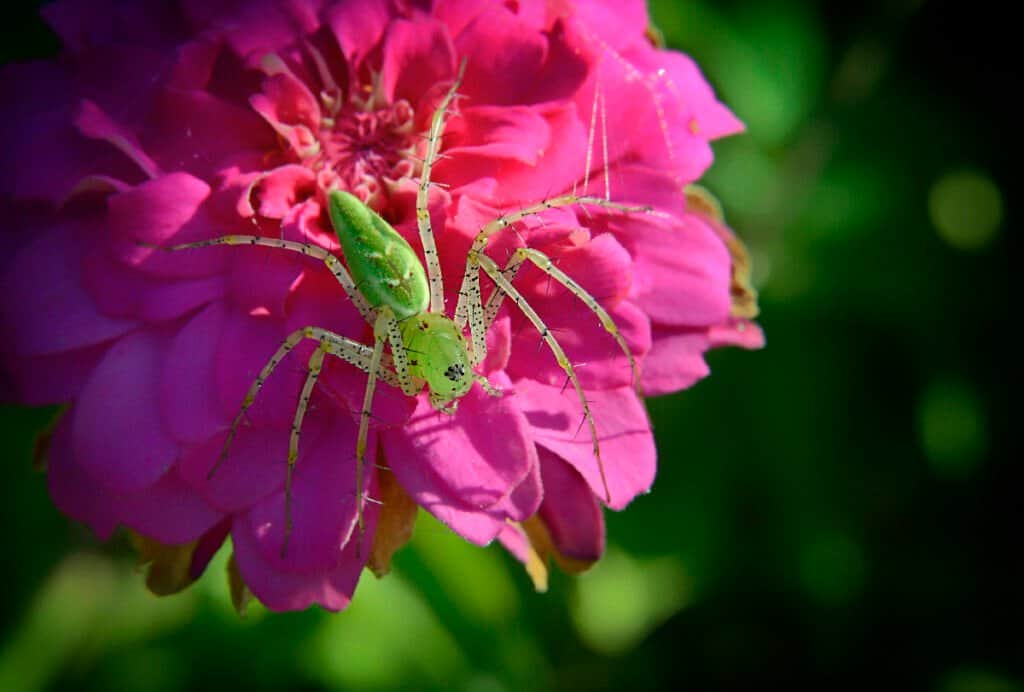
The green lynx spider is the largest species of lynx spider in North America.
©iStock.com/Lois_McCleary
About the Green Lynx Spider
Green lynx spiders are a part of the Peucetia genus, which is made up of other lynx spiders. There are a few different green lynx spider species that differ primarily in location. Peucetia viridans is common in the southern United States, Mexico, Central America, the West Indies, Venezuela, and can be found as far north as southern Canada and as far south as Argentina. These are the green lynx spiders that you are most likely familiar with.
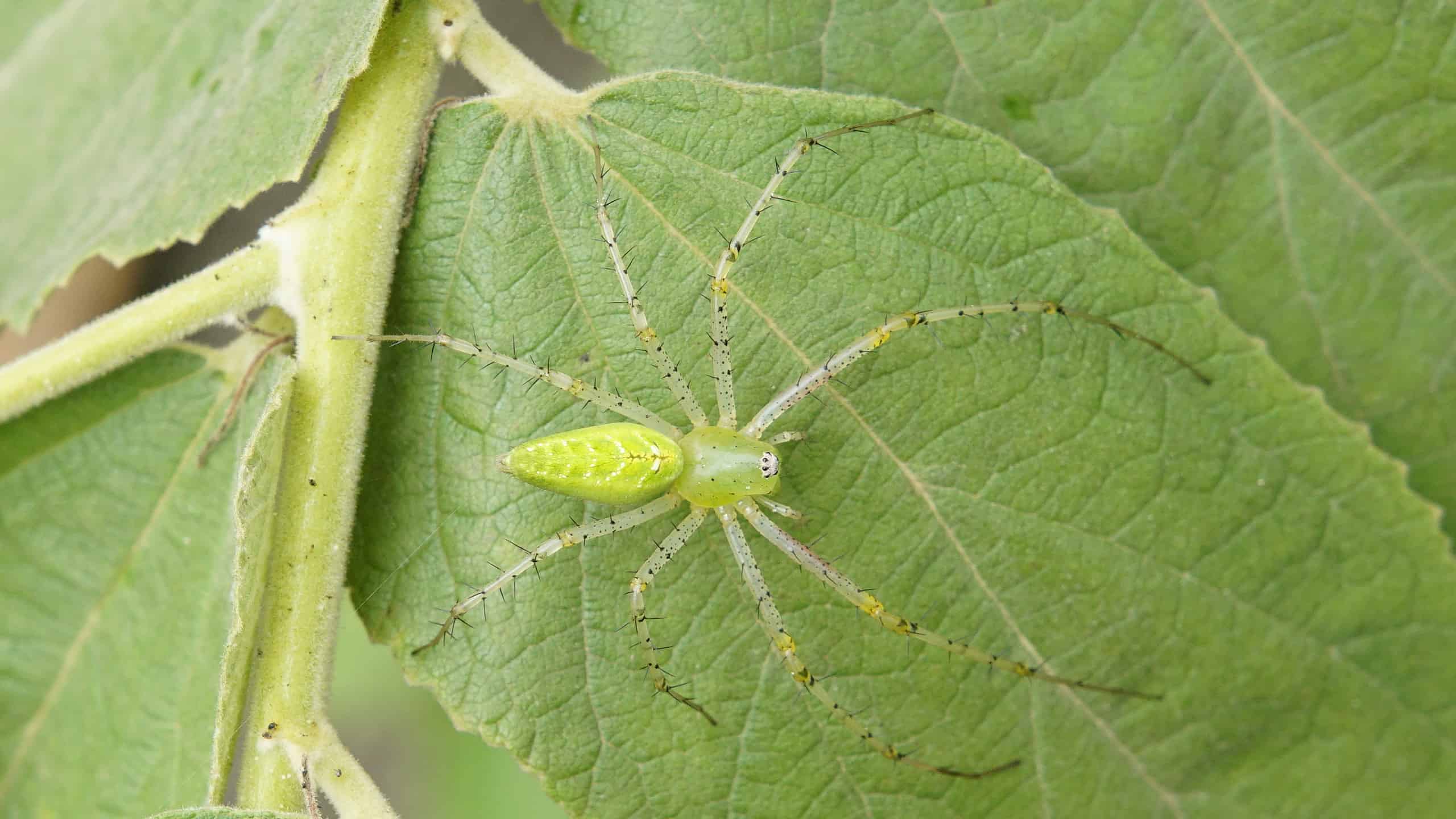
However, Peucetia viridans is a spider in the photos above, and is known as the Indian green lynx spider. As its name suggests, these spiders are found in India, as well as in Myanmar, Sri Lanka, Pakistan, Bangladesh, and possibly China. These species live on plants and grasses for the camouflage they provide. The spider’s mix of green shades makes plants the perfect place to hide from predators. They also use their camouflage to hide from and ambush prey. Lynx spiders are famous for their cat-like hunting style, where they stalk and pounce on prey.
Green lynx spiders are insect predators, eating various small insects. These include moths, caterpillars, bees, grasshoppers, flies, and more. Rather than spinning webs to catch their prey, they wait in the plants they sit on before pouncing when the time is right. These spiders are great hunters thanks to their long legs and can grow to around an inch or two in length. They use their legs to grab and secure their prey. While they may sound scary, they are generally harmless to humans. Bites from these spiders are uncommon. If bitten, the bite may be painful and swell, but it is not typically medically serious.
Watermelon Camouflage
While green lynx spiders don’t necessarily use their watermelon-like appearance for camouflage, they definitely look similar to the fruit. As seen in the photos, they have bright green bodies and dark green lines that resemble the stripes on a watermelon. Because they hunt pests like flies, green lynx spiders are actually great for gardens. Next time you’re in a garden or on a hike, keep an eye out for these ‘watermelon spiders.’