
Quick Take
- Scientists had the sunfish's diet all wrong for years, and what they discovered changes how we understand these giants. Discover their real diet →
- Sunfish only swim at 2 mph, yet they're effective predators whose hunting method is stranger than you'd expect. See how they hunt →
- Sunfish bask at the surface for a reason that has nothing to do with laziness, and that reason unlocks a feeding strategy most people don't know about. Explore the basking behavior →
- Being the size of a small car doesn't make sunfish invincible. Their predators exploit one surprising vulnerability. Meet their predators →
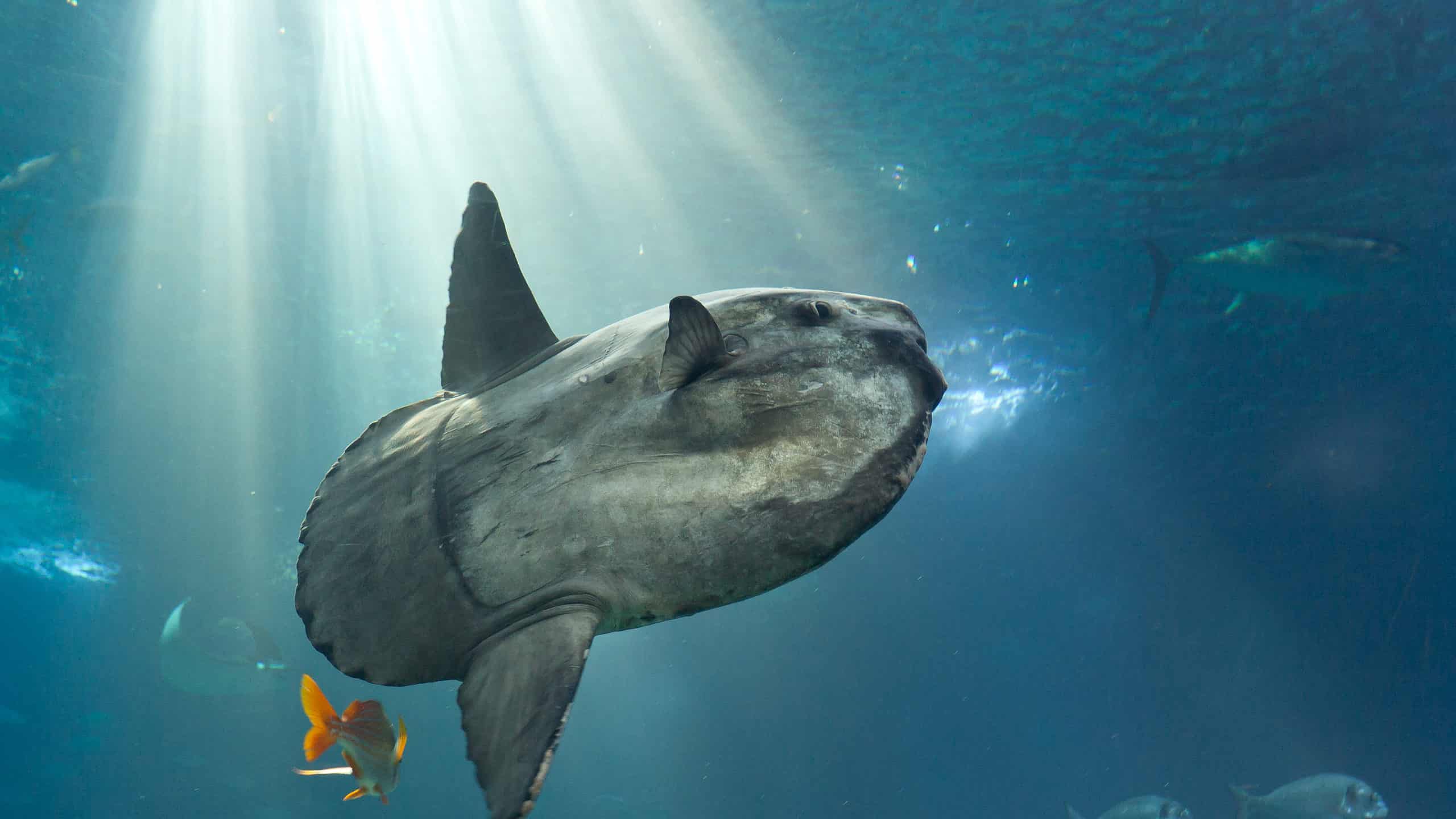
Sunfish (Mola mola) are among the largest bony fish in the world, weighing as much as 2,205 pounds, with some individuals growing as large as 5,000 pounds and up to 10 feet long. They are a pelagic species, meaning they live in the open ocean, far from shore. Sunfish inhabit temperate and tropical waters worldwide, including the Atlantic, Pacific, and Indian Oceans, as well as the Mediterranean Sea. As one of the largest bony fish, sunfish must consume a staggering amount of food each day to maintain their weight. Continue reading to discover everything you need to know about what sunfish eat.
What Food Does the Sunfish Eat?
Sunfish eat jellyfish, small fish, squid, crustaceans, and salps. They are ecologically vulnerable fish that have been around for millions of years. Sunfish swim both horizontally and vertically while searching for food or basking near the surface.
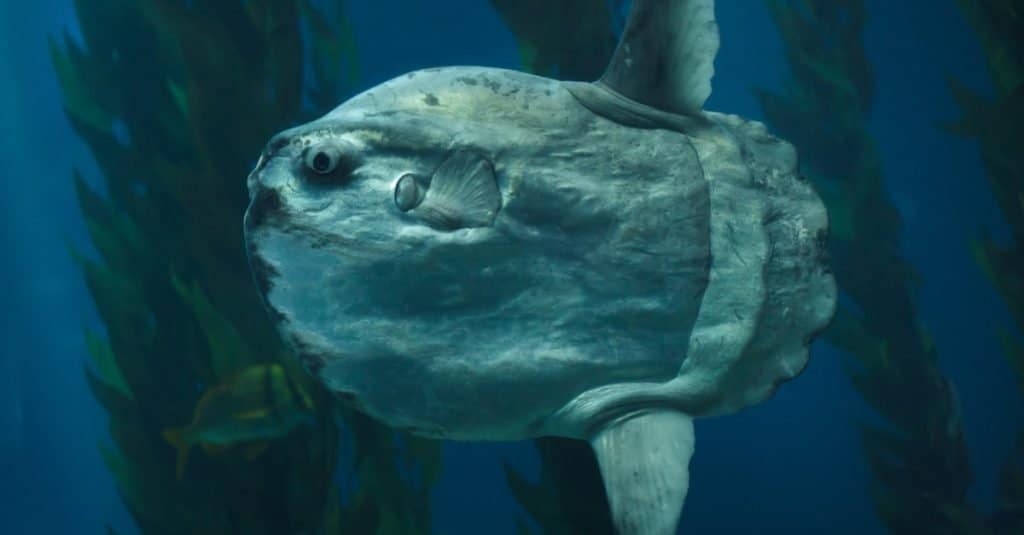
Sunfish were originally thought to feed exclusively on jellyfish, but research shows they also eat fish, squid, and crustaceans.
©Vladimir Wrangel/Shutterstock.com
For many years, scientists thought that sunfish primarily ate jellyfish and salps because that was all that was observed. While they do eat jellyfish, it has since been discovered that sunfish are much more adaptable and are generalists that feed on a variety of foods.
Aside from jellyfish, sunfish eat almost anything they can catch or happen upon. Small fish and fish larvae are common elements of their diet, illustrating that the sunfish isn’t just a passive feeder.
Sunfish also eat squid and various crustaceans like crabs. When they prefer certain foods, sunfish alter their depth to align with their desired prey.
Foods that sunfish are known to eat include:
- Jellyfish
- Salps
- Small fish
- Fry
- Larvae
- Squid
- Crustaceans
- Eel grass
How Does the Sunfish Get Its Food?
While technically predators, sunfish are slow-moving and have less control over their movement compared to other fish with tails. Typically, sunfish can only swim at around 2 miles per hour (mph), much too slow for fast-paced hunting. However, they can put on small bursts of speed when necessary.
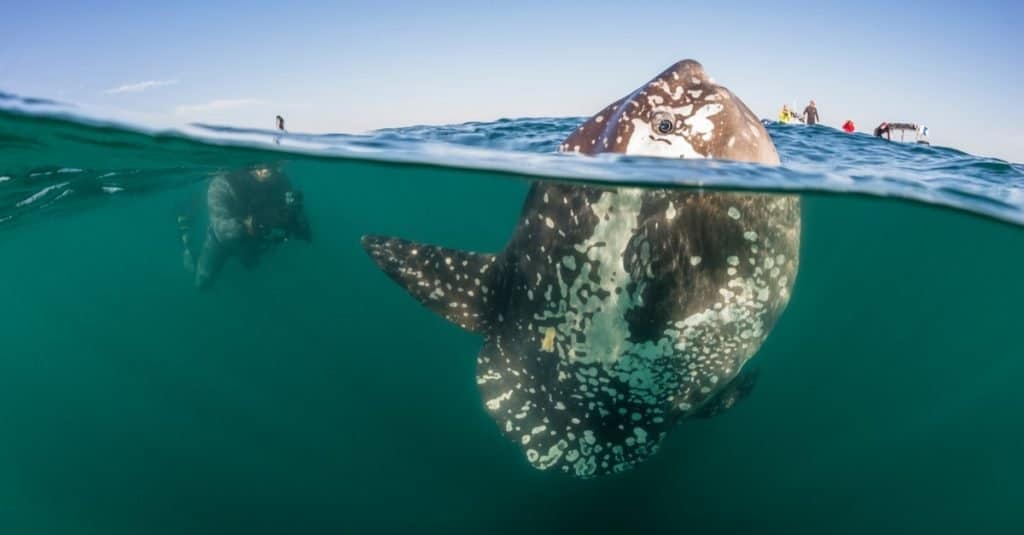
Sunfish hunt by sucking water into their mouths, grabbing their prey, and pushing the water back out.
©wildestanimal/Shutterstock.com
Near the surface, sunfish feed by sucking in large amounts of water and grabbing edible prey with their teeth. Once they have secured their prey, they push the water out and swallow. Jellyfish are usually caught this way, as they float near the water’s surface where sunfish spend most of their time.
Eelgrass is also part of the sunfish’s diet. In shallow water, sunfish float past eelgrass and take bites from it. Eelgrass, also known as seagrass, is an important part of aquatic ecosystems all over the world.
When diving deeper, sunfish feed on prey not found near the surface, such as squid and crustaceans. Many squid species live between 650 and 3,280 feet deep, suggesting that sunfish dive farther than previously thought.
Where Do Sunfish Live?
Sunfish live in almost every temperate and tropical ocean in the world. They are most commonly found in waters above 54°F, as they prefer warmer temperatures, but they are capable of inhabiting colder water for short periods of time.
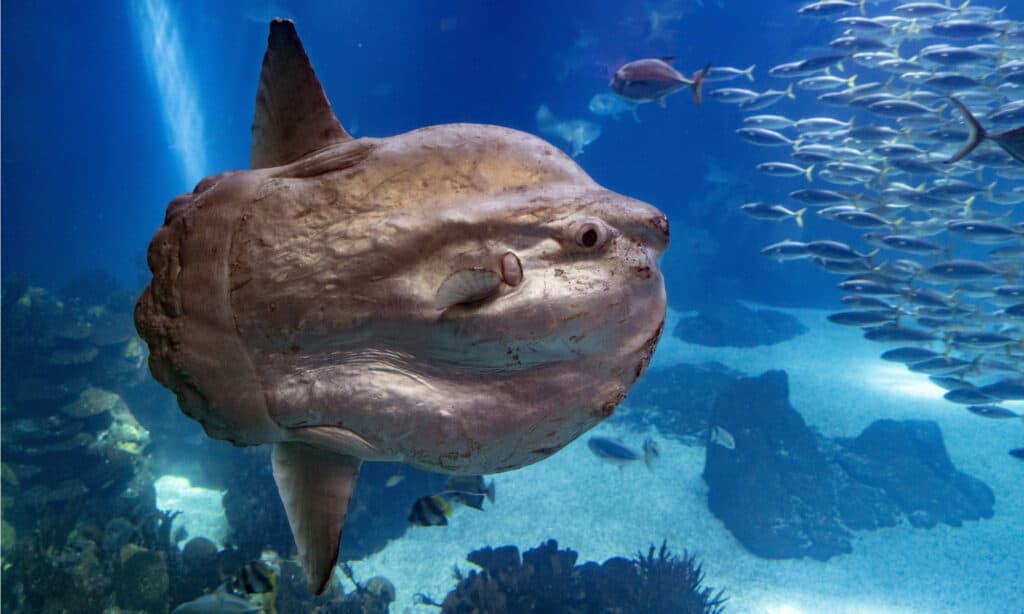
Sunfish live in oceans all around the world.
©Andrea Izzotti/Shutterstock.com
One of the most common behaviors sunfish display is known as basking, which is where the sunfish gets its name. While floating near the surface, they display one side of their body to the sun. This is done for two reasons. The first is that it warms the fish as it floats. The second is that it may help kill parasites living on them. While basking, sunfish will allow birds to peck at their skin to remove parasites.
It was originally thought that sunfish never left the epipelagic zone (the upper, warmer layers of the ocean that sunlight can penetrate), but their basking behavior seems to be a mechanism that allows them to dive deeper into colder waters. Once they have warmed themselves and thermoregulated their bodies, they can search in colder waters for other prey, such as squid and crustaceans, for a short time.
Incredibly, sunfish can sometimes be seen leaping out of the water in a behavior known as breaching. These occurrences are thought to help them remove parasites (of which sunfish have many).
What Eats the Sunfish?
Because they are so large, sunfish have few natural predators. In the early stages of life, before they put on serious mass, tuna, mahi mahi, and other predatory fish can easily eat them. However, as they grow older and larger, their predators change.
At full size, only a few animals in the ocean can penetrate the thick skin and overcome the sheer mass of the sunfish. Adult sunfish can be attacked by large sharks, but a single shark typically can’t eat an entire sunfish. Once the sunfish is injured, other sharks may join in to finish the job.
Orcas (killer whales) have been documented preying on sunfish, but such events are rare and not considered a primary predation relationship.
Sea lions are known to injure sunfish and take bites out of them. However, since sea lions can’t usually kill sunfish, they often leave them to die with a large bite mark.