
We all know about jellyfish, but have you ever heard of a sea salp? They are gelatinous and fascinating creatures living in the open ocean. Although they resemble jellyfish, sea salps have their own unique features. This video by ViralHog shows a string of salps together! Read here to learn about sea salps and why they stick together.
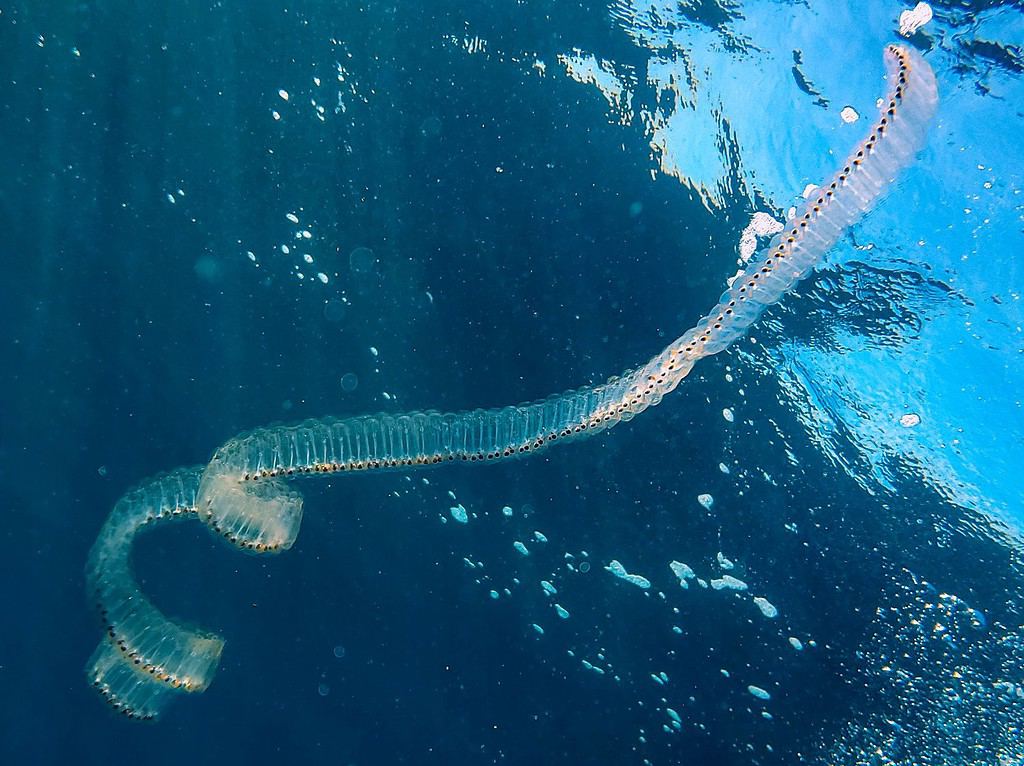
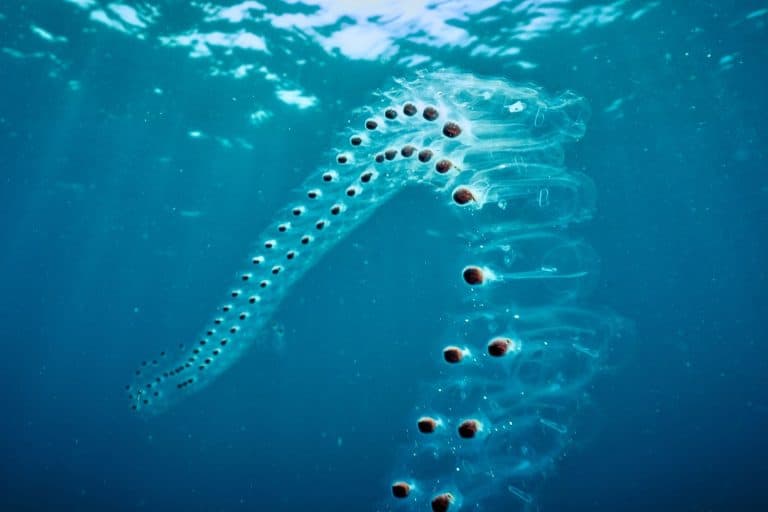
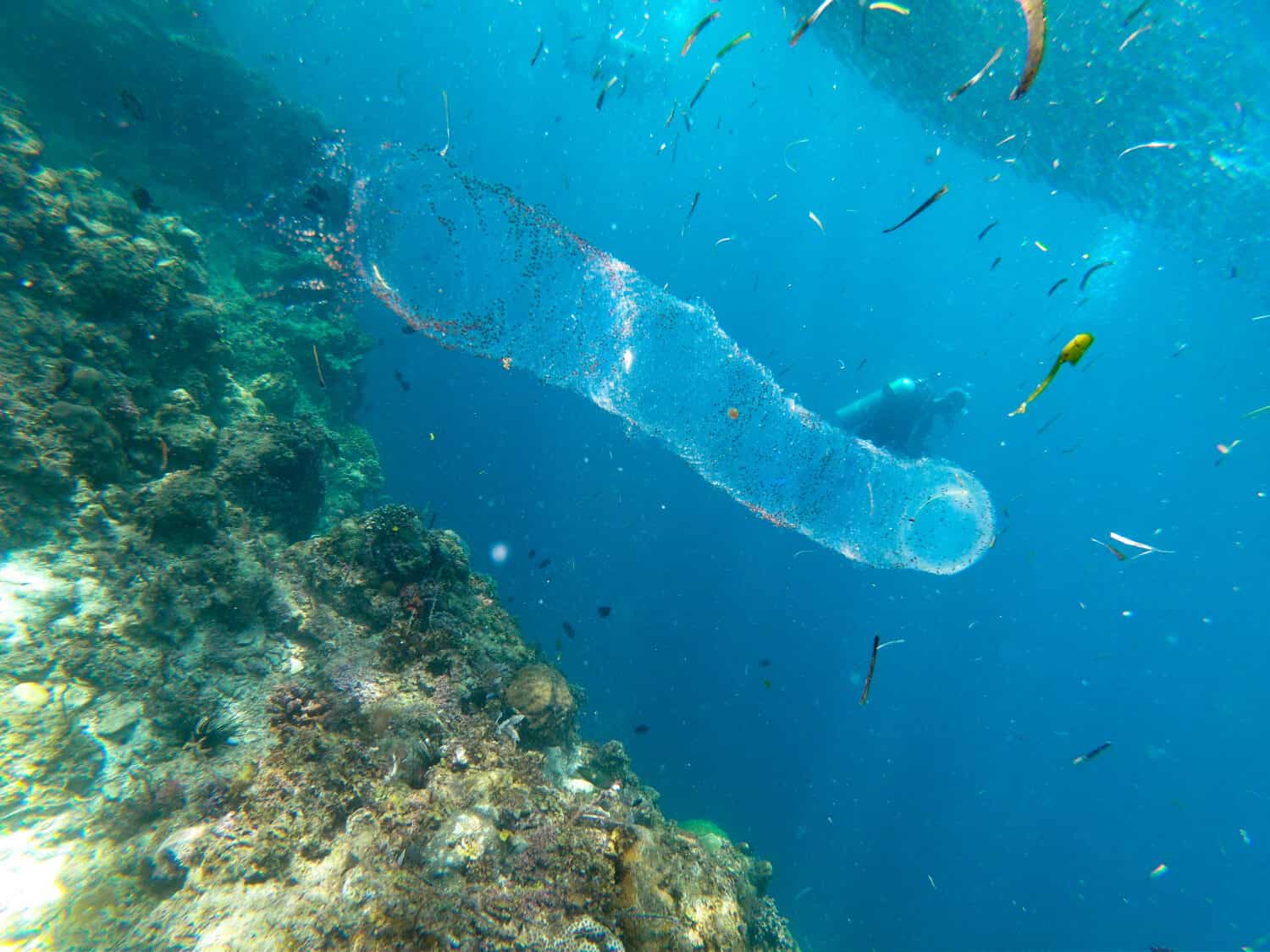
Sea salps look like Jell-O.
©Timmothy Mcdade/Shutterstock.com
All About Sea Salps
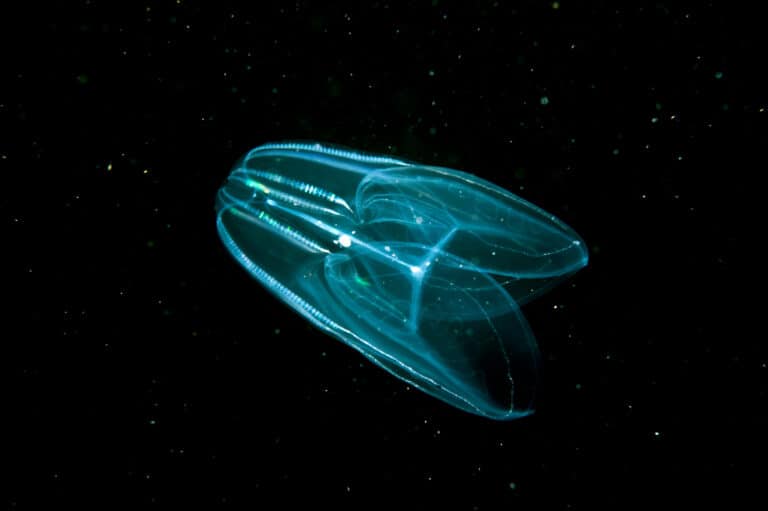
Sea salps, known scientifically as Salpidae, are jelly-like animals that live in the open ocean. They are barrel-shaped and made mostly out of water, giving them a transparent and soft appearance. While they are made mostly of water, they are encased in a jelly covering called a tunic. The tunic corresponds with their scientific group, the Tunicata subphylum, which includes sea squirts and pyrosomes. They are small in size and range from a few millimeters to over 30 cm in length, depending on the species. While they are small individually, the chains they form can stretch for meters.
Salps go through a dual-phase cycle, meaning they alternate between two different forms during their life cycle. This phenomenon is rare and unusual among ocean creatures, making it especially interesting to learn about. One phase is called the solitary phase (or asexual). During this phase, a sea salp can clone itself, creating a chain of genetically identical individuals. The other phase is the aggregate (or sexual) phase, during which each individual is sexually mature and produces offspring. This dual-phase system allows them to reproduce continuously, ensuring their survival. Because they can reproduce so quickly, their population can increase rapidly, sometimes resulting in large blooms over a short period.
Why Do They Stick Together?
The chain seen in the video is a common behavior for the salps, and is essential to their life cycle! The chains serve two main purposes: reproduction and movement. The chains are formed through the asexual reproduction mentioned above. While they are chained together, eventually they will break off and live their own individual lives. Forming a chain also helps the clones move. When salps are linked together, they can travel through the water more quickly and efficiently. This is done through jet propulsion. As they move together, they filter water to feed on plankton, which helps ensure the survival of the group.