
Quick Take
- Reaching 18 inches requires adult peacock flounders to shift both eyes to the left side.
- The Bothus lunatus anatomy creates a permanent blind spot beneath the fish during movement.
- The peacock flounder begins life swimming upright like a standard fish.
- A complete metamorphosis is mandatory for the flounder to successfully restructure its skeletal system.
The ocean is full of creatures so vastly different from land animals. Their appearance and anatomy are unique in many ways, which makes them extremely interesting to study. One example is the peacock flounder, which, as an adult, has both eyes on its left side after undergoing metamorphosis. This Instagram post from @underwater shows a video of a flounder swimming. Its distinctive eye orientation makes it appear as though the fish is swimming sideways. Read here to learn more about this fish!
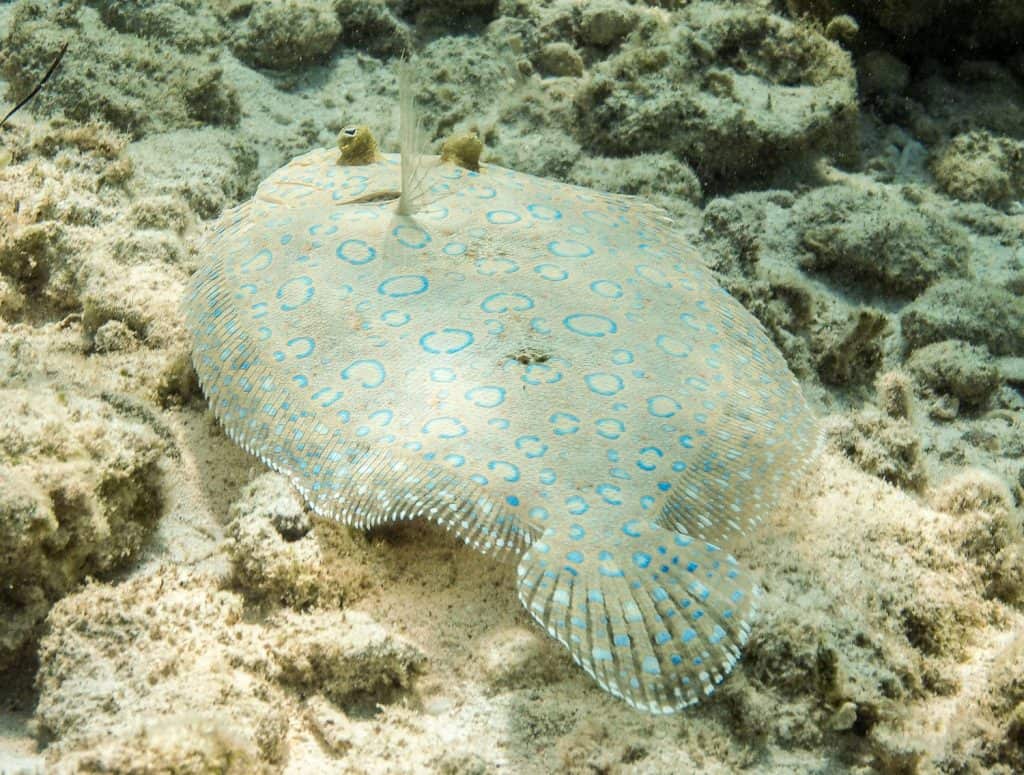
The peacock flounder has uncommonly positioned eyes.
©Hannah Prewitt/Shutterstock.com
About the Peacock Flounder, AKA ‘Lefteye Flounder’
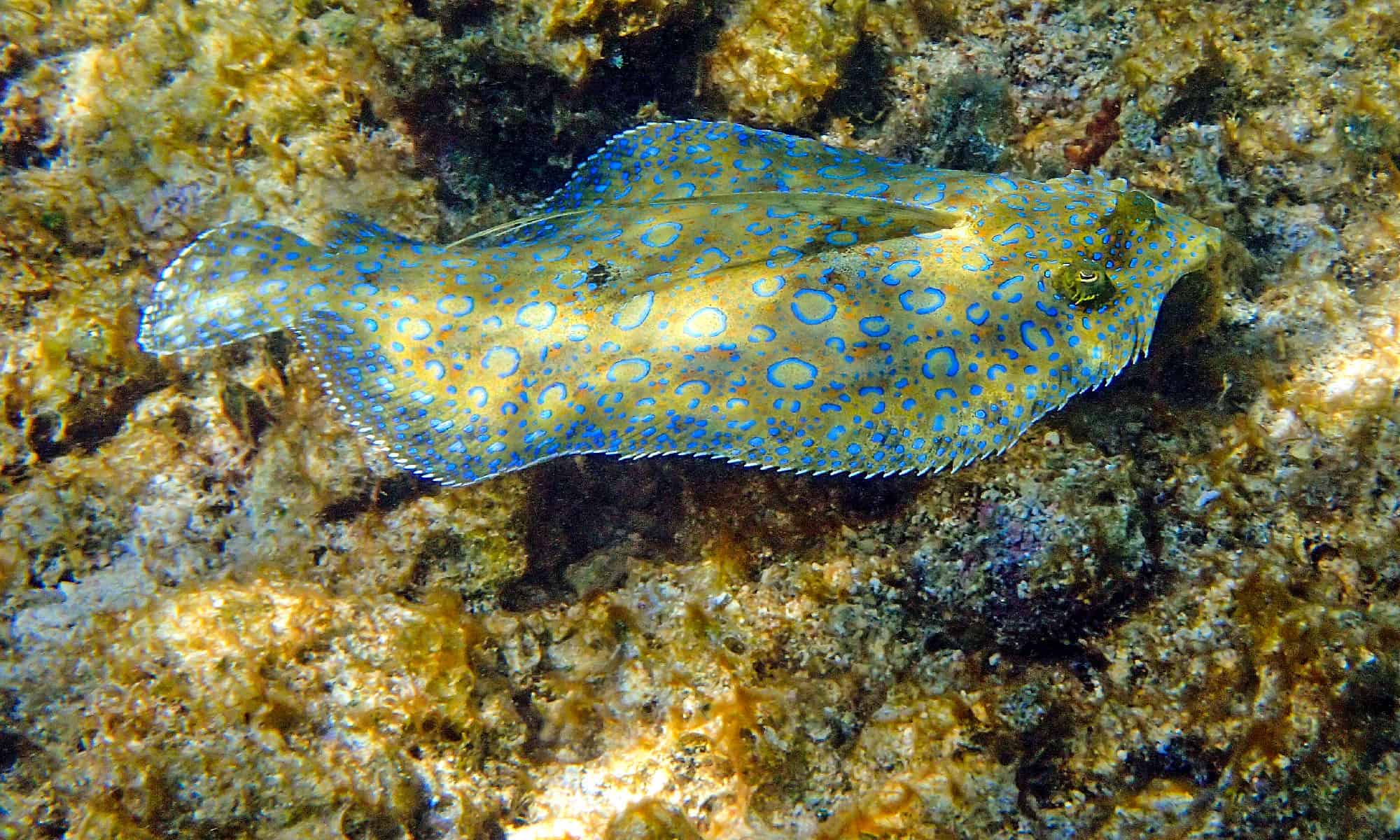
The peacock flounder, scientifically known as Bothus lunatus, is a flatfish belonging to the Bothidae family. This family gets the nickname “lefteye flounders” because most of the species lie on their right side, with both eyes on their left. Peacock flounders are native to tropical and subtropical oceans, inhabiting coral reefs or sandy areas in shallow water. They are most common in the western Atlantic region, including Florida, the Caribbean, Bermuda, and down to Brazil. While lefteye flounders grow to different sizes depending on the species, the peacock flounder typically grows to around 12 to 18 inches. They get their nickname from their loose resemblance to the spotted feather designs of peacocks. These flounders have brown or tan scales that contrast with their bright blue circular patterns, resembling a peacock.
Flatfish, including peacock flounders, start their lives swimming like other ordinary fish. As larvae, they swim upright with an eye on each side. It is only through metamorphosis that their right eye migrates to the left side of their face. This metamorphosis also restructures bone and tissue, making it possible for them to swim parallel to the ocean floor. There are both advantages and disadvantages to this orientation. One benefit is that having both eyes on the left side means the flounder can bury itself in the sand but can keep both eyes out. This provides a great hiding place while allowing the flounder to maintain strong eyesight. This also allows them to ambush their prey, such as shrimp and crabs. On the other hand, they have a significant blind spot beneath them, which leaves them vulnerable to ambushes similar to those they use on their prey. This means that their unusual adaptation is also one of their vulnerabilities.