
Quick Take
- The turkey vulture is the most common vulture in North America.
- The lesser yellow-headed vulture is the smallest of all the New World vultures.
- As of December 31, 2025 there were 607 California condors worldwide.
- The Andean condor has a wingspan of up to 10.5 feet and the largest wing area of any bird on Earth.
New World vultures in the Americas and Old World Vultures in Europe, Africa, and Asia may look similar and have similar behaviors as scavengers, but they are actually not closely related at all. New World vultures are in the family Cathartidae, while Old World vultures belong to the family Accipitridae with hawks and eagles. New World and Old World vultures exhibit convergent evolution, which occurs when species of two different lineages evolve similar adaptations, often in response to the same environmental pressures. There are 23 vulture species worldwide, of which seven are found in the New World. Learn more about the seven vulture species that inhabit the Americas, including size, distribution, habitat, diet, and more.
Black Vulture
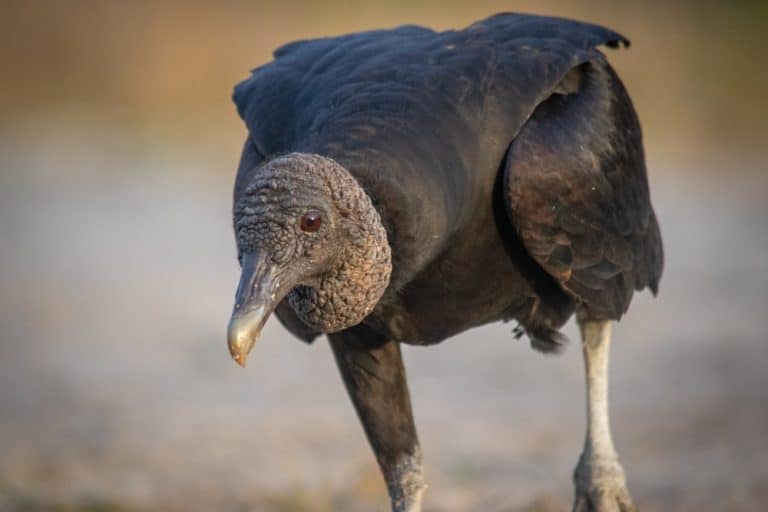
The black vulture (Coragyps atratus) is aptly named. With black feathers with a bald black head, this bird looks like an avian version of the Grim Reaper. Black vultures have short tails and broad wings with rounded tips. White feathers under the wings, which resemble stars, help to identify them when seen from the air. These vultures are 2.23 feet long and can weigh up to 4.85 pounds. Their wingspans measure up to 5 feet.
Black vultures can be found in the eastern and southern U.S. south through all of South America. They prefer open areas within wooded habitats and build their nests in cavities, such as hollow trees, rocky crevices, or caves. These vultures are very social, roosting in flocks and maintaining strong family bonds. They are monogamous and are believed to mate for life. They primarily feed on carrion, but they may also consume fish or kill small mammals. Unlike the turkey vulture, black vultures have a poor sense of smell. Since their range overlaps with the turkey vulture, they often follow turkey vultures to a carcass.
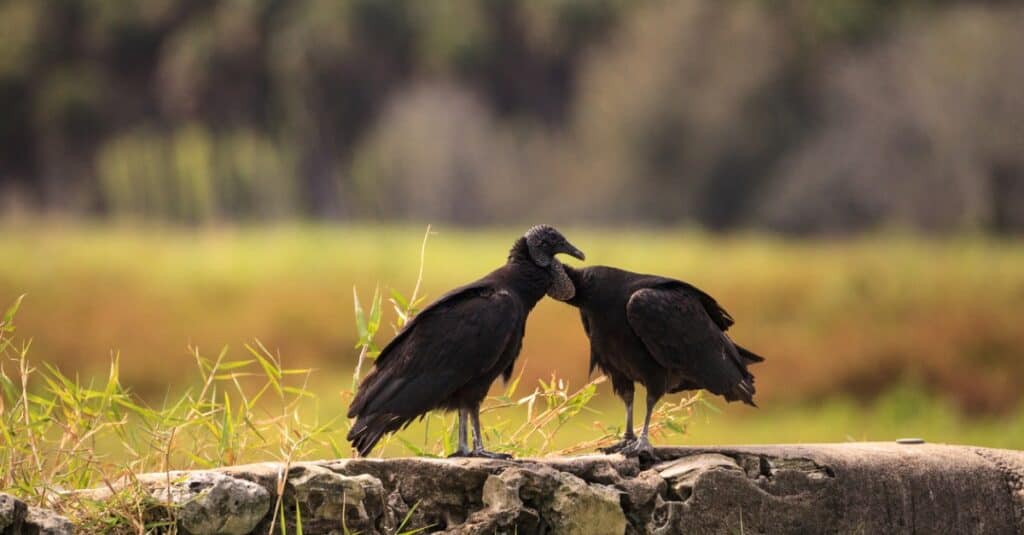
Black vultures are common in the eastern and southern U.S.
©iStock.com/LagunaticPhoto
Turkey Vulture
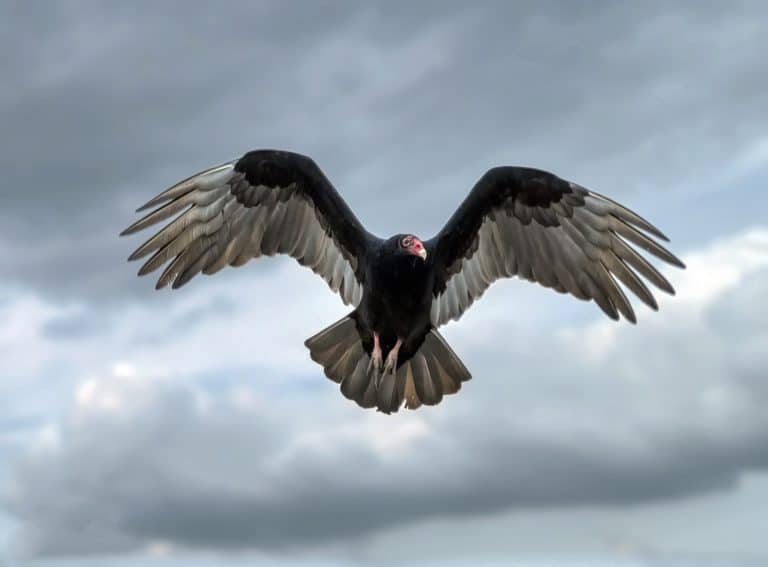
Turkey vultures (Cathartes aura) are the most common vultures in North America. They have dark brown feathers with paler edges and wingtips on their undersides, long tails, and bright red heads, which resemble that of a turkey. Their wings are long and broad, and they make a “V” shape when flying. Turkey vultures have an exceptional sense of smell that is uncommon in birds, so they often fly low to the ground to detect scents. These vultures measure 2.65 feet in length and weigh up to 4.4 pounds. Their wingspans reach 5.8 feet.
Turkey vultures are found from southern Canada to the tip of South America. They favor open areas and can often be found feasting near human settlements. They roost in trees or other high places at night. However, they prefer to nest in cavities away from urbanized areas. Turkey vultures eat carrion, but unlike black vultures, they rarely attack live animals. They primarily eat mammals but may also consume other birds, reptiles, and amphibians. Turkey vultures generally forage alone, but they often feed in small groups. They roost in large groups and migrate in groups of thousands of individuals.
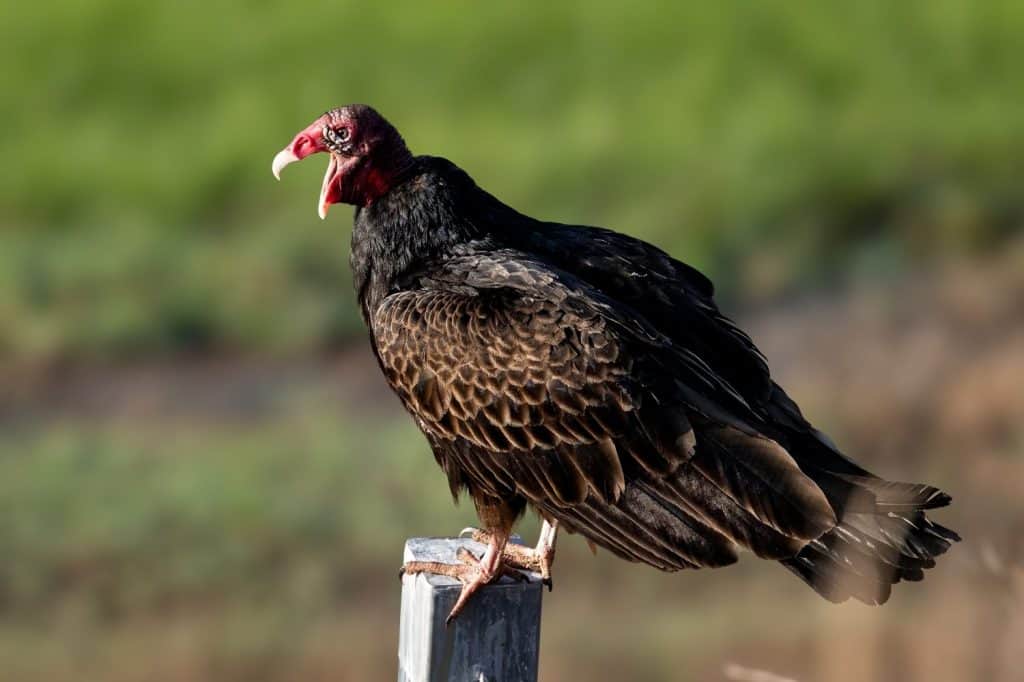
Turkey vultures have wingspans of up to 5.8 feet.
©Daniel Lash/Shutterstock.com
Lesser Yellow-Headed Vulture
The lesser yellow-headed vulture (Cathartes burrovianus) is the smallest of all the New World vultures. They have dark brown to black feathers with a light green sheen. These vultures have predominantly yellow heads with reddish foreheads and napes, and blue splotches around the top and sides. One of their most striking features is their red eyes. Lesser yellow-headed vultures measure 2.16 feet long and weigh about 3.5 pounds. Their wingspans generally reach up to 5.4 feet. Like turkey vultures, they fly with their wings in a “V” shape.
They live from northern Mexico through Central America and parts of South America primarily east of the Andes Mountains. Their preferred habitat includes lowland grasslands, swamps, or degraded forests, which is why they are sometimes called the savanna vulture. They do not build nests, but instead, lay their eggs on the ground or other flat surfaces. They eat carrion like other vultures, but they rely on the larger king vulture when it comes to larger carcasses. The lesser yellow-headed vulture has a good sense of smell, but its beak is not strong enough to tear open the hides of larger animals. Although king vultures dominate the group and feed first, this cooperation allows lesser yellow-headed vultures to consume the remains.
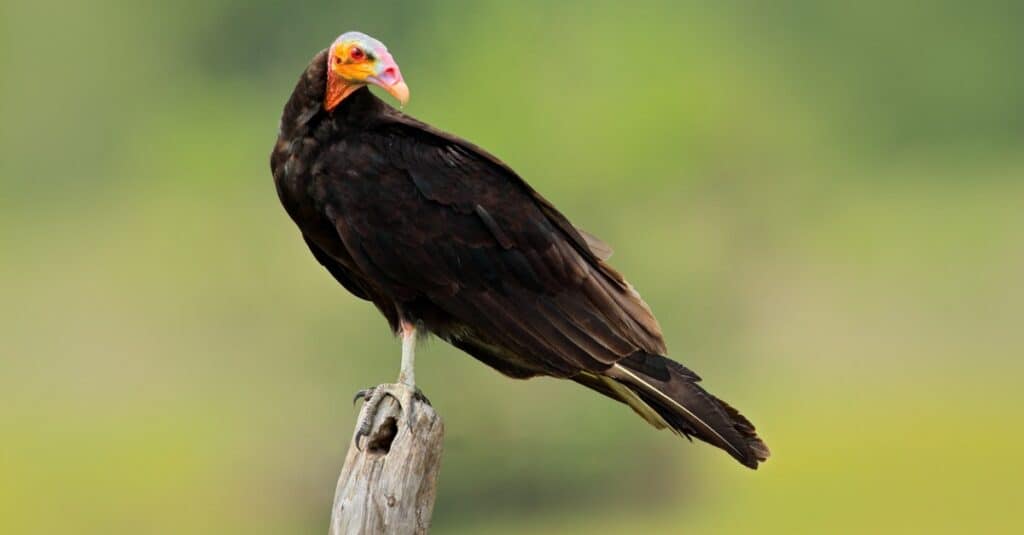
Lesser yellow-headed vultures are the smallest New World vulture.
©iStock.com/Ondrej Prosicky
Greater Yellow-Headed Vulture
The greater yellow-headed vulture (Cathartes melambrotus) was only described as a separate species from the lesser yellow-headed vulture in 1964, so they have similar characteristics. These vultures have dark brown to black plumage that can have a green or purple sheen and yellow heads with a blue crown. As the name suggests, they are larger than their lesser relatives. Greater yellow-headed vultures measure around 2.5 feet in length and typically weigh up to 3.5 pounds. Their wingspans reach about 5.8 feet and they fly with their wings held horizontally.
These vultures live throughout the Amazon region and the Guianas in South America. They favor undisturbed lowland rainforest habitats. Like lesser yellow-headed vultures, greater yellow-headed vultures have a keen sense of smell. They generally feed on dead animals they find on the forest floor, such as sloths, opossums, monkeys, and other primates. Nesting sites have not yet been described for these birds due to the remoteness of their habitats. They are generally seen alone or in pairs, but they may feed in small groups.
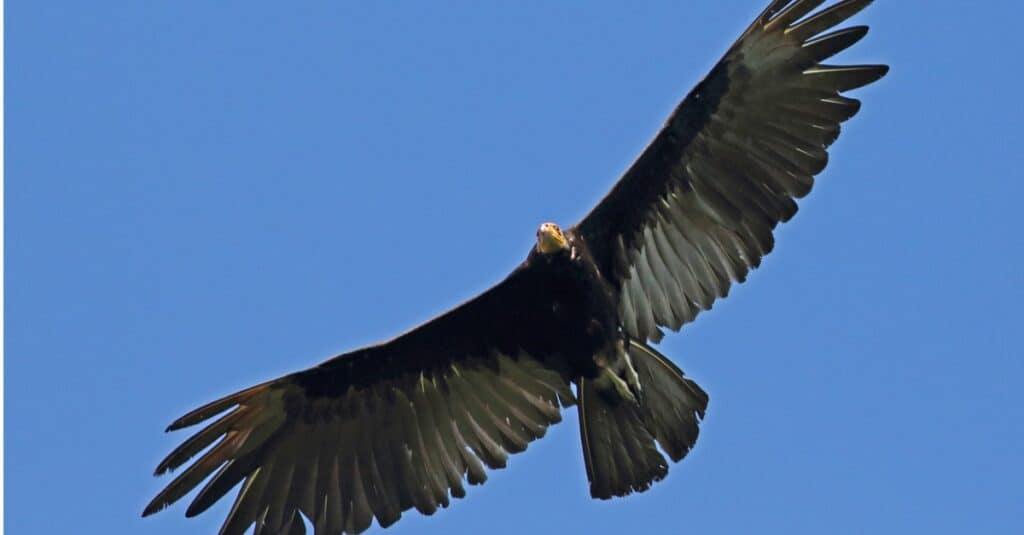
Greater-yellow headed vultures inhabit undisturbed sections of the Amazon River basin.
©iStock.com/neil bowman
King Vulture
King vultures (Sarcoramphus papa) are the third largest vulture species in the New World behind Andean and California condors. They have mostly white feathers with black tips and a black-blue ruff around their necks. The skin on their heads is shades of orange, yellow, pink, blue, purple, grey, and black. They also have a yellow and reddish-orange wattle. King vultures have white eyes with red rings and a reddish-orange bill. They measure up to 2.6 feet in length and weigh up to 10 pounds. They have a wingspan that can reach 5 feet.
King vultures can be found from southern Mexico to northern Argentina. They favor tropical lowland forests but may also forage in savannas and grasslands with nearby forests. King vultures do not have a strong sense of smell, so they forage by sight. They often follow lesser yellow-headed vultures to a carcass. As noted above, king vultures are able to open larger carcasses with their strong beaks, allowing all of the birds to feed once the king vulture has eaten. These vultures lay their eggs on the ground or inside a hollow log or stump.
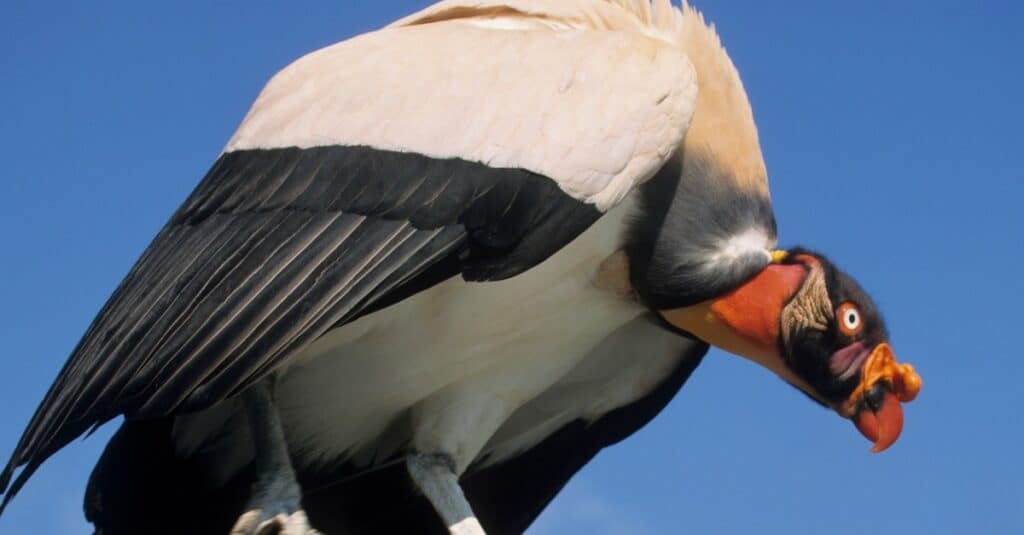
The king vulture inhabits tropical lowland forests from southern Mexico to northern Argentina.
©iStock.com/Michel VIARD
California Condor
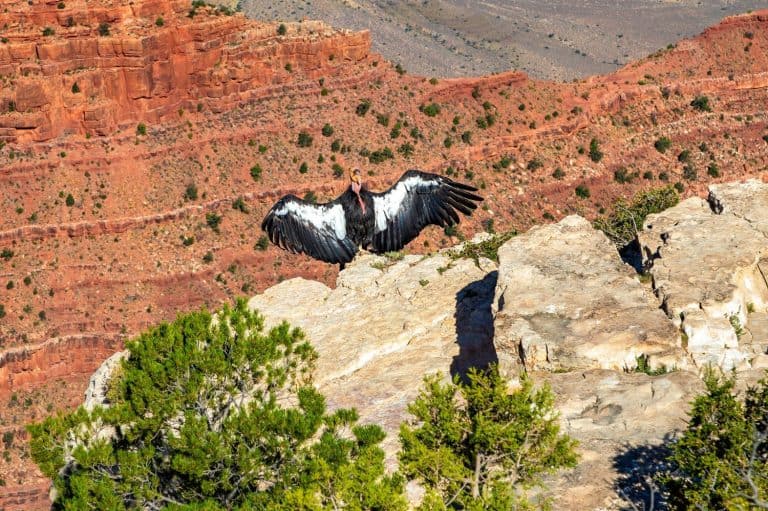
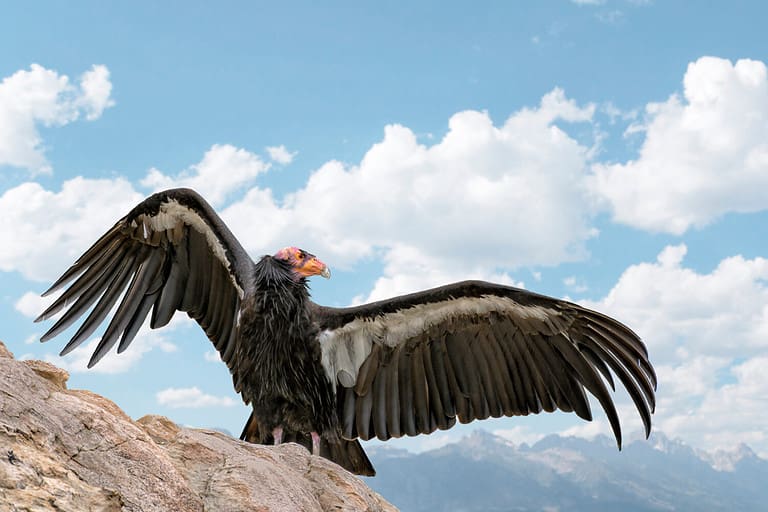
The California condor (Gymnogyps californianus) is the second largest vulture in the world by wingspan and one of the largest terrestrial birds in North America. They have black plumage with bald, yellowish-orange heads. Large white patches are visible on the undersides of their wings. They have short, wide tails and their wings are extremely long and broad with wingtips that look like fingers. These birds can reach 3.5 feet in length and weigh up to 25 pounds. California condors have wingspans that can measure up to 9.5 feet.
California condors nearly went extinct in the 1980s, but reintroduction efforts have had promising results. As of the end of 2025, the global population of California condors was 607. They have a limited range covering parts of California, Arizona, Utah, and Baja California, Mexico, but they forage in a wide variety of habitats, sometimes traveling as much as 250 miles in a day. These birds are communal roosters and often gather in groups around carcasses. They frequently make their nests in cavities on high cliffs. They are strictly carrion eaters and typically feed on the carcasses of large mammals such as deer, cattle, and even large marine mammals including seals and whales.
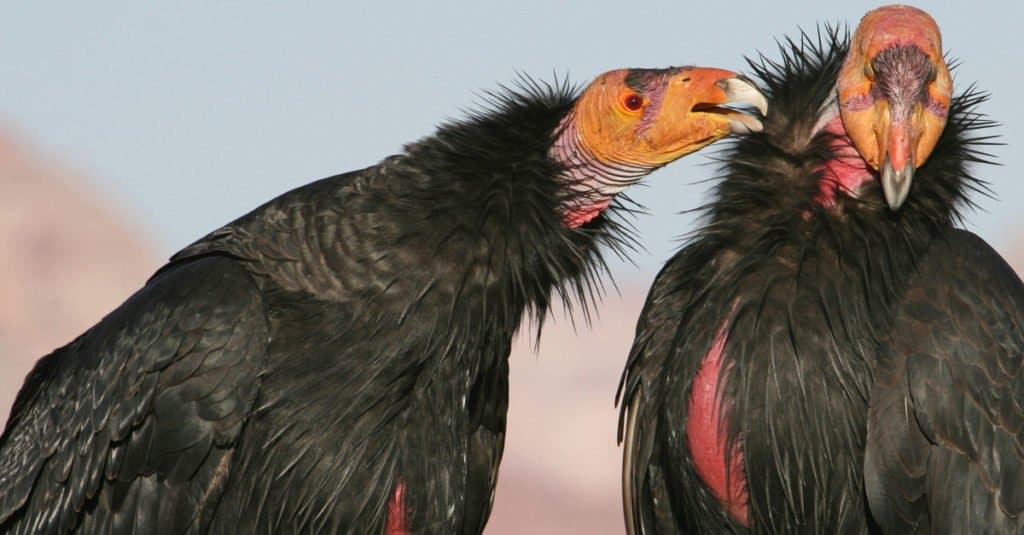
The California condor is the largest terrestrial bird in North America.
©MTKhaled mahmud/Shutterstock.com
Andean Condor
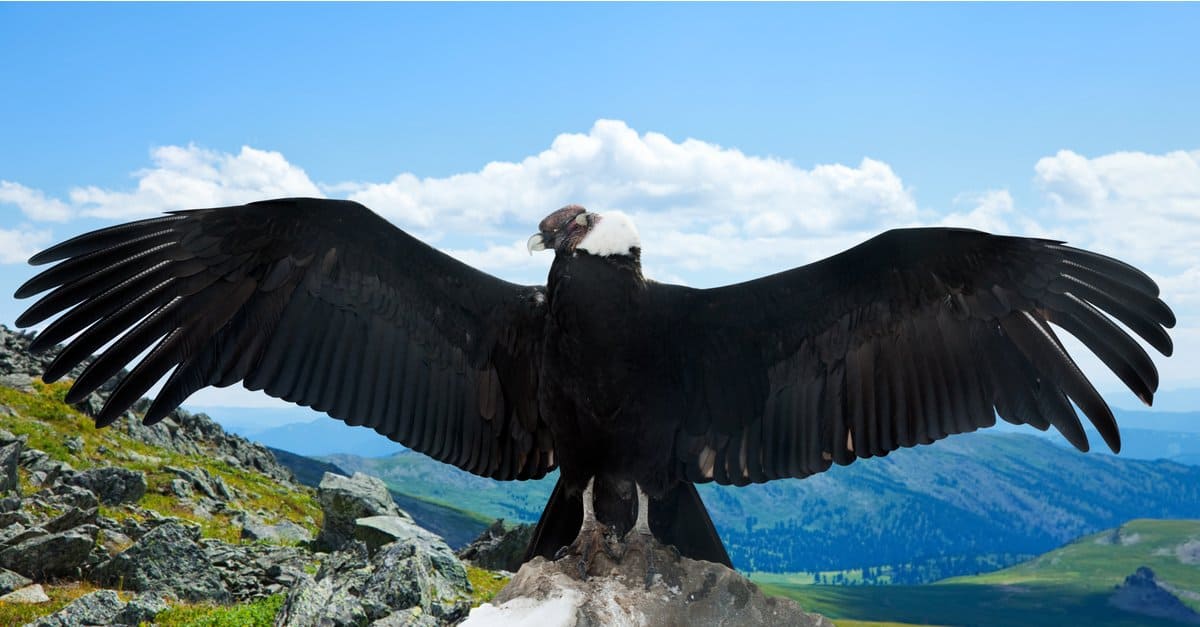
The Andean condor (Vultur gryphus) is the largest flying land bird in South America. Adult condors have primarily black feathers with white patches on their wings and white neck ruffles. The Andean condor is the only New World vulture to exhibit sexual dimorphism. Unlike most vulture species, male Andean condors are typically larger than females. Males weigh up to 33 pounds, but females only reach about 24 pounds. Males also have combs on top of their heads and neck wattles. They stand over 4 feet tall and have a wingspan of up to 10.5 feet. Andean condors have the largest wing area of any bird on the planet.
The Andean condor lives along the Andes Mountains from Venezuela to Argentina. They often search for food over long distances, sometimes up to 150 miles a day. They exclusively eat carrion, preferring large animal carcasses, such as deer, domesticated livestock like cows and llamas, and marine mammals. These birds nest along rocky ledges at high altitudes. Andean condors tend to be social, but they have a strict hierarchy established by sex and age.
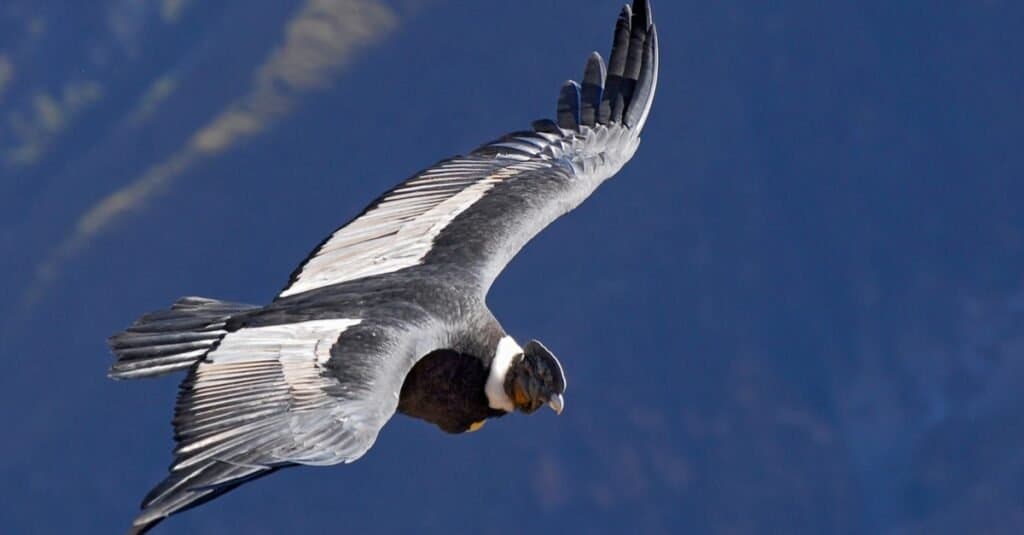
The Andean condor is the largest flying land bird in South America.
©Cezary Wojtkowski/Shutterstock.com