
Quick Take
- A lone black vulture stubbornly incubated a snail shell roadside, and the reason it refused to stop is more revealing than the bizarre sight itself. See the bizarre observation →
- Birds incubating inanimate objects sounds absurd, but that reaction changes when you learn what some species have chosen to brood instead of eggs. Explore the strange examples →
- Scientists have competing theories for why birds mistake objects for eggs, and one of those theories involves a snail being eaten before it ever reaches the nest. Read the competing theories →
- The vulture's relationship status may hold the strangest clue to why it started incubating in the first place. Discover the mate connection →
Birds have a strong instinct to incubate eggs. So strong, in fact, that they can sometimes end up incubating inanimate objects. A recent study has recorded a black vulture (Coragyps atratus) incubating a snail shell. In this article, we examine what this bizarre event reveals about egg recognition and nesting behavior.
Continue reading
What We Know About Black Vulture Reproduction
Black vultures are found across the Americas and often breed and nest in areas close to human settlements. They breed throughout the year, with a peak between January and August. These vultures nest in natural cavities or abandoned structures but do not build traditional nests. Their eggs are found on the floor of shallow caves, in holes under rocks, and in the hollow bases of trees. They lay up to three eggs, which are incubated for 32 to 39 days, and incubation is a team effort. Both parents take turns incubating their offspring.
Inanimate Objects in Nests
It is not actually that unusual to find an inanimate object in a bird’s nest. This is especially true for ground-nesting birds like the vulture. Additionally, several avian species can treat these objects as pseudo-eggs, caring for and incubating them like regular eggs.
Ring-billed gulls (Larus delawarensis), California gulls (L. californicus), and kelp gulls (L. dominicanus) can all have inanimate objects in their nests. A gray-headed albatross has even been observed making an egg-shaped object from plant fibers, while a long-billed dowitcher (Limnodromus scolopaceus) has incubated mammal bones.
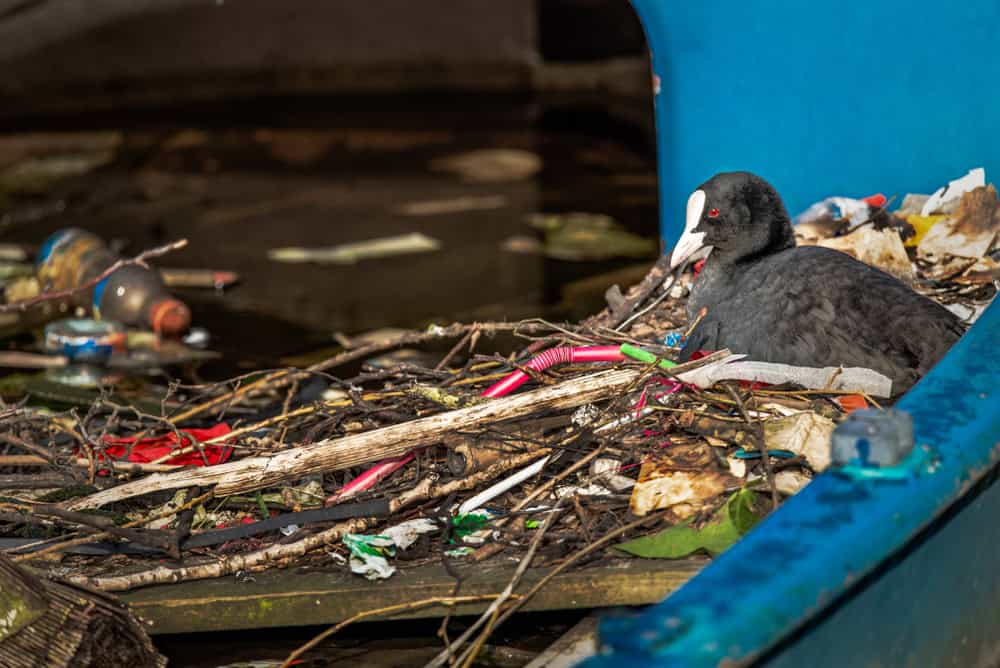
Inanimate objects can end up in birds’ nests.
©Photography by Adri/Shutterstock.com
Some pseudo-eggs are even more bizarre, especially in areas where birds live near humans and incorporate everyday objects into their nests. A Canada goose (Branta canadensis) has been seen incubating a golf ball! Laysan albatrosses (Phoebastria immutabilis) and black-footed albatrosses (P. nigripes) have occasionally been spotted with beer cans and light bulbs in their nests.
Pseudo Incubation Theories
Experts are not certain why birds do this. The incubation stimulus hypothesis claims that birds need a minimum clutch size to trigger incubation behavior, so they add inanimate objects to small clutches. The bird may simply mistake an object for its egg and drag it into the nest. In other cases, a bird may eat a snail, regurgitate the shell near its nest, and later mistake the shell for an egg. This behavior is seen in the common tern (Sterna hirundo). While these birds do not generally eat snails, females do so during the laying period to obtain more calcium. If the snail shells are regurgitated, the female may mistake them for her own egg.
Vulture Incubating a Snail Shell
The unusual sight was witnessed during a birdwatching expedition on the morning of December 3, 2023, in the municipality of Pocinhos in Northeast Brazil. Initially, a black vulture was seen alone in a tree at the roadside. Twenty minutes later, it was spotted on the ground next to a snail shell. The shell was large and pink, belonging to a snail in the genus Megalobulimus.
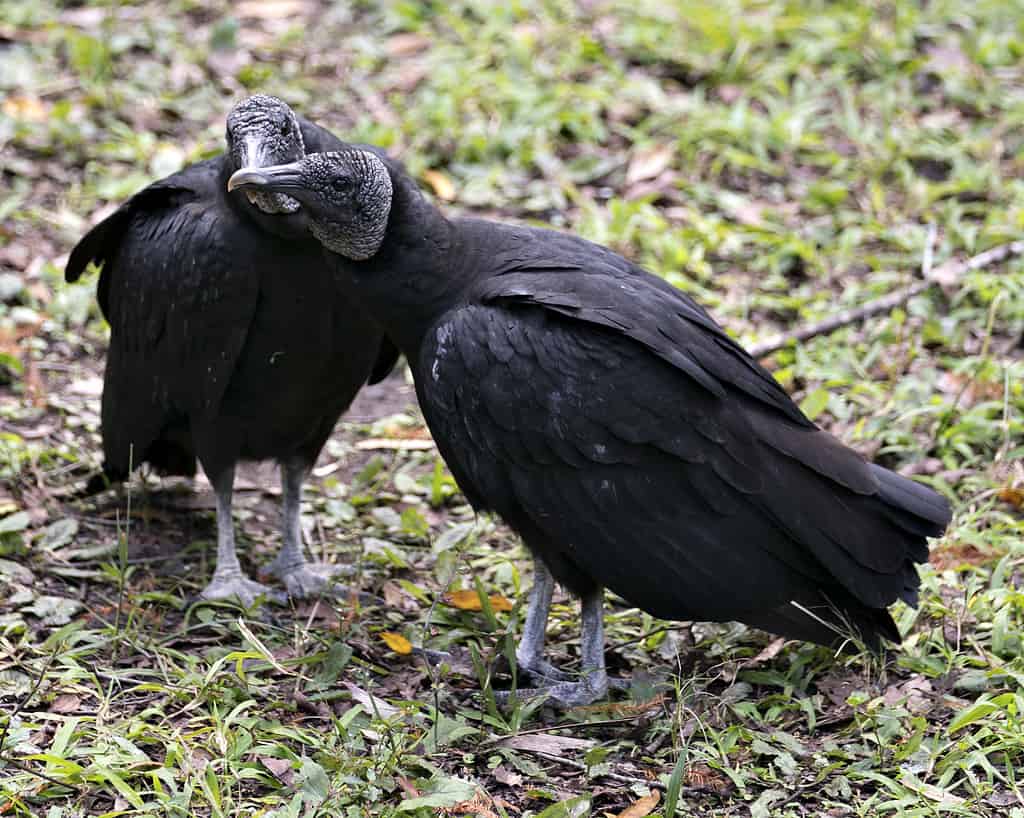
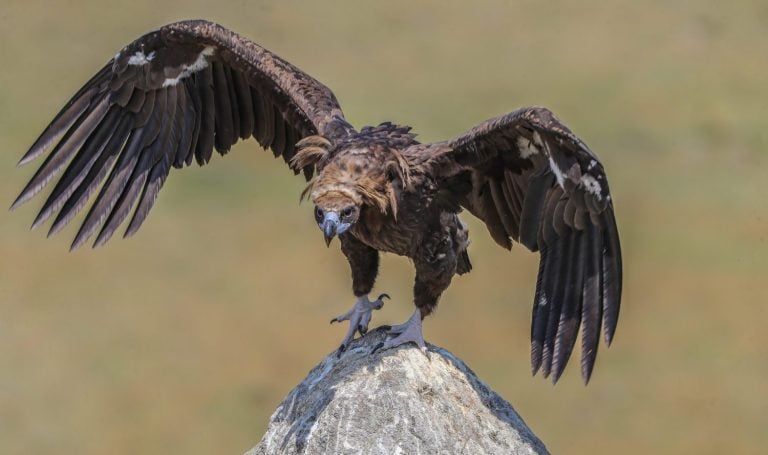
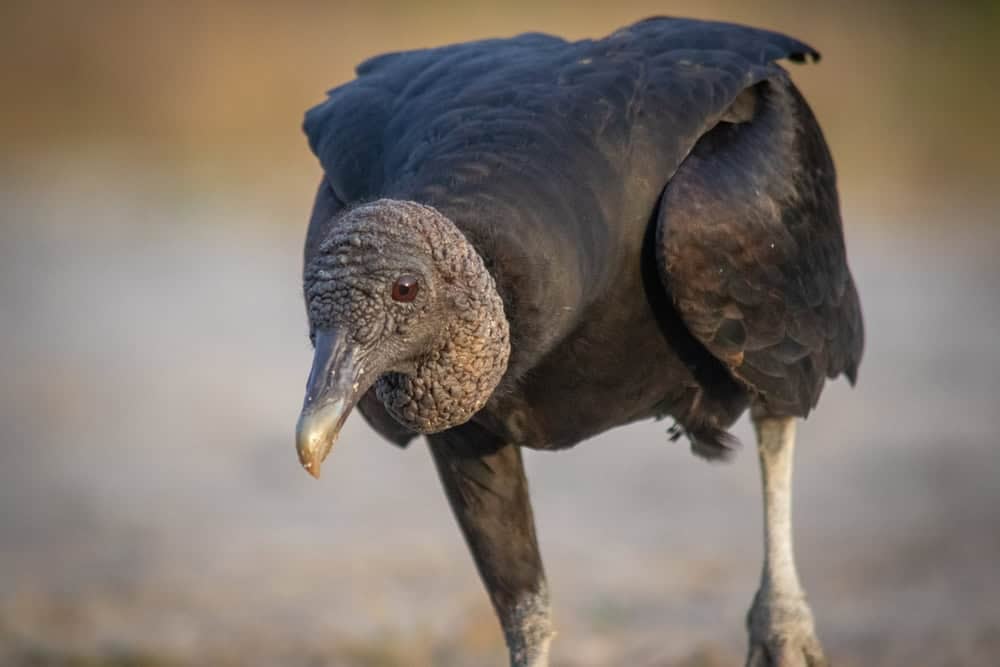
Black vultures pair up to raise their young.
©iStock.com/Rejean Bedard
The vulture moved toward the shell and settled its brood patch over it—a featherless area on the bird’s chest that helps transfer body heat to the egg. Despite the presence of both humans and vehicles, the devoted ‘parent’ was steadfast in its care of the shell. This indicates a strong parental drive to protect the pseudo egg despite the proximity of potential threats. From its appearance, experts estimated that the vulture was an adult about three years old. This suggests that it was a serious attempt at incubation by a mature bird, rather than a juvenile simply practicing parental behavior.
How Can We Explain This Behavior?
The behavior is called pseudo-egg incubation. This is when a bird mistakes an inanimate object for one of its eggs. Scientists have come up with a few possible scenarios that explain what is going on here. Firstly, the vulture may have eaten the snail and then mistook the empty shell for an egg. Alternatively, the vulture had previously nested on the site and thought that the snail shell was a remnant egg. Finally, it is possible that a bird without a mate will ‘adopt’ a random object as its offspring. The absence of a partner may trigger this adoption behavior. This has been seen before in a 31-year-old bald eagle named Murphy that adopted a rock at the World Bird Sanctuary in Missouri. Additionally, it opens up further areas of research into the incubation of inanimate objects by other bird species.