Quick Take
- Wasp venom is being studied as a weapon against a disease that affects millions, with the mechanism involving mind control. Explore the venom research →
- One wasp species doesn't kill its prey. Instead, it does something far more disturbing. See the zombie cicadas →
- Some of the fruit in your kitchen might not exist if wasps hadn't done something no other insect does quite like them. Discover wasp pollination →
- Wasps aren't just yellow and black. Some look like they were designed by a jeweler. See their vivid colors →
Wasps will do anything to protect their vulnerable eggs. One species of wasp, the bee wolf, uses smell. Their eggs emit nitric oxide, a gas with a chlorine-like odor, to fumigate the brood chamber and protect against mold and fungi. There are also parasitic wasps that lay eggs in well-fed caterpillars. When the eggs hatch, they eat the caterpillar from the inside out! What else should you know about these resilient insects? Read on to learn 10 incredible wasp facts.
1. They Come In Almost Every Color Imaginable
You might be familiar with the traditional yellow and black wasps. However, did you know wasps can come in an almost endless variety of colors and combinations? There are iridescent, metallic wasps like the cuckoo wasp, metallic blue wasps such as the blue mud wasp, and Wasps with shiny blue-green thoraxes and metallic, ruby red abdomens such as the ruby-tailed wasp. While some colors are pigment, others are due to structural coloration. Microscopic surface structures on their exoskeletons interfere with light, reflecting specific light waves while canceling out others.
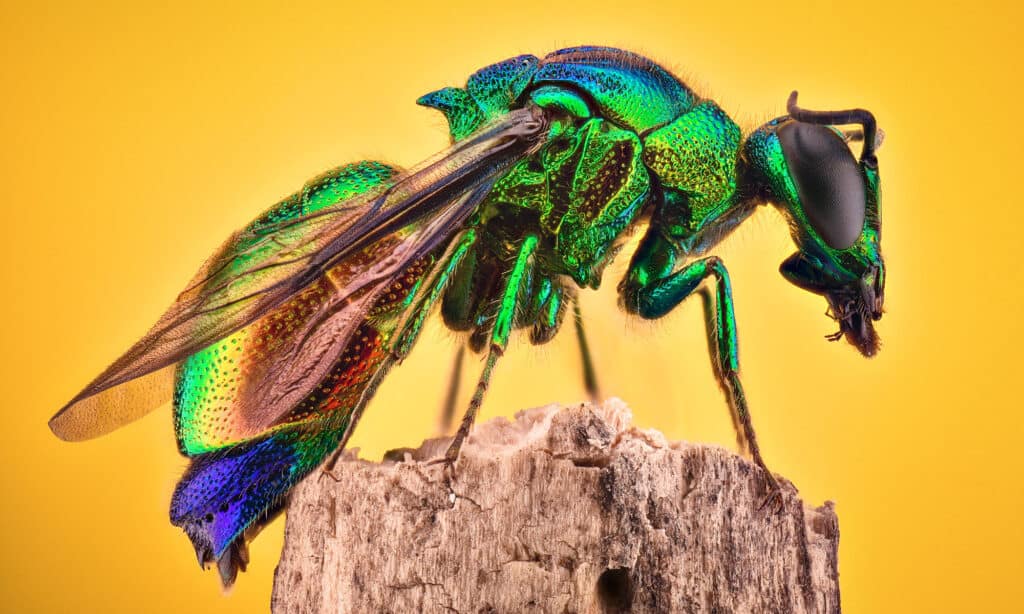
While many wasp species are drab, there are others, like the cuckoo wasp, that are vibrantly colored.
©Cornel Constantin/Shutterstock.com
2. There Are Social and Solitary Wasps
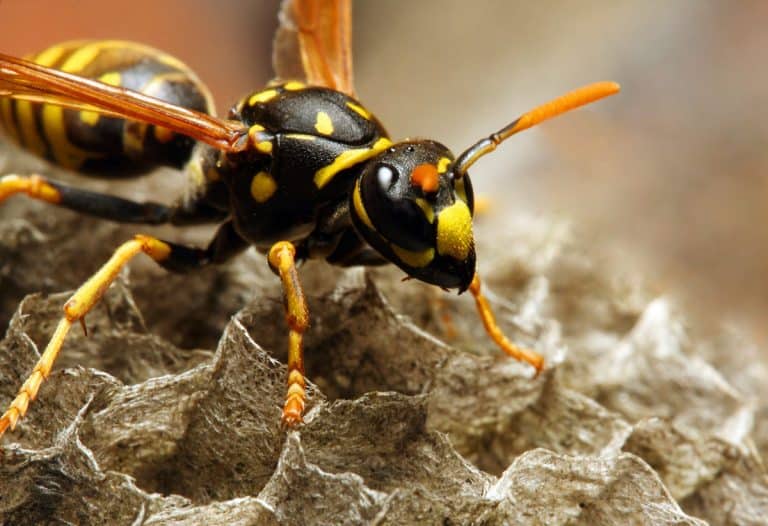
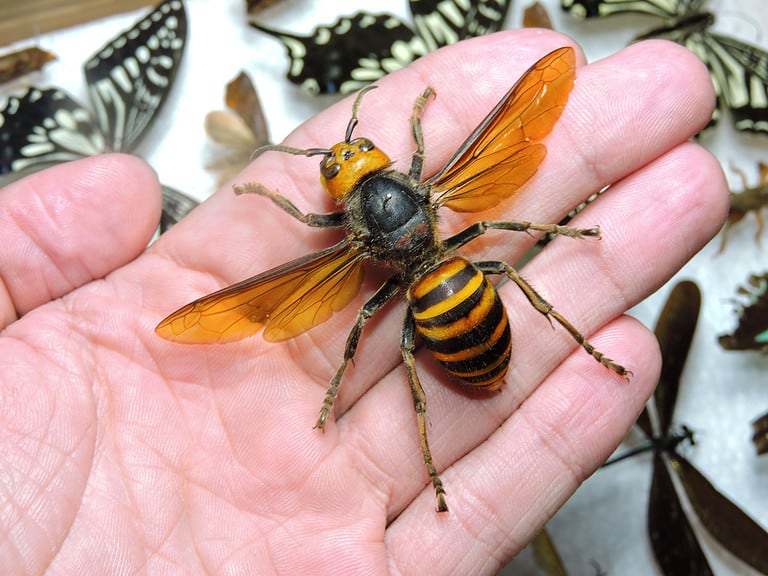
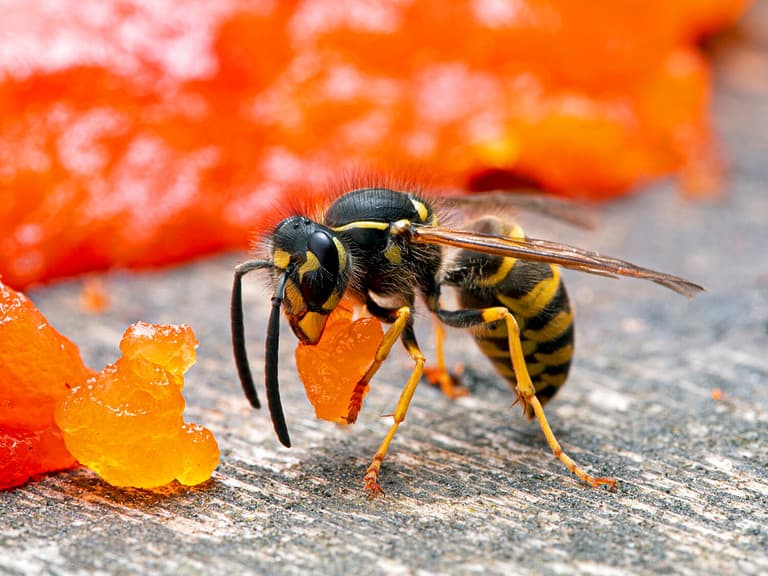
You can divide all of the wasps in the world into two primary subgroups: solitary and social. Solitary wasps are the largest subgroup. This group includes many giant wasps. These wasps live alone, not in colonies. Instead, solitary wasps use their venom for hunting some of the largest prey. For instance, it’s not unusual for a solitary wasp to make a meal out of a gigantic cicada. Social wasps generally only use their venom in defense of the nest. Social wasps form colonies with a queen and workers, and the workers spend much of their time foraging for food and expanding the nest.
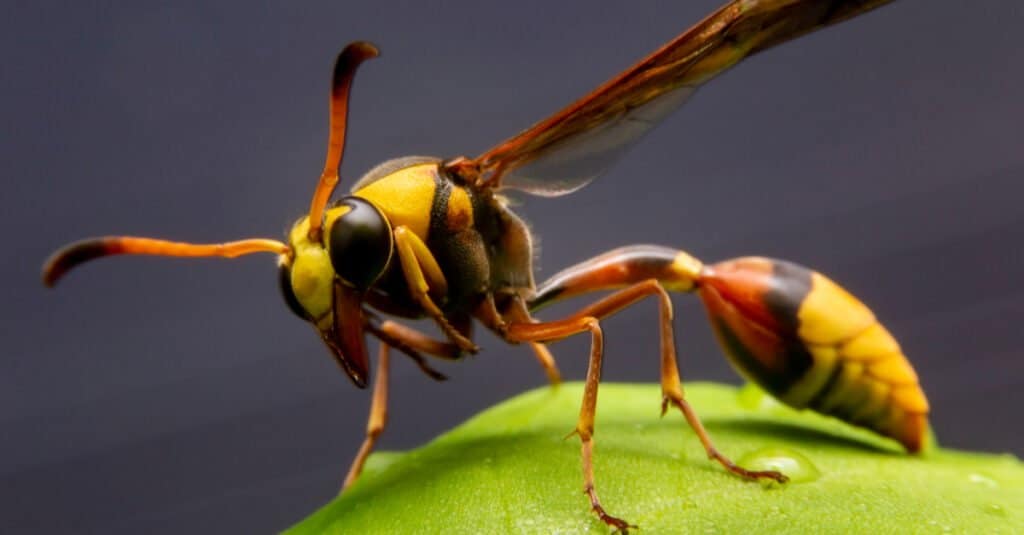
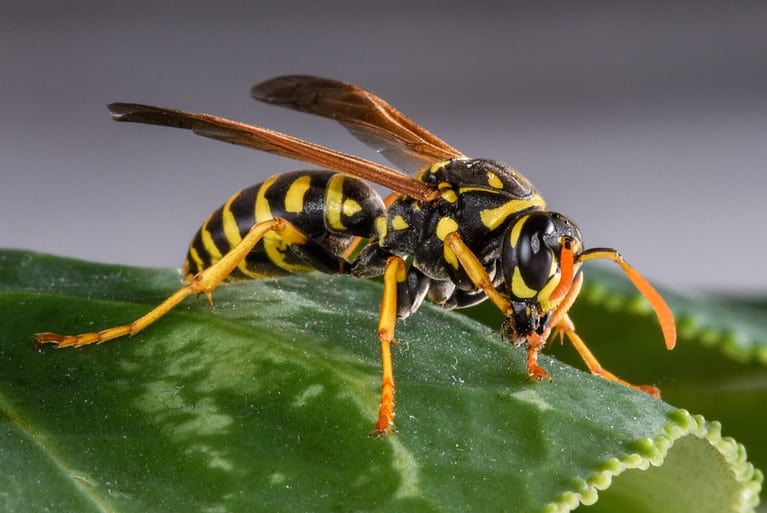
Paper wasps are social and live in small colonies.
©Witsawat.S/Shutterstock.com
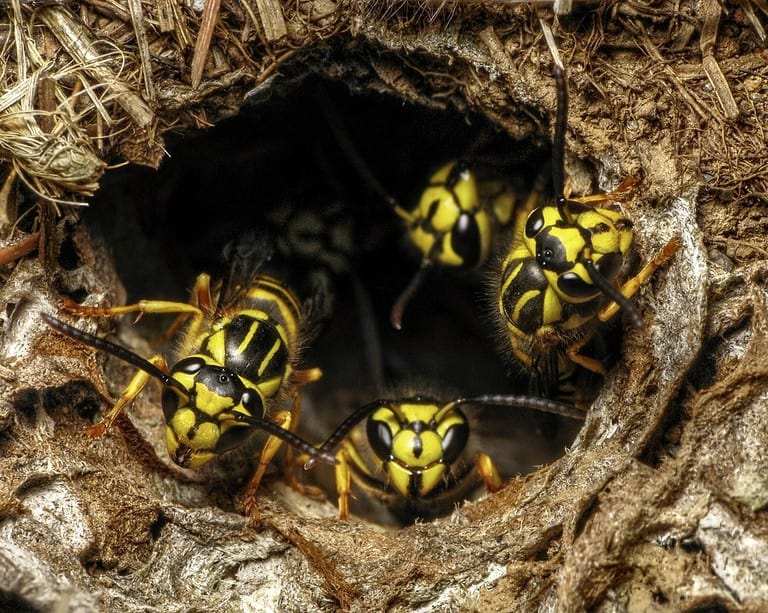
3. Wasp Colonies Can Have Up to 5,000 Members
A wasp colony can get pretty crowded. By late summer, it’s not unusual for a colony of yellow jackets to have 4,000-5,000 members. However, things won’t stay crowded for long. Once the winter rolls around, the workers, males, and the old queen will die. The only ones who manage to survive are the newly fertilized queens and females that may potentially become queens, who leave the nest before winter and hibernate until spring. The queens that live start a new colony in the spring.
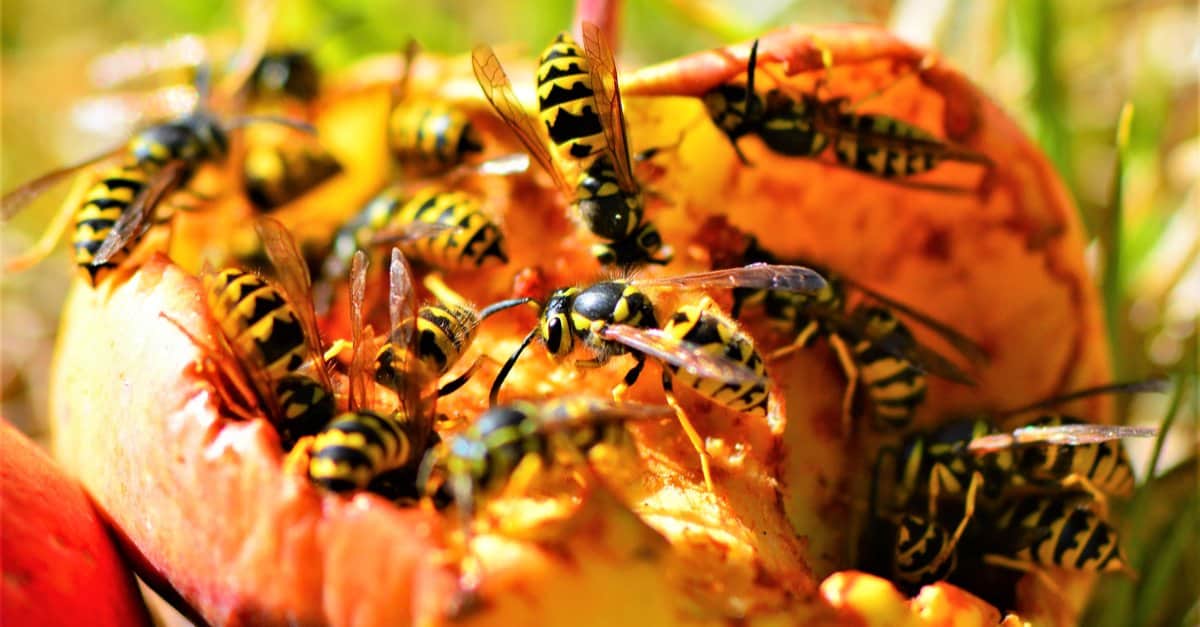
Yellowjacket colonies can have up to 5,000 members.
©Jim Lambert/Shutterstock.com
4. Wasps Communicate With Pheromones
Social wasps use chemicals called pheromones to communicate with other members of the colony. They can use these chemicals to warn other wasps of danger or guide others to new nests or foraging sites. The queen also has signals unique to her that allow her to control the workers and keep other females from reproducing. Other wasps pick up these signals primarily through the sensory receptors on their antennae.
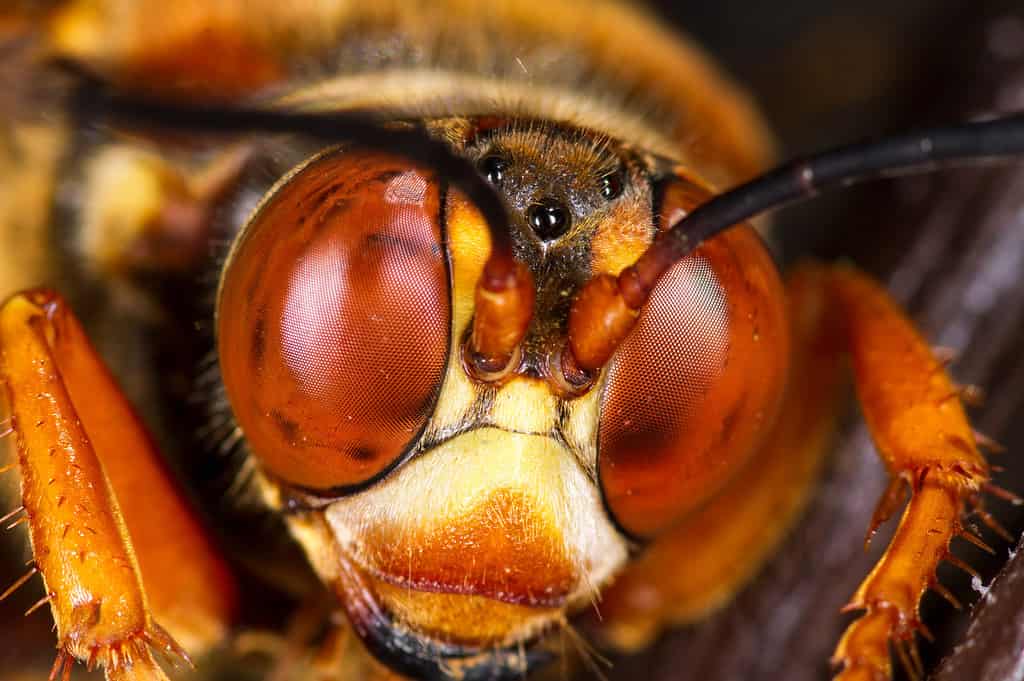
Wasps can send messages to other wasps about threats and resources through pheromones.
©Ryan Silva/Shutterstock.com
5. Wasps Are Great at Controlling Pests
You might think that wasps are pests, but the opposite is true. Wasps can be incredibly beneficial to the ecosystem by helping control agricultural pests. Almost every pest insect in the world can become a tasty meal for the right wasp species. Researchers have found that wasps are effective predators of pests on valuable crops such as maize and sugarcane. Scientists also note wasps can be cheap, accessible pest control, especially for small-scale farms.
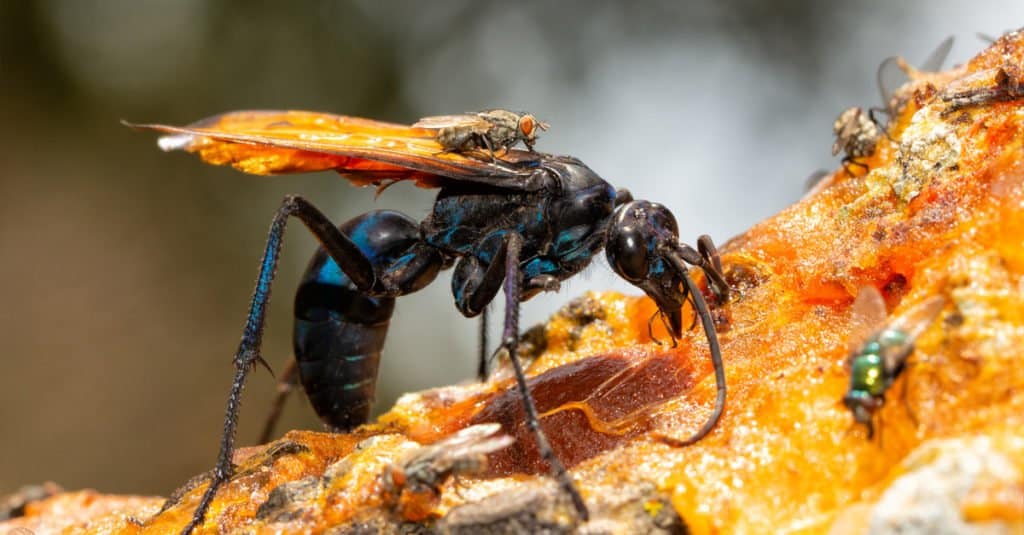
Wasps help control agricultural pests.
©Sari ONeal/Shutterstock.com
6. They Can Turn Cicadas Into Zombies
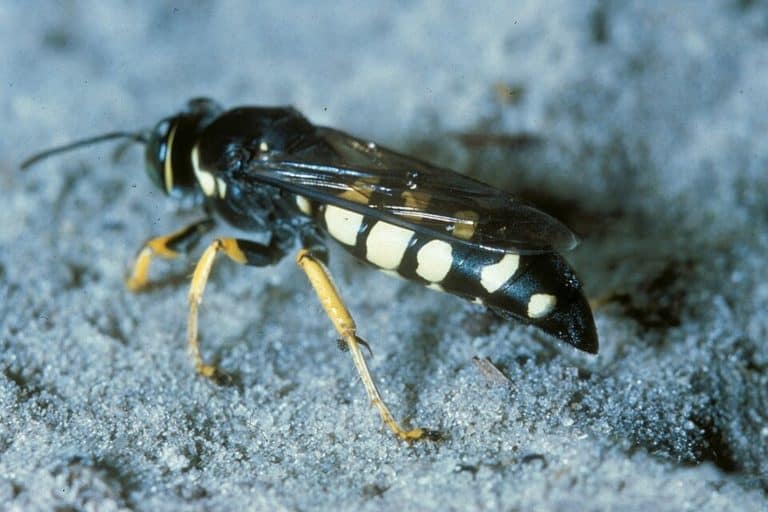
There are approximately 20–22 species of wasps in the genus Sphecius. These wasps are called cicada killers. Cicada killers can reach 1.25 to 2 inches long. They may be large and intimidating, but they don’t pose any threat to humans. They do, however, know how to kill cicadas efficiently. Female cicada killers will inject their prey mid-air with a cocktail of venom. The venom doesn’t instantly kill the prey but rather turns it into a type of zombie insect. The cicada remains paralyzed long enough for the female wasp to lay her eggs and for them to hatch so the larvae can eat the cicada while it is still alive.
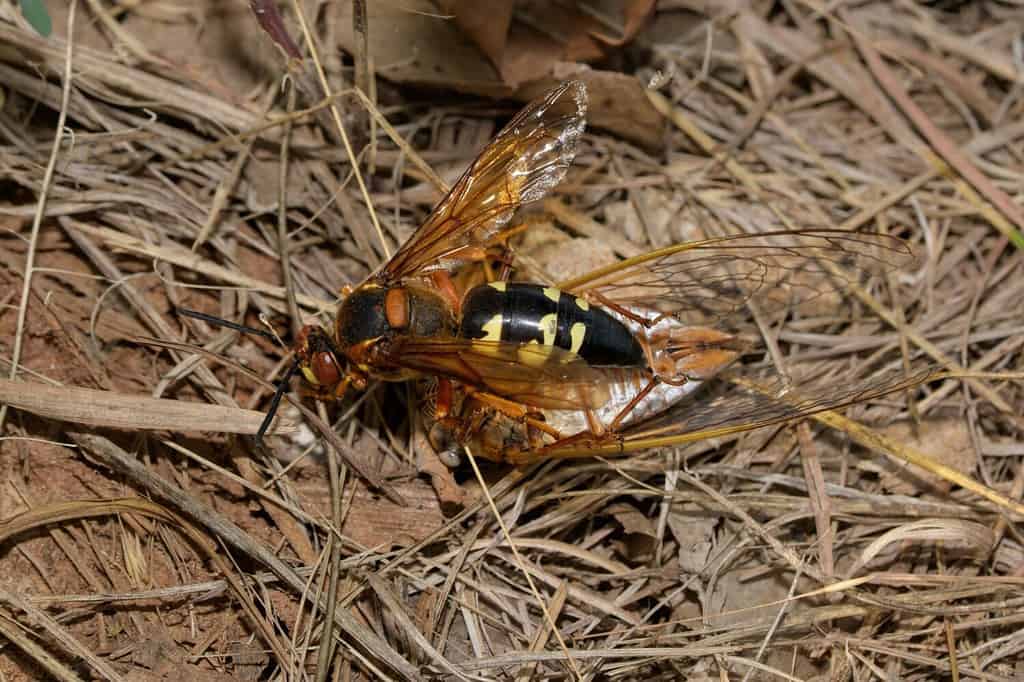
Cicada killers prey on cicadas to feed their larvae.
©Sari ONeal/Shutterstock.com
7. Female Wasp Larvae Eat More
Female wasp larvae generally require more food than male larvae. This is because adult females, either workers or future queens, develop larger bodies than male drones. So females need more protein during the larval stage and ultimately consume more resources than the smaller males.
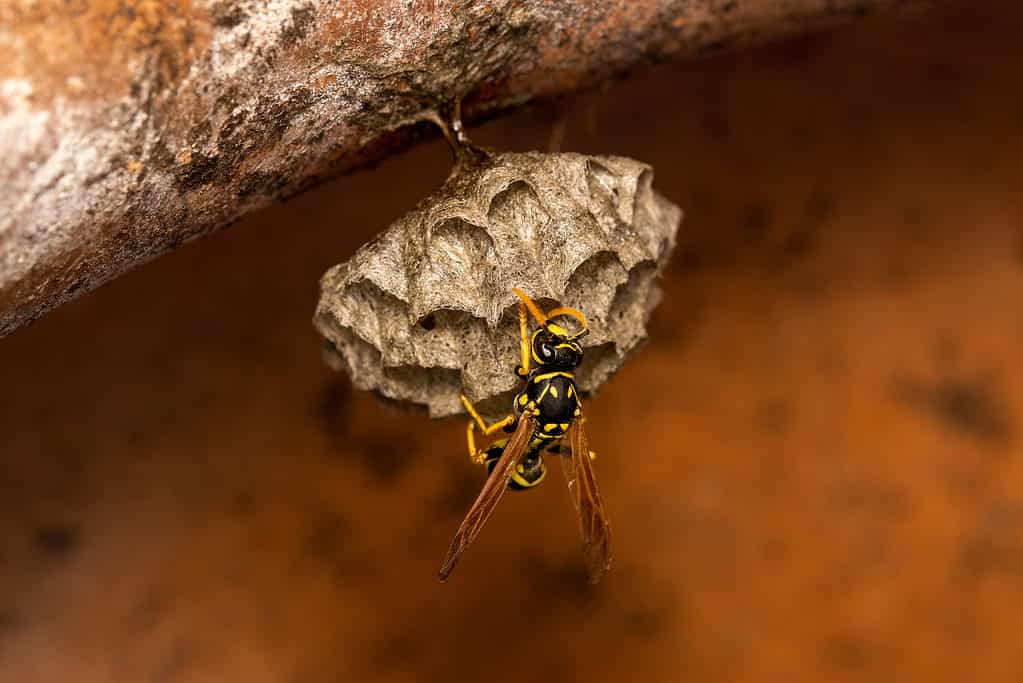
Baby female wasps require more food.
©iStock.com/Wirestock
8. Wasps Might Cure Parkinson’s
Researchers are looking into ways to use the mind-altering molecules of wasp venom to aid in Parkinson’s research. One of the most promising species is the emerald cockroach wasp (Ampulex compressa). The emerald cockroach wasp is a type of parasitic insect. It can sting its prey directly in the brain and alter their behavior. The insects enter a state called hypokinesia, which gives the wasp full control of its prey.
Researchers are looking for ways to use mind-controlling venom to help cure Parkinson’s disease. The neurodegenerative disorder targets neurons that create dopamine, and brain cells slowly die. However, the peptides in wasp venom might be able to impact the dopamine pathways and reverse Parkinson’s symptoms. The venom could also help fight other neurodegenerative diseases like multiple sclerosis, Alzheimer’s, and amyotrophic lateral sclerosis.
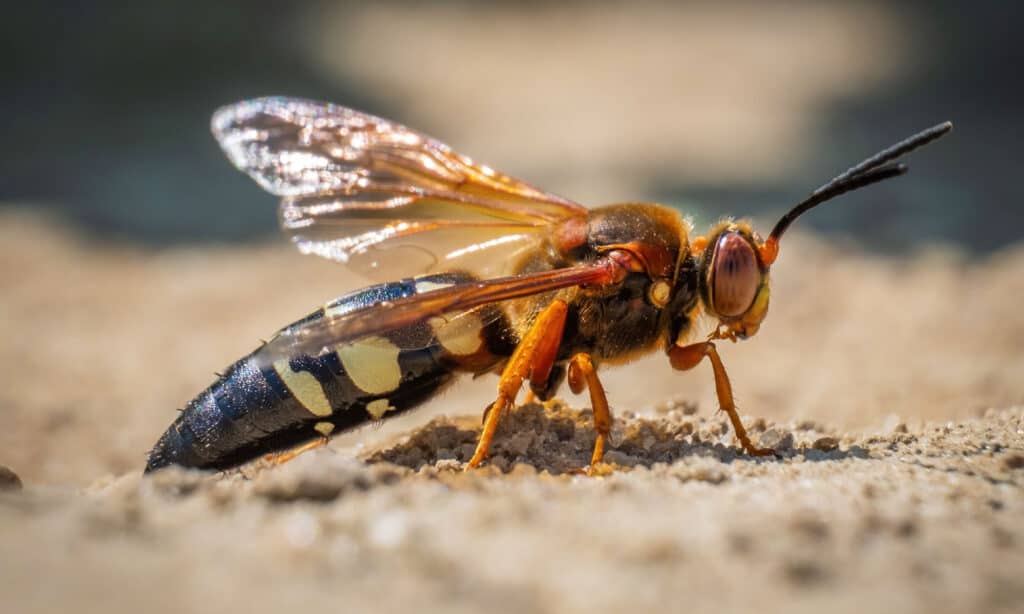
Some wasp venom could possibly be used to cure Parkinson’s.
©samray/Shutterstock.com
9. They Love Collecting Water
There are adorable videos all over the internet of wasps gathering water. They’re foraging insects, always looking for opportunities. Once they find a good water source, they’ll return day after day. Along with drinking, wasps use water to cool their nest, share with their larvae, or build a new nest. By mixing the water with wood pulp, paper wasps can build some of the most vital parts of the nest. They have to be careful, however. If a wasp gets its wings too wet, it won’t be able to fly.

Wasps regularly visit water sources to drink and carry it back to cool their nests.
©My Angel L.A. Images/Shutterstock.com
10. Some Figs Wouldn’t Exist Without Wasps
While many fig species can propagate without insects, some species, such as Calimyrna and Smyrna, require the tiny fig wasp for their harvest. When female fig flowers are ready for pollination, they emit a unique aroma to attract female fig wasps that pollinate that specific tree species. The female wasp’s sense of smell helps her find the right tree species, then she bores into the small opening at the very end of the fig to pollinate the flowers and lay her eggs inside future seeds.

A pollinating fig wasp does more than just walk over the flowers, it actually burrows into the fruit.
©Nic Pasquini/Shutterstock.com