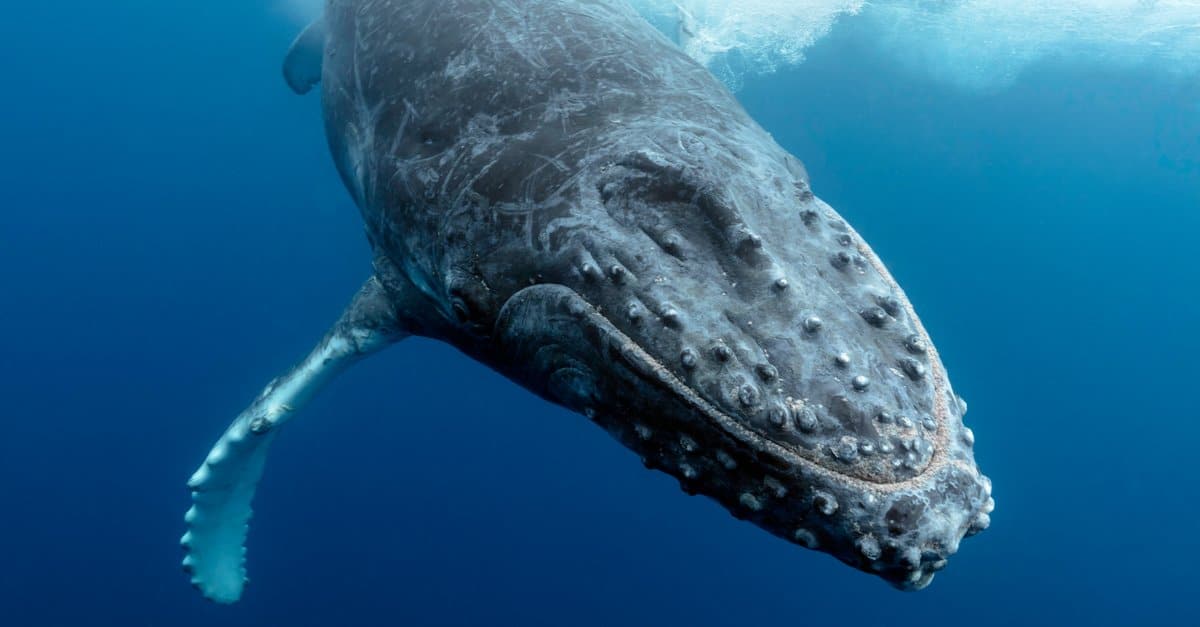

Whales and dolphins are thought of as smooth, hairless creatures. However, some whale species do have hair, even though they are not covered in it. Whales have a small amount of hair, primarily as follicles located on their heads and around their mouths. These follicles, surrounded by nerves, are believed to act as mechanoreceptors, helping whales detect movement, pressure changes, and vibrations in the water. This sensory function is thought to aid in navigation, prey detection, and social interaction. Continue reading to learn about four types of hairy whales.
1. Humpback Whales
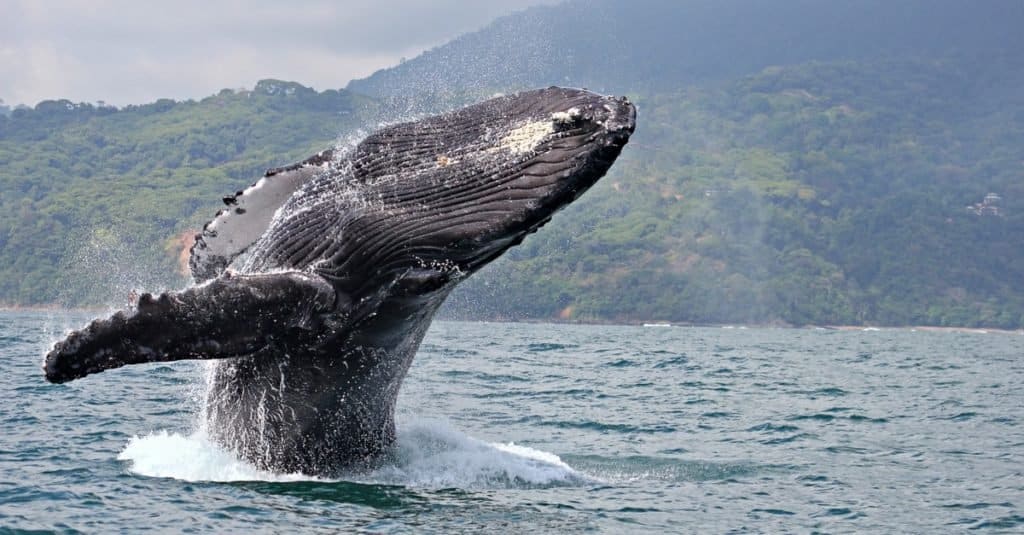
A Humpback whale breaching in “Marino Ballena National Park”, Costa Rica.
©Claude Huot/Shutterstock.com
The large humpback whale (Megaptera novaeangliae) is a baleen whale that sieves the water for tiny krill. They consume up to 3,000 pounds of food a day to sustain their 40- to 50-foot bodies. Humpback whales are named for the hump on their back just before their dorsal fin. They also have long fins on each side of their bodies and grooves on their undersides.
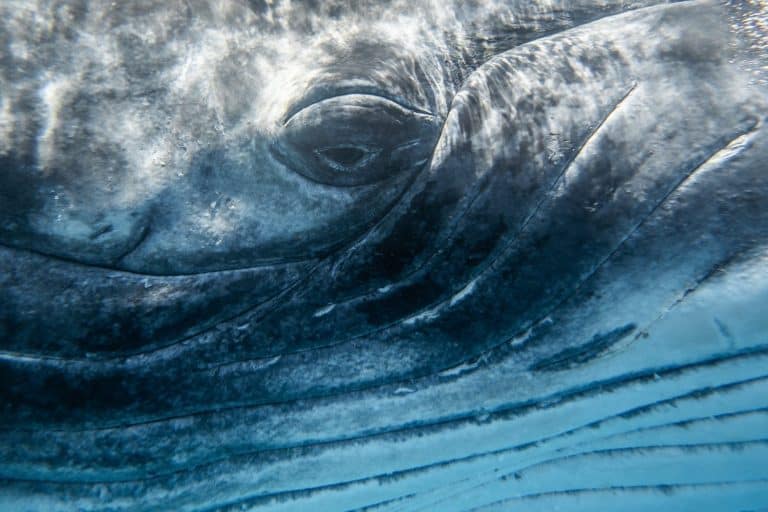
Their faces appear to be covered in barnacles, but upon closer inspection, these bumps, called tubercles, each contain a single hair follicle. Since each follicle carries a single hair, one can easily count the number of hairs on a humpback’s head. They usually have anywhere from 30 to 50 hairs. These hairs remain visible throughout the whale’s life.
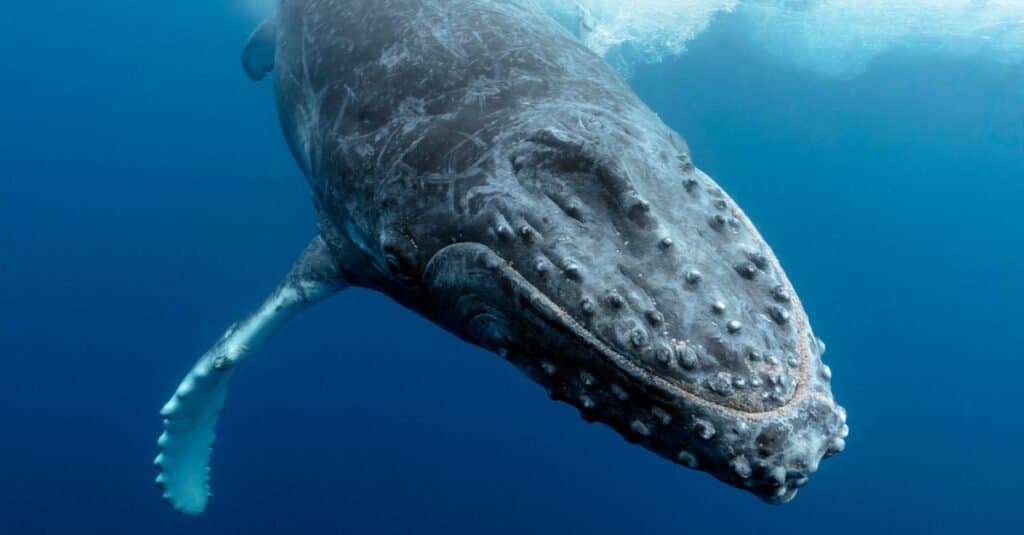
The bumps on a humpback whale’s face are hair follicles.
©Craig Lambert Photography/Shutterstock.com
2. Fin Whales, Sei Whales, Right Whales, and Bowhead Whales

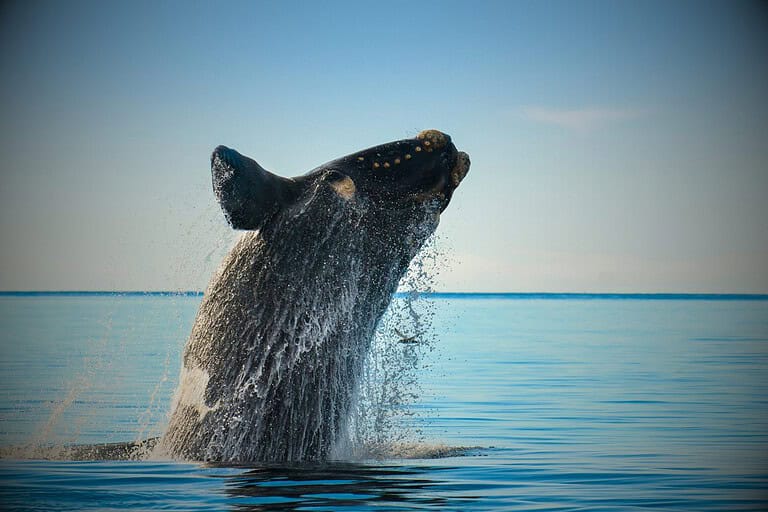
Southern right whale (Eubalaena australis) coming out of the water.
©Foto 4440/Shutterstock.com
This group of baleen whales, consisting of fin whales (Balaenoptera physalus), sei whales (Balaenoptera borealis), right whales (Eubalaena), and bowhead whales (Balaena mysticetus), has very small hair-like whiskers on their muzzle, chins, and jawlines. These whiskers have nerves that are connected to the roots and are thought to serve a sensory purpose. These are not easy to see, and some individuals do not have them at all. It can be confusing because some baleen whales appear to have an elaborate mustache. However, these are their baleen, not mustache hairs. Baleen are long, hair-like structures that filter the water, allowing only small krill, plankton, and tiny fish to pass through.
3. Amazon River Dolphin
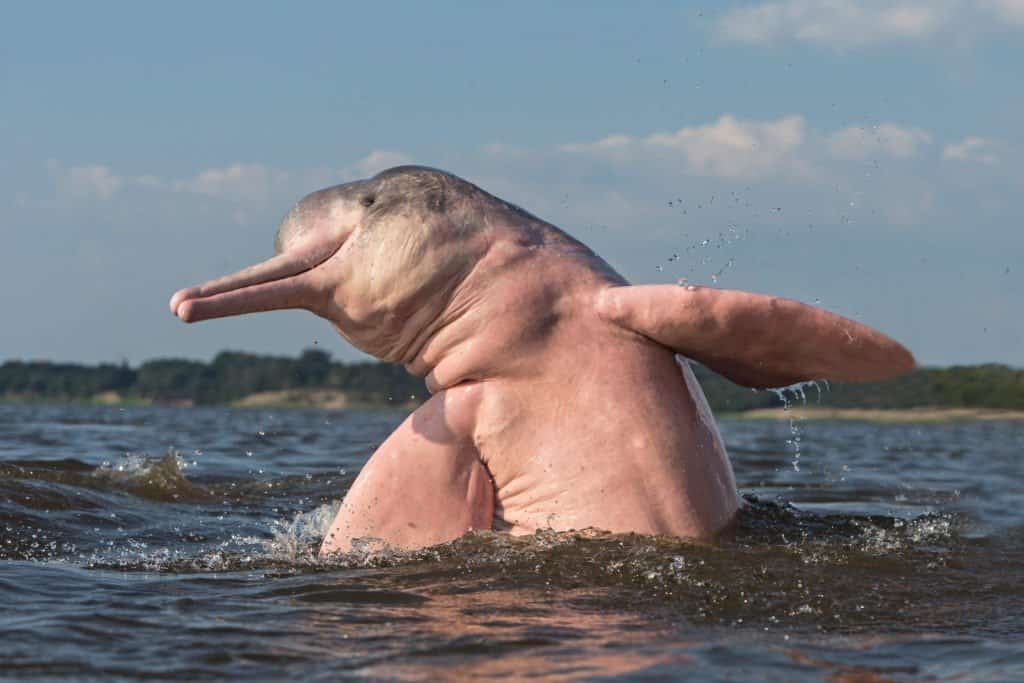
An Amazon River dolphin, often known as the pink dolphin.
©COULANGES/Shutterstock.com
Dolphins and whales are both cetaceans, belonging to the order Cetacea, but dolphins are not typically classified as whales in scientific taxonomy. The Amazon River dolphin (Inia geoffrensis) is a freshwater dolphin that lives in the Amazon River as well as the Orinoco River. These unique dolphins resemble bottlenose dolphins except for their pink skin, Pinocchio-like snout, and hair. Amazon River dolphins have hair on their snouts, similar to short bristles. They use these hairs as sensory tools to locate prey in murky river water. They are born with these hairs and keep them into adulthood.
4. Baby Dolphins

A charming baby dolphin swims with its mom in a pool.
©Elena Larina/Shutterstock.com
Some dolphins have hair as fetuses and lose it before birth, while others are born with hair and lose it soon after birth. They have only sparse hair or whiskers, usually found on their snouts. It is believed that these early whiskers are used to rub against the mother, signaling that the calf is ready to eat. Once the calf no longer needs them, it loses the whiskers and does not regrow any hair as an adult.
5 Reasons Whales and Dolphins Have Hair
Whales and dolphins have hair for a variety of reasons. Here are five reasons whales have hair:
- Left over from ancestors that were land mammals: Whales and dolphins are thought to have descended from mammals that once roamed the land. These land mammals most likely would have had hair or fur coats.
- Sensing prey in the water: The whisker-like hairs on the Amazon River dolphin are used to find prey in the murky waters of the river. Amazon River dolphins also use echolocation, so these tools may work together to be even more accurate in locating food.
- Determining how much prey is in an area: For baleen whales, it is thought that they may use the whisker-like hairs on their faces to sense if there is enough prey in an area to make it worthwhile to open their mouths and expose their baleen to sieve for food.
- Sensing water temperature changes: The whisker-like hairs on whales may serve to sense changes in water temperature, which may alert them to changes in the currents during migration, helping them decide where to go.
- Communicating with each other: Dolphins born with whisker-like hairs may rub their whiskers along their mothers, signaling that they want to nurse. This is one theory as to why they lose their hair once they can eat on their own.