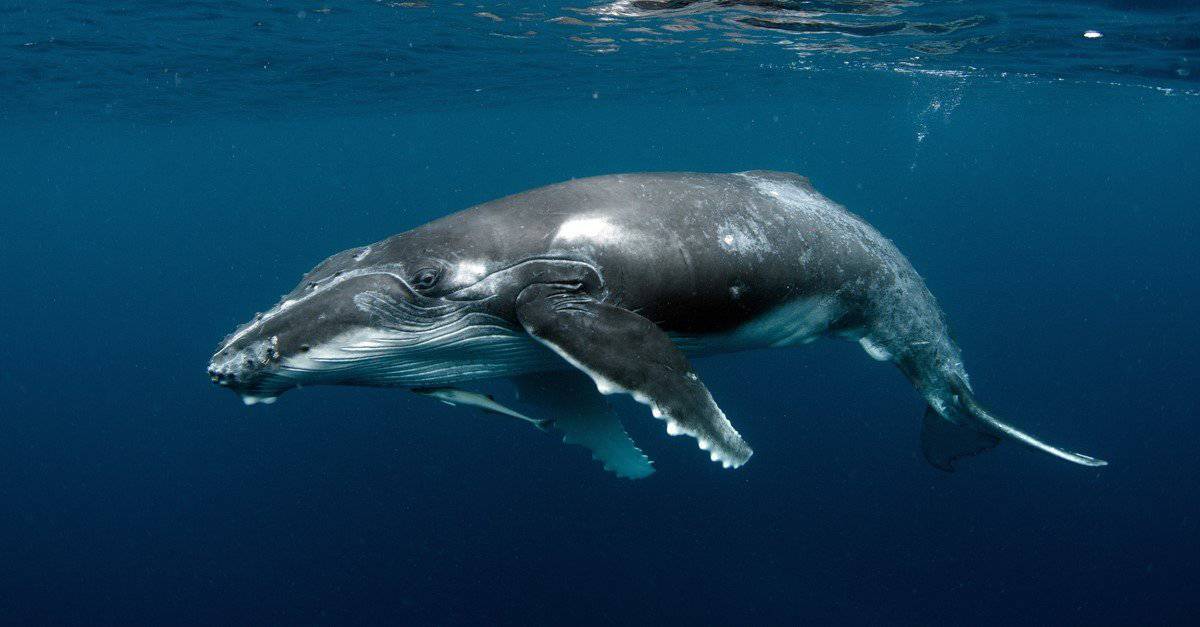

Whale species vary greatly in size. Some are just a few feet longer than a human, while others are the largest animals in the entire world. Whales also hold several records, such as being the largest toothed predator and the largest animal ever to have lived. It may be difficult to wrap your head around just how big different types of whales are. We’ve created this complete guide to show you how whales compare to each other, as well as how they compare to the average human.
Blue Whale
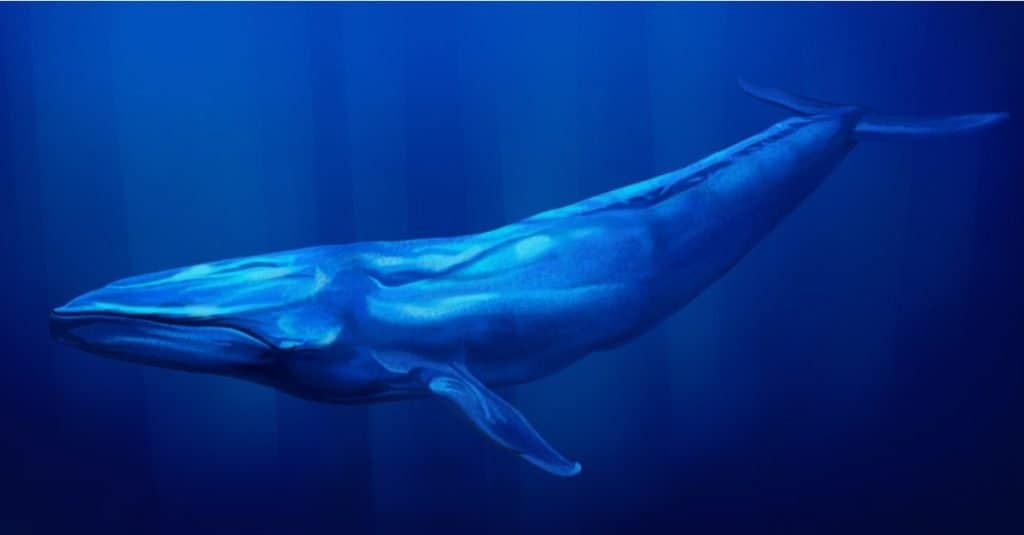
Blue whales are the largest animals in the entire world.
©Atomic Roderick/Shutterstock.com
Just as there are many different types of whales, there are also several subspecies of blue whale. In recent years, there’s been an ongoing debate about what characteristics define a blue whale. However, as of the writing of this comparison, there are currently five recognized subspecies. These include:
- Antarctic blue whales (Balaenoptera musculus intermedia)
- North Atlantic and North Pacific blue whales (Balaenoptera musculus musculus)
- Pygmy blue whales (Balaenoptera musculus brevicauda)
- Northern Indian Ocean blue whales (Balaenoptera musculus indica)
- South Pacific Ocean blue whales (Balaenoptera musculus unnamed species).
Of all recognized subspecies, the Antarctic blue whales are the largest. Yet they aren’t just the largest blue whale or even the largest whale — they’re the largest animal in the entire world. They’re even bigger than most of the dinosaurs we know about. Blue whales generally grow between 80 and 100 feet and weigh up to 330,000 pounds. The largest blue whale ever recorded weighed 418,878 pounds. The longest blue whale reached an incredible 110 feet and 17 inches in length, which is longer than two school buses.
The Pygmy blue whale is the smallest blue whale subspecies. However, reaching nearly 80 feet in length, it’s still one of the largest animals in the world. They weigh between 180,000 and 200,000 pounds, with the females being larger. This is common among baleen whales, including blue whales and humpback whales.
Sperm Whale Size
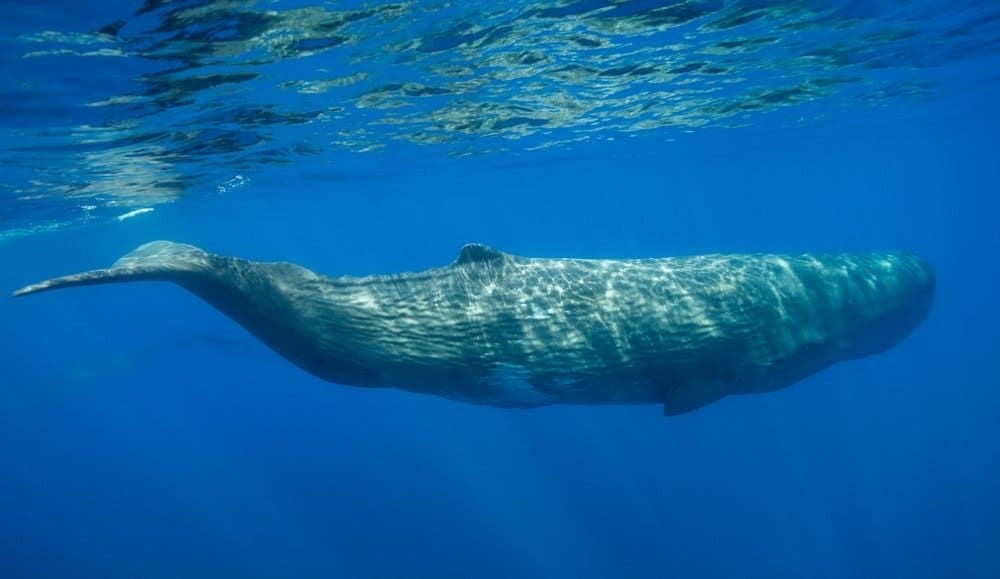
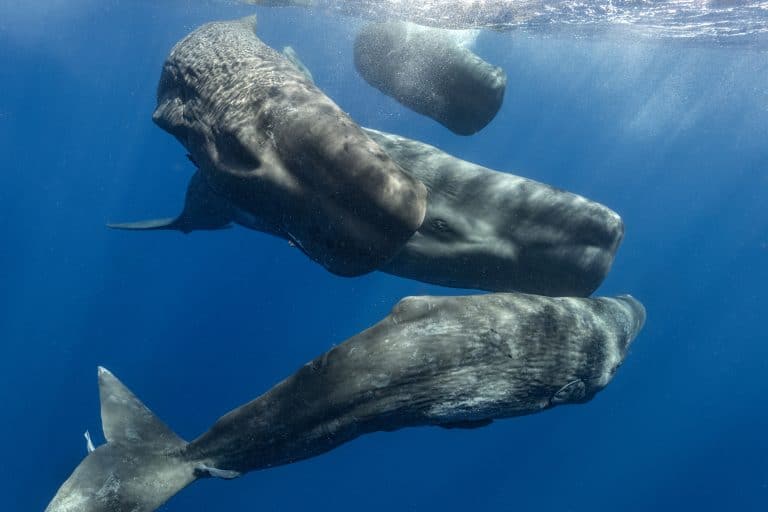
A sperm whale’s head can make up to 33% of its entire body.
©wildestanimal/Shutterstock.com
Sperm whales might not be the largest animal in the world, but they are the largest toothed predators. However, they are 20 feet shorter and around half the weight of the smallest blue whales. There are three types of sperm whales in the superfamily Physeteroidea. These include:
- The sperm whale (Physeter macrocephalus)
- The pygmy sperm whale (Kogia breviceps)
- The dwarf sperm whale (Kogia sima)
The largest sperm whales can reach up to 60 feet in length and weigh up to 100,000 pounds, which is more than a fully loaded 18-wheeler truck. In contrast, the pygmy sperm whale only reaches just over 11 feet and up to 1,000 pounds. The dwarf sperm whale only grows to around 9 feet and weighs a maximum of 600 pounds.
Most of the sperm whale’s size and weight comes from its head, which can make up as much as 33% of its body. In fact, that’s what their species name means, with “macro” referring to large size and “cephalus” referring to the head.
Humpback Whale Size
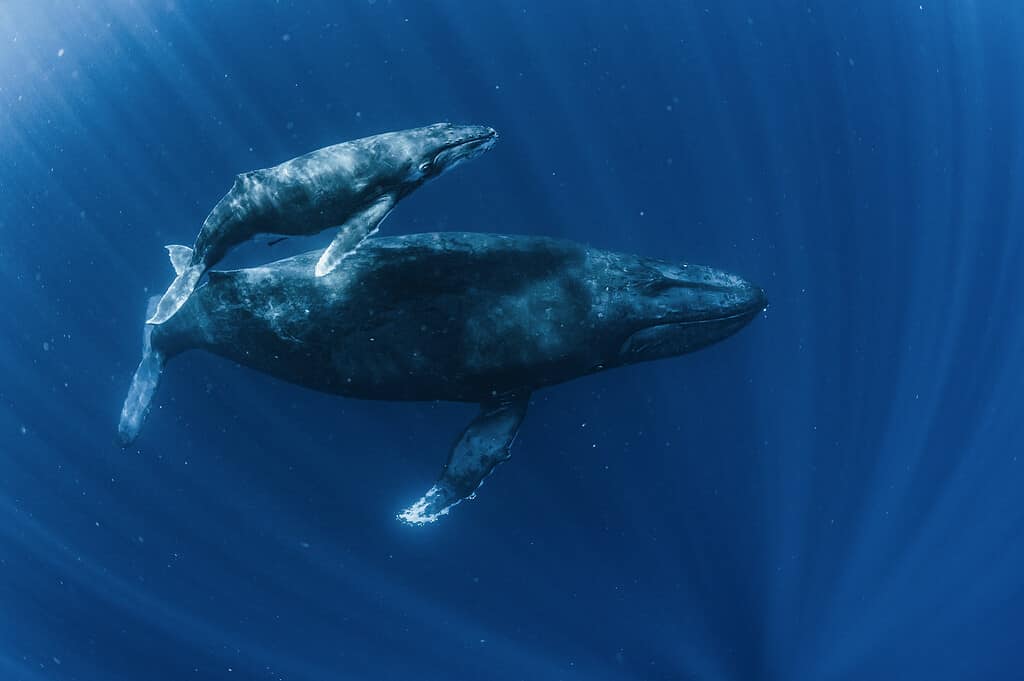
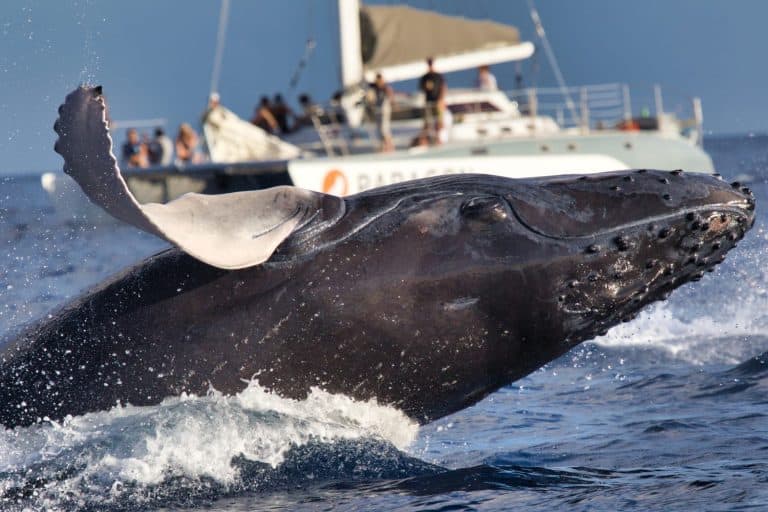
Humpback whales are known for visiting the surface and surprising whale watchers.
©iStock.com/inusuke
Whale watchers know this whale well. Known for breaching and other attention-grabbing antics on the surface, humpback whales are among the largest whales outside of the blue whale family. There are three subspecies, including:
- The Pacific humpback whale (Megaptera novaeangliae)
- The North Atlantic humpback whale (Megaptera novaeangliae novaeangliae)
- The Southern Hemisphere humpback whale (Megaptera novaeangliae australis)
Humpback whales can reach 50 to 60 feet in length and weigh a maximum of 80,000 pounds, which is the weight of at least two standard firetrucks. These whales are nearly the same length as sperm whales, but they weigh about 20% less. Humpback whales also have extremely long flippers that can reach up to 30% of their total body length.
Killer Whale Size

Killer whales are also known as orcas.
©slowmotiongli/Shutterstock.com
The killer whale is another toothed predator, though it is only half as long as a sperm whale and about 1/5th the weight. NOAA Fisheries describes two species of killer whales, including:
- Resident killer whales (Orcinus ater)
- Bigg’s killer whales (Orcinus rectipinnus)
Bigg’s killer whales are slightly larger than Resident killer whales, with the largest reaching around 32 feet long and weighing up to 22,000 pounds. This is about half the length and only a quarter of the weight of a humpback whale.
The male killer whale’s dorsal fin is nearly double the size of the female’s, at up to 6 feet tall. This is slightly taller than the average male height in the U.S., which is 5 feet and 9 inches.
Human vs. Whale Size Comparison
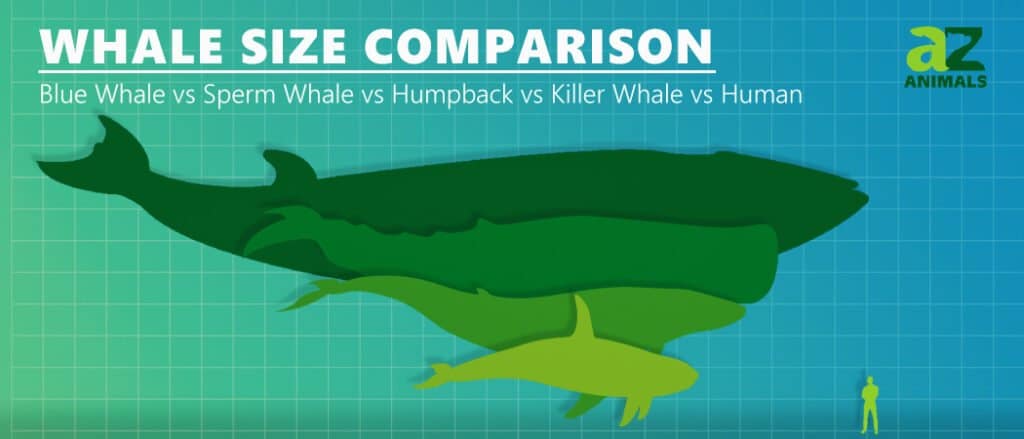
So, how do these whales compare to a human? Even when compared to one of the smallest whales, the dwarf sperm whale, humans still don’t measure up. At the lower end of their size range, these whales are around 8 to 8.5 feet long and weigh about 400 pounds. As noted above, the average human male in the U.S. is only 5 feet and 9 inches, while the average female height in the U.S. is just over 5 feet and 3 inches. While some humans can weigh 400 pounds or more, the average weight in the U.S. is less than 200 pounds for both males and females.
As for the Antarctic blue whale, it would take 1,650 adult human males to equal the weight of a blue whale at 330,000 pounds. Their hearts alone can weigh up to 400 pounds — the same as a small sperm whale — and can be as large as a bumper car. Many museums even have replicas that humans can crawl through and explore.
Humpback whales have some of the largest pectoral fins in the ocean. At around 20 feet long, they’re nearly 4 times the height of the average human female in the U.S. However, you don’t need to worry about them swallowing you whole because, at rest, their throat is only about the size of your fist and does not get much bigger.
While killer whales may not have the largest teeth in the ocean, their teeth can still grow to around 3 inches long. The average human tooth is only 0.4 inches, making the killer whale’s teeth almost exactly ten times longer.