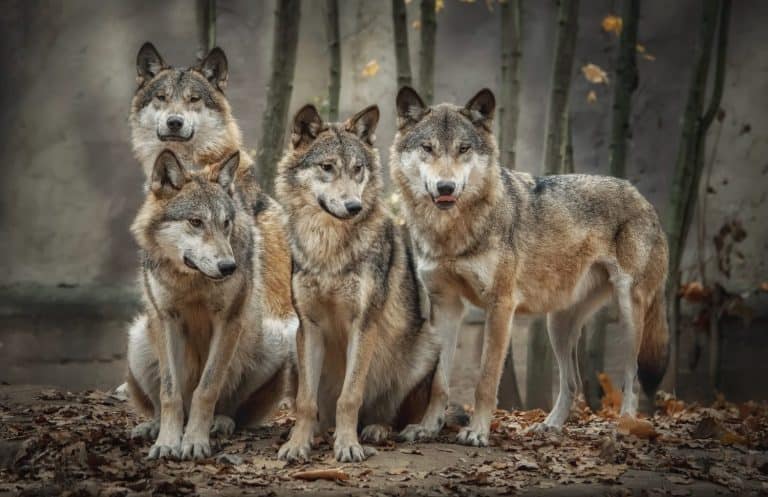
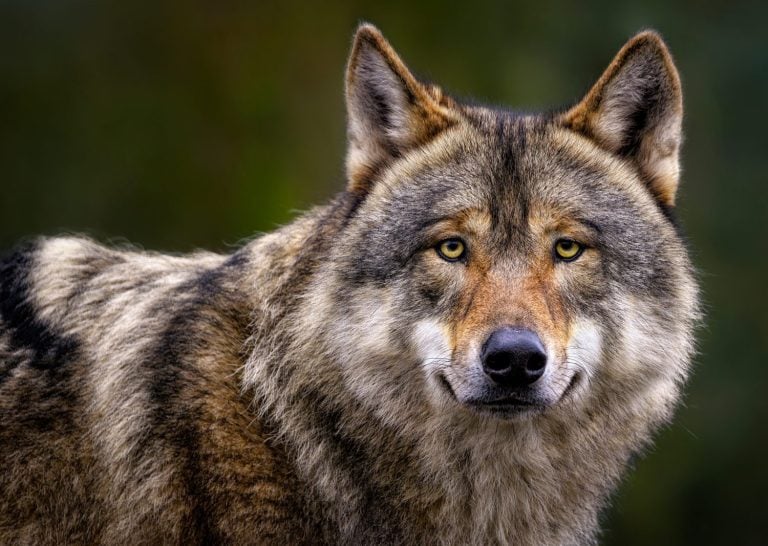
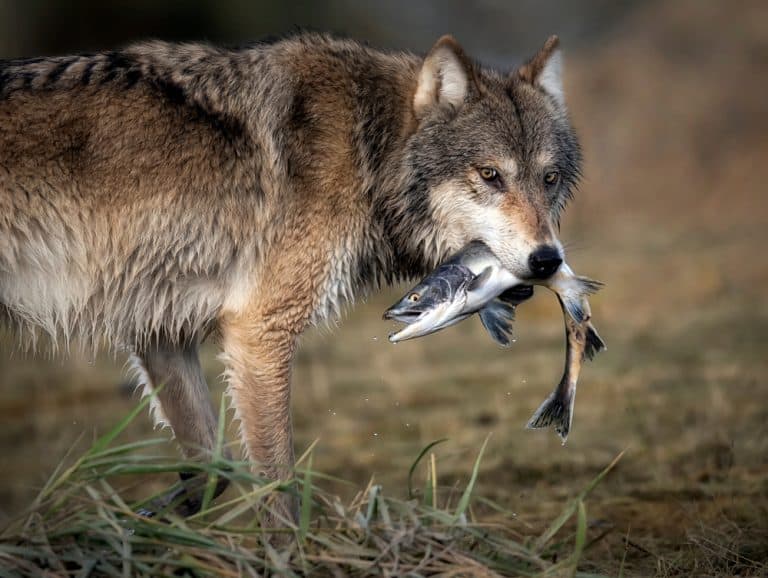
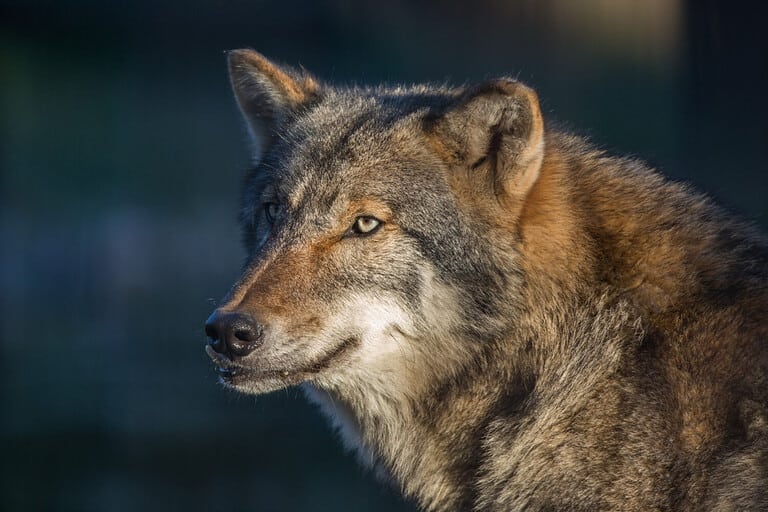
Wolves are fascinating wild canids that have captivated humans throughout history. They can be found in diverse habitats from the Arctic to the desert across Europe, Asia, and North America. Although the debate around wolf taxonomy continues, there are just two widely accepted wolf species: the red wolf (Canis rufus) and the grey wolf (Canis lupus). The red wolf does not currently have any recognized subspecies, but the grey wolf has around 40 historically named subspecies. Grey wolves can reach up to around 175 pounds, while red wolves only reach about 80 pounds. So the largest wolves roaming the United States today are all subspecies of the grey wolf, but which are the largest? Keep reading to discover the largest wolves in the U.S.
6. Mexican Wolf

Mexican wolves are the smallest grey wolves in the U.S.
©Nagel Photography/Shutterstock.com
The Mexican wolf (Canis lupis baileyi) is the smallest and southern-most subspecies of grey wolf in the U.S. They can be found in northern Mexico, eastern Arizona, and western New Mexico. Mexican wolves can reach about 2.6 feet in height and up to 5.5 feet in length. Their maximum weight is around 80 pounds, with some sources suggesting they can weigh as much as 90 pounds.
In addition to being smaller, Mexican wolves are said to have narrower skulls than other grey wolf species. Their coats may be grey, buff, black, and rust colored, and they often have unique facial patterns. These wolves prefer grasslands, mountain woodlands, and scrublands in the desert regions of the southwest. Their primary prey is white-tailed deer, mule deer, and elk. However, they may also hunt small mammals such as javelina and rabbits.
5. Alexander Archipelago Wolf

The Alexander Archipelago wolf can be found on the mainland of southeast Alaska and on some of the larger islands of the Alexander Archipelago.
Alexander Archipelago wolves (Canis lupus ligoni) inhabit the mainland of southeast Alaska, some of the larger islands of the Alexander Archipelago, and coastal regions of British Columbia. According to the U.S. Fish and Wildlife Service, wolves over 6 months can weigh from 49 to 115 pounds, with wolves on the islands being smaller than those on the mainland. There are no authoritative height and length measurements. However, some sources suggest they can reach 2 feet tall at the shoulder and over 3.5 feet in length, but this is unlikely to include the tail.
The pelts of Alexander Archipelago wolves are typically darker, rougher, and shorter than other grey wolves. The colors range from all black to brindled with a mix of tan or gray with black, white, or brown. Old-growth forests make up most of their range, but they can be found near freshwater areas when denning. Black-tailed deer and moose account for most of their diet.
4. Arctic Wolf
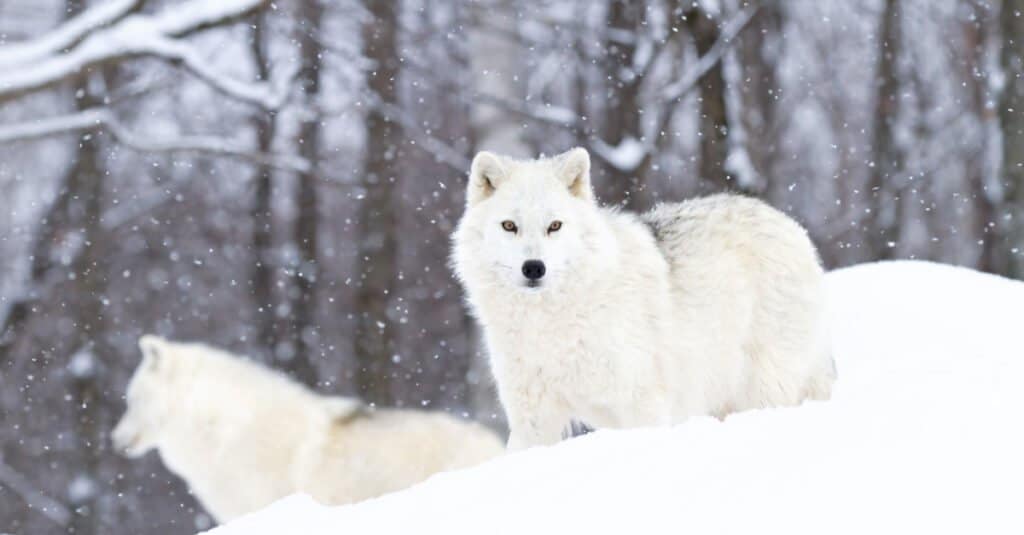
Arctic wolves’ white pelts help them camouflage in the snow.
©Jim Cumming/Shutterstock.com
Other names for the arctic wolf (Canis lupus arctos) include the white wolf, polar wolf, and Arctic grey wolf. It is the northernmost subspecies of the grey wolf in North America. The average arctic wolf has a length of up to 6 feet and a height of 2.6 feet at the shoulder. The Arctic wolf typically weighs around 100 pounds, with some reported to weigh as much as 125 pounds.
The Arctic wolf’s range includes the Arctic tundra of northern Canada, Greenland, and coastal tundra regions of Alaska. These wolves have evolved their distinct white coloring as an adaptation to aid in camouflage in their snowy and icy environment. However, some individuals may have pelts that include gray, brown, or sometimes even black fur. The Arctic wolf’s prey includes large mammals such as caribou and muskoxen, but they also hunt smaller animals, including Arctic hares and nesting birds.
3. Northern Rocky Mountain Wolf
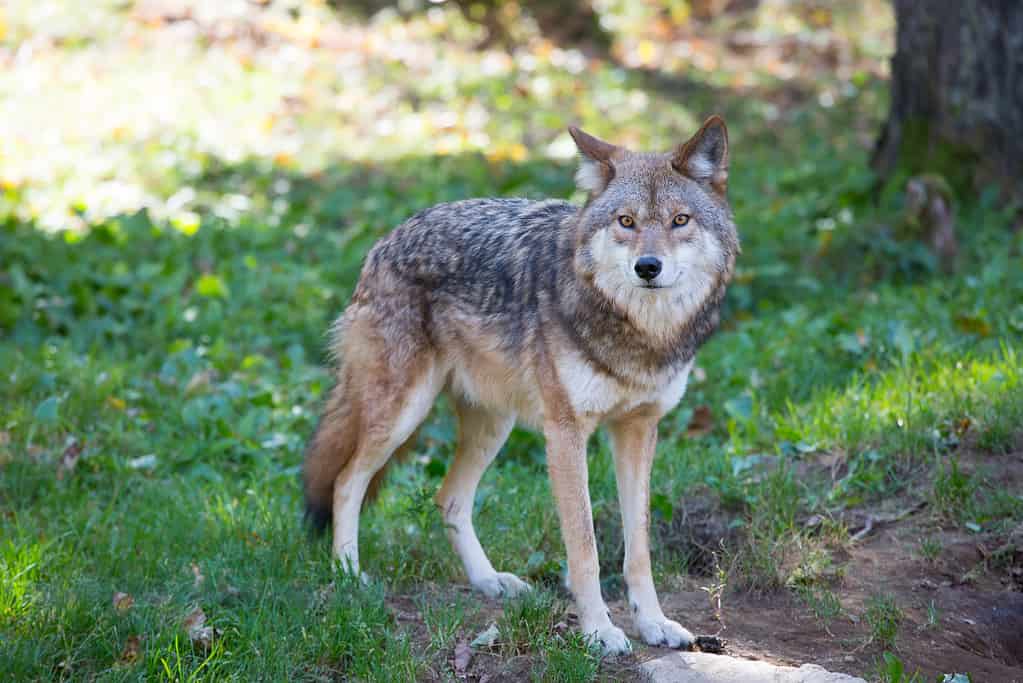
The Northern Rocky Mountain wolf has more white than black in its grey to tan pelt.
©kavram/Shutterstock.com
Northern Rocky Mountain wolves (Canis lupus irremotus) are mid-sized wolves that inhabit parts of the western United States. The average Northern Rocky Mountain gray wolf can reach about 2.7 feet tall at the shoulder and grow to around 6 feet from nose to tail. They can weigh a maximum of around 135 pounds.
These wolves can be found in flat forested areas in Idaho, western Montana and Wyoming, eastern Washington and Oregon, and northern Utah. The Northern Rocky Mountain wolf is lighter in color than most wolves, with more white than black in its grey to tan pelt. It also differs from other subspecies of gray wolf by its flat and narrow frontal bone. Elk, bison, and mule deer are their primary prey, but they will also hunt beavers when other prey is scarce.
2. Interior Alaskan Wolf
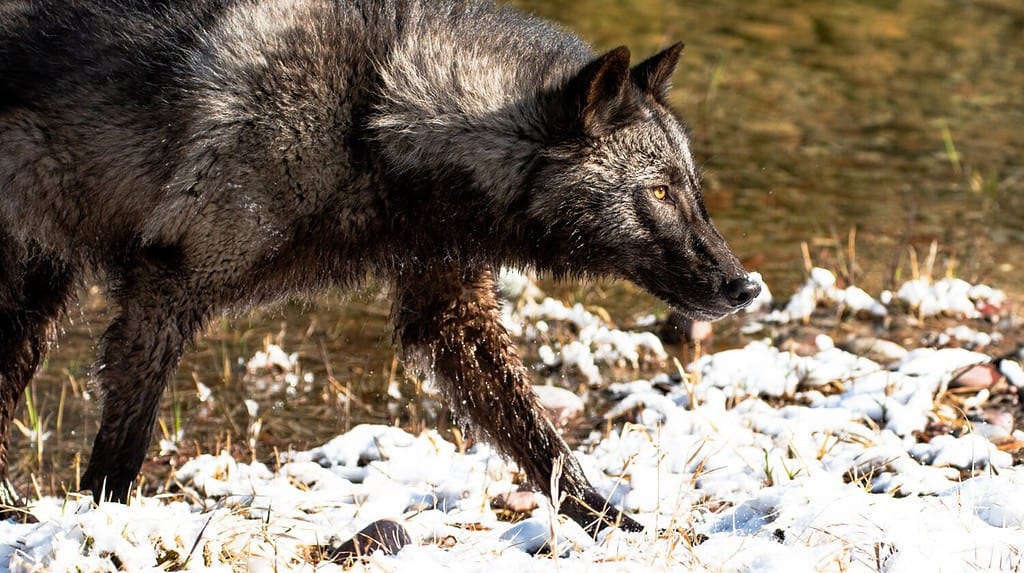
The interior Alaskan wolf has a darker pelt than other grey wolf subspecies.
©Wirestock Creators/Shutterstock.com
Interior Alaskan wolves (Canis lupus pambasileus) are also known as Yukon wolves. These large wolves can stand about 2.75 feet at the shoulder and reach lengths of around 6 feet from nose to tail. Males generally weigh up to 145 pounds, but some larger individuals have been reported.
As their names suggest, they primarily inhabit the interior of Alaska and Yukon, Canada. They prefer the Arctic tundra, boreal forests, and mountain alpine habitats of the region. This wolf is generally darker than other grey wolves, with a gray to black pelt. They have sturdy builds and are said to have larger skulls, wider jawbones, and bigger teeth than any other gray wolves. They primarily prey on Dall sheep, caribou, and moose.
1. Northwestern Wolf
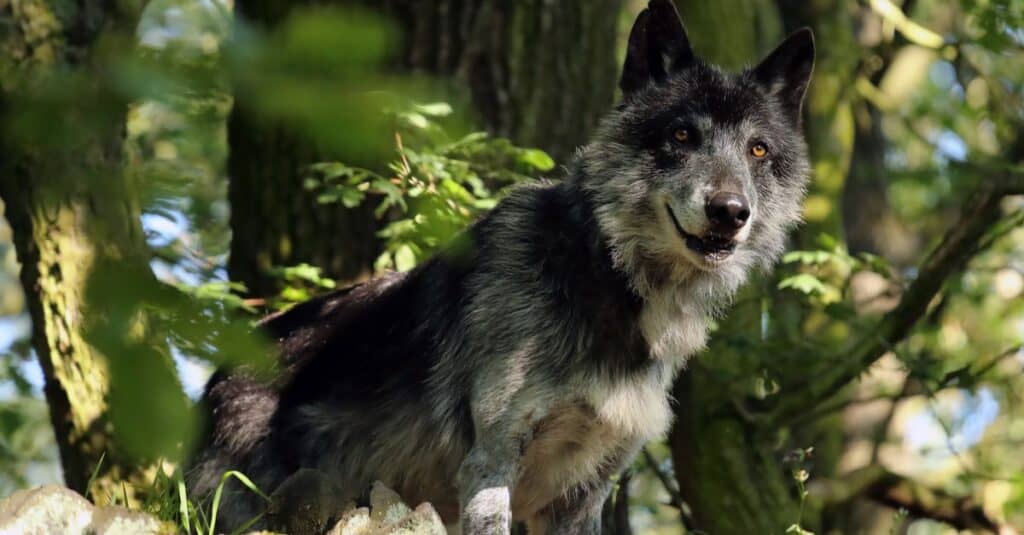
The northwestern wolf is the largest wolf in the United States.
©Karel Bartik/Shutterstock.com
The Northwestern gray wolf (Canis lupus occidentalis), also known as the Canadian timber wolf, Alaskan timber wolf, and Mackenzie valley wolf, is believed to be the largest grey wolf subspecies. They measure about 7 feet long from nose to tail, stand 3 feet at the shoulder, and weigh up to 175 pounds. According to Guinness World Records, the largest on record reportedly weighed 227 pounds.
The Northwestern gray wolf’s range is western Canada, Alaska, and the northwestern United States. These wolves are adapted for the extreme cold of their mountain, tundra, and boreal forest habitats. Their thick pelts can vary in color from white to black and all shades of gray and brown in between. Northwestern grey wolves are said to have more robust builds, larger heads, longer legs, thicker muzzles, and shorter ears than other subspecies of grey wolf. Their prey of choice is typically large ungulates such as bison, moose, and elk.