Quick Take
- The thylacine was the world's largest modern carnivorous marsupial and had a dog-like body with the stripes of a tiger. Explore its strange anatomy →
- Farmers blamed thylacines for livestock losses, leading to bounty schemes and decades of persecution across Tasmania. See the livestock myth →
- The last confirmed thylacine died in Hobart Zoo in 1936, only two months after the species received legal protection. Read about its last days →
- Hundreds of reported sightings have kept the legend alive, but no evidence has confirmed the thylacine's survival since its extinction. See who's still searching →
One of the most unusual animals in the world was the thylacine, which was a marsupial with a dog-shaped body and the stripes of a tiger. Thylacines became extinct on mainland Australia two thousand years ago, but survived in Tasmania until 1936. However, their extinction wasn’t simply the result of natural causes, as they were deliberately hunted after being branded “livestock killers.” Keep reading to learn how human activity contributed to the extinction of this unique animal.
What Made the Thylacine So Unusual
The thylacine (Thylacinus cynocephalus), also known as the Tasmanian tiger, was one of the most unusual animals of its time due to its strange appearance. Thylacines had a dog-like appearance and a stiff tail. They were light brown to fawn, with darker tiger stripes on their bodies. Their stripes were particularly prominent across their hindquarters. Thylacines stood approximately two feet high at the shoulder and could reach up to 4.5 feet in length.
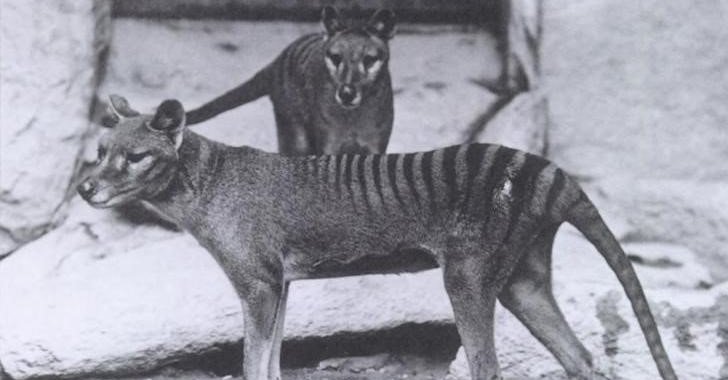
Thylacines were marsupials with a dog-like body and tiger stripes.
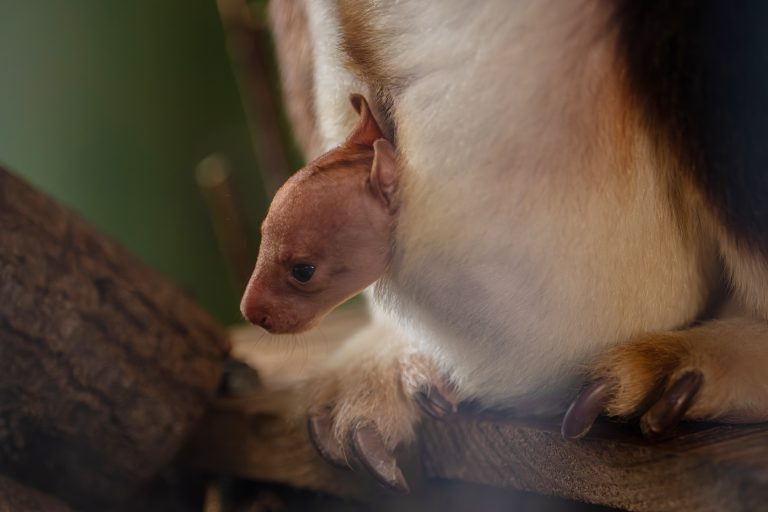
As marsupials, they also had a pouch on their abdomen. The pouch opened backward and was present on both males and females. Females used their pouch for rearing their young, which were born underdeveloped after a short gestation period. Just like other marsupials, the joey would crawl into its mother’s pouch after birth and remain there for several months. While females used their pouch for rearing their young, in males, it served to protect their reproductive organs.
Thylacines had large jaws that they could open at an angle of up to 80 degrees. They were the largest carnivorous marsupials of the time and preyed on birds and small mammals, such as wallabies. However, they also sometimes preyed on livestock such as sheep and chickens, which led to their eventual persecution by farmers.
How Humans Drove It to Extinction
Thylacines originally inhabited mainland Australia and New Guinea but disappeared from Australia around two thousand years ago. It’s not known for certain why they died out in Australia, but several theories suggest that they were outcompeted for food by dingoes. Dingoes often hunt in packs, whereas thylacines were solitary predators, making successful hunts more difficult for them. Despite this, thylacines continued to exist in Tasmania until the final known thylacine died in captivity in 1936. Unfortunately, their extinction can be directly linked to humans.
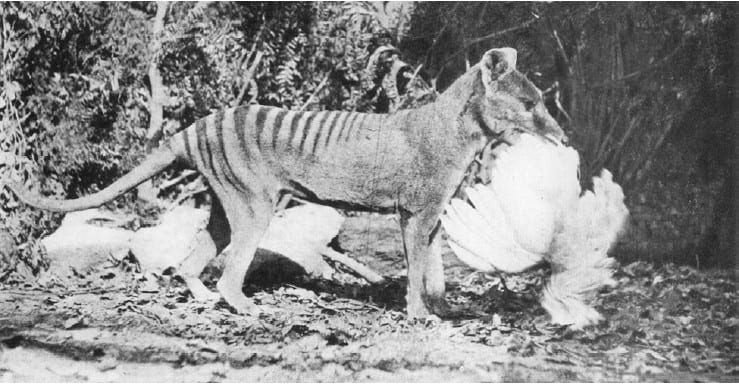
Thylacines were persecuted as they were branded “livestock killers.”
©Henry Burrell (died 1945), Public domain, via Wikimedia Commons – Original / License
Thylacines tended to prefer open forests and woodlands in Tasmania, but they could also survive in wetlands and grasslands. However, when British settlers arrived in Tasmania in the early 1800s, they began to establish farms in the areas that thylacines had traditionally inhabited. As thylacines were carnivores, farmers saw them as a threat to their livestock. As fairly powerful predators, thylacines were strong enough to kill sheep, goats, and possibly small calves, so they were quickly blamed for any attacks on livestock.
It is likely that at least some reports of predation were exaggerated or incorrectly attributed to thylacines. However, thylacines were still branded as livestock killers. As a result of this, several bounties were placed upon them from as early as the 1830s. These included one from the Tasmanian government, which paid £1 for an adult and ten shillings for a juvenile. Between 1888 and 1909, the Tasmanian government paid a total of 2,184 bounties for the thylacines. During this time, thylacines faced continuous persecution, which eventually caused a serious decline in their population.
The Final Thylacine
Hunting alone wasn’t the only reason for the eventual extinction of the thylacine. Additional pressures such as habitat loss and a lack of genetic diversity caused by their declining population were eventually too much for them. The last confirmed thylacine lived at Hobart Zoo. There is some debate as to whether it was male or female, and where it originated. The animal was described as having a scar on its hind leg from being caught in a snare trap.
Unfortunately, the final thylacine was not well looked after during its time at the zoo. The animal is reported to have been locked out of its sleeping quarters during a cold spell, which saw temperatures drop to freezing overnight. However, it’s likely that the neglect began earlier, as the last known picture from May 1936 showed it looking ill and emaciated. The thylacine died on September 7, 1936—a sorry end for such an unusual creature. Ironically, thylacines received legal protection two months earlier, but it came too late to save the species.
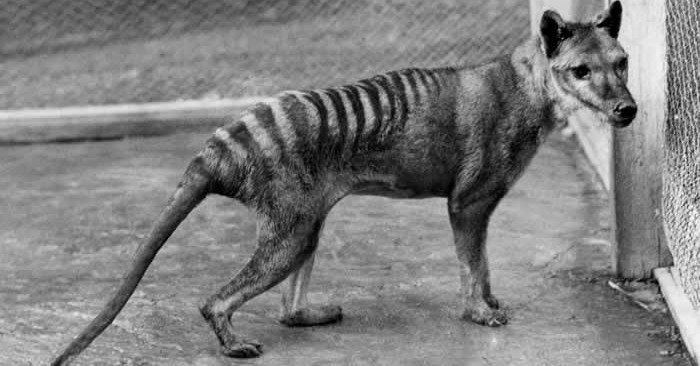
The last ever picture of a thylacine showed it looking sick and emaciated.
Why People Still Search for the Thylacine
Although thylacines are officially classified as extinct, people remain fascinated with them. Some extinct animals, such as woolly mammoths and dinosaurs, gain more attention than others. Thylacines, in particular, receive attention because some people believe they might still exist in pockets of rugged, inaccessible land. For others, they have become something of a legend.
In 1966, a 647,000-hectare reserve was created in southwestern Tasmania to protect any unconfirmed thylacines that might still have been living in the area, although none were seen. Since the 1930s, there have been hundreds of reported sightings across Australia and Tasmania. People have claimed to see them crossing roads or running through forests. Some reports describe glimpsing only part of the animal, and occasionally, blurry photographs or videos appear, which some people believe are proof that the thylacine lives on.
To date, there are no confirmed reports to suggest that thylacines still exist. Logical explanations suggest that these sightings might be cases of misidentification with other animals, such as dogs or wallabies. As recently as 2017, a Tasmanian tour operator offered a $1.75 million reward for proof that the thylacine still exists. No such proof has been found, but thylacines remain very much on people’s minds, even 90 years after they died out.