
The ocean is full of giants—some so huge they make a standard yellow school bus look small. From deep-sea beasts to massive filter-feeders and tentacled jellyfish, these creatures stretch the limits of what we think is possible. But could there be something undiscovered out there under the waves that’s even bigger?
How Big Is a School Bus?

©New Africa/Shutterstock.com
Let’s set the scale. The standard North American school bus is around 35 to 45 feet long. For this article, we’ll use 40 feet as our average bus length. Any creature that meets or beats that mark is a true ocean giant—and some go well beyond it.
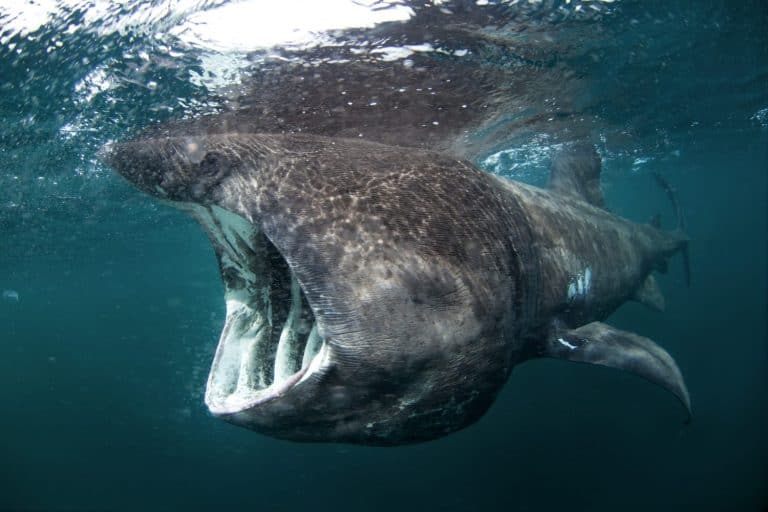
10. Basking Shark (Cetorhinus maximus)
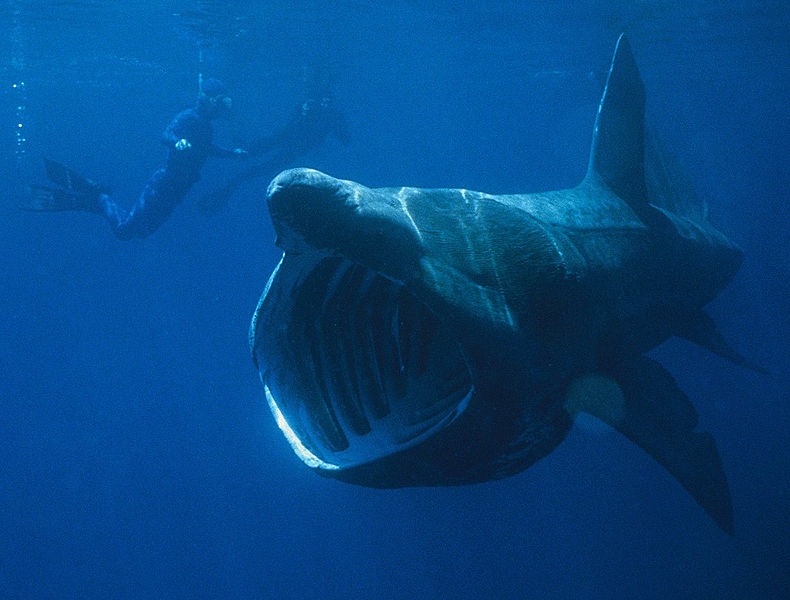
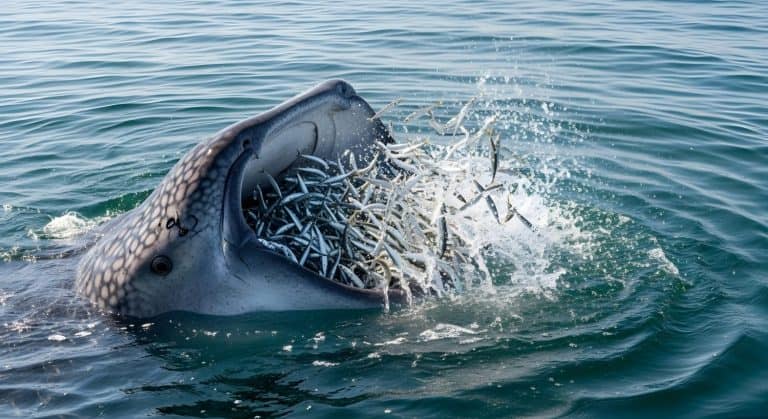
A basking shark opens wide to filter water for plankton.
©Chris Gotschalk / Public Domain, from Wikimedia Commons, the free media repository – Original / License
Max length: 40–46 feet
Bus equivalent: About 1 to 1.15 buses long
Where it lives: Temperate seas worldwide
Status: Endangered
Slow and graceful, basking sharks cruise just below the surface with their giant mouths wide open, filtering plankton as they go. They’re the second-largest fish in the world and are often spotted off the coasts of New England and the British Isles. Despite their size, they’re completely harmless to humans.
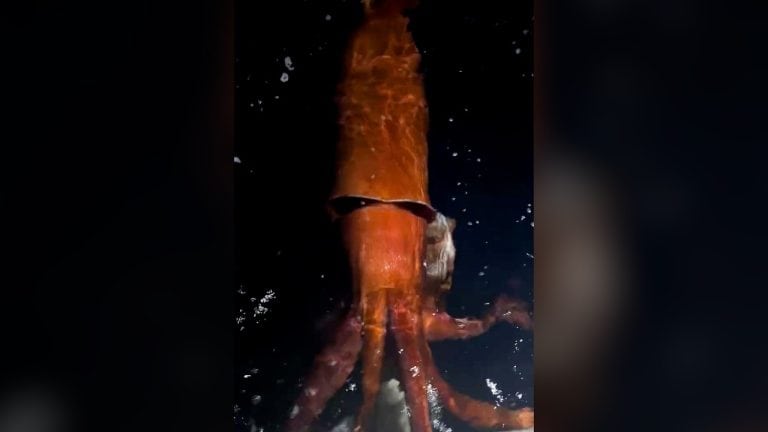
9. Colossal Squid (Mesonychoteuthis hamiltoni)

This is the first confirmed live observation of the colossal squid in its habitat.
©ROV SuBastian / Schmidt Ocean Institute – Original
Max length: Almost 46 feet
Bus equivalent: Just over one bus long
Where it lives: Deep Southern Ocean, near Antarctica
Status: Data deficient
Rarely seen alive, the colossal squid is one of the most mysterious creatures in the ocean. It has the largest eyes of any animal—about the size of dinner plates—and powerful arms and tentacles. Most of what we know comes from dead specimens recovered from the icy depths, hinting at a secretive giant that prowls far below the surface.
8. Oarfish (Regalecus glesne)
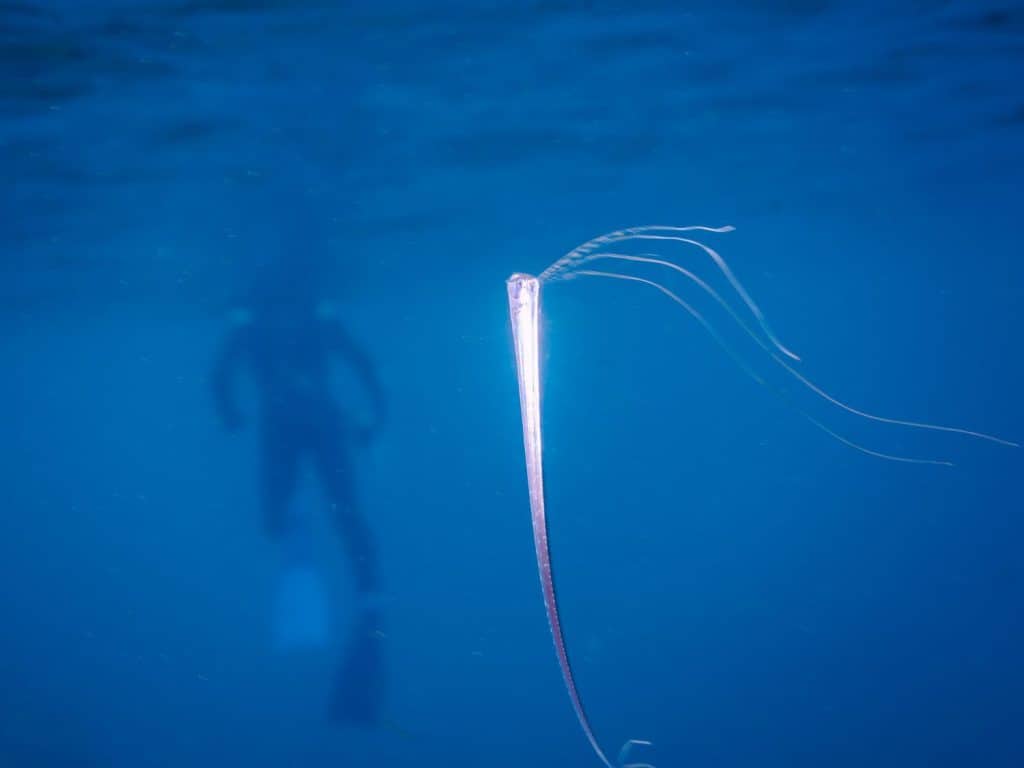
This is just a juvenile oarfish, a huge snakelike species that may have inspired traditional Chinese dragon imagery.
©d3_plus/Shutterstock.com
Max length: Up to 56 feet
Bus equivalent: 1.4 buses long
Where it lives: Deep ocean zones worldwide, usually below 650 feet
Status: Not yet evaluated by the IUCN Red List
Sometimes called the “sea serpent” of sailor lore, the oarfish is the world’s longest bony fish. It’s a ribbon-like creature with a silvery, undulating body that can stretch more than 50 feet long. Oarfish are rarely seen alive—they often surface only when sick or dying—so most sightings are brief and eerie. Their strange, snakelike motion and crest of red fins have fueled deep-sea legends for centuries. They’re traditionally thought of as harbingers of doom—“doomsday fish”—and unverified reports claim that some washed ashore in Japan before the 2011 earthquake.
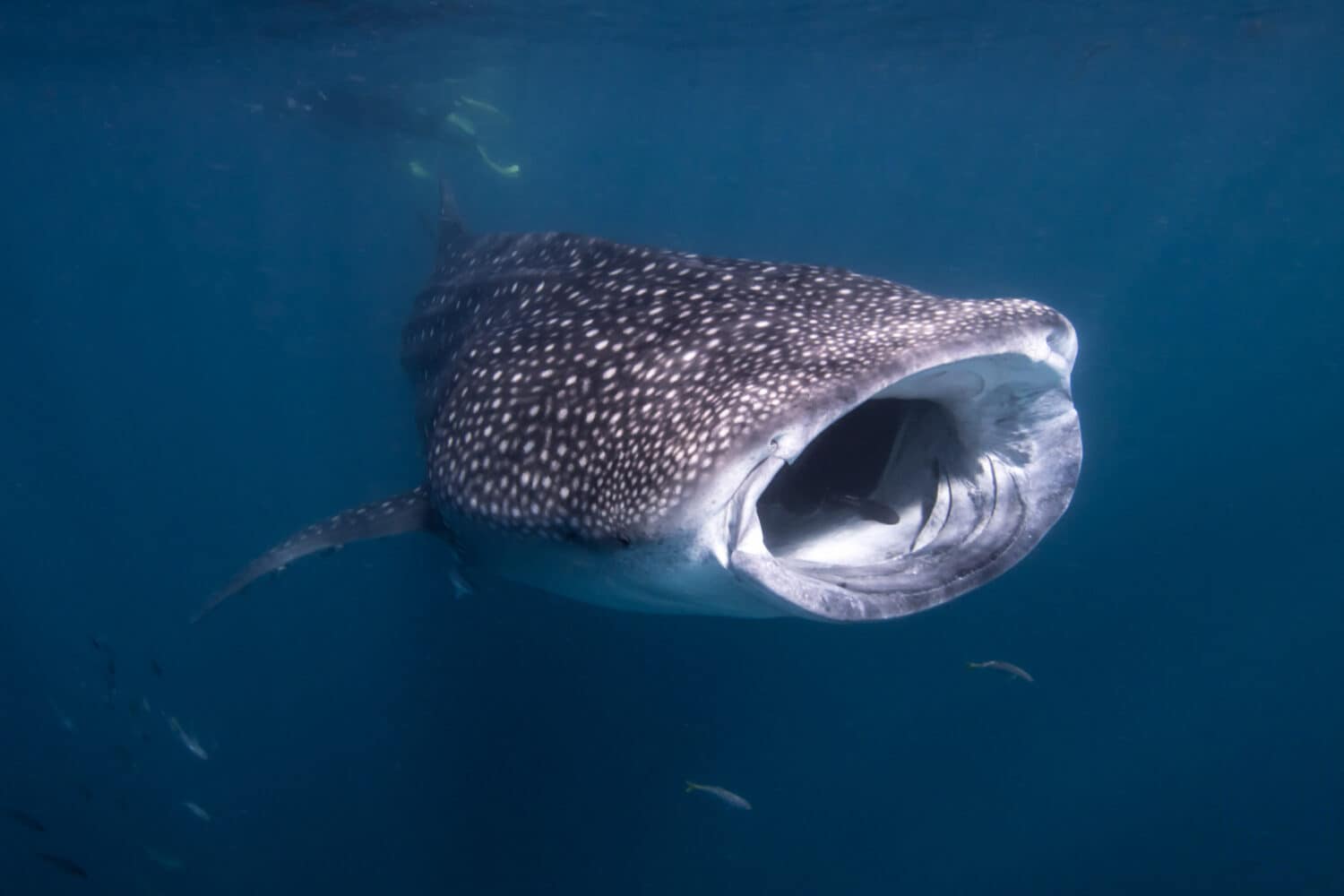
7. Whale Shark (Rhincodon typus)
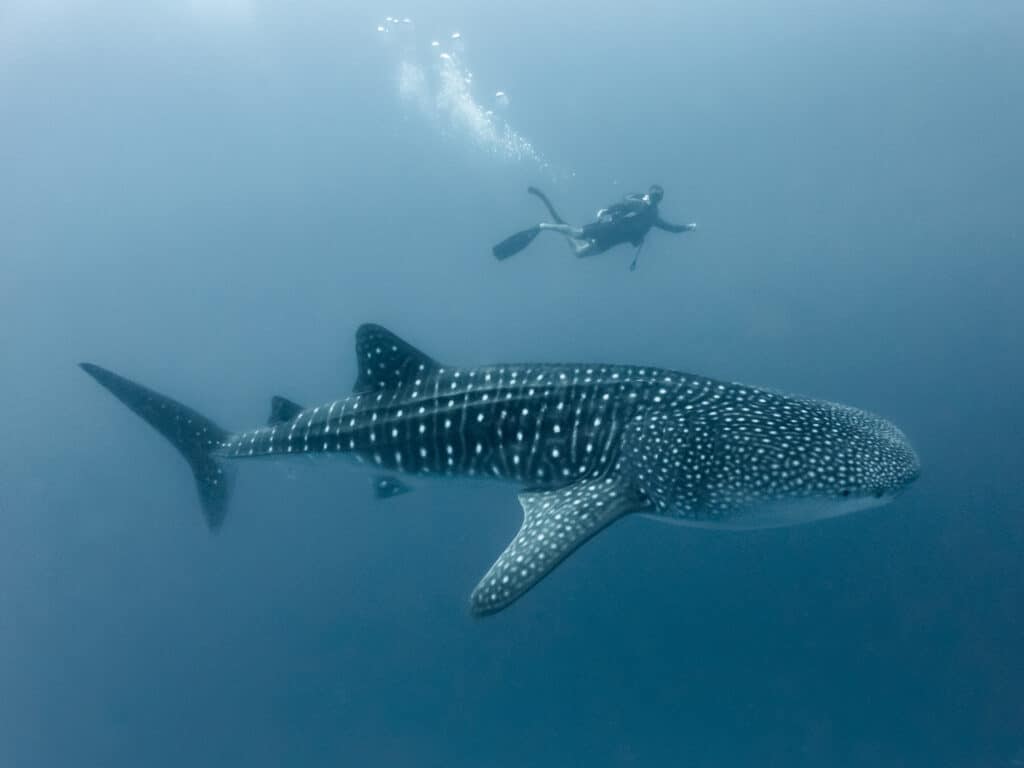
A diver encounters a peaceful whale shark in the deep ocean.
©Katja Tsvetkova/Shutterstock.com
Max length: Up to 65 feet (usually 45–50 feet)
Bus equivalent: 1.6 buses long
Where it lives: Tropical and warm-temperate seas
Status: Endangered
The largest living fish, whale sharks, are calm, filter-feeding giants. They move slowly through warm, plankton-rich waters, mouths agape. Despite their size, they pose no threat to humans and are popular with divers. You’ll often find them off the coast of Mexico, the Philippines, and Australia.
6. Giant Squid (Architeuthis dux)
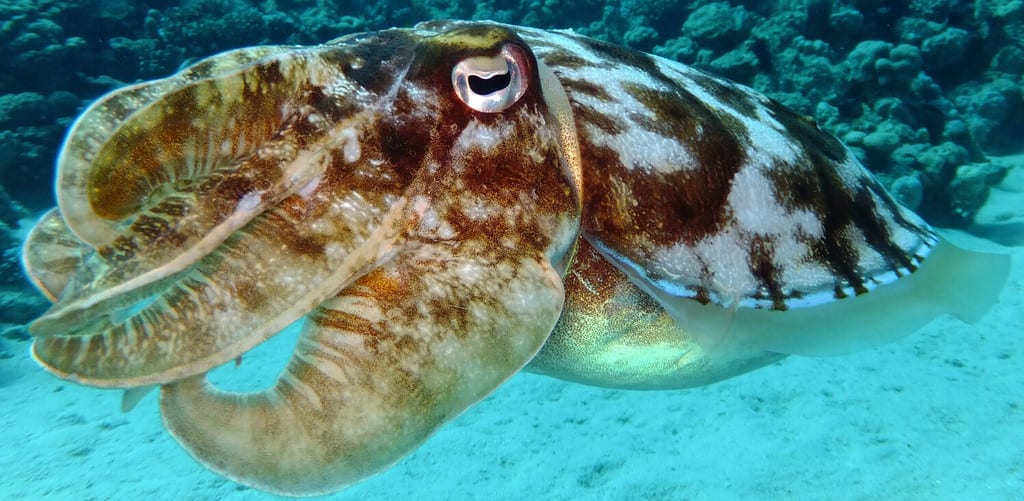
Giant squids have a long-running feud with sperm whales. Fortunately, the ocean is big enough for both of them.
©Shiva N hegde/Shutterstock.com
Max length: 43–66 feet
Bus equivalent: 1.1 to 1.65 buses long
Where it lives: Deep waters worldwide
Status: Least concern
Legends of the kraken likely started with sightings of giant squid. These elusive cephalopods have long, flexible tentacles covered in suction cups and hooks. They live in deep waters near the continental slopes and are known for their run-ins with sperm whales, who seem to be their only real predator.
5. Sperm Whale (Physeter macrocephalus)
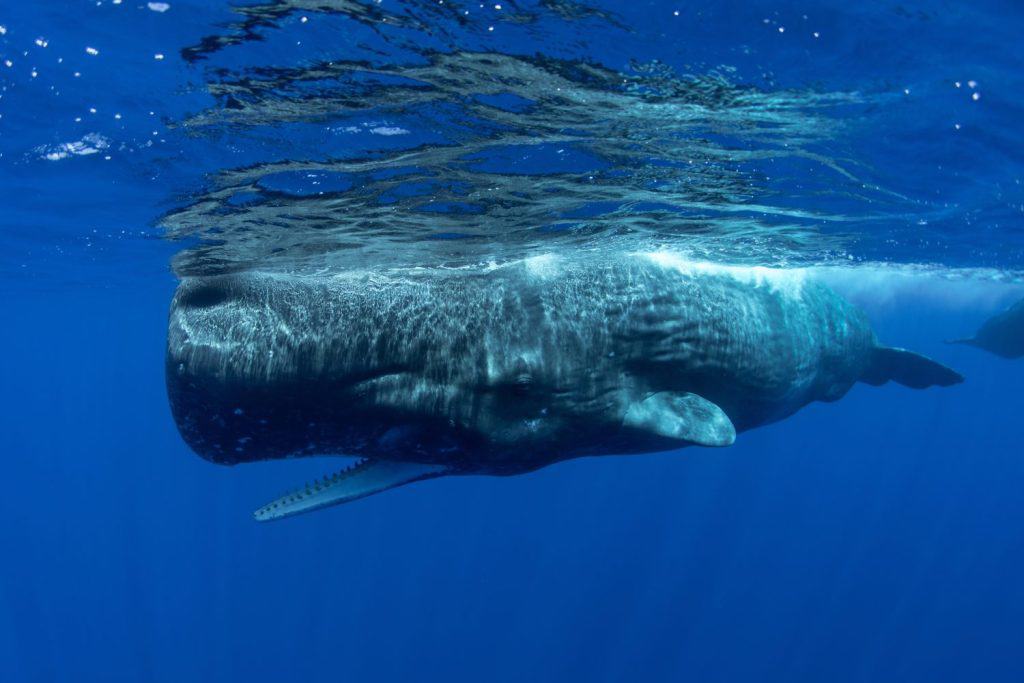
The sperm whale’s enormous blocky head contains structures that aid in echolocation and buoyancy.
©ohrim/Shutterstock.com
Max length: 67–80 feet
Bus equivalent: 1.7 to 2 buses long
Where it lives: Deep ocean zones around the world
Status: Vulnerable
With enormous, square heads and the ability to dive more than a mile deep, sperm whales are built for life in the deep sea. They make some of the loudest animal sounds, reaching 230 decibels to communicate over long distances and echolocate their prey. Although they are air-breathing mammals, they can stay submerged for over an hour. Their main prey? Giant squid, hunted in pitch-black waters far below the sunlit surface.
4. Fin Whale (Balaenoptera physalus)
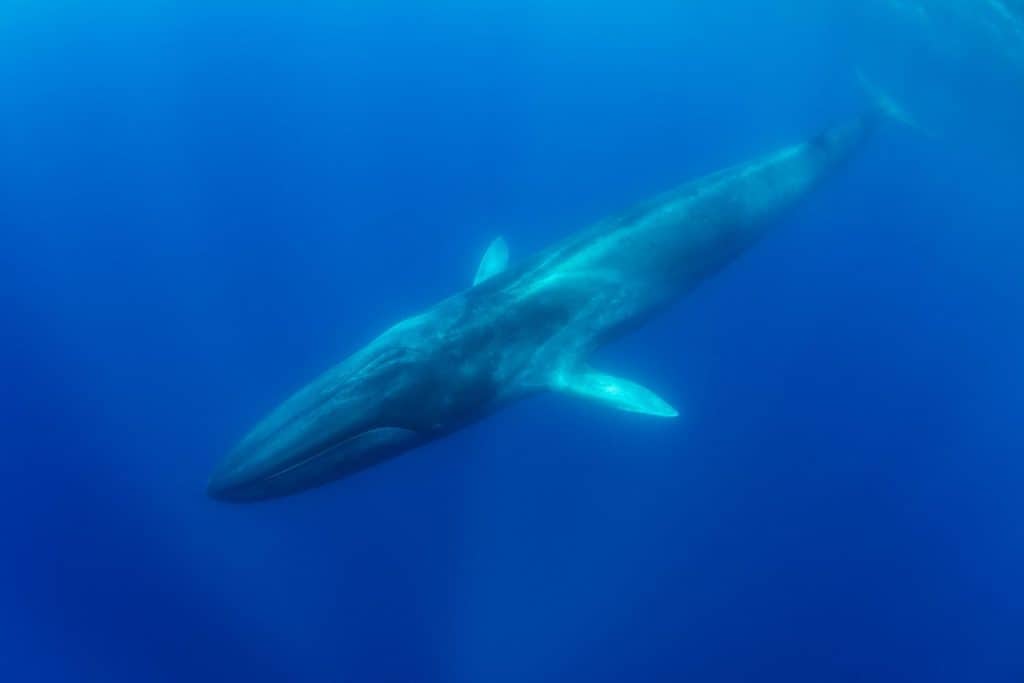
Fin whales are second only to blue whales in size.
©wildestanimal/Shutterstock.com
Max length: 64–85 feet
Bus equivalent: 1.6 to 2.1 buses long
Where it lives: All major oceans
Status: Vulnerable
Fin whales are long, slender, and surprisingly fast. They’re the second-largest animal on Earth, but they can move at speeds up to 25 mph, earning them the nickname “greyhound of the sea.” They are often seen in open water, sometimes traveling in pairs or small groups.
3. Portuguese Man o’ War (Physalia physalis)
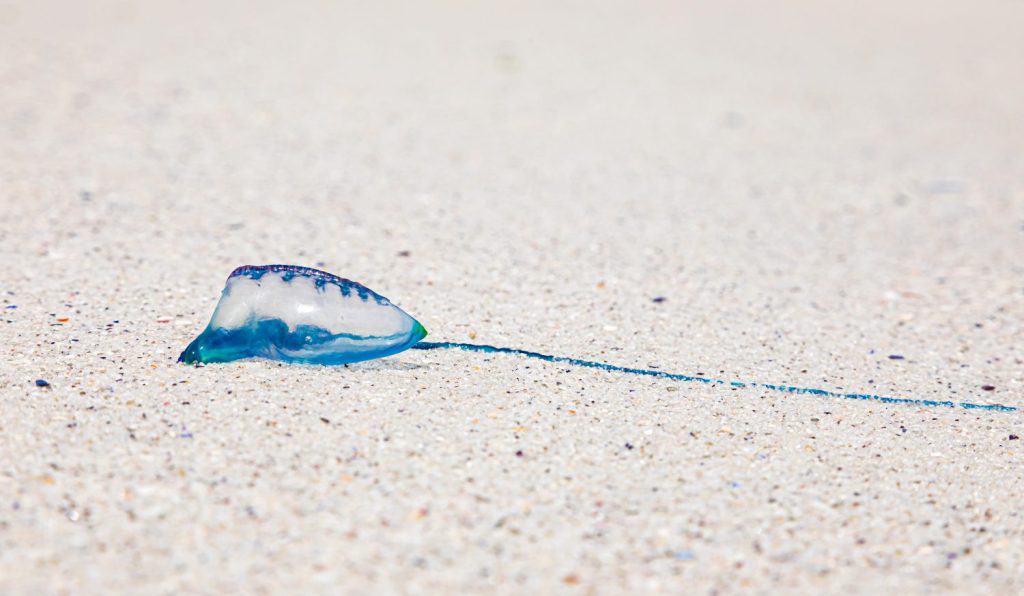
The name of this creature comes from its shape, which looked like a type of ship to sailors who first spotted it floating on the waves.
©Sunshine Seeds/Shutterstock.com
Max length: Tentacles up to 100 feet
Bus equivalent: 2.5 buses long (by tentacle length)
Where it lives: Warm waters of the Atlantic, Pacific, and Indian Oceans
Status: Not yet evaluated by the IUCN Red List
Despite looking like a jellyfish, the Portuguese man o’ war is actually a colony of specialized organisms working together. Its translucent, purple-blue body floats on the water’s surface. Below it, stinging tentacles can dangle like fishing lines over 100 feet below and deliver venom that can paralyze small fish. They drift with the currents, sometimes washing ashore in large numbers during seasonal blooms. It can be tempting to touch these beautiful, glasslike organisms, but resist the urge even if they look dead. The tentacles still pack one of the most painful stings you’ll ever endure.
2. Blue Whale (Balaenoptera musculus)
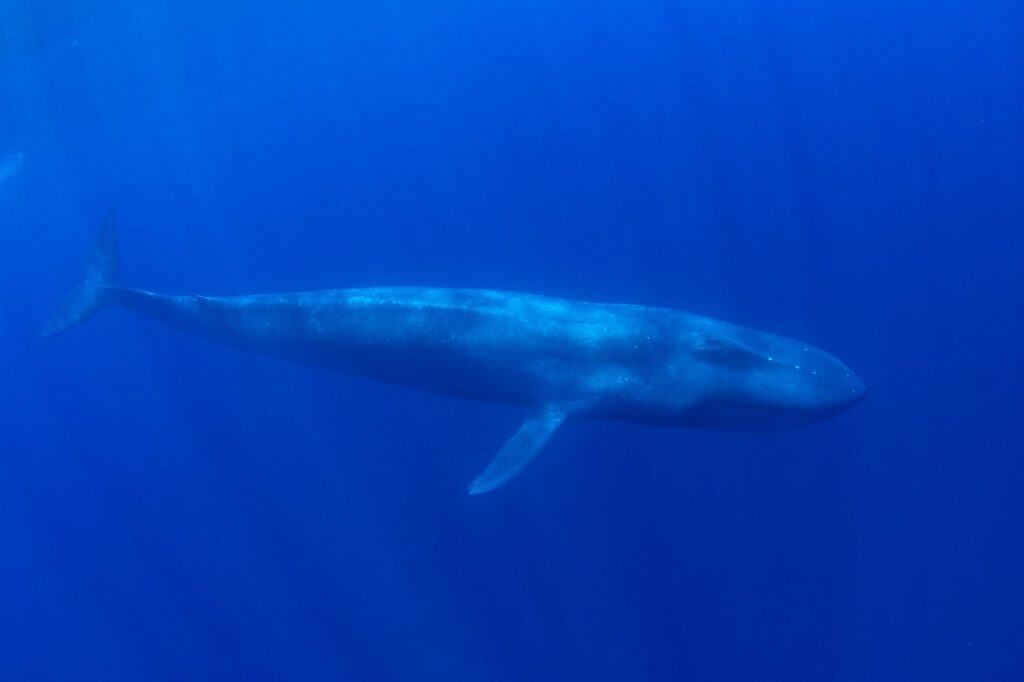
The blue whale is larger even than the largest dinosaurs on land or sea that we have discovered.
©Rich Carey/Shutterstock.com
Max length: Up to 100 feet
Bus equivalent: 2.5 buses long
Where it lives: All oceans except the Arctic
Status: Endangered
The blue whale is the largest animal ever to live on Earth. Bigger than any dinosaur, these whales can weigh up to 200 tons. That’s the weight of more than a thousand fifth graders and the 15 buses they rode in on! Their calls are among the deepest and loudest sounds in the animal kingdom, traveling hundreds of miles underwater. Yet, despite their massive size, they survive on tiny planktonic crustaceans called krill—consuming up to 4 tons each day!
1. Lion’s Mane Jellyfish (Cyanea capillata)
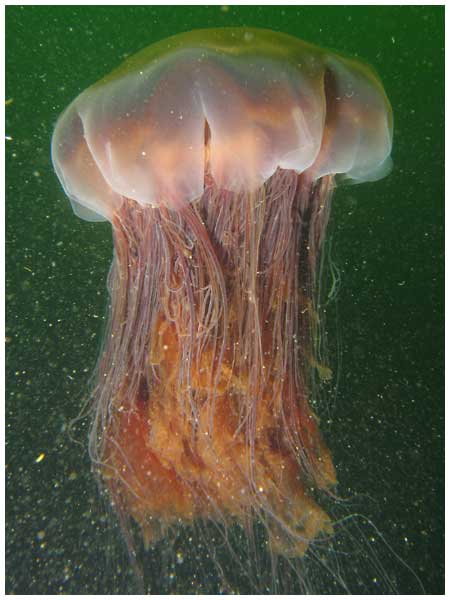
Like the Portuguese Man o’ War, the lion’s mane jellyfish captures prey with long stinging tentacles.
Max length: Up to 120 feet (tentacles)
Bus equivalent: 3 buses long (tentacle length)
Where it lives: Cold northern waters of the Atlantic and Pacific
Status: Not yet evaluated by the IUCN Red List
It may not have the bulk of a whale, but the lion’s mane jellyfish holds the record for length. Its thin, trailing tentacles can stretch longer than a blue whale, floating like strands of silk through the water. Despite their delicate appearance, those tentacles can deliver a painful sting. Most sightings occur in colder seas, like near Russia, the British Isles, or the northeastern U.S.
Are Bigger Creatures Waiting to Be Discovered?
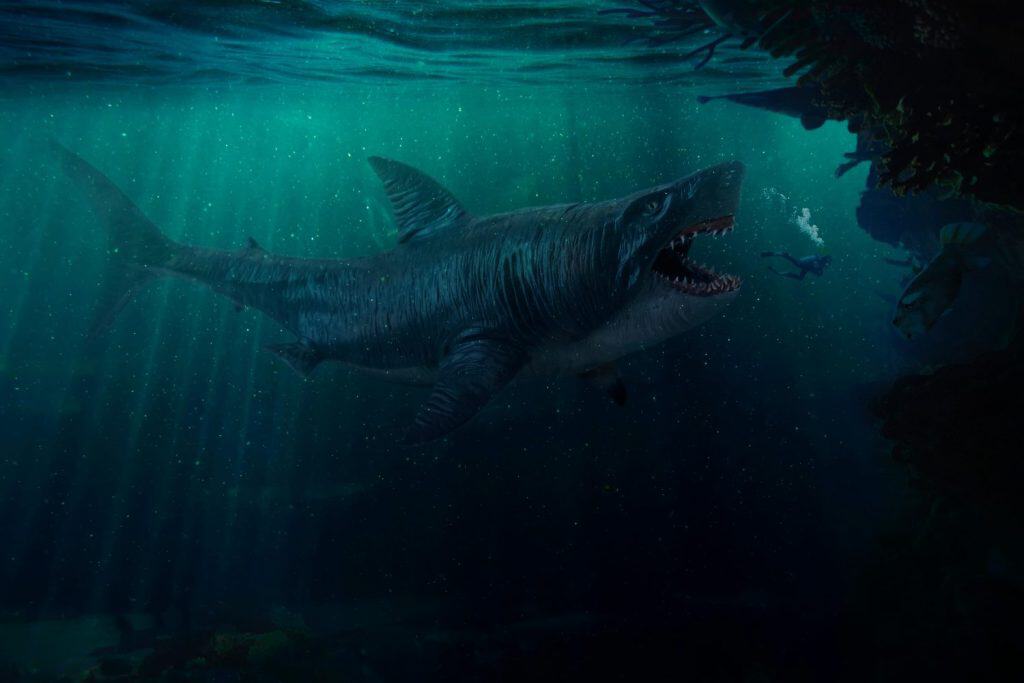
In this artist’s conception, a megalodon pursues a diver. Our money is on the shark.
©Artem Avetisyan/Shutterstock.com
In 1997, underwater microphones detected a strange, ultra-low-frequency sound in the South Pacific. Loud enough to be heard over 3,000 miles away, it was dubbed “the Bloop” and didn’t match any known geological or man-made source. Some researchers speculated it might come from an enormous, undiscovered sea creature—maybe even a living Megalodon, an extinct species of giant shark that once ruled prehistoric oceans. Eventually, NOAA scientists identified the likely source as an icequake: huge slabs of Antarctic glacier cracking underwater.
Still, the idea of a giant, unknown creature hiding in the ocean’s depths hasn’t completely gone away. In a world where colossal squid, 100-foot jellyfish, and deep-diving whales exist, it’s easy to see why the ocean continues to inspire both wonder and a healthy dose of fear.