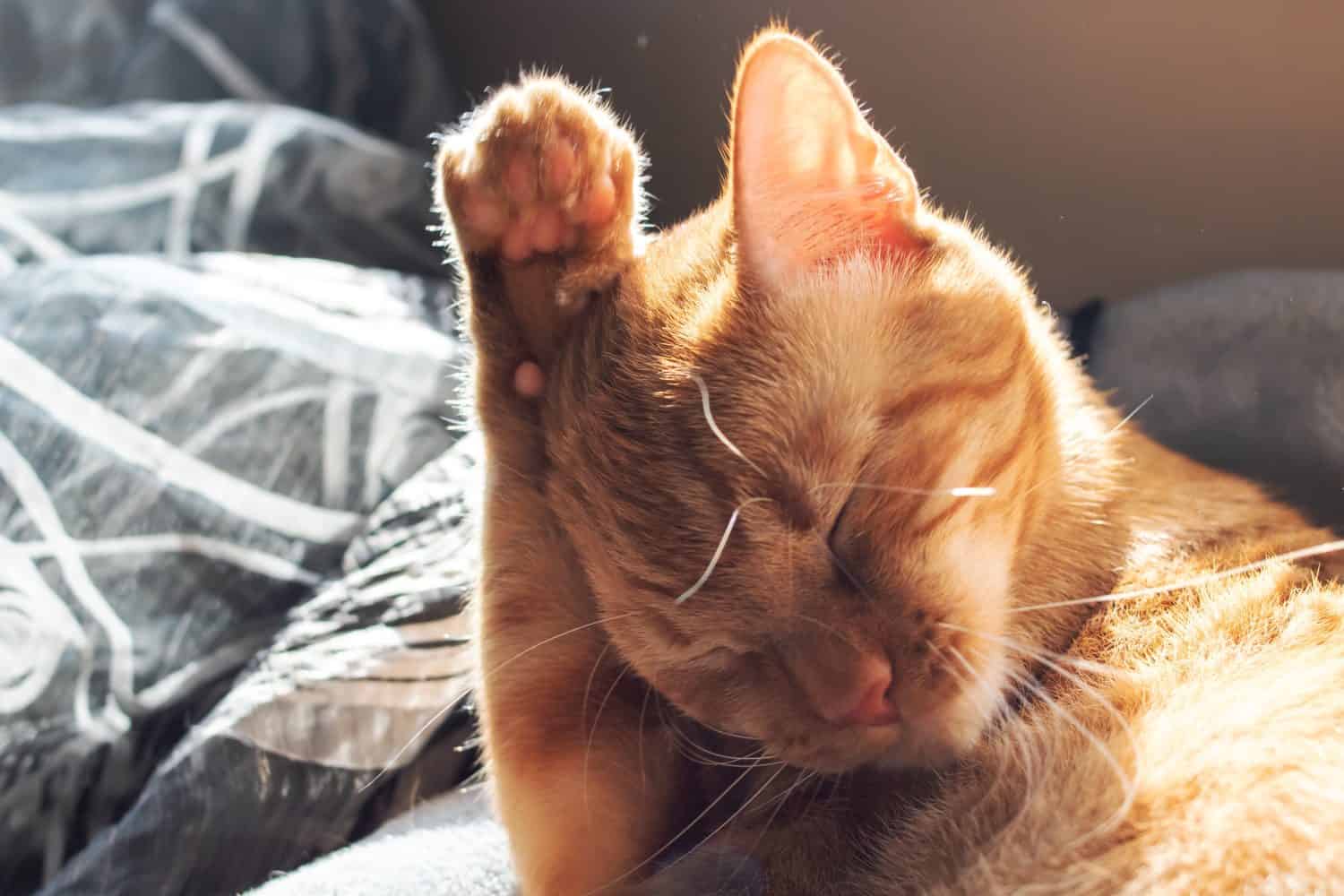

Cats are thought to have nine lives for a reason. They can seemingly get themselves out of any nasty situation, always landing on all fours. Their intelligence and physical prowess make them very strong, even for house pets! This YouTube Short posted by @SoAdorable-pet shows a cat hanging from what appears to be a roof rafter as two cats fight dramatically. Given their ability to land on all fours, the cat likely had a better chance of avoiding injury, but falls can still be dangerous for cats. Read on to learn more about how cats fight and how they land on all fours.
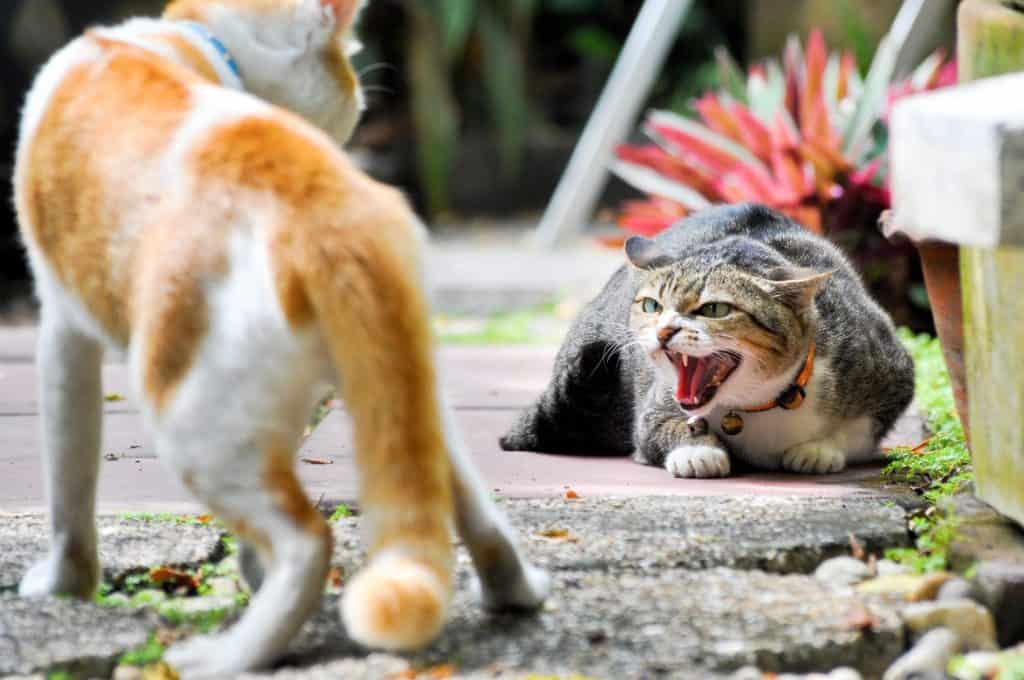
Cats use their sharp claws to hook onto surfaces.
©Glue Promsiri/Shutterstock.com
Why Do Cats Fight?
Cats fight for several different reasons. In the video, they most likely got to that elevated place out of curiosity or exploration. Cats are naturally curious creatures, which is why they were in such a strange location. Playing or play-fighting in these areas helps younger cats gain strength and coordination, making this form of socialization important. The cat in the video is able to hang on for so long thanks to the strength it has developed from interacting with other cats. Cats have sharp claws that can be good for hooking onto different surfaces, and combined with a flexible build and light body weight, they can hold on strongly. Their reflexes are also quick, keeping the cat alert to its surroundings and opponent. If a cat were to fall, it could twist its body quickly to help with the landing.
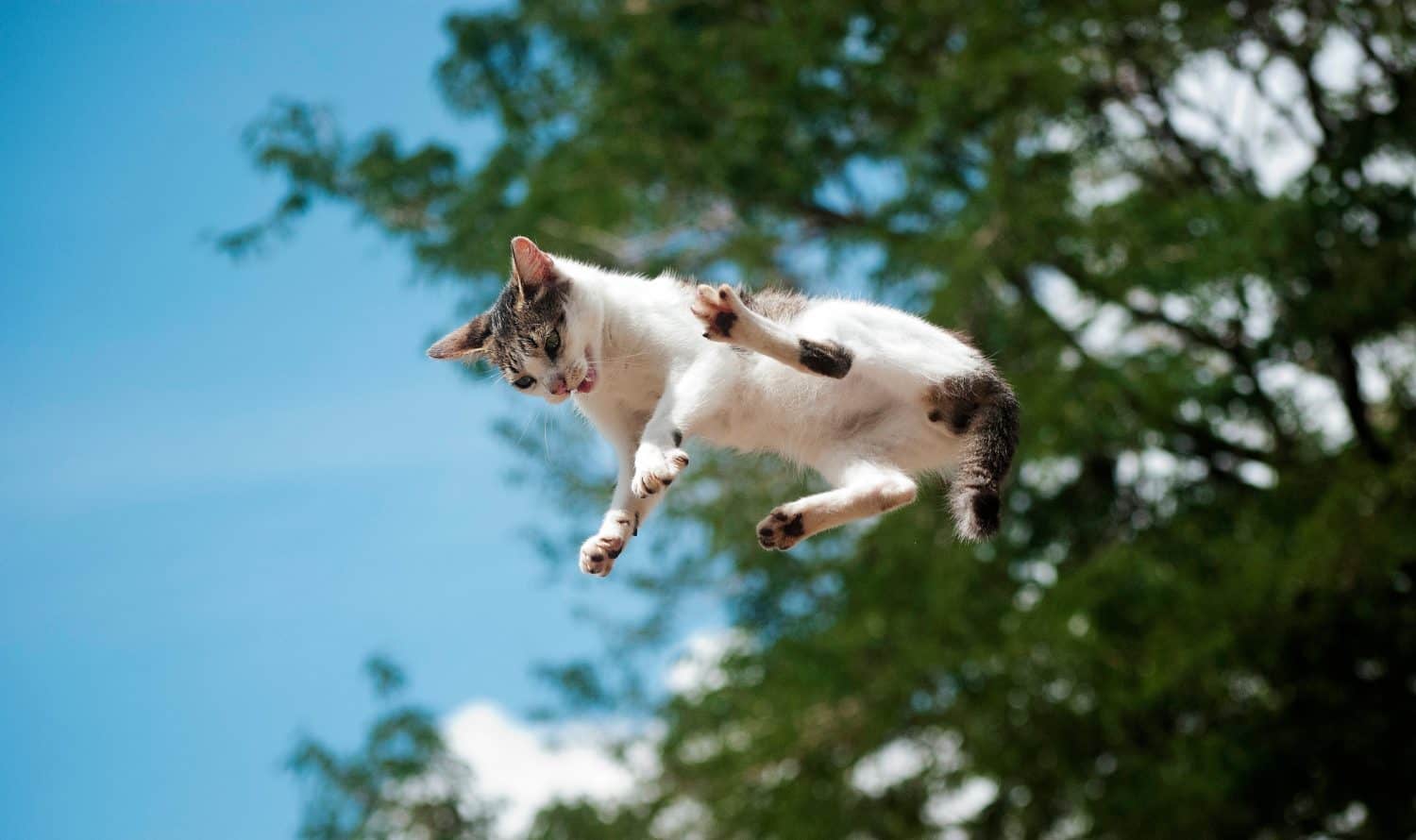
Cats are incredibly agile.
©yordanka caridad almaguer/Shutterstock.com
How Do Cats Land on All Fours?
Cats have the amazing ability to right themselves in midair after a fall. This reflex has more to do with instinct than learned behavior, making it incredibly interesting to learn about. They have a “balance organ” known as a vestibular apparatus. The vestibular apparatus helps detect and coordinate head position and movement, signaling body orientation to the brain. When a cat falls, its brain quickly signals the body to adjust its posture for a safe landing.
When falling, the cat first adjusts its head to be upright relative to the ground. Next, it rotates its front legs and shoulders to align with the head. Then, the back legs follow, straightening out the body to face the ground. By extending its legs out and down, the cat can brace itself and absorb the impact upon landing.. While falling from great heights can be dangerous, cats can usually handle short drops, even when they fall unexpectedly.