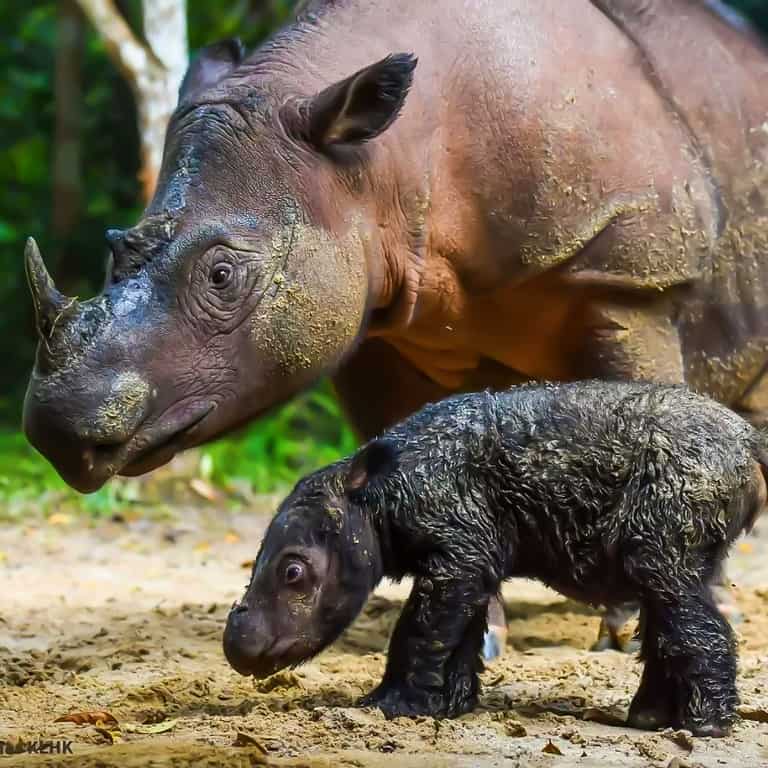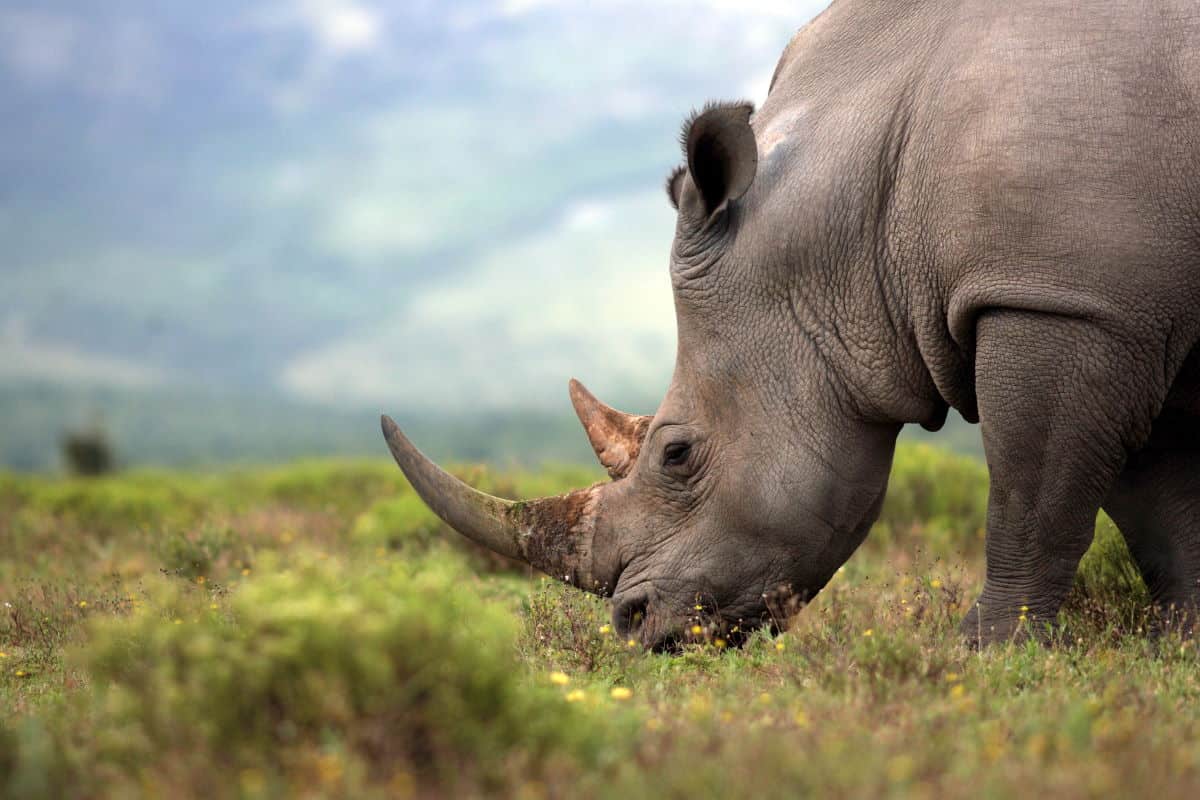

Every year on September 22nd, the world celebrates the remarkable rhino. World Rhino Day has been an important day of awareness for rhinos and their conservation needs since 2011. Sadly, three of the five species of rhinos are critically endangered. In fact, experts believe only around 30,000 rhinos are living in the wild today. Let’s take a closer look at every rhino species in the world as we honor their special day.
1. Black Rhino (Diceros bicornis)
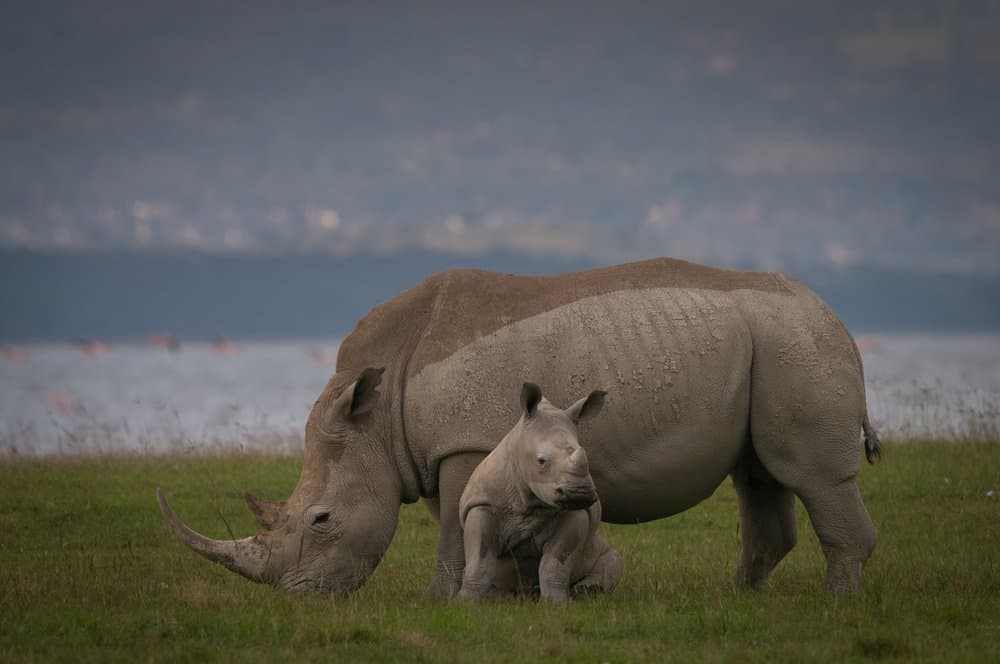
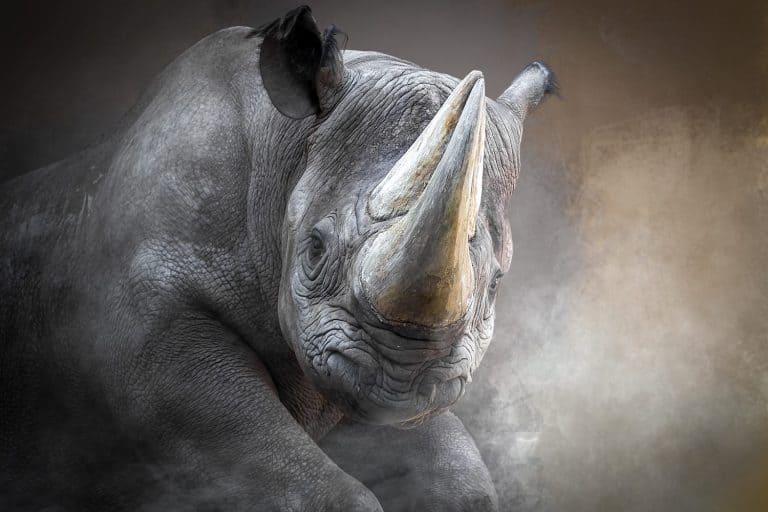
Black rhinos are excellent mothers and take careful care of their young for the first few years.
©Bartosz Budrewicz/Shutterstock.com
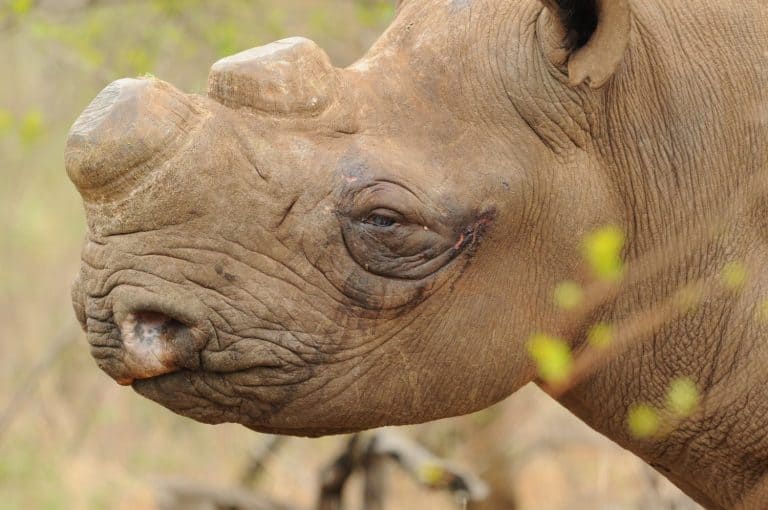
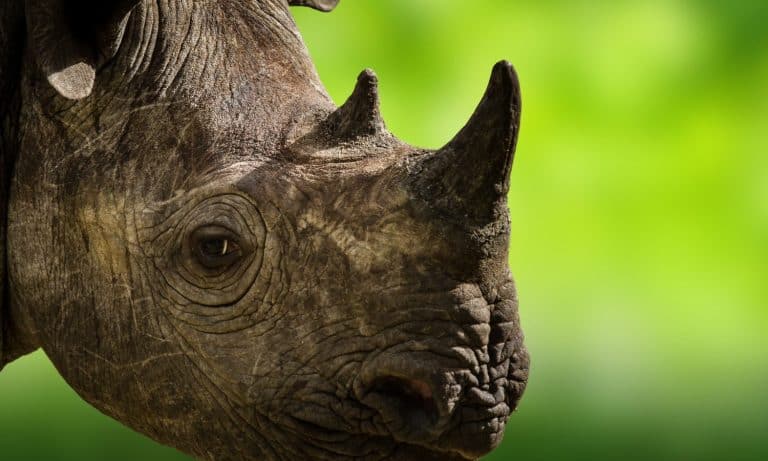
Africa is home to two rhino species, the black rhino and the white rhino. Black rhinos (Diceros bicornis) are about 4.5 to 6 feet tall at their shoulders and weigh about 1,760 to 3,080 pounds. Although they are called black rhinos, they are not black in color but gray. You can distinguish black rhinos from white rhinos by the shape of their lips. Black rhinos’ lips are more pointed, while white rhinos have more of a square shape.
Like all rhinos, black rhinos are herbivores that eat leaves and fruit from trees and bushes. There are over 6,000 black rhinos left today, which has risen considerably from a low of 2,500 during the mid to late 1900s. Despite the population increase, black rhinos remain critically endangered. They suffer habitat loss and are still being illegally killed for their horns. Poachers sell rhino horns on the black market for large sums of money. People mistakenly believe black rhino horns have medicinal properties. However, the horns are made of keratin, the same protein found in human hair and fingernails.
2. White Rhino (Ceratotherium simum)
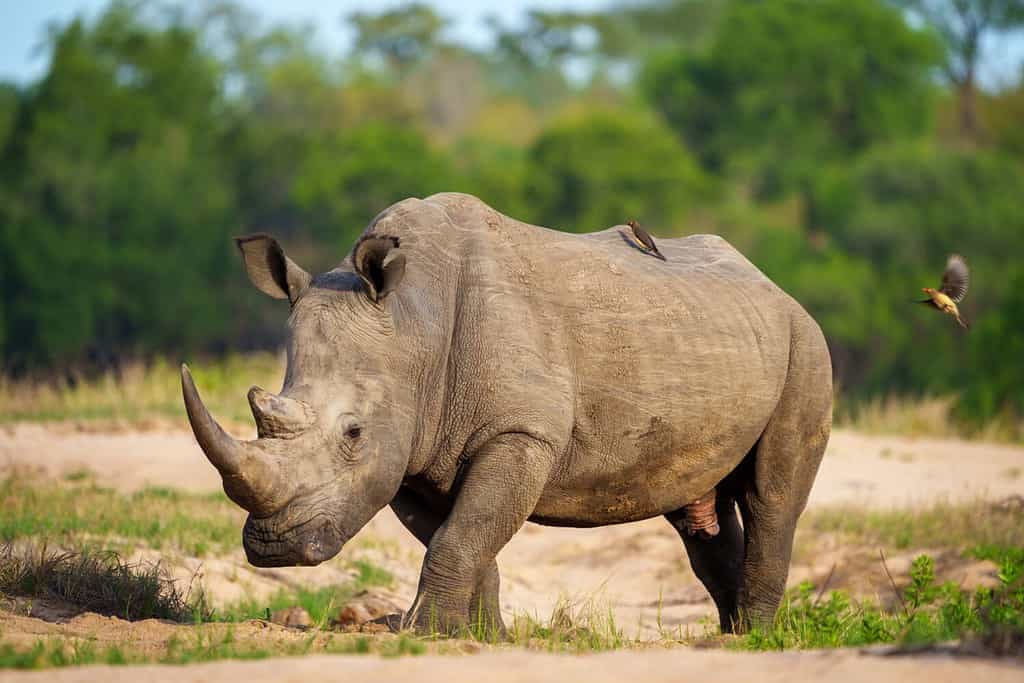
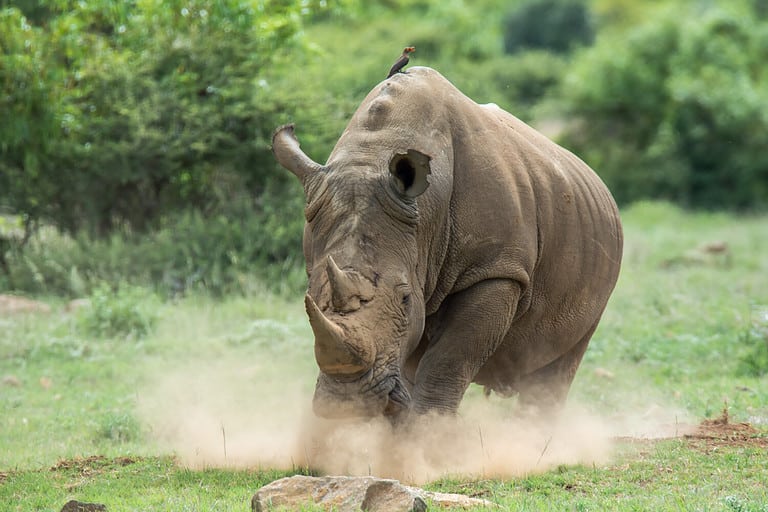
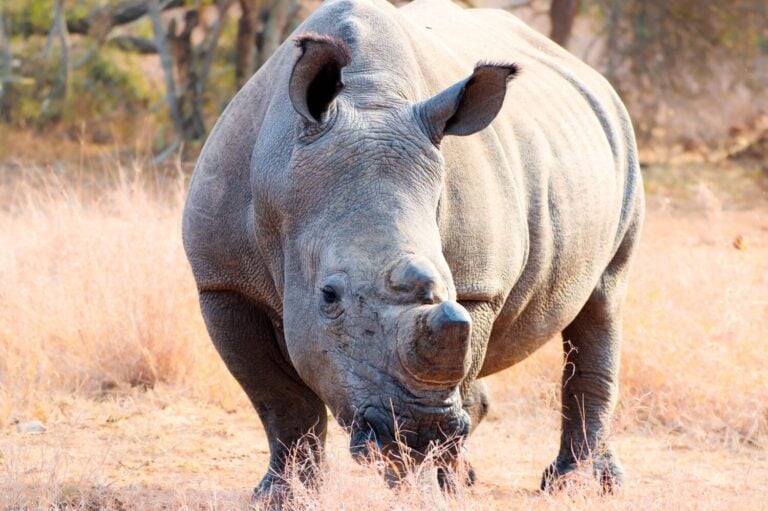
White rhinos are the largest of the rhino species, and the females live in herds of up to 15 individuals.
©Roger de la Harpe/Shutterstock.com
The second of Africa’s rhino species is also the largest of the rhino species. The white rhino (Ceratotherium simum) is about 5 to 6 feet at the shoulder and can weigh up to 7,920 pounds. Unlike black rhinos that feed on shrubs and trees, white rhinos graze on grasses on the ground. They also differ from black rhinos in that they are more social and may live in herds of up to 15 animals, called a crash. A crash of rhinos is usually a family group, made up of females and their offspring.
Although the white rhino population is larger than that of the black rhino, white rhinos are still classified as near threatened. However, a subspecies of the white rhino, the northern white rhino, is critically endangered. There are only two female individuals left in the world. Like black rhinos, illegal poaching for their horns is the greatest threat to white rhinos.
3. Greater One-Horned Rhino (Rhinoceros unicornis)
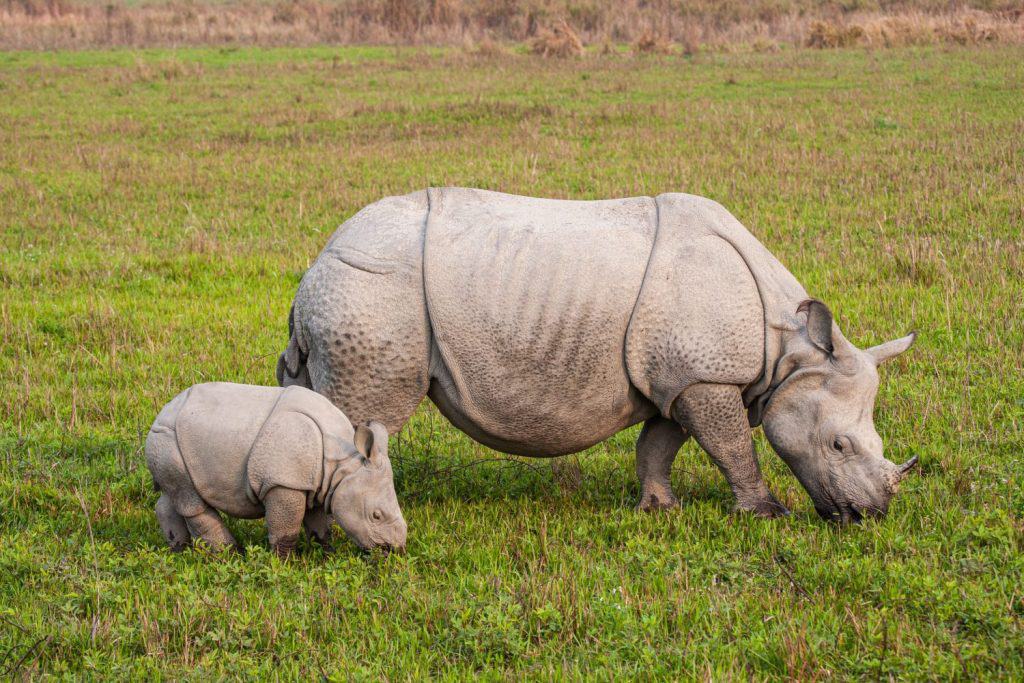
Greater one-horned rhino calves will stay with their mothers for around three years, although they are weaned at about 18 months.
©Wayne Marinovich/Shutterstock.com
The greater one-horned rhino (Rhinoceros unicornis), also known as the Indian rhinoceros, is one of the three rhino species that live in India. They can grow up to 6.5 feet tall at the shoulder and may weigh between 4,000 and 6,000 pounds. The greater one-horned rhino is the largest of the Indian rhinos, second in size only to the African white rhino.
Greater one-horned rhinos live in northern India and southern Nepal. They very nearly went extinct by the beginning of the 20th century, when there were only 200 individuals left. Thanks to conservation efforts, today there are around 4,000 individuals. Greater one-horned rhinos face threats from habitat loss and are sometimes killed when they enter villages and farms while foraging. Like all rhinos, their biggest threat is from illegal poaching for their horns.
4. Javan Rhino (Rhinoceros sondaicus)
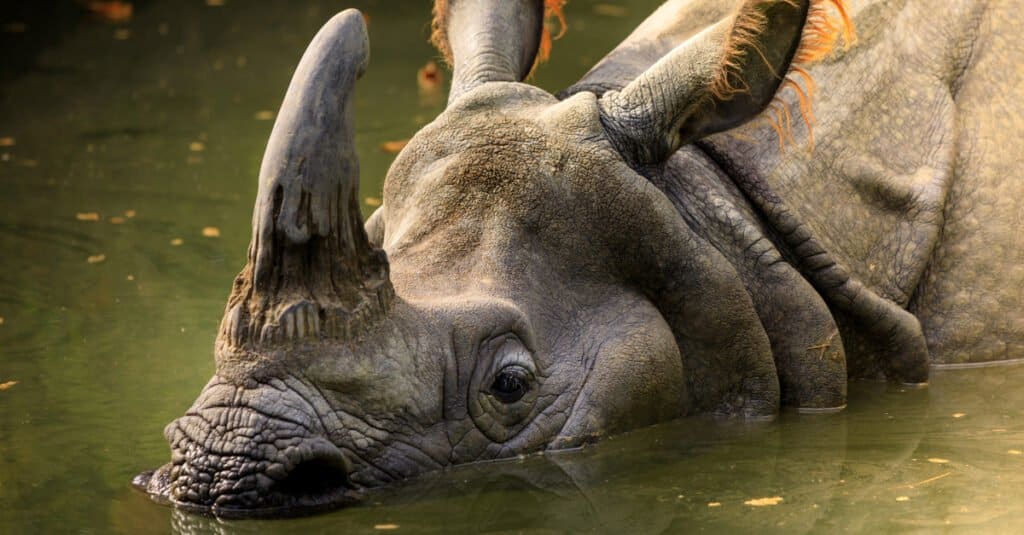
The Javan rhino is critically endangered and only lives in the Ujung Kulon National Park in Java, Indonesia.
©Maximilian Pawlikowsky/Shutterstock.com
Out of all of the rhino species, Javan rhinos (Rhinoceros sondaicus) are the most in danger of extinction. Although they used to live in India, Vietnam, and Indonesia, the only place in the world where they remain is in the Ujung Kulon National Park in Java, Indonesia. There are only around 76 individuals left. Javan rhinos weigh around 2,000 to 5,100 pounds, and have a single horn that’s about 10 inches long. The biggest threats facing Javan rhinos are low genetic diversity and habitat loss. Because such a small population remains, all in one area, inbreeding restricts their genetic diversity. Furthermore, their habitat is at risk from a nearby active volcano and rising sea levels due to climate change.
5. Sumatran Rhino (Dicerorhinus sumatrensis)
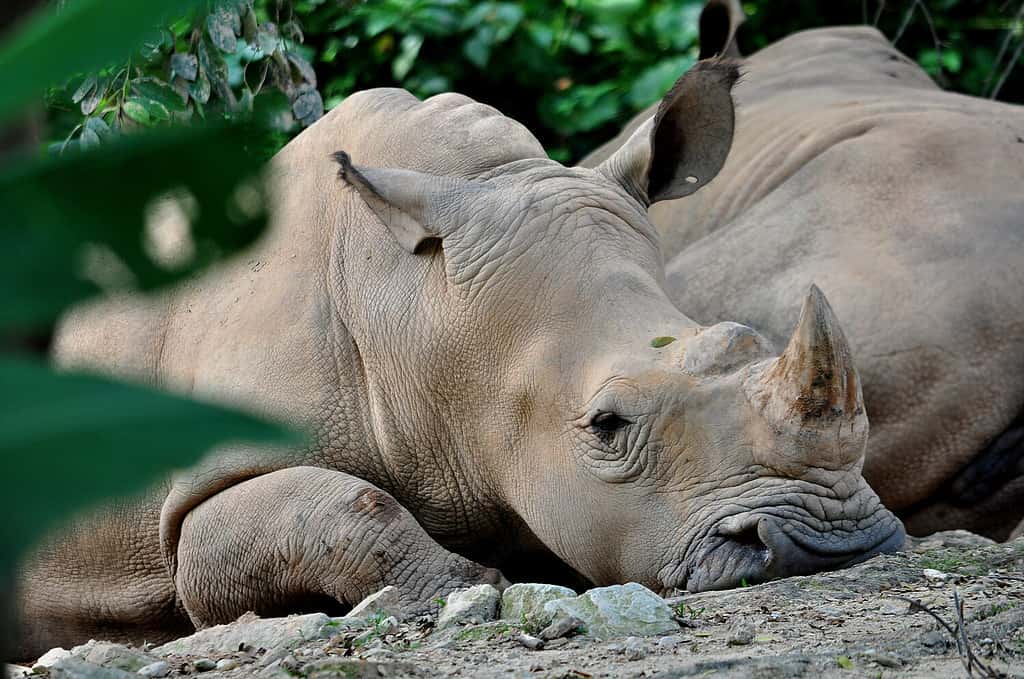
Sumatran rhinos are more closely related to the extinct woolly rhinos than the other four rhino species.
©KF photo/Shutterstock.com
The smallest of the rhino species and the only Asian rhino that boasts two horns is the Sumatran rhino (Dicerorhinus sumatrensis). At the shoulder, they are around 3 to 5 feet tall and weigh about 1,320 to 2,090 pounds. Like the Javan rhinos, they face severe threats to their population. There are estimated to be around 80 individuals left in the world.
Sumatran rhinos suffer from habitat loss, as many of their former forest habitats have been cleared for palm oil plantations. The remaining rhinos survive in fragmented forest patches, making it difficult for them to travel and find mates. Like the other rhino species, they are also in danger of poaching for their horns. Conservation efforts focus on breeding programs and bringing the fragmented rhinos together to mate and breed.