
Quick Take
- An expedition that found almost none of what it came for still counts as one of the most significant Argentine deep-sea discoveries on record, and there is a good reason why that contradiction makes sense. See what they found →
- The world's largest known structure of its kind sits off Argentina's coast, approaches the size of Vatican City, and was essentially invisible until a camera descended to find it. Explore the record reef →
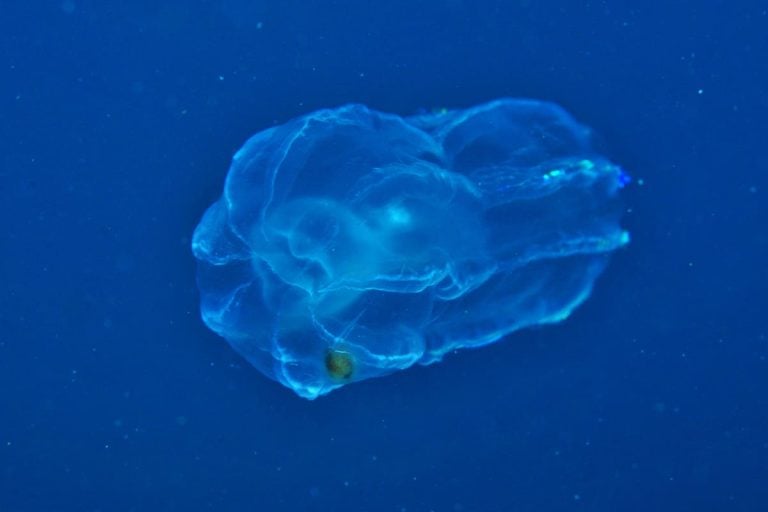
- One of the rarest animals in the deep ocean has no stinging tentacles, and juvenile fish were swimming toward it rather than away. Meet the phantom jellyfish →
- Something from a 1980s living room reached the Argentine seafloor before the scientists did, and it arrived in better condition than when it left. See the VHS tape →
A deep-sea expedition is an expensive bet. Ship time is booked months in advance, a remotely operated vehicle descends for hours at a stretch, and nothing guarantees the target is where the maps suggest.
The Schmidt Ocean Institute’s recent trip to the Argentine deep sea largely lost that bet. Researchers went looking for cold seeps and located exactly one active zone. They came home with 28 possible new species anyway.
Here is what the seafloor off Argentina turned out to be hiding.
What They Went Looking For
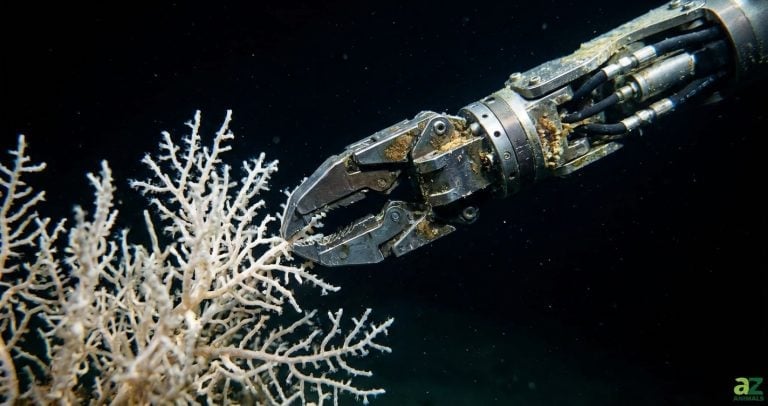
Working from the research vessel Falkor (too) with the remotely operated vehicle SuBastian, the team set out to survey cold seeps in the South Atlantic. These are patches of seafloor where methane and other chemicals escape from below and sustain microbial communities. Those microbes feed tube worms, clams and mussels, supporting a food web that runs without a single photon of sunlight.
They found one active seep zone. What stopped them was everything else. Life covered the region far beyond the seep patches, in densities nobody on board had planned for.
Expedition chief scientist María Emilia Bravo said in a statement that the team had not expected this level of biodiversity in the Argentine deep sea, and described the region as teeming with life.
One Active Seep, Twenty-Eight Possible New Species
The expedition found almost none of what it set out to study. How should a trip like that be judged?
- A success, since discovery rarely follows the plan
- A failure, because the original question is still open
- Neither, it just shows how little we know before we go
- It depends on whether the new findings get funded next
A Reef That Broke Records
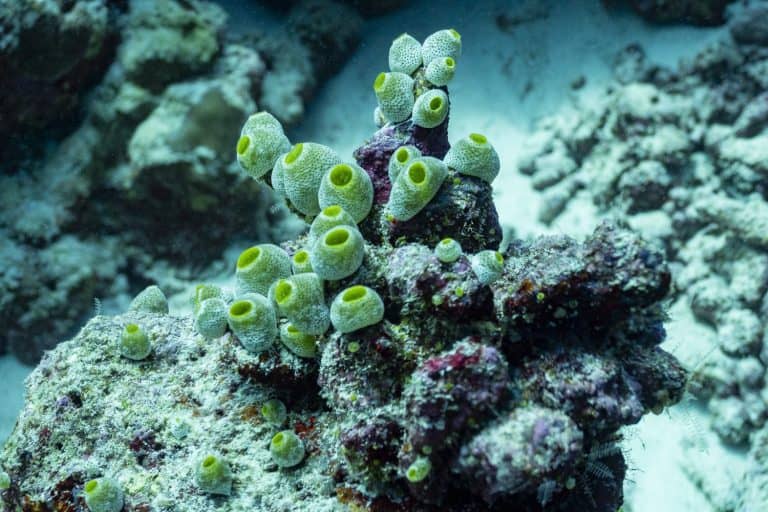
The 28 candidate species include sea snails, urchins, anemones and worms, and many of them live inside a single structure. The team surveyed the largest known Bathelia candida coral reef in the world, a colony approaching the size of Vatican City. Deep-sea corals build three-dimensional habitat that functions as shelter, nursery and feeding ground, which is why so much of the region’s life was concentrated there.
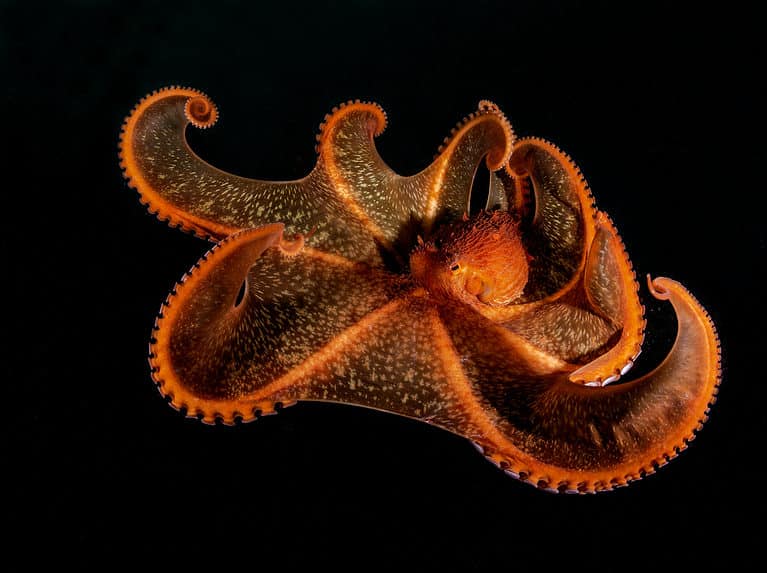
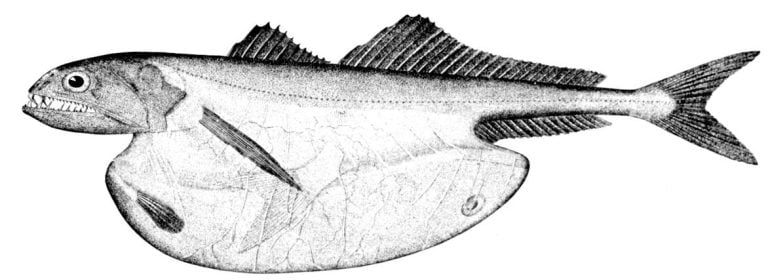
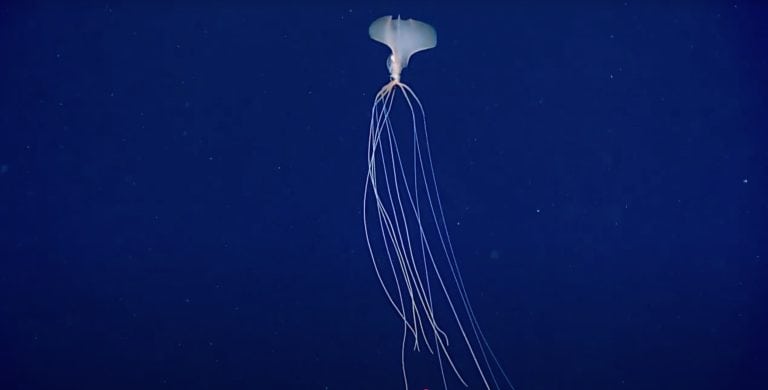
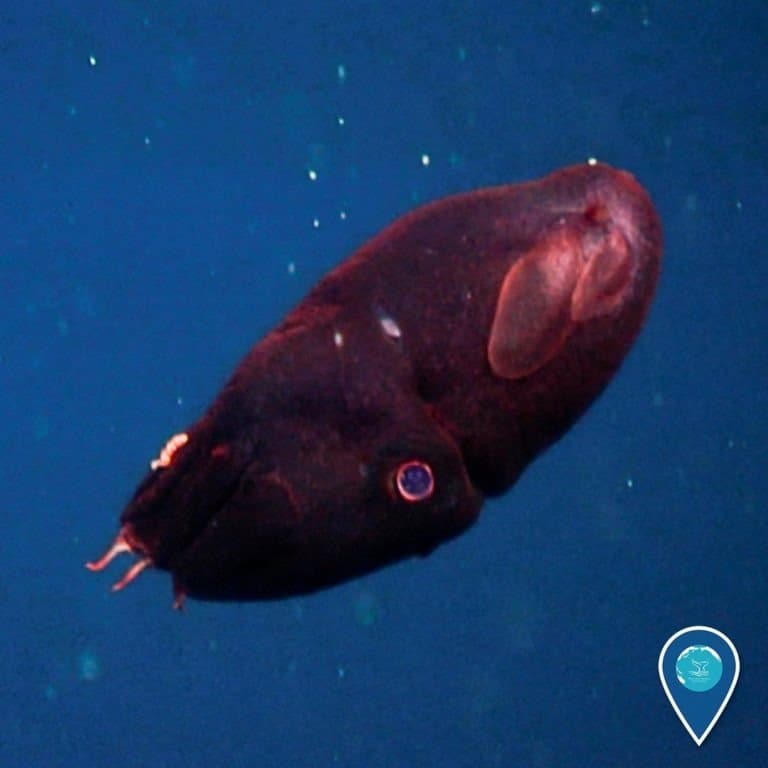
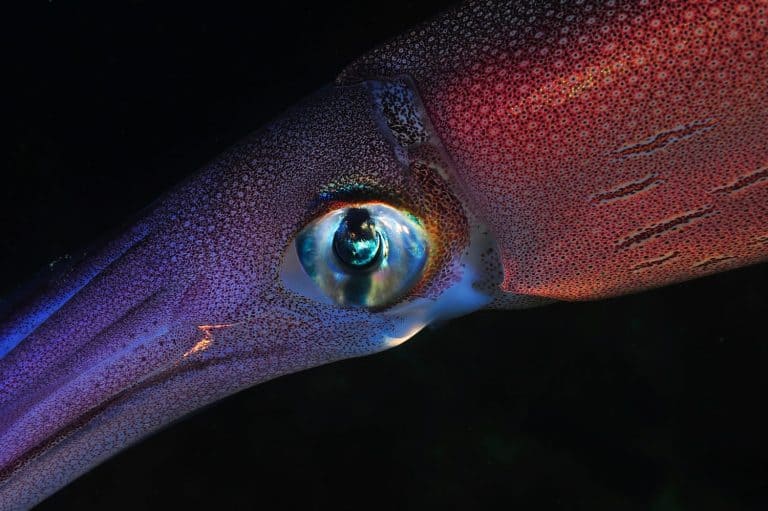
The rest of the footage reads like a depth chart. A squat lobster at 619 meters, picking through a bed of chemosynthetic clam shells. A glass squid at 1,725 meters in the Colorado-Rawson submarine canyon. An octopus tucked into coral at 1,010 meters along the Argentine Continental Slope. A tripod fish standing on its elongated fins at 2,700 meters in the Argentine Basin.
The ocean contains 98 percent of the living space on this planet.
Jyotika Virmani, executive director, Schmidt Ocean Institute
The Whale and the Phantom
Two observations stand apart. The first is Argentina’s first documented deep-sea whale fall, filmed roughly 2.4 miles below the surface on a scarp in the Argentine Basin. A whale carcass delivers centuries of nutrition to a place built on scarcity, and this one has likely been down there for decades. Sharks and crabs were using the site, along with bone-eating Osedax worms. Once the soft tissue is gone, the skeleton enters what researchers call the reef phase, serving as hard substrate in a landscape that offers almost none.
The second is the giant phantom jellyfish, Stygiomedusa gigantea, one of the rarest animals in the deep ocean. Its bell reaches about 3.3 feet across and its four arms extend up to 33 feet, roughly a school bus. It has no stinging tentacles at all. Instead it uses those arms to trap plankton and small fish, and the footage caught juvenile fish sheltering around the bell rather than fleeing it.
What Should Not Be There
The same dives logged garbage bags and fishing nets. They also logged a VHS tape, described by the expedition as near-pristine.
That detail lands harder than most pollution statistics. The cassette format has been commercially dead for roughly two decades. The plastic that carried it is sitting on the Argentine seafloor in better condition than most of what is played on.
Marine biologist Melisa Fernández Severini of the Instituto Argentino de Oceanografía said the team collected an unprecedented volume of chemical, physical and biological samples, and framed them as a chance to understand both how extraordinary these ecosystems are and how vulnerable.
The Argentine deep sea was never untouched. Something from a 1980s living room got there before the scientists did, and it arrived intact.
What this expedition changed is not whether we can reach these places. It is whether we know what lives in them when we do. Bravo described the trip as opening one window onto her country’s biodiversity, only to find how many windows are still shut.