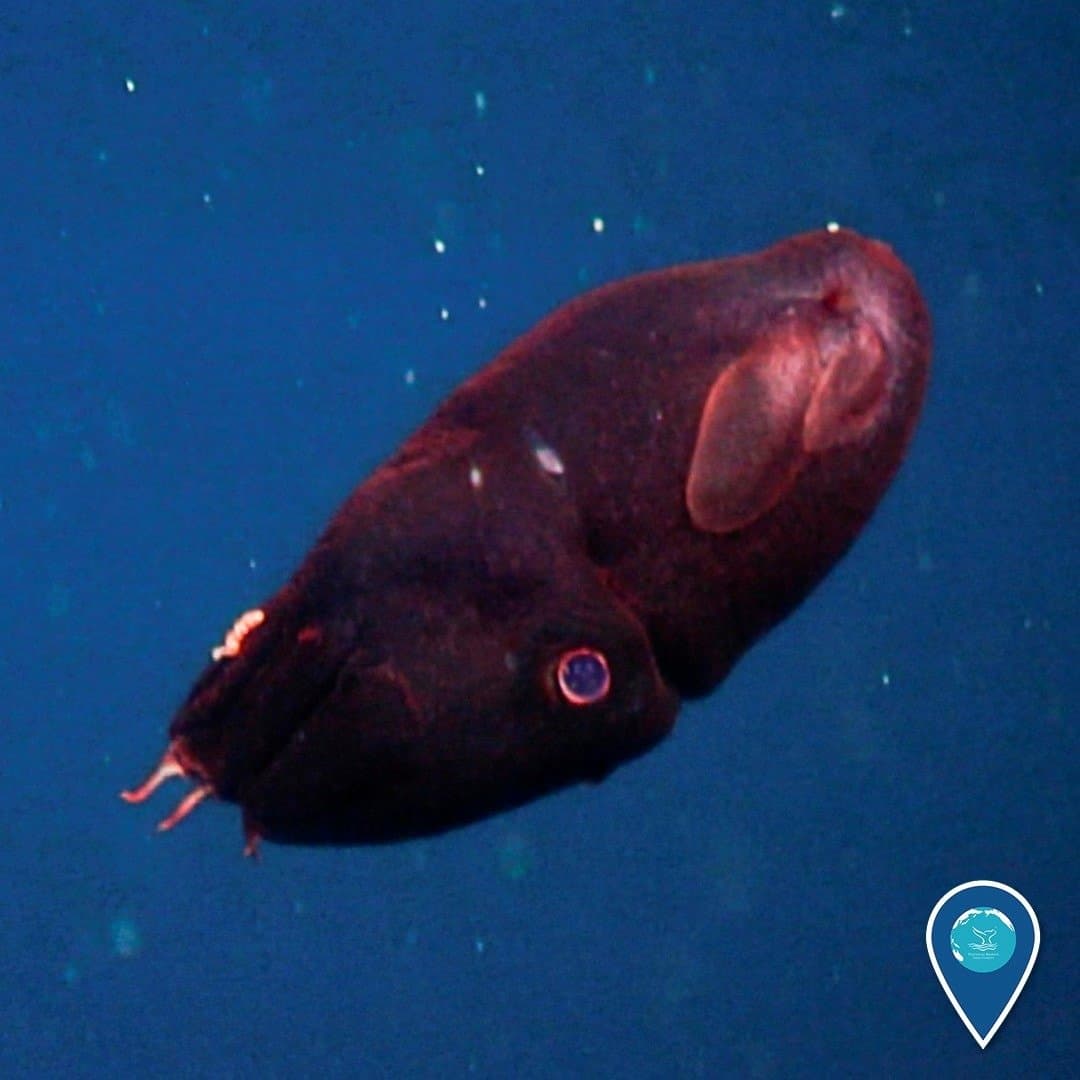

Quick Take
- The vampire squid from hell isn't a squid, isn't an octopus, and doesn't drink blood, yet its actual defense mechanism is far stranger than its name suggests. Meet the real vampire squid →
- Despite genetic evidence and physical differences pointing to a new species, researchers completely reversed that conclusion two years later. Here is what they missed the first time. See what they missed →
- One overlooked biological factor explains why deep-sea cephalopods keep fooling scientists into describing species that don't actually exist. The overlooked biological factor →
- The 'new species' was never fully erased from the scientific record, and the reason why reveals something counterintuitive about how taxonomy actually works. How taxonomy really works →
Science is a living record. This means that long-held assumptions about creatures and their identity can be suddenly updated when new information comes to light. Something similar happened recently regarding the ancient cephalopod order Vampyromorphida. Since the late 19th century, the vampire squid stood as the only remaining species of that ancient order. In 2024, researchers described a potential second living species of that order—Vampyroteuthis pseudoinfernalis—after finding an adult female specimen deep within the South China Sea.
This announcement was met with excitement in the world of marine biology. It showed that the ocean’s abyssal layer might hold more examples of living species from the ancient cephalopod group. Two years later, however, the newly described species of vampire squid turned out to be the old species. In a new study published in the Bulletin of Marine Science, researchers re-examined the evidence and concluded that Vampyroteuthis pseudoinfernalis is actually the original species described: V. infernalis. Let’s learn more about how the researchers confirmed this, and what it can tell us about the self-correcting nature of taxonomy.
The Vampire’s Castle
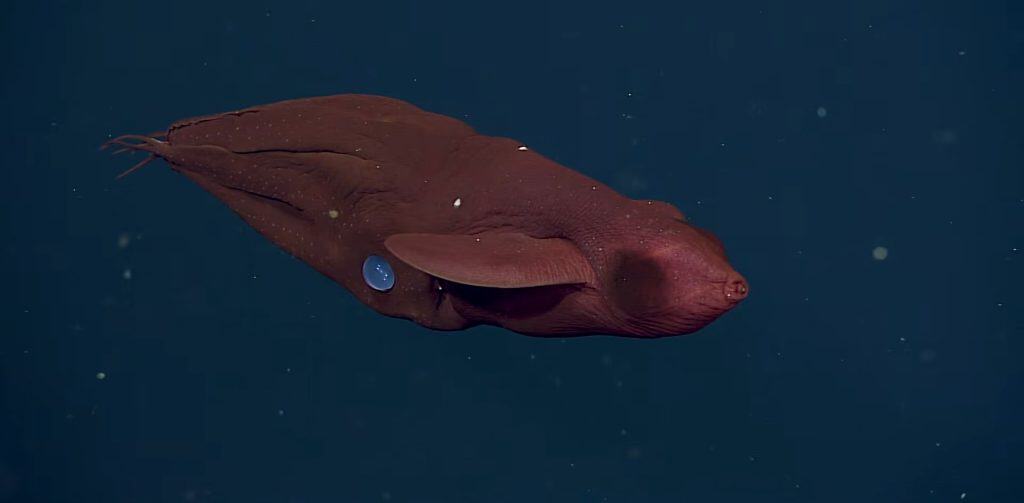
The vampire squid was first described around the turn of the 20th century by German zoologist Carl Chun.
©https://www.youtube.com/watch?v=JgytSJNKrkE&t=11s – Original
The original vampire squid species (Vampyroteuthis infernalis) has undergone several taxonomic updates since its discovery in 1898. German zoologist Carl Chun, inspired by the Challenger Expedition, sought to verify that life existed below 550 meters. Aboard the SS Valdivia, packed with equipment, Chun and his team sailed the ocean. While studying the deeps of the South Atlantic Ocean off the coast of Africa, they found the vampire squid.
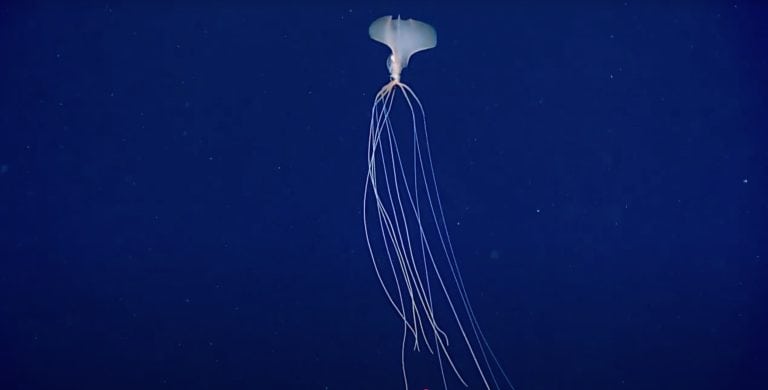
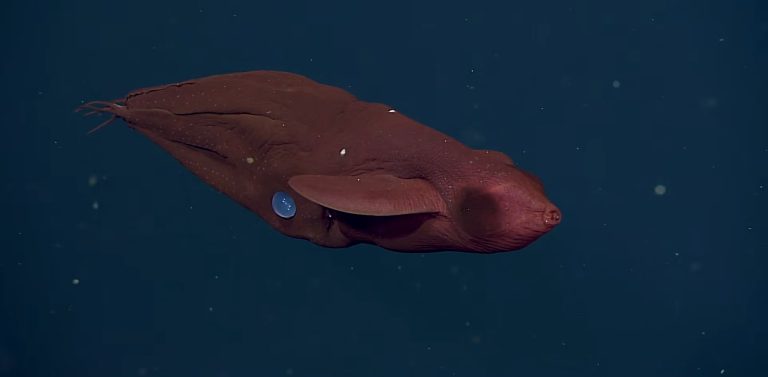
Despite its menacing name (Vampyroteuthis infernalis means vampire squid from hell), this species is neither a true squid nor an octopus. Instead, it’s the only surviving member of an ancient order of cephalopods. Its eight arms, connected by a web of skin, resemble Dracula’s cloak. The vampire squid, which has large red or blue eyes and a dark body up to a foot long, has adapted to live in ocean layers with very little oxygen.
The vampire squid prefers organic waste over blood. It uses two retractable filaments to collect marine snow — a mix of dead plankton, mucus, and other organic particles — drifting down from above. If it senses a threat, it will invert its arms over its mantle to form a protective pineapple shape. When threatened by a predator, the vampire squid releases clouds of bioluminescent mucus from the tips of its arms.
The vampire squid appeared to be alone in its order until 2024. That is when several researchers plucked a distinct-looking specimen out of the South China Sea.
The 2024 Discovery
In September 2016, researchers from the South China Sea Institute of Oceanology found a different-looking vampire squid at depths of 800 to 1,000 meters. For one, its tail had a sharp point at the posterior end of the mantle. Other aspects of the specimen suggested a different species, too. Its lower beak structure seemed broader and more elongated than that of the historically described vampire squid. Plus, the specimen’s light-emitting organs were positioned midway between its fins and tail, compared to their typical upper-third positioning in known specimens.
Most notably, tests on this specimen’s mitochondrial COI and nuclear rDNA sequences seemed to place it in a distinct monophyletic group compared to samples of vampire squids found in the Gulf of Mexico. All of these features prompted the researchers to describe it as the first new living vampire squid species. They named it Vampyroteuthis pseudoinfernalis and set the marine biology world ablaze with the notion that even more undiscovered creatures might be hiding in the ocean’s depths.
The 2026 Reversal
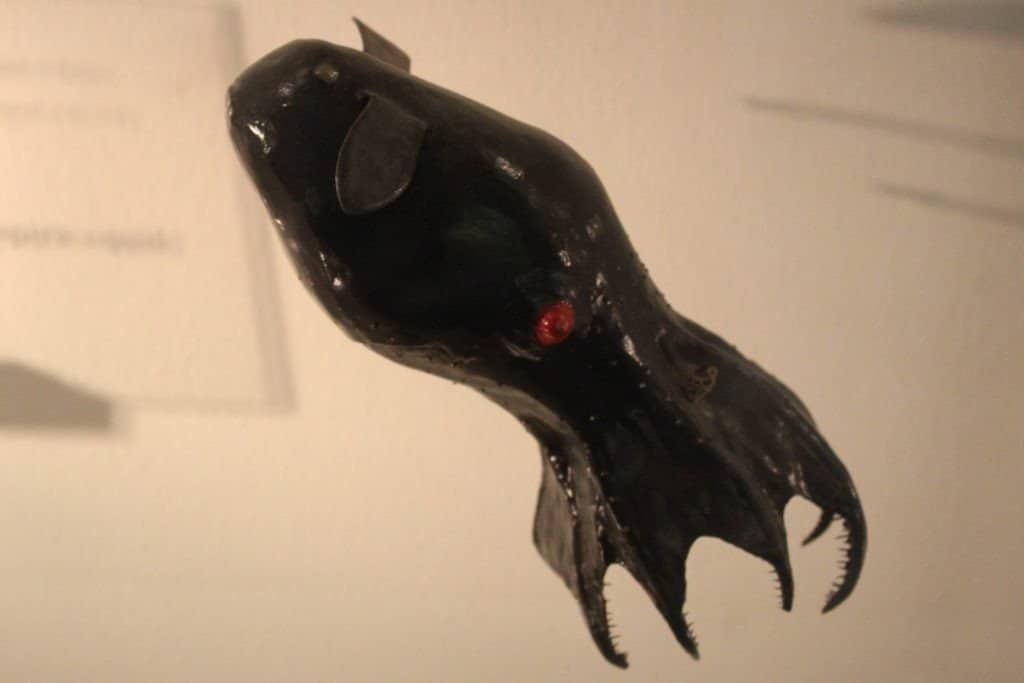
The latest research suggests that the second described vampire squid species is actually just a variation of the original.
©Emőke Dénes / CC BY-SA 4.0, via Wikimedia Commons – Original / License
However, not all of the experts were convinced of this description. A team of researchers re-evaluated the newly described species to test the validity of the previous claim. The team, including Smithsonian expert Michael Vecchione, took another look at the specimens taken from the Gulf of Mexico and used in the 2024 study.
A broader collection of vampire squid specimens showed the researchers that distinct features, such as lower beak wings and photophore spacing, varied considerably across vampire squids depending on the stage of their life cycle. This suggested that the newly described species’ unique traits actually fell within the normal range of physiological variation. Furthermore, the researchers noted that soft-bodied cephalopods like vampire squids are known to show physical deformations when captured and transported through the ocean’s pressure layers.
To confirm whether the newly described species was actually the original vampire squid, the team re-analyzed the phylogenetic trees and included additional genetic markers. They found that the genetic differences between the South China Sea specimen and vampire squids found around the world did not support a separate species lineage. As a result, they corrected the 2024 claim. Vampyroteuthis pseudoinfernalis is not a new species. Instead, it is a junior synonym of the original, sole living species of the ancient order Vampyromorphida.
Taxonomic Truths
The description of a new vampire squid species and its subsequent reversal two years later highlight the self-correcting nature of taxonomy. It also shows just how difficult proper sampling is for creatures that live in the deep ocean. Initial descriptions of these marine species often involve only a small number of specimens. Plus, soft-bodied creatures like vampire squids are often damaged in net captures. The latest research also demonstrates the limitations of single-gene sequencing.
Studying creatures near the surface is considerably easier. Deep-sea creatures often elude thorough description and controlled breeding studies. Although the research has been updated, V. pseudoinfernalis has not been completely removed from the record. Instead, it is now listed as a junior synonym under the Principle of Priority.
The deep ocean is a mysterious place full of equally mystifying creatures. Only time will tell if there is another type of vampire squid lurking down there. For now, however, Vampyroteuthis infernalis remains the only living species of its ancient order.