
Quick Take
- The Stygiomedusa gigantea survives in the midnight zone with massive 30-foot-long tentacles.
- An environment averaging around 39 degrees Fahrenheit creates an inhospitable barrier for most marine species.
- Counterintuitively, the phantom jellyfish lacks stinging tentacles despite its 30-foot reach.
- The Schmidt Ocean Institute used remotely operated vehicles to document rare sightings of this species.
Deep within the sea lies another world entirely. It’s a world of complete darkness, where light is absorbed thousands of feet below the ocean surface. The temperature remains constant at 39 degrees Fahrenheit, making these inky-black waters even more inhospitable. Divers would be crushed at this depth, and even if they could make it, there would be no colorful fish or vibrant coral reefs to observe. The animals swimming in the midnight zone are specially adapted to survive its harsh conditions.
Many of these creatures remain unrecognizable and undiscovered due to the extreme depth of their habitats. However, some, like the phantom jellyfish, have been accidentally caught on camera. Recent footage from the Schmidt Ocean Institute shows the jelly up close in ways it’s never been seen before, and it’s even more spectacular than anyone thought.
How Did the Phantom Jellyfish Earn Its Name?
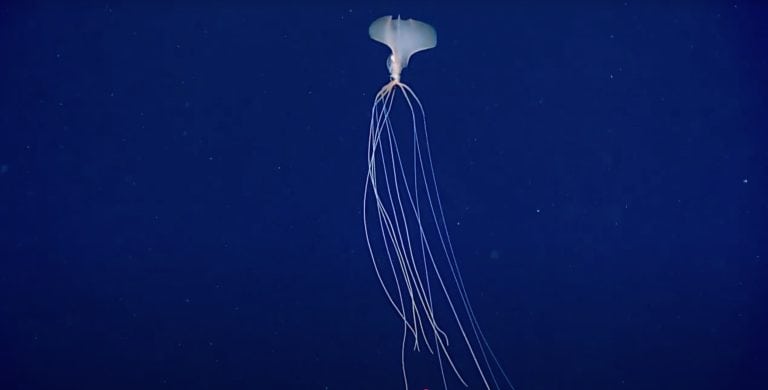
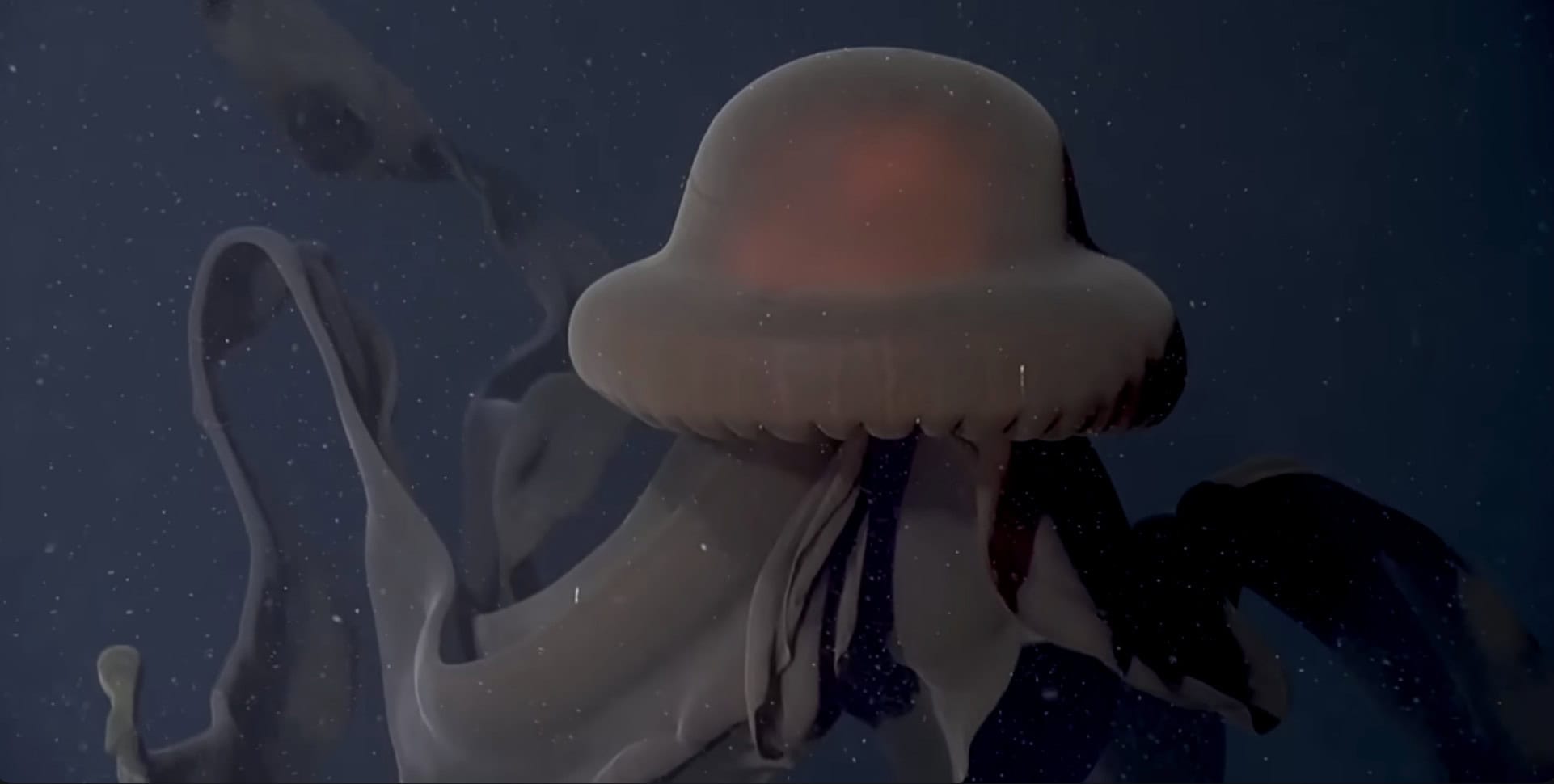
The giant phantom jelly (Stygiomedusa gigantea) was named for its elusiveness. This giant jellyfish species is rarely seen by humans or cameras, making it one of the rarest sightings in the ocean. Its life in the bathypelagic (midnight) zone is slow-paced as it floats by. Few remotely operated vehicles have captured its long tentacles and its reddish-brown, bell-shaped head, but those that have are lucky. They’ve seen a creature about which little is known, including its deep-sea habits, as it wanders along the seafloor.
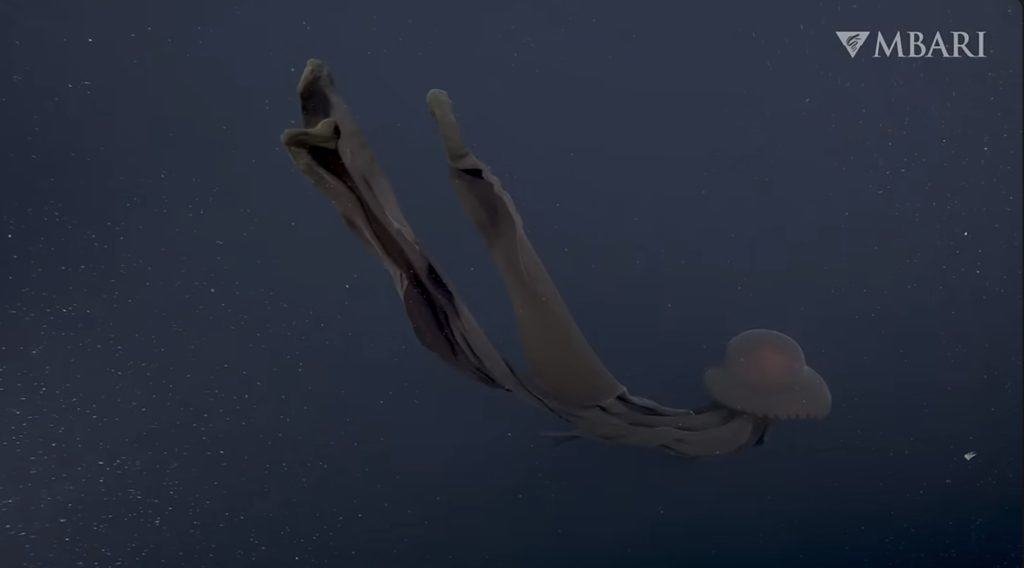
Few scientists have captured footage of the giant phantom jelly, and sightings are extremely rare due to where it lives.
©MBARI (Monterey Bay Aquarium Research Institute) / YouTube – Original
However, there is another reason for the phantom jellyfish’s unique name. When it moves, it glides through the water effortlessly, its long tentacles folding like fabric. These silky folds give it a ghost-like appearance, creating an eerie shadow that floats in the depths. Its reddish-brown color disappears in the dark water surrounding it, its satin texture enhancing the effect. From a distance, it could easily be mistaken for a spirit bobbing in the water rather than a jellyfish with 30-foot-long tentacles.
What Do Phantom Jellyfish Prey On?
In the recent video of the phantom jellyfish, a small blue fish darts around the folds of its long tentacles. Jellyfish are most often known for their stinging tentacles. In many cases, a fish like this would not survive such a close encounter. Surprisingly, the phantom jellyfish does not have stinging tentacles like many other jellyfish. Instead, it uses its long, ribbon-like arms to ensnare prey. These ethereal tentacles function as nets rather than weapons.
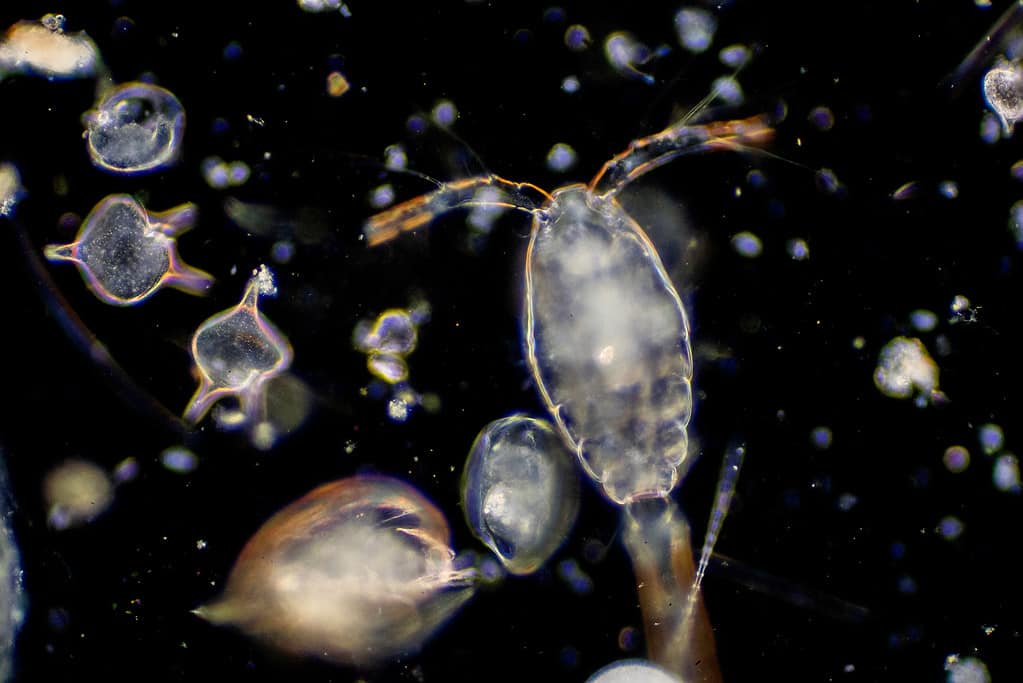
Plankton are organisms drifting in oceans and seas.
©tonaquatic/iStock via Getty Images
When it “hunts,” the jellyfish uses these arms to wrap around prey such as plankton and small fish. The one seen in the video had plenty of time to escape and was not trapped by the jelly’s long limbs. Little is known about how the phantom jellyfish consumes its food or about its hunting style. Experts have confirmed that its arms function as nets, but this has yet to be caught on camera.
Phantom Jellyfish Have Few Known Predators
A creature this large is more likely to be a predator than prey in the midnight zone. While the phantom jellyfish is not an active hunter, it still has no confirmed predators. Since it preys on plankton and small fish, it stays out of the way of larger predators. It is unlikely to encounter anything that would hunt it, especially at depths where so few marine species survive. Interestingly, the phantom jellyfish has been found in all major oceans, including the Antarctic waters. Its widespread distribution also suggests it has few predators waiting to make a meal of it.
In theory, the phantom jellyfish could be preyed upon by larger species such as the colossal squid. But because sightings are so rare, scientists still do not know if anything hunts the jellyfish.
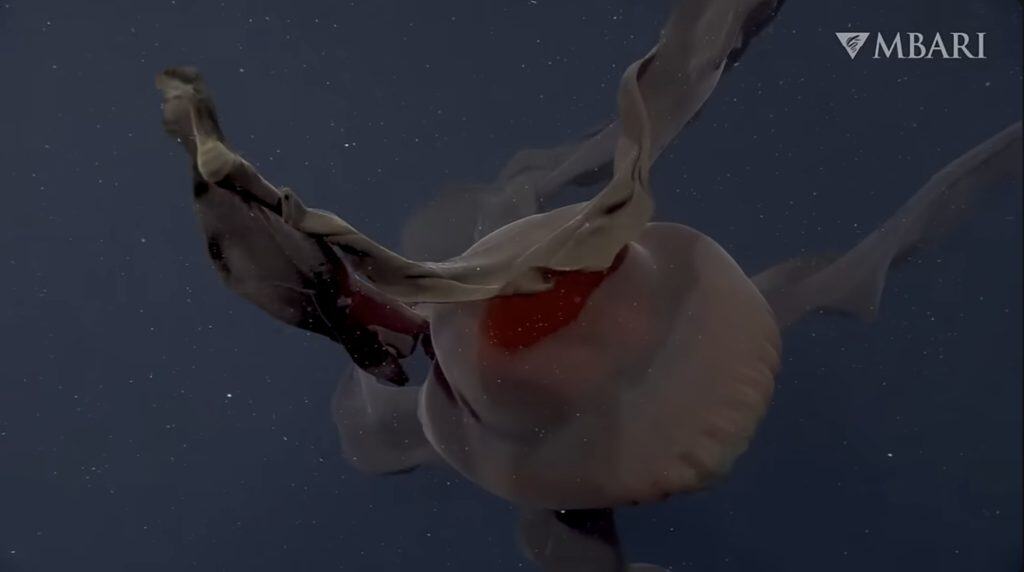
Giant phantom jellyfish have 30-foot-long tentacles that help them net prey, and also stabilize them while floating in the deep sea.
©MBARI (Monterey Bay Aquarium Research Institute) / YouTube – Original
One thing that has been confirmed is the symbiotic relationship between the phantom jellyfish and the brotula fish. Also known as the Pelagic Brotula, this deep-sea fish has been observed sheltering among the jellyfish’s arms. There is currently no evidence that it cleans the jellyfish or consumes parasites. However, the presence of the phantom jellyfish keeps the brotula fish well-protected. This relationship is another indication that the giant jellyfish has few natural enemies. If it did, it’s unlikely that a fish would seek out the jellyfish for protection.