
Quick Take
- Scientists went looking for a 100-year-old shipwreck and found something far stranger. Whatever they discovered was very much alive. See the strange find →
- A tiny Antarctic fish is pulling off a level of social organization that shouldn't be possible in one of Earth's most hostile environments. Meet the nest builders →
- The arrangement of these nests follows a social logic that mirrors behavior seen in herds and flocks, yet no one expected to find it here. Explore the social logic →
- What this frozen seafloor reveals could change how a vast stretch of Antarctic ocean is legally protected. See the conservation stakes →
An Unexpected Discovery Beneath the Ice
In the remote depths of Antarctica’s Weddell Sea, scientists searching for historical shipwrecks instead stumbled upon a mystery of the living world. It was 2019, and the research team aboard the SA Agulhas II set out looking for the lost Endurance, Ernest Shackleton’s ship that vanished under the ice in 1915. But what they found under several meters of ice has captured the scientific community’s attention ever since.
Continue reading
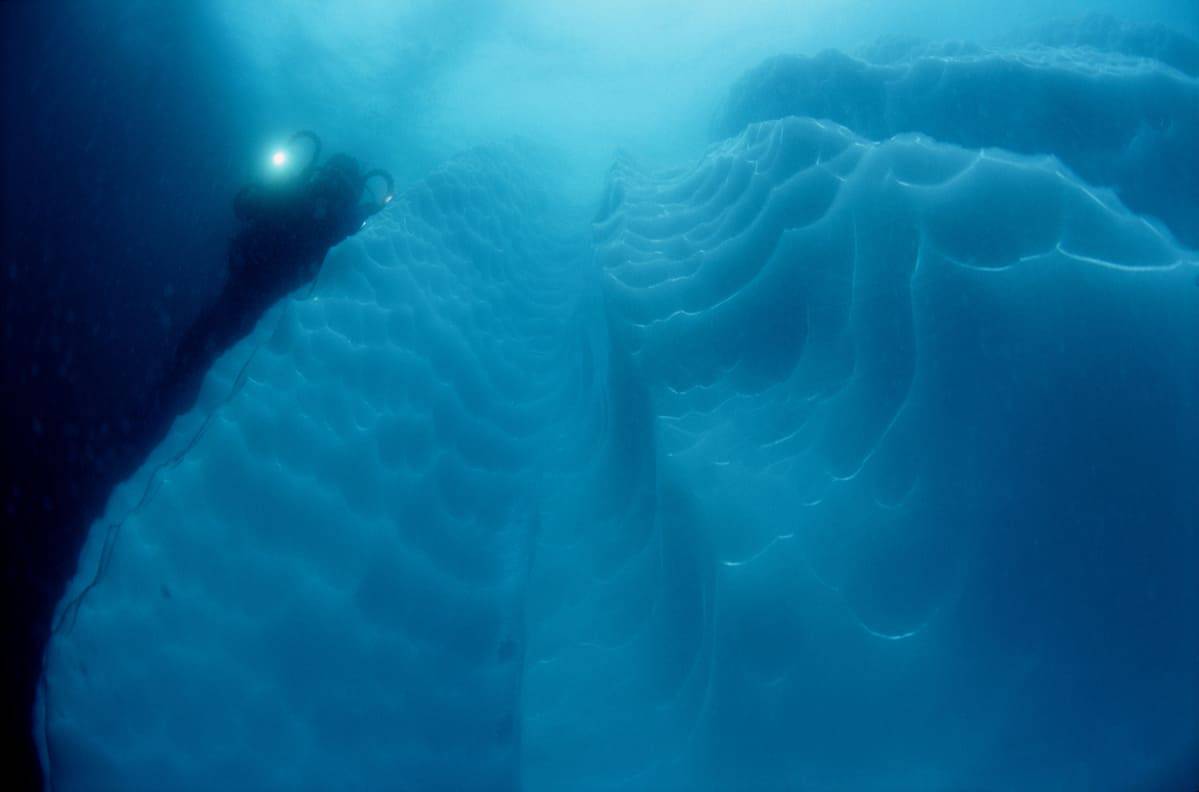
A remotely operated vehicle, aptly nicknamed Lassie, dove beneath the frozen surface into waters recently freed by the detachment of iceberg A68 from the Larsen C ice shelf in 2017. This event had opened a staggering 2,200-square-mile (5,800 km²) area, virgin territory for undersea exploration. What the robot filmed there left even seasoned biologists speechless: row after row of carefully arranged circular depressions, numbering over a thousand, dotted the seafloor in organized clusters.
The Builders: Antarctic Rockfish at Work

©Colin Woods/Shutterstock.com
Upon closer examination, each depression was found to be an active nest, the work of Lindbergichthys nudifrons, a small Antarctic rockfish. These fish, built for survival in near-freezing temperatures, showed remarkable ingenuity. Each fish excavated and cleared a patch of sediment, guarding the space diligently to protect its eggs from would-be predators. The order and precision of the nest formations suggested a level of social organization rarely seen in such a hostile environment.
Researchers were particularly struck by the intentional way the nests were constructed and maintained. Unlike random clusters dictated by physical factors like temperature, light, or the kind of ocean floor, these nests owed their arrangement to the interactions between the fish themselves.
A Complex Social Structure in Extreme Conditions
Deeper analysis revealed sophisticated social behavior underpinning this nesting system. Fish gathering at the center of each cluster benefited from the strength of numbers, gaining natural protection simply by being surrounded. This echoes the well-known “selfish herd” model observed in other animal groups, where individuals seek the safety of the middle to minimize risk from predators. Meanwhile, larger or possibly more robust fish took up peripheral or even solitary nests, presumably able to fend for themselves.
While such social nesting behaviors have occasionally been documented among tropical species, seeing this pattern in the icy, dark waters of Antarctica was unprecedented. According to scientists documenting their findings in Frontiers in Marine Science, this shows that social complexity in animals can emerge even under some of the most inhospitable conditions on Earth.
©Mozgova/Shutterstock.com
Implications for Conservation and Ecology
This vast network of fish nests doesn’t just challenge assumptions about Antarctic life, it highlights the region’s role as a unique and fragile ecosystem. The nests represent a critical link in the Southern Ocean food web, connecting the animals at the bottom with plankton and larger predators throughout the region. Recognizing this significance, data from the 2019 expedition is now being used to support a proposal to designate the Weddell Sea as a marine protected area, a decision under review by the international body responsible for Antarctic marine resources, CCAMLR.
Exploring these shadowed, frigid realms is notoriously difficult due to darkness, turbulent waters, and the ever-present cold. That makes discoveries like these all the more remarkable and urgent in understanding and protecting the intricate life beneath the Antarctic ice.
Life Finds a Way in the Harshest Places
Amid the frozen darkness of the South Pole, thousands of nests bear silent witness to nature’s ingenuity. Far from lifeless, these icy depths reveal how life not only survives but also organizes, cooperates, and even thrives at the edges of possibility. Where humans once searched for relics of the past, they’ve now uncovered new chapters in the story of social behavior and survival in the natural world.