
Quick Take
- The crew initially mistook the bigfin squid for something far more ordinary, but then one distinctive feature appeared on screen and changed everything. See how it unfolded →
- The squid's signature elbow posture has never been seen in any other species. Scientists have a theory for what it's doing, but still can't answer the most basic questions about how this animal survives. Explore the elbow mystery →
- Fewer than 70 of these squid have ever been recorded, yet scientists believe their habitat spans a staggering share of the world's oceans. This raises an uncomfortable question about what 'rare' actually means. Unpack what rare means →
- The expedition wasn't searching for squid at all. Researchers were down there to solve a completely different deep-sea mystery. Discover the original mission →
Deep in the northeastern Pacific Ocean, a robotic sub glided silently through the ink-black water. Its mission was to study the Davidson Seamount and figure out what was causing furrows on the seabed. What researchers found instead was one of the deep ocean’s most mysterious creatures – a bigfin squid.
Rarely seen and even more rarely photographed, bigfin squid are the deepest-dwelling squid species currently known to scientists. Filming one by accident was something nobody on the research team was expecting during a routine scouting expedition.
Here’s what scientists know about this elusive species, and what they still hope to learn.
Continue reading
The Sighting That Surprised Scientists
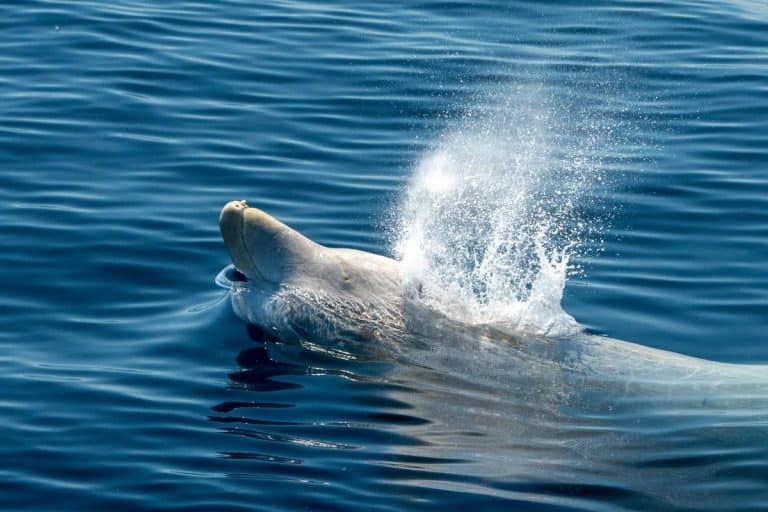
The sighting happened during a 10-day expedition aboard the research vessel David Packard, led by marine scientists from the Monterey Bay Aquarium Research Institute. The team was remotely operating the Doc Ricketts submersible to examine the seafloor near the Davidson Seamount at depths of about 10,700 feet. Researchers were hoping to determine what caused the furrows at such depths. Their hypothesis was that beaked whales were searching for food.
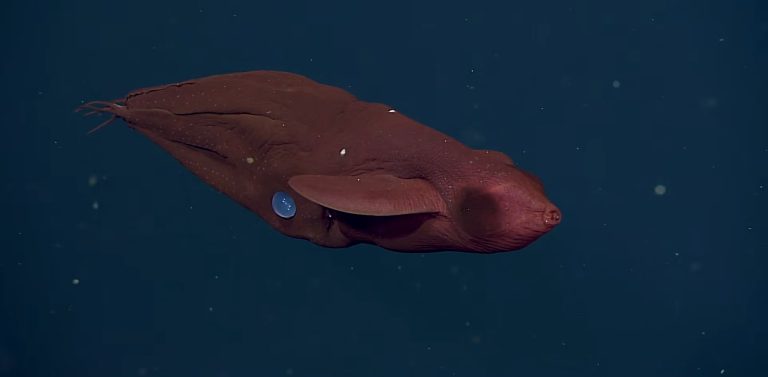
As the sub maneuvered along the seabed, an unexpected object drifted into view. The researchers operating the remote control at first thought it was a species of jellyfish. But as the creature moved into full view, it was quickly identified as a bigfin squid.
“At first, I could only see the tips of what looked like fine tentacles, so I thought it was a jelly, but when the ‘elbows’ showed up on the screen, I knew this was something really special,” MBARI deep-sea ecologist Olívia Soares Pereira told ScienceAlert.
The team used the sub’s laser measuring system to estimate that the squid was about 4 feet long from the top of its body to the tips of its spindly arms. It was the first confirmed sighting of the species in that part of the Pacific Ocean and the first time it had ever been spotted within the Monterey Bay National Marine Sanctuary.
A Strange Squid
These elusive squid are classified as Magnapinna, a Latin word that means “big fin.” This Latin term is also the source of their common name. Little is known about the species, since it lives at extreme depths and is rarely seen by humans.
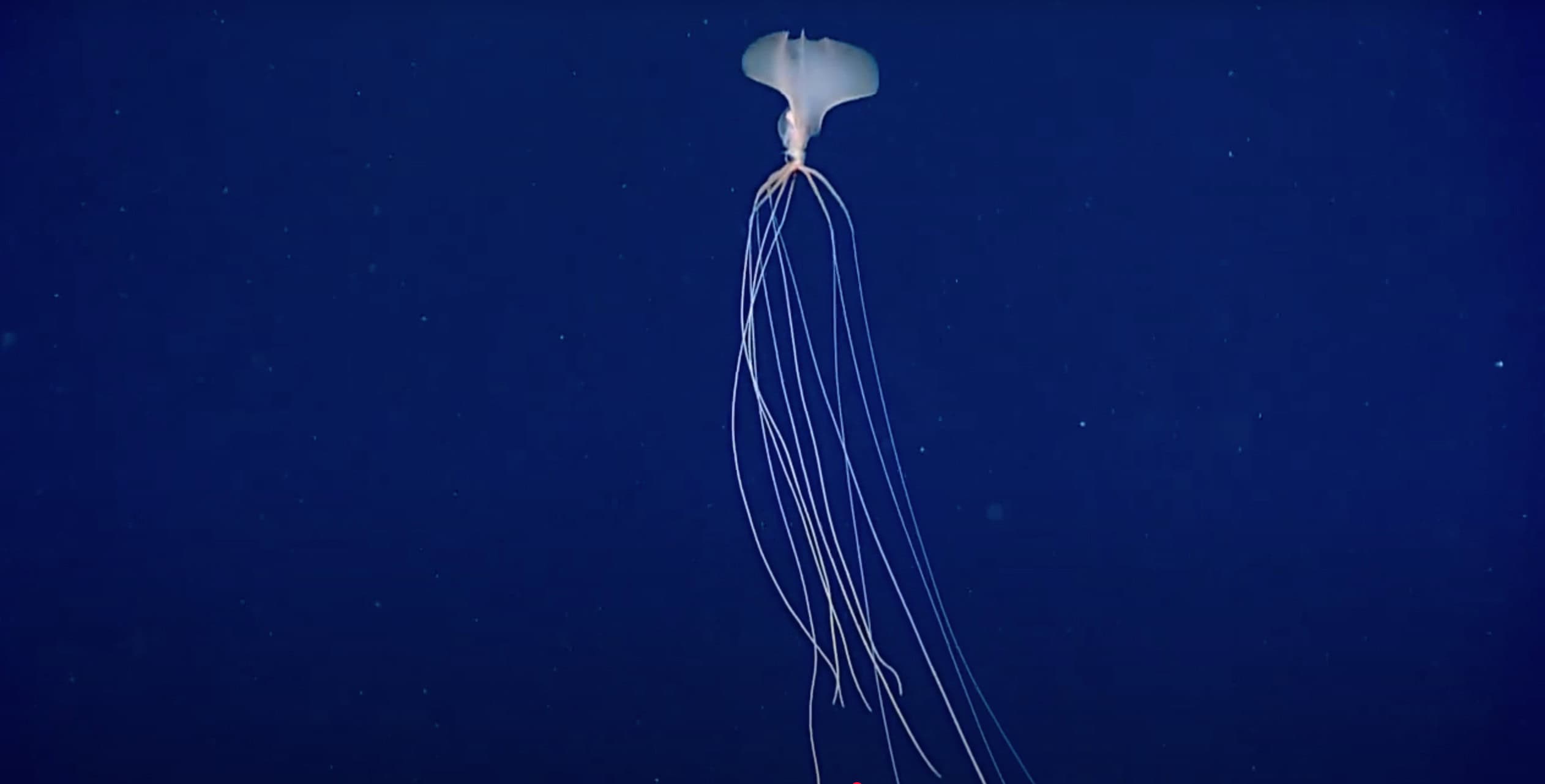
The squid’s appearance is quite unusual as well. It has a small mantle with two huge fins extending from it and eight thin arms. It also has two tentacles that trail off with extremely thin filaments that can grow to several meters long.

The bigfin squid is a deep-sea dwelling species about which little is known.
©https://www.youtube.com/watch?v=Z72Sji4sykE – Original
What makes the squid even more remarkable is the way it hovers in the water. It holds its eight arms out at sharp angles from its body, giving the appearance of having elbows. It’s a posture never seen in any other squid species.
Scientists believe—although this hypothesis has not yet been confirmed—that bigfin squid hover over the deep seafloor and wait for prey to become entangled in one of their arms. They believe the bent elbow posture prevents the arms from tangling and allows the squid to cover a broader area to catch prey.
However, researchers emphasize that they still do not know what bigfin squid actually eat, how the species reproduces, or how it hunts. At this point, everything is speculation.
How Rare Is The Bigfin Squid?
Only about 70 bigfin squid have ever been observed or collected. One new study formally counted every known sighting and found just 46 in-the-wild observations and 17 collected specimens. These were reported in other scientific papers, remotely operated vehicle (ROV) camera footage, and social media posts.
The biggest cluster of those sightings was in the Gulf of Mexico. However, bigfin squid have also been spotted in the Indian Ocean, Atlantic Ocean, Pacific Ocean, and Caribbean Sea. The species lives in both tropical and temperate waters around the globe. Of course, at the depths they live, sea temperatures are fairly consistent globally.
The deepest sighting was nearly four miles down in the Philippine Trench and was the deepest squid ever recorded. The shallowest sighting was just under one mile in depth. Based on the locations and depths of the confirmed sightings, scientists believe the bigfin’s range could cover as much as 62 percent of the world’s oceans and 70 percent of its total volume.
However, scientists caution that, although the range of sightings suggests a large habitat, it is impossible to determine the actual population size of the species.
“These scattered sightings make me believe they might be genuinely rare,” Soares Pereira told ScienceAlert. “But in a space as vast as the global ocean, I think it’s hard for us to say for sure if they are genuinely rare or instead rarely encountered, or perhaps even a combination of both. That is why these encounters are always so special!”
What Is the Davidson Seamount?
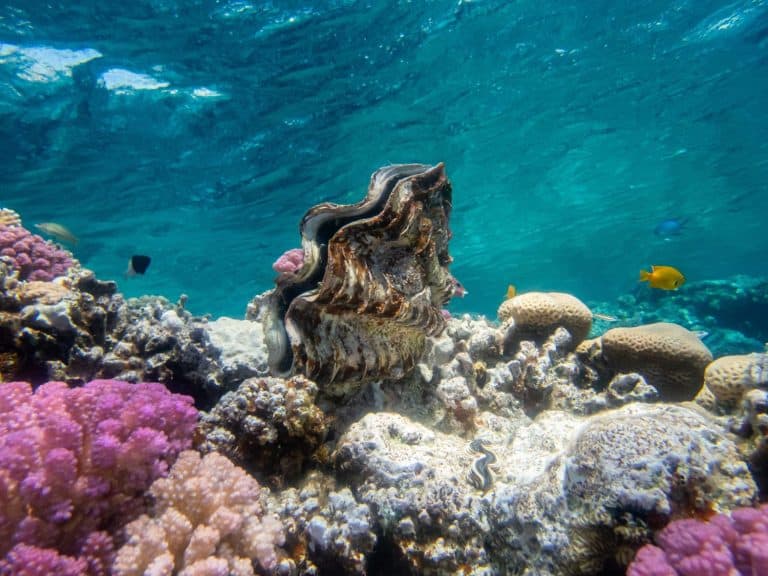
The spot where the bigfin squid was caught on camera is near the Davidson Seamount, an inactive underwater volcano about 80 miles southwest of Monterey, California. It rises from the deep seafloor and redirects ocean currents because of its size. This concentrates nutrients and food, which attracts a high volume of marine life.
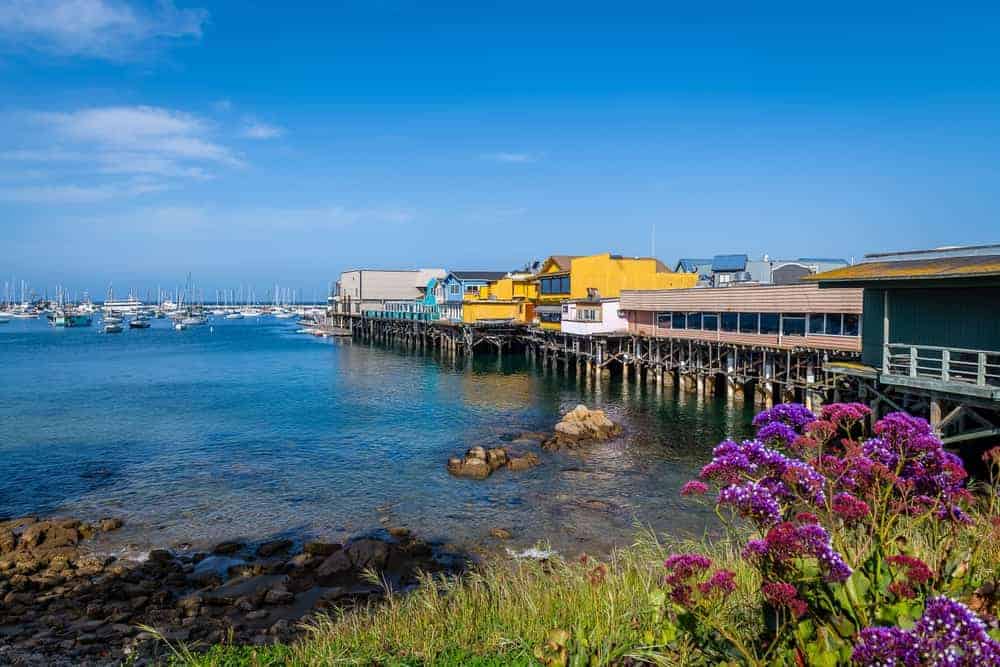
Davidson Seamount is about 80 miles southwest of Monterey, California.
©Chris LaBasco/Shutterstock.com
The Davidson Seamount is a popular research spot. It is already known for ancient deep-sea coral gardens and a large octopus nursery. Now, it appears to have another claim to fame: serving as a home to the elusive bigfin squid.
“The deep sea never ceases to amaze me. These sightings have given me an even greater appreciation for where I am now and for opportunities that allow me to experience things that once felt so far out of reach,” Soares Pereira told ScienceAlert. “These rare encounters are always a reminder of why we do science and how important it is to share my passion and sense of wonder for the deep sea and help inspire the next generation of ocean explorers.”