
Quick Take
- Cuttlefish passed a self-control test designed for children, and their performance forced scientists to rethink which animals belong in the same cognitive league as chimps. See the cuttlefish study →
- Two-thirds of an octopus's brain cells aren't in its brain at all, a strange architectural fact that explains abilities still baffling to researchers. Explore the alien neurology →
- Octopus farming has quietly become a crisis, and the reason it cannot scale has nothing to do with logistics or cost. Why farming fails them →
- A scientist's cuttlefish learned to recognize her personally, and what they do when she ignores them reveals just how wrong our assumptions about invertebrate awareness have been. Meet Schnell's cuttlefish →
When Dr. Alex Schnell speaks about octopuses, she describes a kind of connection that is hard to ignore. When you look into a cuttlefish or octopus eye, you can see that there s a being looking back at you, she says. Schnell, a marine biologist and comparative psychologist, has spent her career exploring just how much these invertebrate creatures have in common with humans.
Her fascination began as a child wandering the rock pools of Sydney. The memory lingers: she felt something soft, balloon-like, brushing against her hand. What she thought was a sea slug reached out with an arm, curious and engaged. I saw these really developed eyes, and after a while, he reached out his arm to touch mine, Schnell recalls. The encounter changed her understanding of what animals, especially cephalopods, could be.
The Unusual Mind Beneath the Waves
The public often sees octopuses and their relatives, cuttlefish, squids, and nautiluses, as alien. They have blue blood, three hearts, beaks, and an eight-armed body plan most Americans only glimpse in nature documentaries. But Schnell’s research points to behaviors far more familiar.
Like us, they have central brains, but in the oddest configuration: a donut-shaped mass encircling their mouth. An astonishing two-thirds of an octopus’s brain cells reside in its arms, making their limbs not just appendages but semi-independent thinkers. And all cephalopods, according to Schnell, use their arms to taste their surroundings.
Despite this unusual biology, Schnell finds a striking parallel: cephalopods converge on some of the same solutions to life’s problems as vertebrates do, even though their bodies are so different. As she puts it, Even with different hardware, we re seeing they come up with similar solutions to the same problems.
Tests of Self-Control and Memory
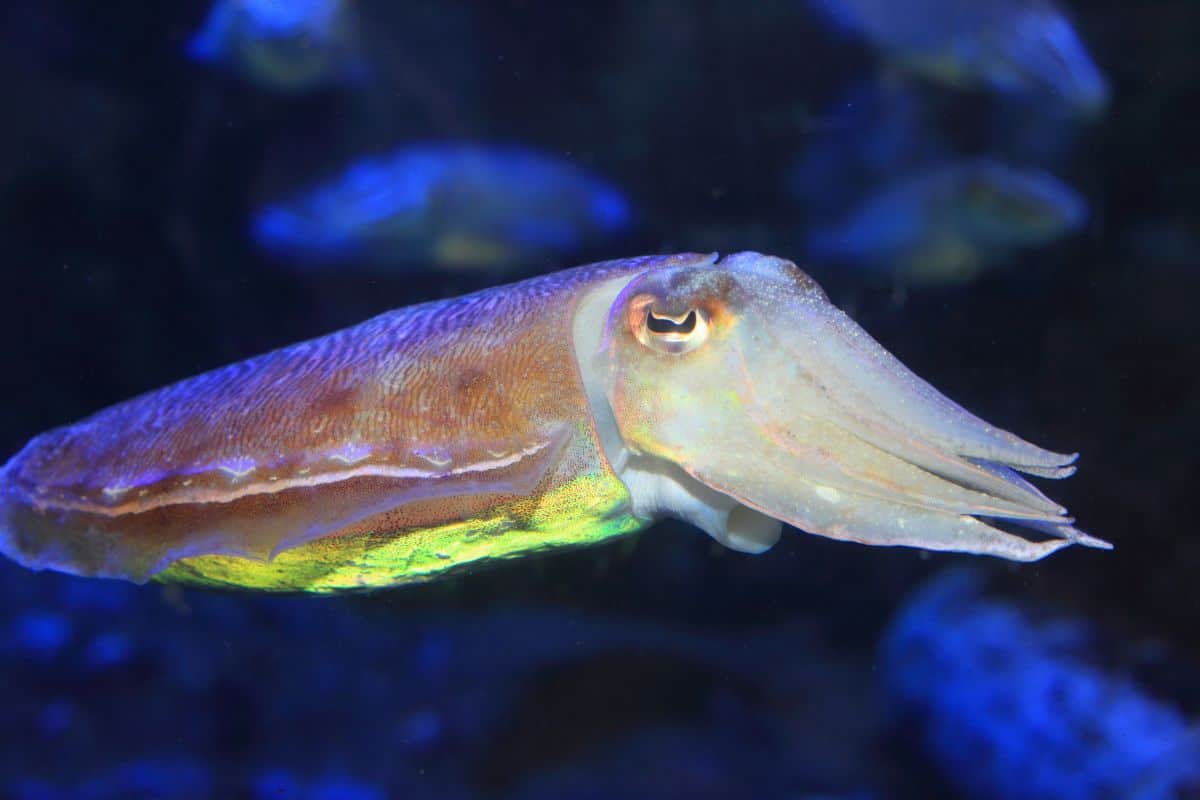
Skeptics long doubted just how far this intelligence went. But in 2021, Schnell and researchers at the University of Cambridge gave cuttlefish a test inspired by the famous marshmallow experiment used in child psychology. The cuttlefish were offered a piece of cooked prawn, but could wait for up to two minutes for a better treat: a live shrimp.
The result surprised even Schnell. They 9ll even distract themselves to avoid giving in, she explains, noting the patience rivaled that of dogs, chimpanzees, and crows, but with a much shorter lifespan. Cuttlefish have also displayed the ability to remember not just what they ate, but when and where, and can produce an inky decoy to escape predators.
Octopuses, meanwhile, are notorious problem-solvers. Colorblind but able to shift their color and texture, they confound attackers and court potential mates. Some open jars, navigate mazes, or craft makeshift shelters, all without a shell to retreat into.
Yet, despite their vulnerability, no bones, no claws, their bodies just juicy ball[s] of protein, as Schnell puts it, octopuses can be quick to trust, reaching out to human hands under the right circumstances. If you spend enough time with one, they will often initiate contact, Schnell notes.
Complex Minds, Complex Challenges
The very traits that fascinate make octopuses difficult study subjects. Schnell admits she hoped to begin her research career with octopuses, but their distinct personalities made research unpredictable. Some individuals engage warmly, others remain standoffish, ignoring even tempting rewards.
This complexity extends to their care in captivity. As demand for cephalopod meat has doubled since 1980, octopus farming has struggled. They require carefully managed environments, not just food but mental stimulation. Without it, captive octopuses can become so distressed they self-mutilate, even eating their own arms. There remains no humane way to kill them for food; only in laboratories are they euthanized with chemicals, making them unsuitable for the table.
This suffering is not just a hunch. Schnell, alongside other researchers at the London School of Economics and Political Science, amassed evidence that cephalopods and even some other invertebrates (like lobsters and crabs) feel emotions ranging from pain and distress to thirst and fear. British lawmakers noticed: in 2021, the United Kingdom officially recognized these animals as sentient, extending animal welfare protections to them for the first time.
A New View Under the Surface
Public awareness is beginning to catch up with science. Schnell is preparing to tell these stories on-screen, leading National Geographic s new docu-series produced by James Cameron, Secrets of the Octopus. The show offers new footage and rare glimpses of behavior, like the recent discovery of a male octopus performing a courtship dance, something science had never documented before.
The series follows a dozen octopus species, some communicating through chemical signals, others teaming up with fish or even divers. Schnell wants viewers to reconsider octopuses as ambassadors of the oceans, revealing skills and depth only now coming to light.
She is far from new to sharing cephalopod science with the world. Schnell’s marshmallow test with cuttlefish was featured on The Late Show With Stephen Colbert. She has contributed research to large BBC and Netflix nature projects, including Planet Earth III and Our Oceans.
Her ambition has grown. Schnell now collaborates with Italian scientist Piero Amodio and other researchers to explore collaborative hunting among octopuses. They plan to introduce a fish-shaped robot powered by artificial intelligence into the wild, documenting octopus interactions, an experiment blending technology and animal behavior research.
Yet, Schnell always grounds her lab work in direct encounters. After years in the field and lab, she knows her cuttlefish recognize her, sometimes bobbing up to greet her, and squirting water if ignored for too long. It s so adorable. I can t help but feel connected with them, she says.
Changing Perspectives, and Protections
Cephalopods remain unlisted as endangered, but that status may come more from lack of data than evidence of security. That s not because they re not vulnerable, we just don t know enough about the health of their populations yet, Schnell warns.
For all their sophistication, octopuses show little social life. They neither care for young nor bond with partners or siblings; most mothers die shortly after their eggs hatch. Still, the ways they interact with unknown situations or individuals suggests a consciousness more common with mammals than most assume.
Why, then, has public empathy lagged? Schnell suggests that our compassion is strongest for animals resembling us. The further down the evolutionary tree, the more alien they seem. But, she points out, research and compelling storytelling can shift this perception. Films like My Octopus Teacher have changed minds, revealing emotional complexity and intelligence where it was once doubted.
In the end, every meeting with these creatures is transformative, a reminder, Schnell says, that the boundaries between humans and the ocean s strangest residents are less vast than we d like to think. She likens this unfolding shift to when Copernicus reimagined our planet s place in the cosmos. I think they are the ambassadors of the oceans, and invertebrates. They show immense skill we are only beginning to understand. And when we love something so much, we want to protect it and the fragile ecosystems it lives in.
Now, with her next project One World, Many Minds, Schnell hopes to foster appreciation for the unique mental worlds of creatures all around us, a tapestry of perspectives that, together, adds to the richness of life on Earth.