
Quick Take
- Most people think they know how the thorny devil drinks, but the popular explanation is wrong. The reality is far stranger. Discover the real mechanism →
- Its spikes look like a defense mechanism, but they pull off something no armor was ever designed to do. See how the spikes really work →
- Two lizards on opposite sides of the planet evolved almost identical survival tricks, and they did so without sharing a common ancestor. Explore convergent evolution →
Water is not easy to come by in the desert. The rain, when it seldom comes, finishes as soon as it starts. Yet, thousands of creatures have adapted to the desert’s inhospitable conditions. Camels developed long snouts to recover water in their exhaled breath. Smaller creatures, like rodents and birds, have high metabolic rates relative to their size. This allows them to source water from the unlikeliest of places—food, morning dew—and retain it for far longer than larger creatures can. The Australian thorny devil, a lizard found in the scrublands and sandy loams of the Australian Outback, has its own unique method of staying hydrated.
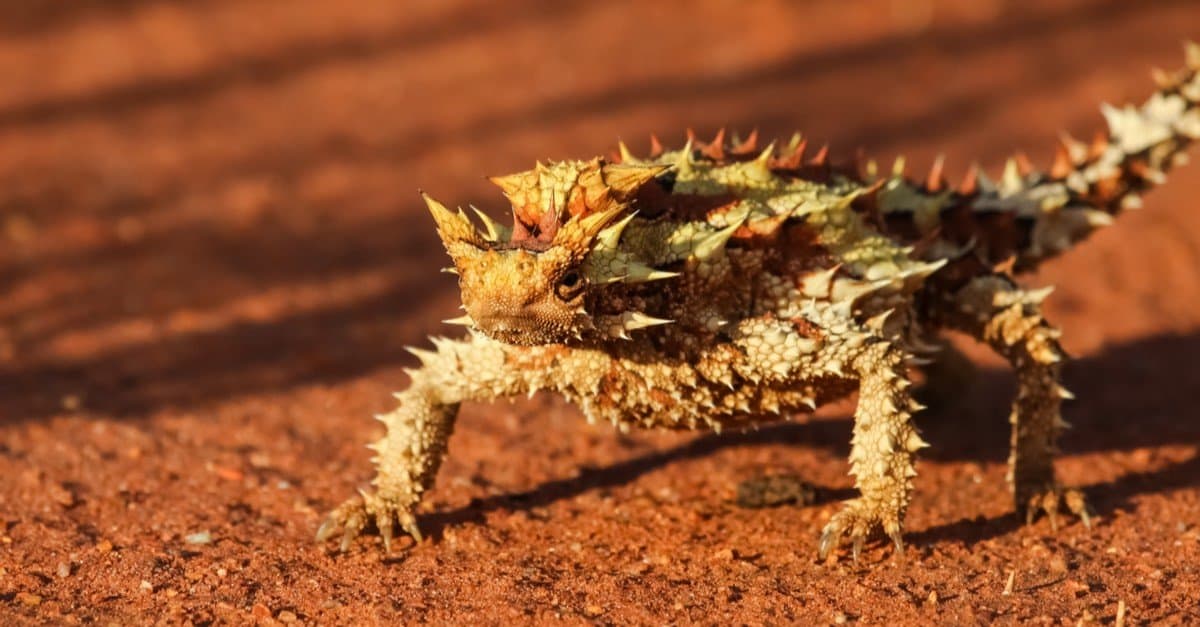
Covered in spiky protuberances, the thorny devil looks more like a gnarled piece of wood or rock than a living creature. Yet it survives in the unforgiving desert using those spiky projections as miniature canals. Moisture hits its body and is channeled through the small grooves directly to the thorny devil’s mouth. There are some misconceptions about this desert survivor, however. Let’s learn more about this fascinating creature, what people get wrong about how it drinks, and how it manages to survive in an environment that spells doom for most creatures.
Thorny Devil Details
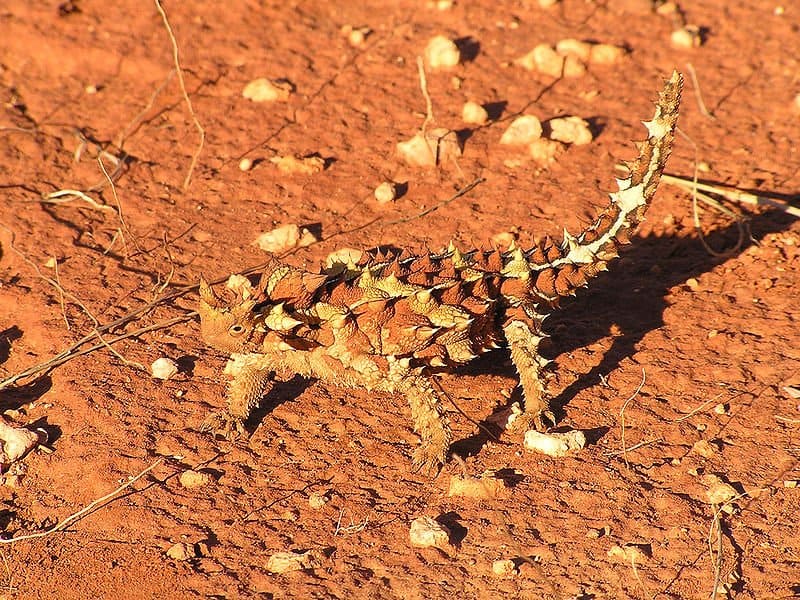
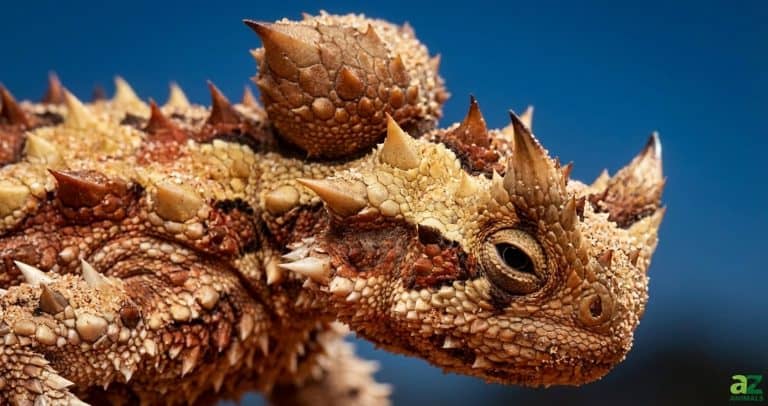
This species of lizard blends into the desert environment easily, thanks to its tan-colored and spiky body.
©ogwen / Creative Commons – Original
The thorny devil (Moloch horridus) is a species of lizard in the family Agamidae and the sole species in the genus Moloch. Biologist John Edward Gray first described the species in 1841, giving it the same name as an Ancient Canaanite deity with demonic, devilish connotations. Its spiky appearance has led other people to call thorny devils horned lizards, mountain devils, thorny dragons, or simply moloch.
These lizards are sexually dimorphic, with females growing larger than males. Overall, they can grow up to eight inches long and live for between 15 and 20 years. Thorny devils live in the scrublands and sands that cover much of western and central Australia. There, they subsist on a diet of mostly ants. In fact, thorny devils are known to eat thousands of ants a day.
Unless they are on the move, it can be hard to identify thorny devils. Their spike-covered bodies are perfect for camouflage in the desert, complete with brown and tan coloration. These colors can change, too, with paler tones turning darker in cold weather. When they move, they adopt a unique freezing and rocking process. They also have spiny protrusions on the back of their necks that appear like false heads. Much of the thorny devil’s appearance is designed for evading detection. Their appearance, however, is also key to their survival.
Capillary Action
With water being so hard to come by in the Australian wilderness, thorny devils developed a unique way of ensuring hydration. Their body spikes can collect and transport water simply by coming into contact with it. Thorny devils’ prominent spikes create miniature canyons that channel streams. There is a popular misconception here, as many believe thorny devils can drink water directly from their skin. The actual process, however, is far more remarkable.
Each morning, after dew has collected in the desert environment, thorny devils get to work. They find a moist object and touch their bodies against it. Their keratinous, fiber-structured scales are hydrophilic and feature hexagon-shaped microstructures that fill with water. Moisture then spreads across their bodies’ miniature canyons.
This results in capillary action, or the process by which liquid flows through narrow spaces. This occurs either against or aided by gravity. With the surface of their bodies now covered in moisture, semi-tubular channels transport water passively through an interconnected system. Like the confluence of streams and tributaries, these channels conclude at the lizard’s mouth. Essentially, thorny devils have a natural water-delivery system that begins working the moment their skin comes into contact with moisture. The makeup of their bodies allows practically any water source to become a drink. Dew is the obvious choice, but thorny devils can also rub their bellies against damp sand or step into shallow pools. These methods achieve the same effect, as the passive channels across their bodies direct any water toward their mouth.
Kindred Spirits
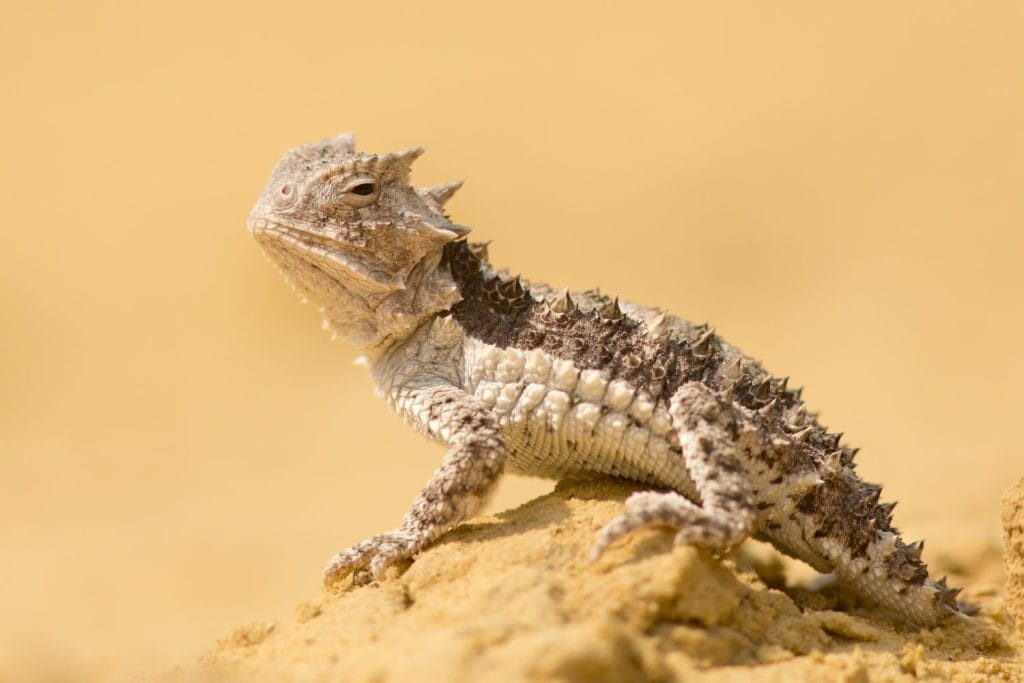
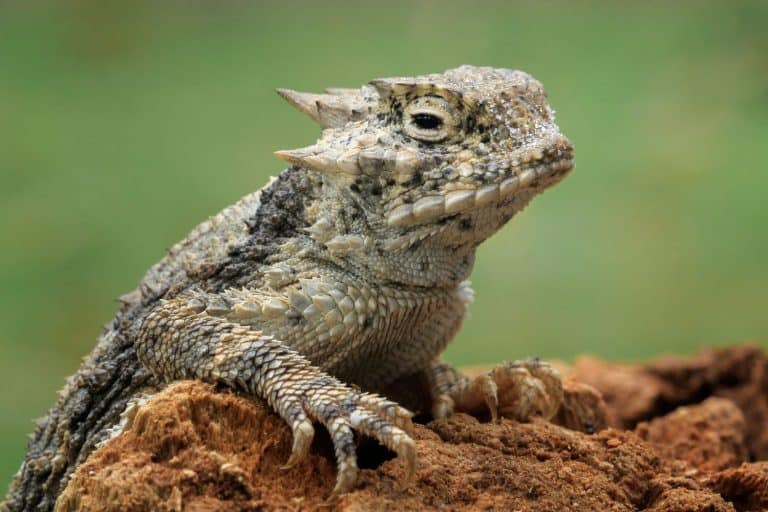
Scientists believe convergent evolution is responsible for the similar looks of thorny devils and Texas horned lizards.
©Milan Zygmunt/Shutterstock.com
This quirk of design inherent to thorny devil physiology is the primary way they source water. The keen lizard fan may recognize some similarities between this evolutionary adaptation and adaptations found in other lizard species. Several species around the world rely on their body composition to deliver water. Perhaps the most prominent example is the Texas horned lizard. They, too, have spiky bodies that serve as both camouflage and defense. Other examples of similar-looking creatures are desert horned lizards, Arabian toad-headed agamas, and yellow-spotted agamas.
Despite similarities in appearance between thorny devils and, say, Texas horned lizards, these two species are only distantly related. Scientists believe the resemblance between the aforementioned lizards is an example of convergent evolution. The desert is an unforgiving place, and it seems that different lizard species have adapted similar features to help them survive it.