
Quick Take
- One shorebird holds the record for the longest non-stop flight ever made by a land bird, a distance covered in just days that will redefine what you think birds are capable of. See the record flight →
- These birds fly toward Arctic extremes on purpose, and the reason why is more strategic than you'd expect. Discover the Arctic strategy →
- A feature of Australian mudflats so overlooked it barely registers to the human eye turns out to be critical to these birds' survival after their epic journeys. Explore mudflat survival →
- The smallest migratory shorebird faces a problem on its 6,000-mile journey that the larger species simply do not face, and its solution exposes a hidden fragility in the entire flyway. Follow the stint's journey →
Large flocks of migratory shorebirds are returning to north-western Australia from Northern Hemisphere breeding grounds. Some of these have made epic journeys over thousands of miles, travelling on an established avian flyway. Let’s explore this impressive feat and the Australian habitats they are heading for.
What Are Shorebirds?
Shorebirds, also called waders, are a group of birds in the order Charadriiformes that commonly wade in water to search for food. Some Australian shorebirds are resident, which means that they stay in the country all year round. Others have a trans-equatorial migration. They generally breed in the Northern Hemisphere during the northern summer. Then they travel to Australia during the austral summer. Shorebirds are a diverse group of birds with a range of body sizes and shapes and neck and leg lengths. Of the 50 or so shorebird species that occur in Australia, two-thirds of them are migratory.
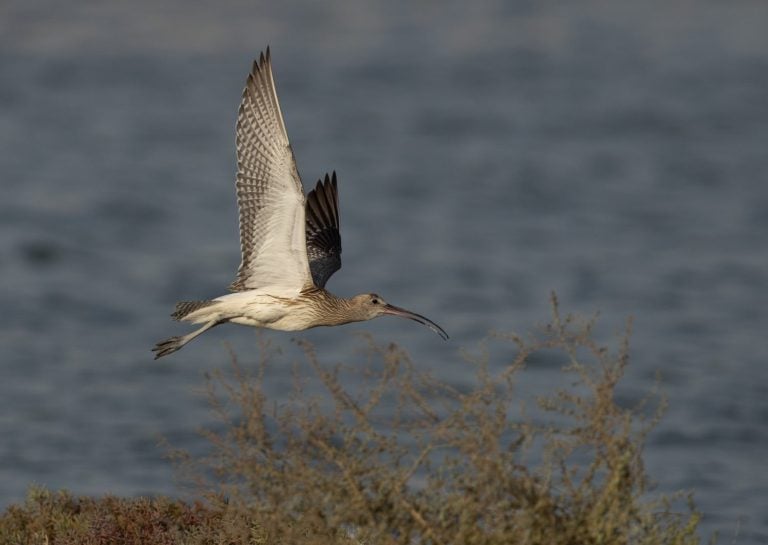
For example, the greater sand plover returns from the central Asian deserts, while the eastern curlew returns from the bogs, wet meadows, and swamps of far eastern Russia. The red knot and the ruddy turnstone have been breeding in areas of the tundra overlooking the Arctic Ocean.
Why Do Shorebirds Migrate?
Australian shorebirds migrate to breed in the Arctic, sub-Arctic and other far northern wetlands of Asia and Alaska. They do this because the food resources and nesting sites are abundant in these areas during the northern summer. Here, they feed on insects and live as pairs as they raise their young.
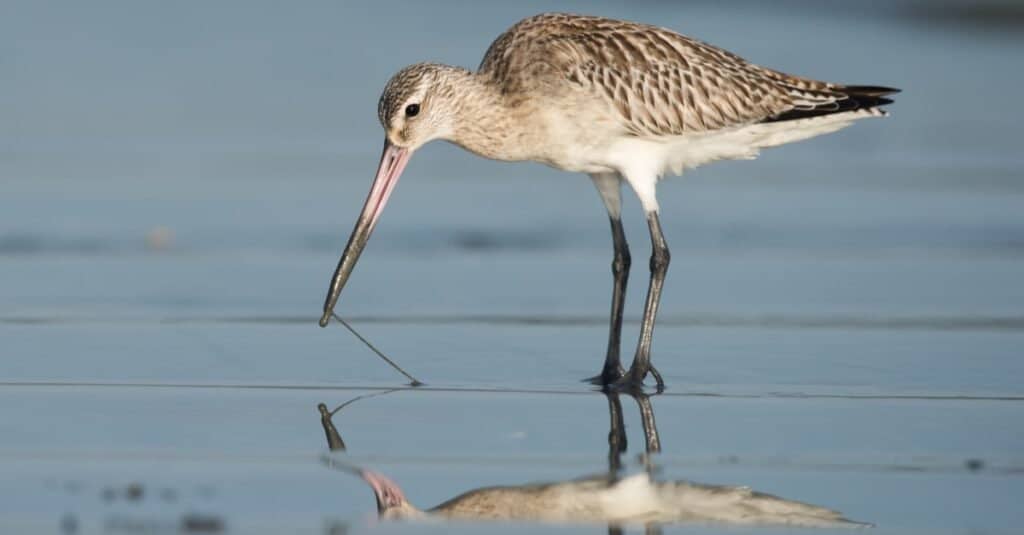
Shorebirds feed on small creatures in the sediment.
©Dave Montreuil/Shutterstock.com
The migratory birds leave the Northern Hemisphere to avoid the harsh winters when temperatures plummet, weather conditions are challenging, and food is in short supply. The adults of the more southerly breeding areas arrive in Australia first. Juveniles arrive last. Once the birds arrive in Australia, it can take them several weeks to navigate to their final destinations.
East Asian-Australasian Flyway
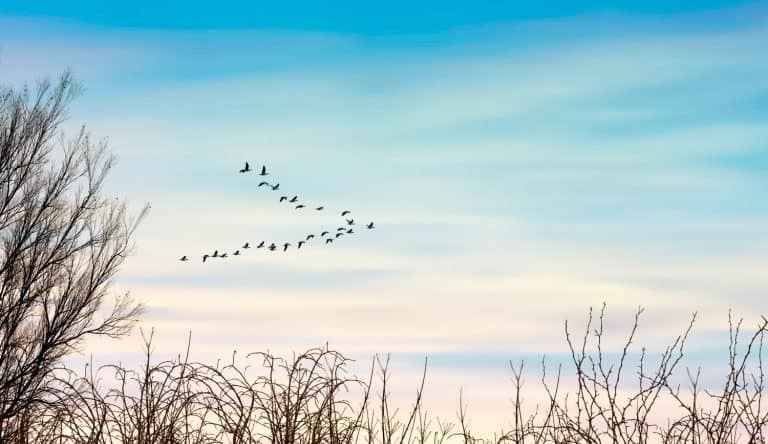
Australia forms the southern terminus of the East Asian-Australasian Flyway. This is the migration superhighway connecting Siberia to the shores of New Zealand. Australia is one of 22 countries within the flyway. Shorebird migration is one of the most amazing feats of travel seen in the animal kingdom. Each shorebird species has its own breeding and non-breeding distribution and habitat preferences. They also have their own preferred flight routes and stopover sites.
These birds breeds in parts of northeast Asia (eastern Siberia and China), to as far west as the Taymyr Peninsula in the far north of Russia and as far east as Alaska.
Epic Migratory Journeys
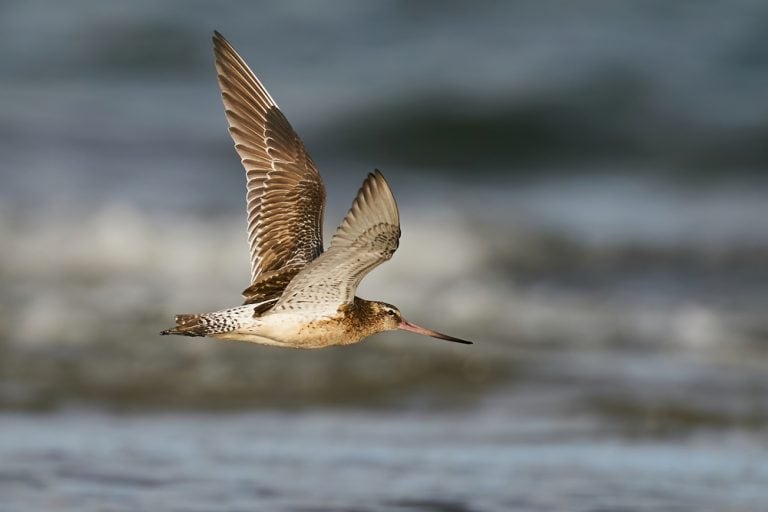
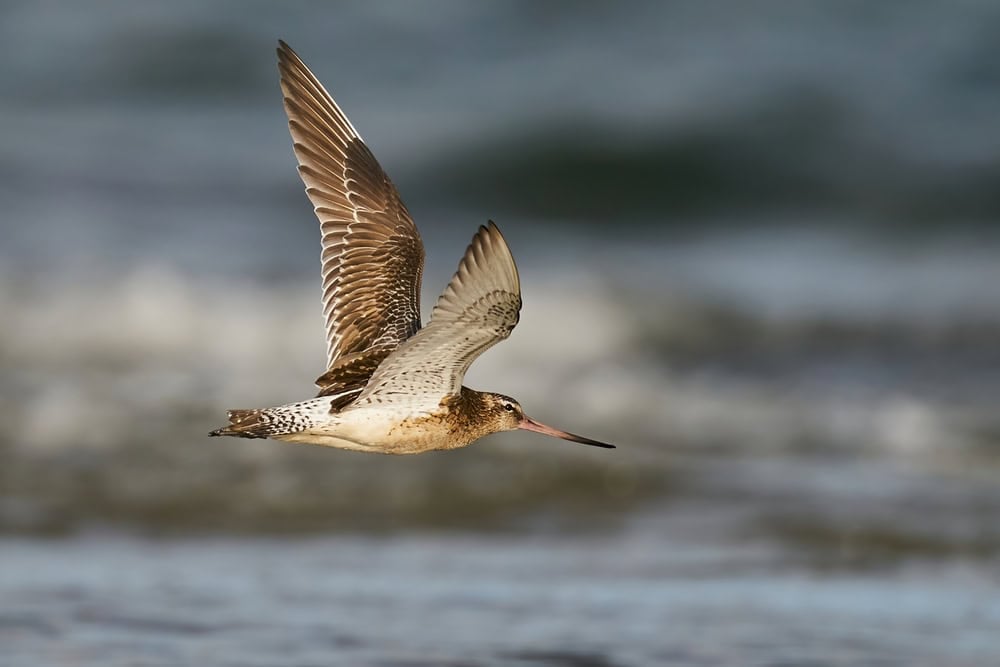
The bar-tailed godwit (Limosa lapponica) undertakes an amazing journey of more than 8,300 miles from Alaska to Tasmania in just 11 days! This is the longest continuous journey ever recorded for a land bird. One subspecies nests in north-eastern Siberia and spends the northern winter in South-east Asia and western Australia. The other subspecies breeds in western Alaska and migrates to New Zealand and south-east Australia for the winter.
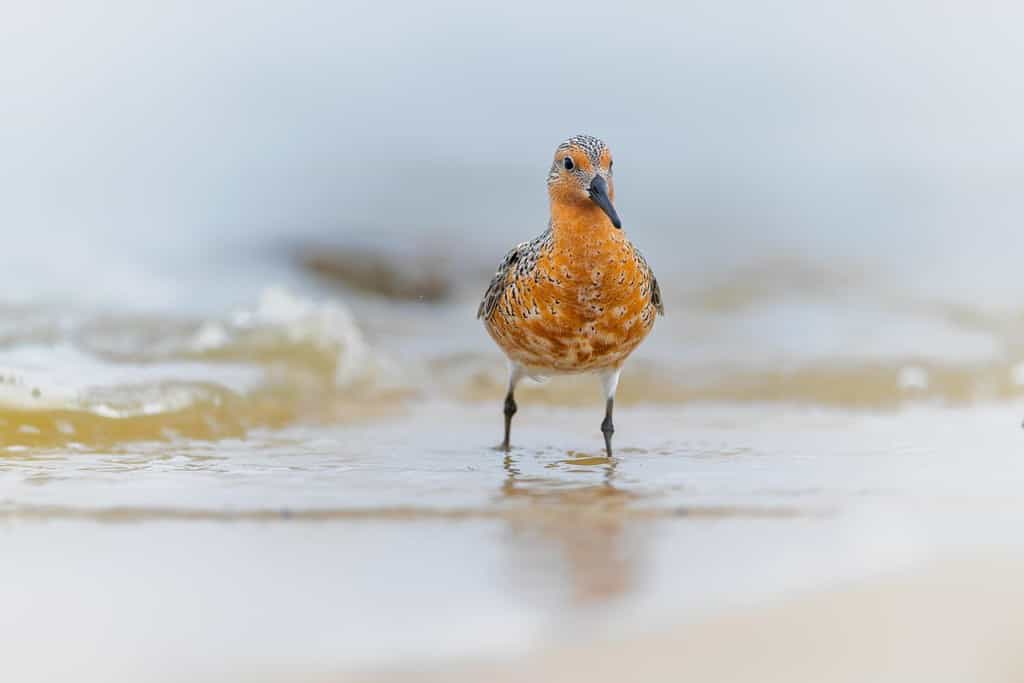
Red knots can be seen at Eighty Mile Beach in Western Australia.
©Buvana Bala/Shutterstock.com
The colorful red knot arrives in Australia during August and September. It inhabits intertidal mudflats and shores of the Eighty Mile Beach in Western Australia, having arrived from Siberian breeding grounds.
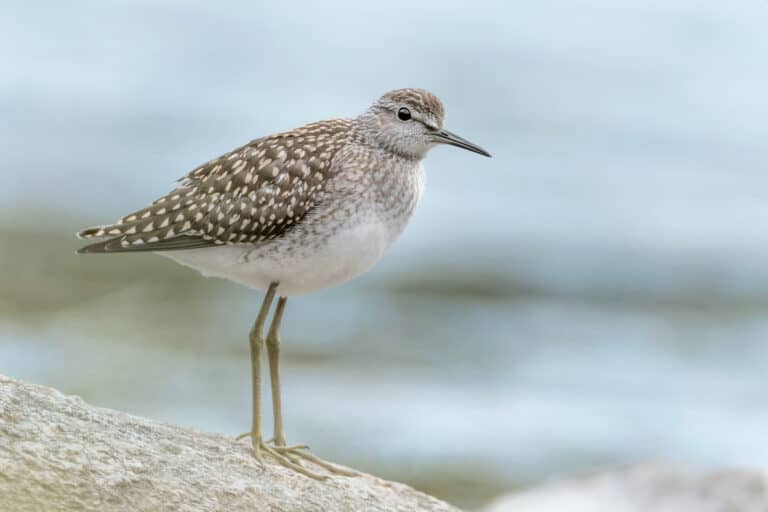
The small and cute red-necked stint is a calidridine sandpiper. It breeds in the Arctic mostly from the Gyda Peninsula east to the eastern tip of the Chukotski Peninsula. When the Arctic winter sets in, however, they travel some 6,000 miles to Australia. These are the smallest of the Australian migratory shorebirds, and they cannot make that arduous journey in one go. They make regular stops to rest and refuel.
The Importance of Mudflats
Migratory shorebirds rely on a very particular type of habitat once they arrive in Australia. They feed on macrobenthic invertebrate fauna on intertidal coastal mudflats. This includes polychaete crustaceans, molluscs, and insects. In some areas, they feed on fly larvae.
Shorebirds are facing threats from climate change, declining habitats, sea-level rise, hunting for sport and subsistence, vegetation encroachment on tidal flats, and human disturbance. Sadly, many shorebird species are in decline.

Mudflats are special habitats that should be preserved.
©Bjoern Wylezich/Shutterstock.com
Healthy and productive mudflats that can sustain shorebird populations require appropriate nutrient inputs, sedimentation rates, tidal regimes, periodic flooding, and natural habitat mosaics. What’s more, the health of a mudflat is dependent on the broader wetland system and surrounding catchment.
If possible, we should avoid fragmenting feeding areas into smaller patches because this can reduce overall bird numbers. It is also important to protect mangrove fringes because they maintain the nutrient input to the mudflats. It is also very beneficial to maintain microhabitat mosaics. Uniform habitats are not as beneficial for the birds.
Activities such as bunding and dredging change salinity profiles, and anything that alters sedimentation regimes affects the productivity, type, distribution, and availability of prey species. By protecting these precious wetlands, we can preserve a suitable habitat for these amazing birds after their epic journeys.