
Quick Take
- Achieving high-speed pursuit required predators to remain under 5 feet about 215 million years ago.
- The crurotarsal ankle creates a technical constraint for reptiles moving through irregular Triassic basins.
- Counter-intuitively, the semi-aquatic ambush was a secondary adaptation rather than an ancestral trait.
- Analyzing ankle and limb bones was necessary to determine the cursorial potential of Galahadosuchus jonesi.
Imagine a crocodile that would rather sprint than swim. It dashes over dry ground on long, slender legs like a reptilian greyhound. Instead of lurking in murky rivers, this Triassic predator moved across dry terrain in what is now Britain, chasing quick-footed prey across open ground.
Scientists have described similar animals from this period, and their unexpected body plans offer a window into convergent evolution. This is the process where similar habitats shape very different creatures into look-alikes over millions of years. By comparing these ancient sprinters with today’s low-slung, river-dwelling crocodiles, we can see a clear pattern: environment, not ancestry alone, decides which body shapes succeed over time.
A Greyhound in the Triassic
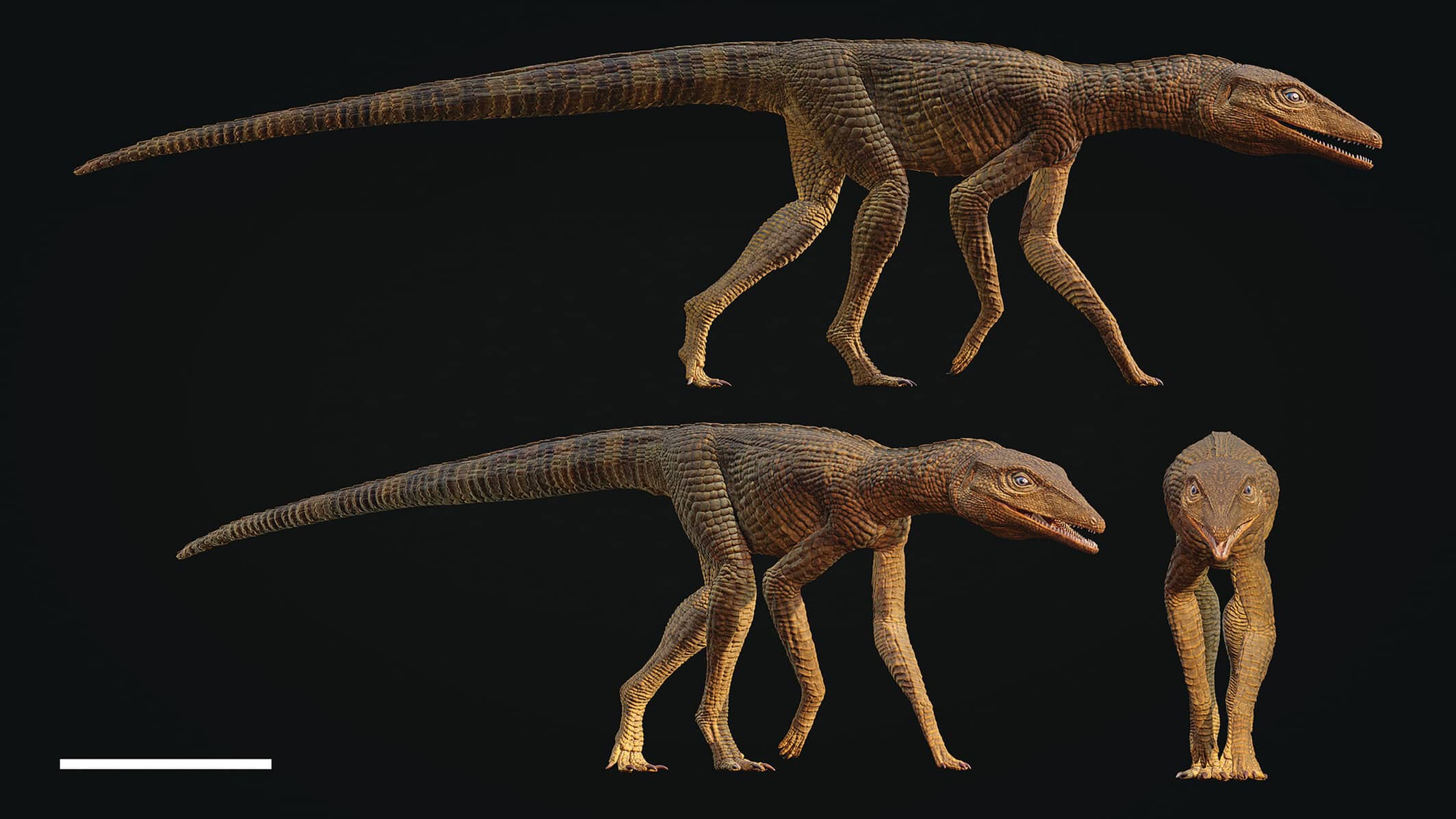
The star of this story is Galahadosuchus jonesi, a proposed crocodylomorph that lived in what is now southwest Britain about 215 million years ago. This places it in the Late Triassic. Fossils from quarries near Gloucester and other sites show small predators under 5 feet long. They had lightweight skulls and narrow bodies built for speed on land. Unlike modern crocodiles, their legs were long and positioned directly under the body. This gave them an upright stance, more similar to a dog than to the sprawling posture of modern reptiles. Careful study of their ankle, hip, and limb bones suggests some early crocodile relatives were cursorial quadrupeds. These animals were designed to run. They likely wove through vegetation to hunt small reptiles, amphibians, and early mammals in relatively dry environments.
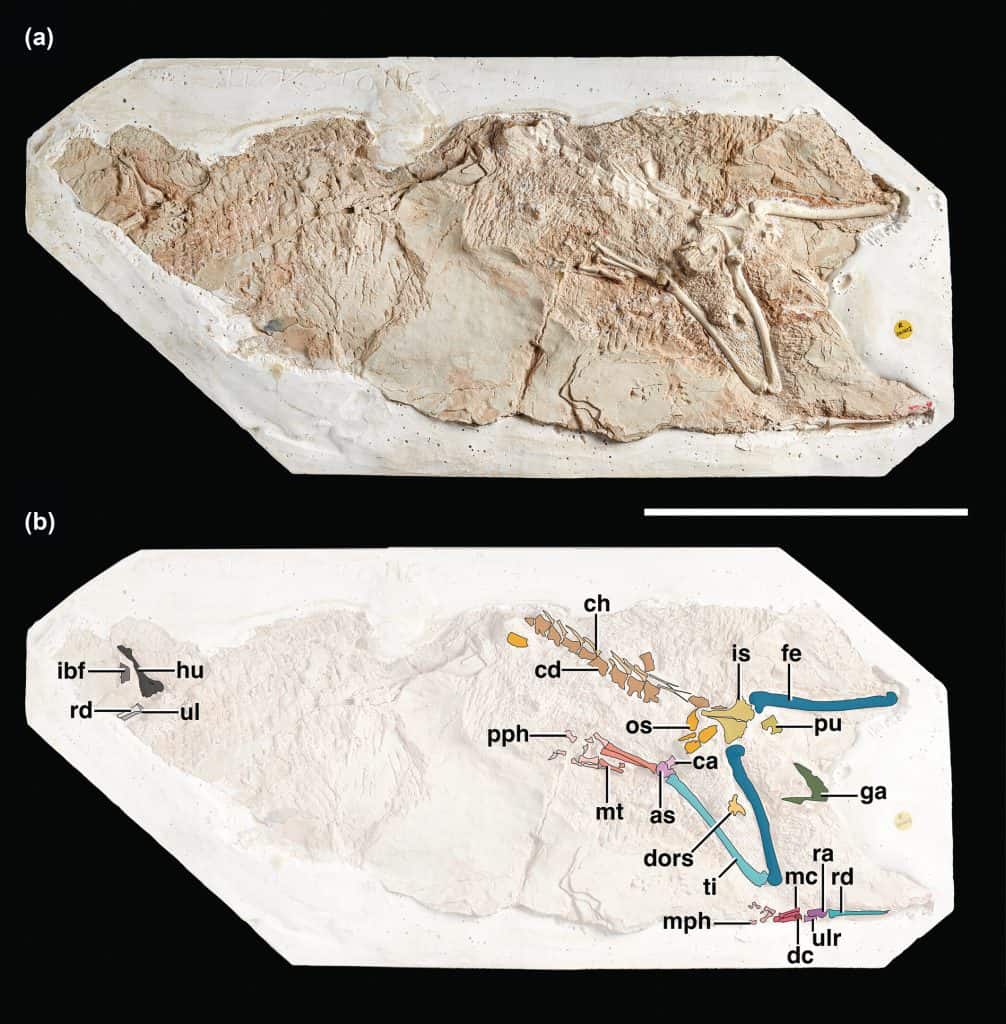
Paleontologists focus on studying the joints and hips to understand how Galahadosuchus jonesi moved.
©Bodenham, E. H.; Spiekman, S. N. F.; Maidment, S. C. R.; Upchurch, P.; Mannion, P. D., CC BY 4.0 , via Wikimedia Commons – Original / License
What the Fossils Reveal About a Running Crocodile
Paleontologists piece together the lives of these animals from scattered bones, using subtle skeletal details to reconstruct how they moved and hunted. In many species, the forelimbs were only slightly shorter than the hindlimbs and seem to have been fully load‑bearing, indicating that these reptiles ran on all fours instead of balancing on two legs like some other Triassic forms. Features such as elongated wrist bones and compact, tightly built hands would have stiffened the forelimbs, making them better suited for powerful, efficient strides rather than delicate grasping. Combined with the classic ‘crurotarsal’ ankle—typical of early crocodile relatives—these traits suggest a stable, springy gait that enabled quick turns and sudden bursts of speed over uneven ground.
Crocodile Cousins in a Dry, Upland Britain
When these early crocodylomorphs roamed prehistoric Britain, they moved through a landscape very different from today’s. Rather than a single upland plateau, the region was broken into a patchwork of rift basins, seasonal floodplains, and drier high ground shaped by a warmer climate. Broad, permanent swamps were less common; instead, habitats were irregular and shifting, with intermittent waterways, exposed ground, and scattered pockets of vegetation.
Such conditions favored quick, agile hunters. Their prey—small vertebrates such as early mammals, lizard-like reptiles, and amphibians—were adept at slipping into crevices, rocks, and brush, which put constant pressure on predators to become faster and more maneuverable. In this kind of terrain, heavy armor and slow, aquatic ambush tactics offered less of an advantage than speed, agility, and precise footwork on land.
Convergent Evolution: Why a Crocodile Looks Like a Dog

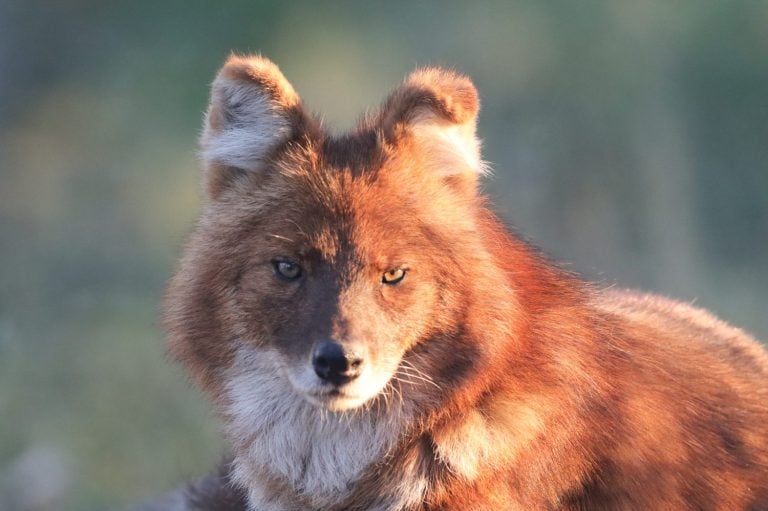
Galahadosuchus jonesi had some anatomical features similar to a greyhound.
©Anna Averianova/Shutterstock.com
The greyhound comparison captures a classic case of convergent evolution. Unrelated animals evolve similar traits when they face similar challenges. Greyhounds and other sighthounds are built to chase fast prey over open ground. They have long legs, flexible spines, and lightweight bodies. These features maximize stride efficiency.
Some early crocodylomorphs developed comparable traits. These reptiles evolved similar adaptations for hunting on land. This occurred even though these reptiles and mammals are only distantly related. In both cases, natural selection favors animals that accelerate quickly. It also favors those who can maintain speed and change direction without losing balance. Over time, this produces similar streamlined designs.
From Triassic Sprinters to Modern River Ambushers
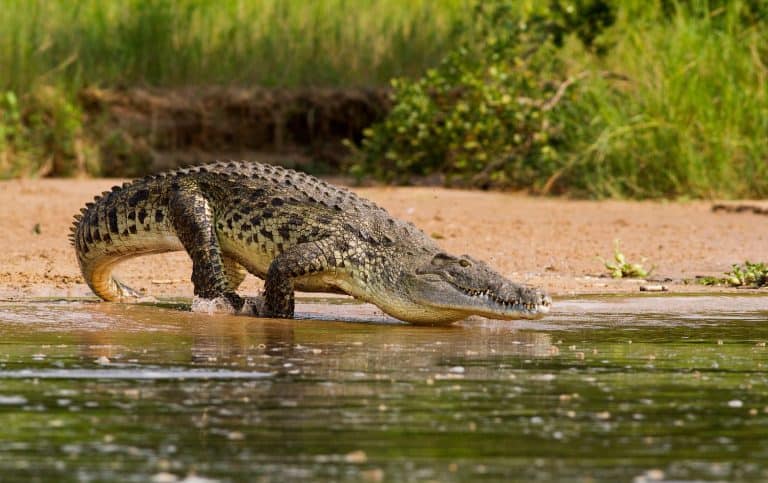
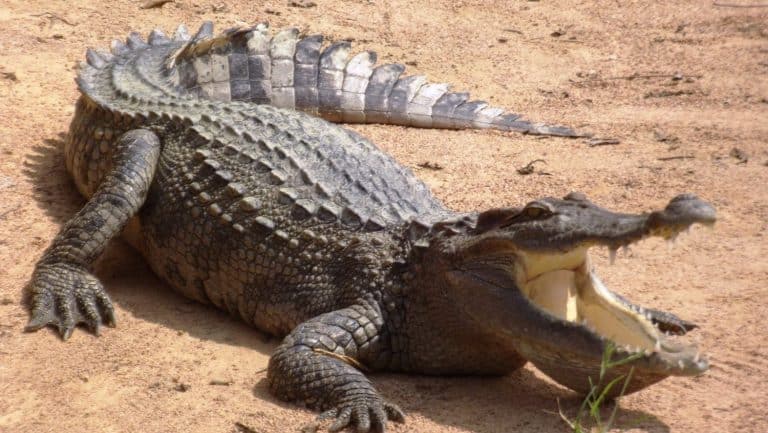
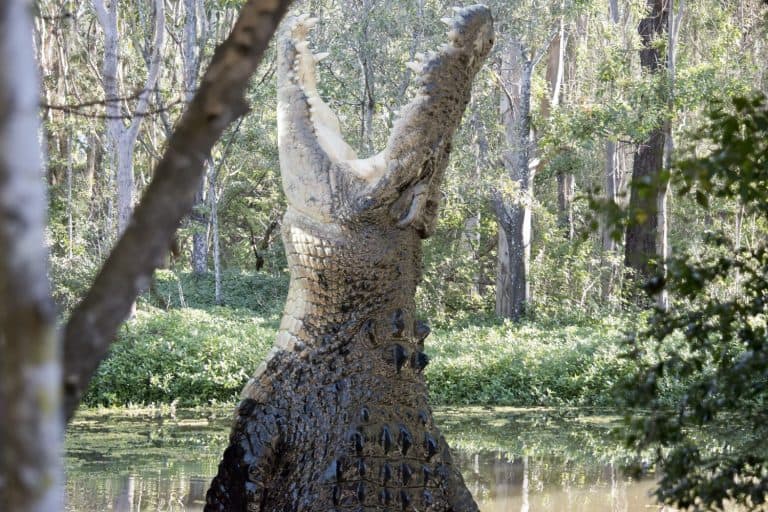
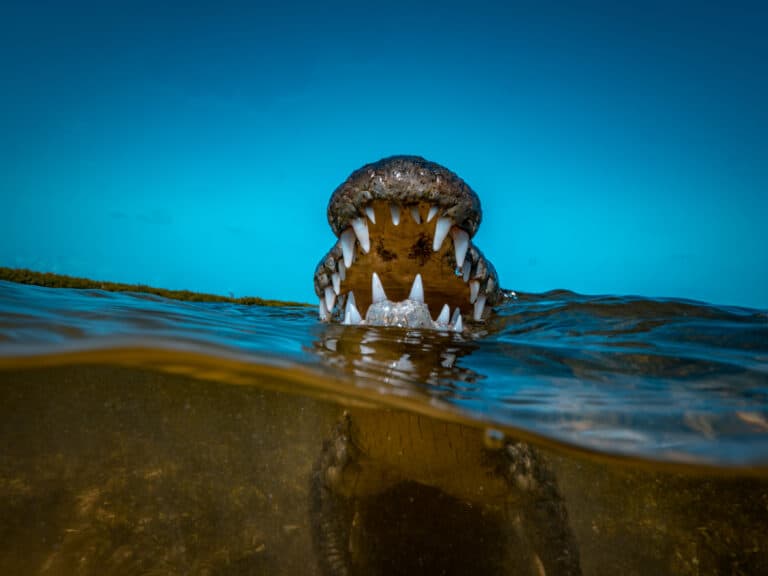
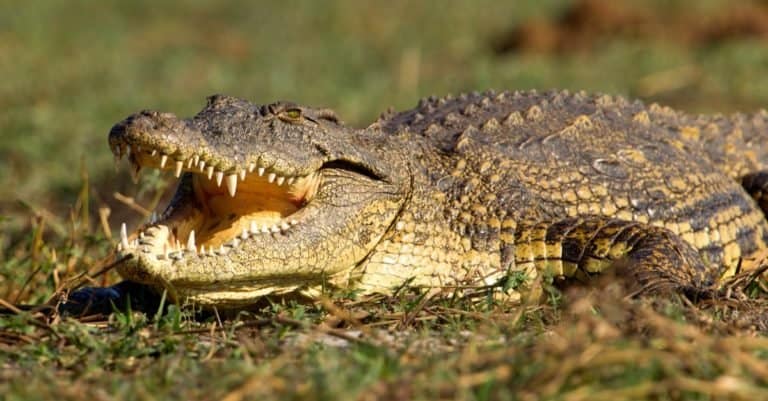
To understand how unusual these early croc relatives were, it helps to compare them with modern crocodiles, alligators, and gharials. Today’s crocodyliforms are semi-aquatic carnivores. They spend much of their time in freshwater habitats, equipped with powerful tails and webbed feet for swimming. They also ambush prey at the water’s edge. Their bodies are low and wide. Their short legs sprawl outward. Many living species share general features such as elongated snouts.
However, there is noticeable variation in skull shape. Gharials have narrow snouts, while alligators have broader jaws. Fossil evidence shows that early croc relatives explored many different body plans. This diversity existed before semi-aquatic ambush predators became dominant.
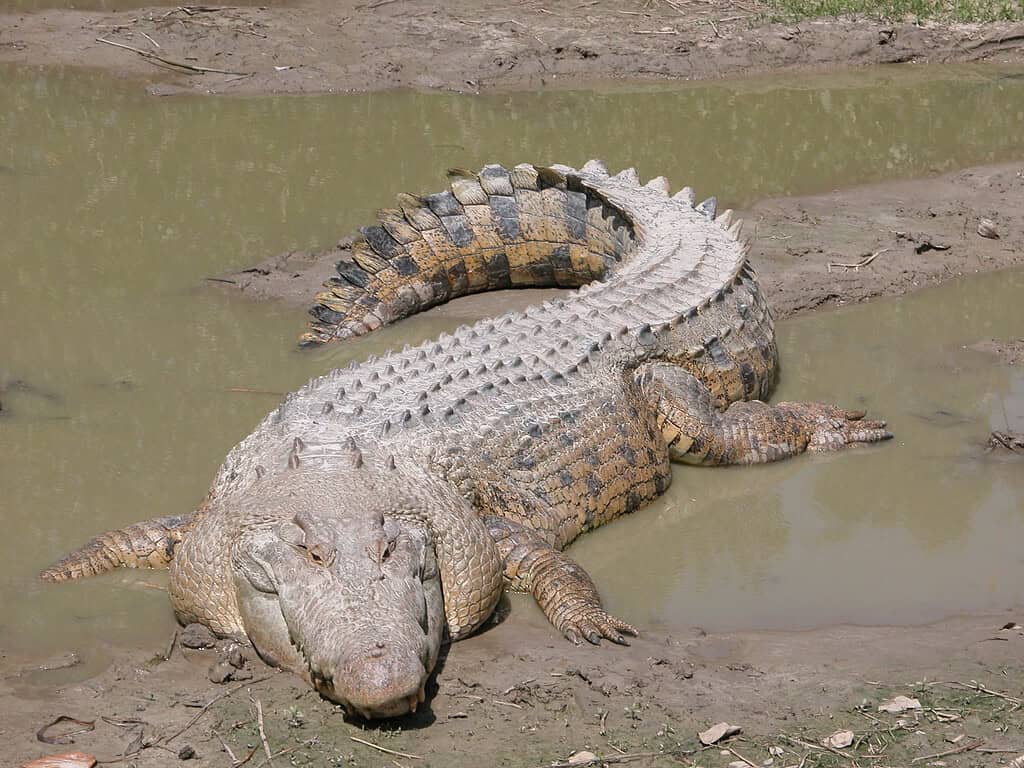
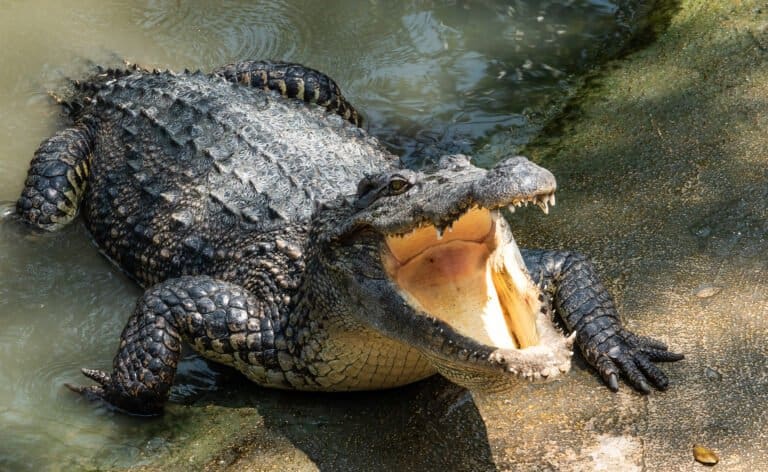
Saltwater crocodiles like this are semi-aquatic ambush predators.
©Molly Ebersold of the St. Augustine Alligator Farm / Public Domain – Original / License
How Water Reshaped the Crocodile Body
The shift from land-running forms to water-edge ambushers reflects another example of convergent evolution. Different reptile groups independently adopted similar semi-aquatic lifestyles. Living crocodiles share several key adaptations. Their nostrils and eyes sit high on the skull. They have secondary palates that allow breathing while mostly submerged. Strong tails provide propulsion in the water.
At the same time, their bodies still function on land. Their anatomy balances both environments. This makes them effective in each, though not extreme specialists in either. Over time, natural selection favored this compromise. It worked well wherever ambush feeding in shallow water was more reliable than chasing prey on land.
Other Crocodile Experiments in Body Shape
Fossils show that crocodylomorphs once displayed far more diversity than today. They repeatedly explored new ecological niches and body plans. Some ancient species were fully marine. They had paddle-like limbs and fish-like tails. These features resemble modern dolphins and ichthyosaurs. Others, such as certain Cretaceous notosuchians, were terrestrial predators. However, it is unclear whether they directly competed with theropod dinosaurs. Still others evolved unusual feeding strategies. Some may have consumed plants. Others appear to have filtered small prey from water. In all these cases, similar environments drove different lineages to evolve comparable adaptations.
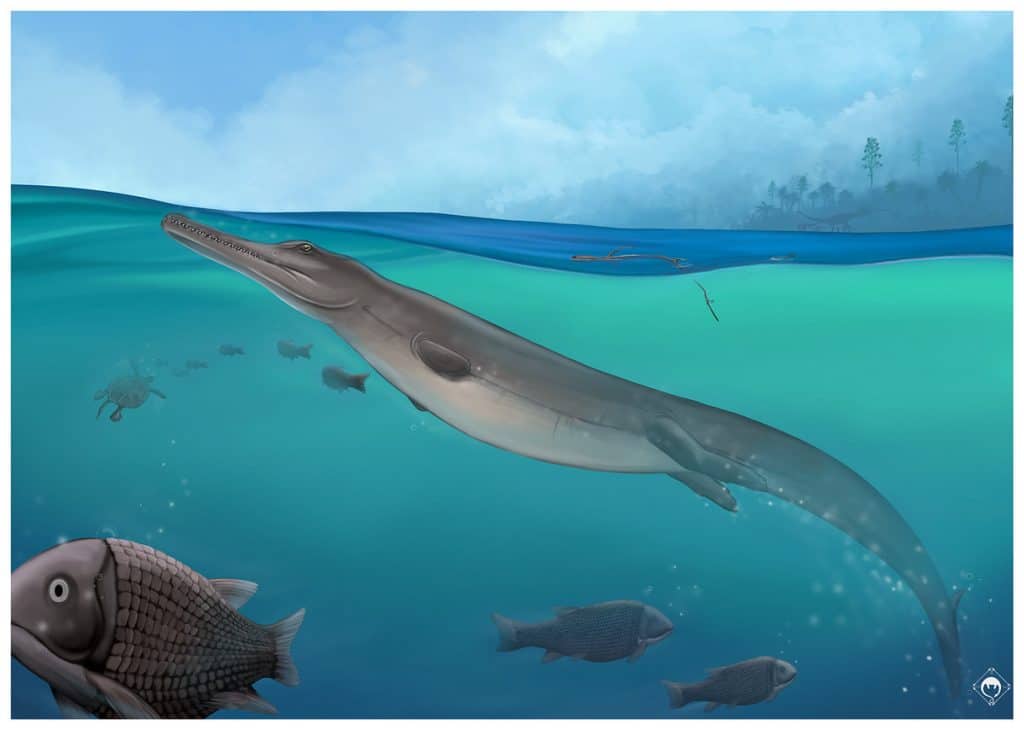
Torvoneustes jurensis was a crocodylomorph with paddles for limbs and a flattened, fish-like tail for fast swimming.
©Sophie De Sousa Oliveira, CC BY 4.0 , via Wikimedia Commons – Original / License
Sharing the Niche: Crocs, Dogs, and Other Sprinters
Greyhound-like body shapes appear in many fast-running animals. Examples include cheetahs, pronghorns, and various antelope species. These animals share limb proportions and body designs that maximize speed. Early crocodylomorphs with similar builds occupied comparable ecological roles. They functioned as pursuit predators. Their exact behavior is unknown, and there is no strong evidence for pack hunting; they were likely solitary hunters. They relied on speed and quick reactions to capture prey.
The Mass Extinction That Reset the Race
The world of these early croc relatives changed dramatically around 200 million years ago. This occurred near the end of the Triassic period. Massive volcanic activity linked to the breakup of Pangaea caused major climate shifts. These changes triggered a large extinction event. Many reptile groups disappeared. This opened ecological space that dinosaurs later filled. Crocodylomorphs survived the crisis. However, they lost much of their earlier diversity. Semi-aquatic forms became more prominent as ecosystems reorganized. Over time, selective pressures favored species that thrived in freshwater environments.
What a Triassic “Greyhound Croc” Teaches Us Today
These animals offer a clear lesson in how environments shape evolution. Early crocodylomorphs show that groups often labeled as “living fossils” were once far more diverse. They included land sprinters, aquatic ambushers, and other forms. Convergent evolution links these ancient reptiles with modern mammals. Similar challenges often produce similar solutions. This happens even across very distant lineages. As environments continue to change, these ancient examples help us understand how species adapt—or fail to adapt—to shifting conditions.