
Humans aren’t the only ones with impressive architectural abilities. Both ants and termites have exceptional building skills, with each insect capable of constructing complex structures. How can you tell an ant hill from a termite mound? Let’s take a look.
How to Tell the Difference Between Ants and Termites
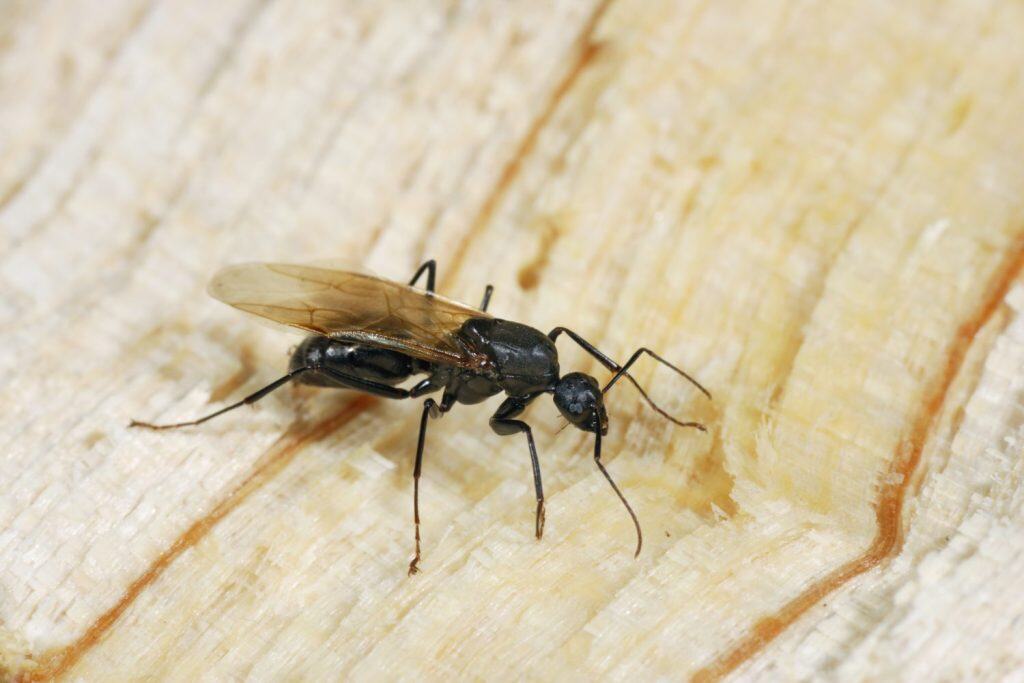
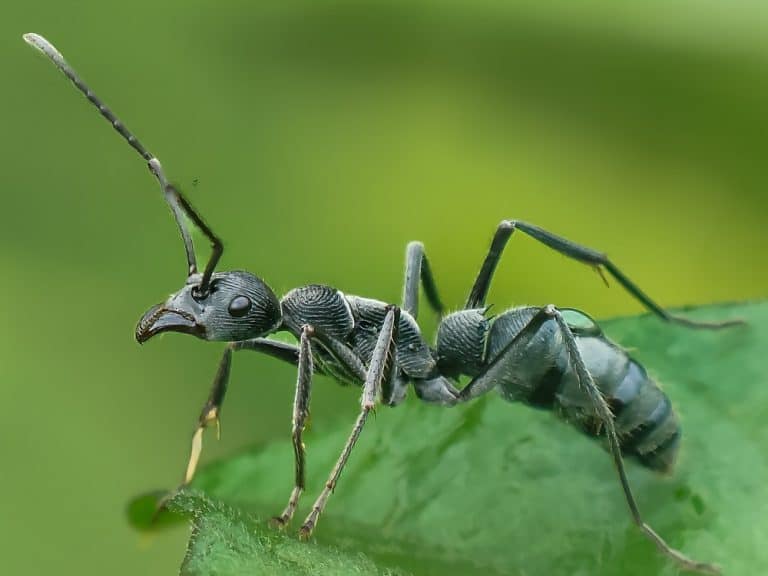
A winged carpenter ant may be mistaken for a termite, but there are differences.
©Paul Tessier/Shutterstock.com
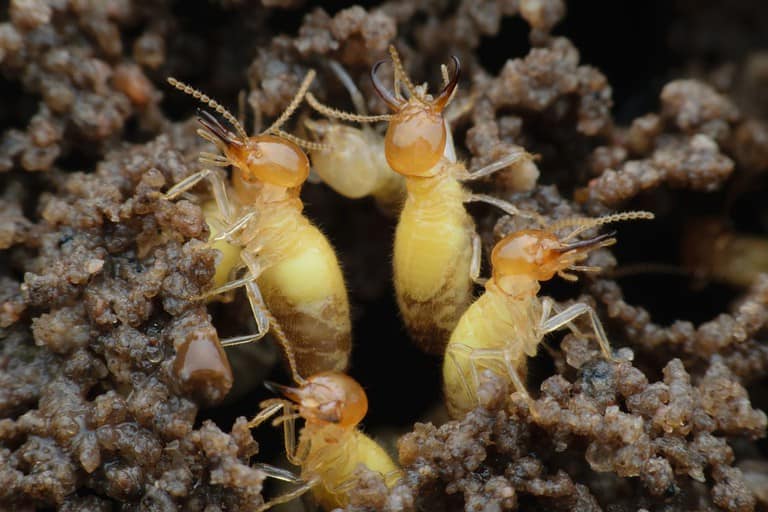
Before we discuss how to distinguish between an ant hill and a termite mound, let’s examine some similarities and differences between ants and termites. There are over an estimated 15,700 different species of ants within the Formicidae family. Ants live all around the world on every continent except for Antarctica. Termites can also be found on every continent except for Antarctica. There are over 2,600 different species of termites in the Termitidae family.
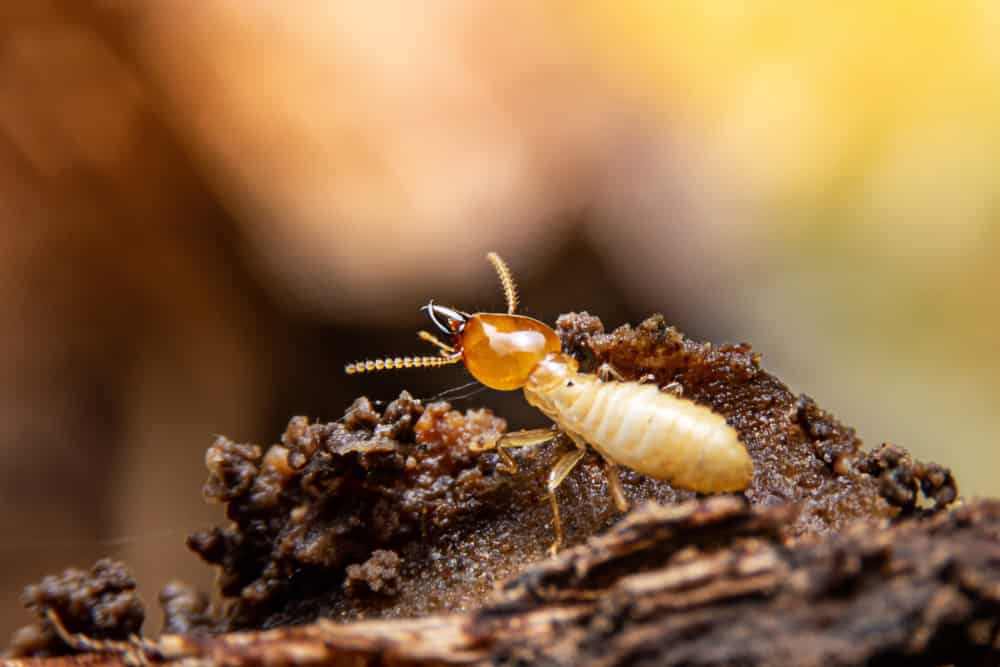
One way to tell a termite from an ant is in the antennae; termites have straight antennae, while ant antennae are bent.
©Witsawat.S/Shutterstock.com
Both species are highly social and live in colonies where each member has a special role to play. Although ants and termites are not in the same insect family, they share some physical characteristics. It may be hard to tell the difference between a winged ant and a termite, but there are a few distinguishing features.
According to the Kansas State Department of Entomology, some key differences are as follows:
- Wings: Flying ants have pairs of wings of unequal length, while termites’ wings are of equal length.
- Waist: Ants have a narrower waist than termites.
- Antennae: Ants’ antennae are elbowed, while termites’ antennae are not.
Division of Labor
Both ants and termites have a caste system and a clear division of labor. Termites have a king and queen that lead the colony, while ant colonies are led by a queen alone. Workers in both ant and termite colonies are responsible for construction tasks, including digging tunnels, as well as repairing and maintaining the nest.
Key Differences: Ants vs. Termite Construction
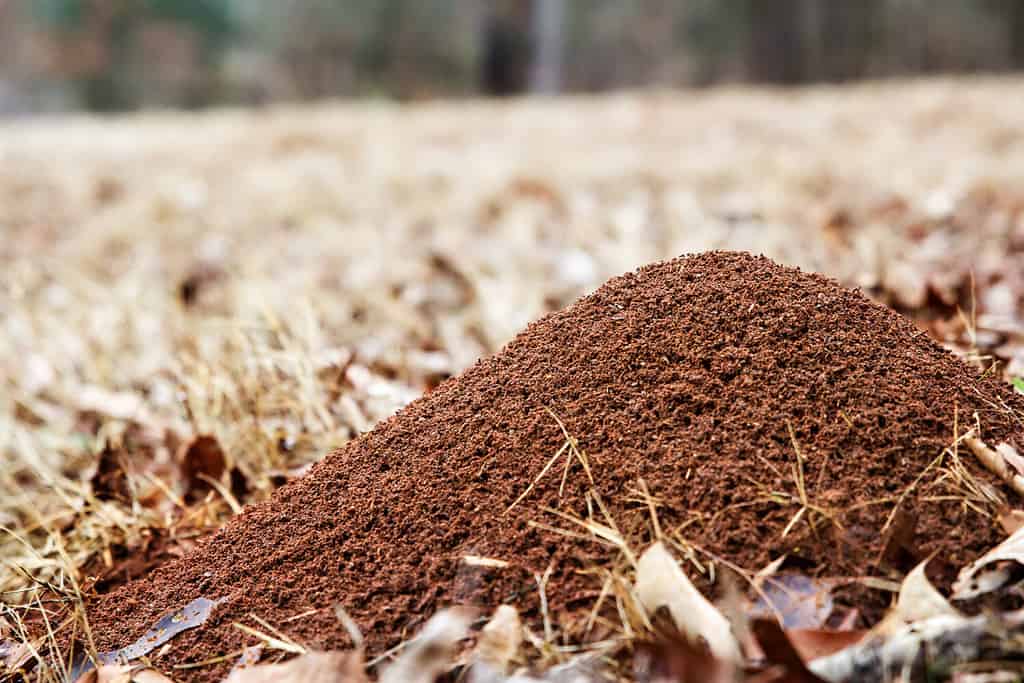
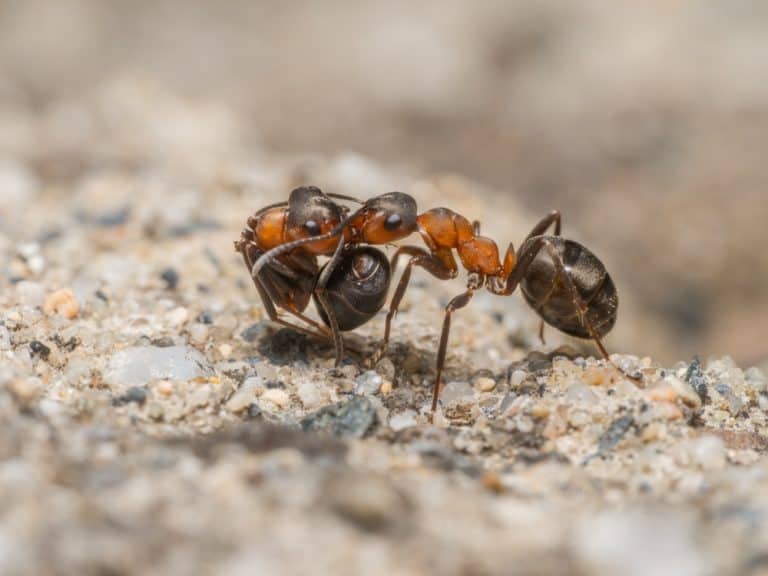
The material that makes an ant hill comes from the excavation of underground tunnels.
©Tracey Patterson/Shutterstock.com
It may be hard to tell the difference between a termite mound and an ant hill, especially in regions where termites tend to build large structures. However, there are some tell-tale differences to watch out for.
Construction Materials
Ant hills are usually made of soil or sand with a crumbly texture. Underneath the mound is a vast network of complex tunnels. The soil on top is essentially the earth that the ants excavated while digging their underground nest. Termite mounds, on the other hand, are more solid and are made from a mix of soil, termite saliva, and fecal matter. While the ant hill is soft and can be easily disturbed, termite mounds harden over time.
Size and Shape
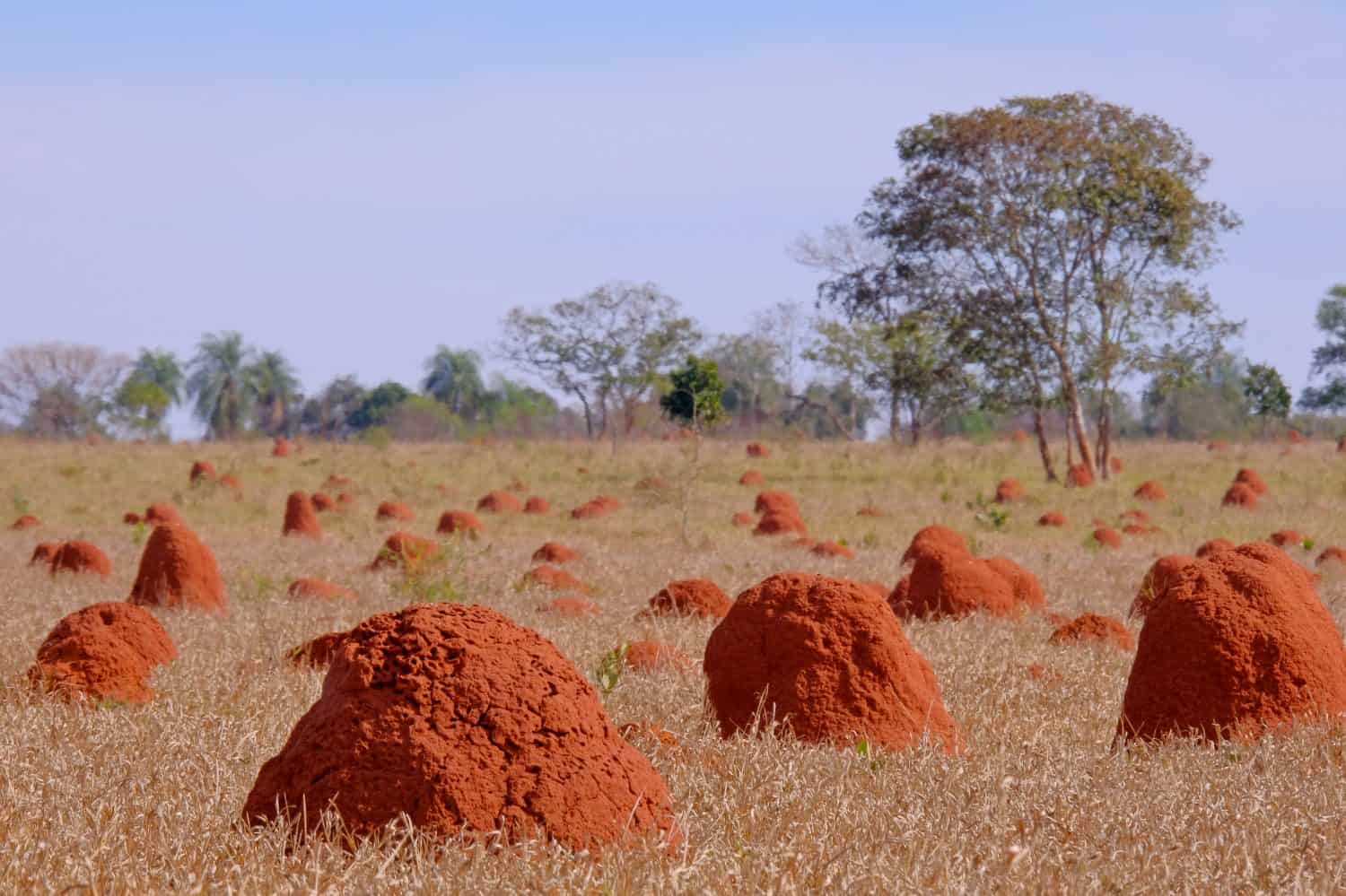
Although ant hills can grow to be enormous, like a super colony discovered in Europe that spans over 3,700 miles, they are typically smaller than termite mounds. Additionally, ant hills tend to be simple mounds, while termite mounds come in various shapes. Some may be tall and narrow, while others may be shorter and more compact.
Entrances
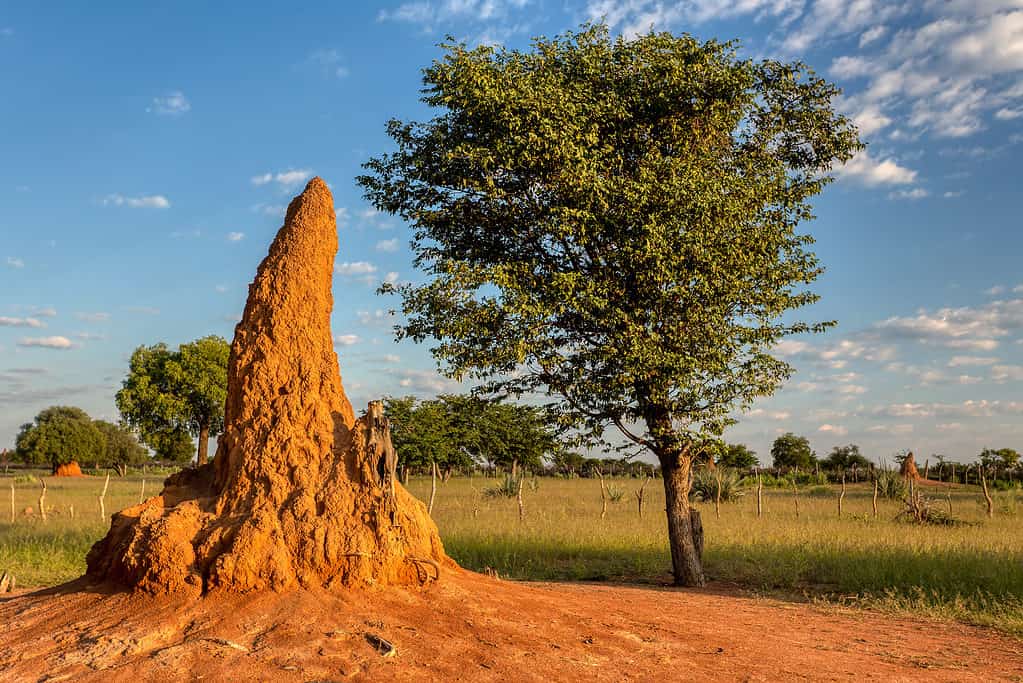
Termite mounds are often more structured than ant hills.
©Artush/Shutterstock.com
The mound of an ant hill marks the entrance to the ants’ underground tunnels. Ant hills typically have multiple entrances along the top of the mound. Termite mounds tend to have fewer and more structured entrances.
Ventilation
Termite mounds look very solid, but they are in fact porous. Air is able to flow through the structure. Researchers have discovered a fascinating fact about termite mounds. They function as a ventilation system for the colony living underneath. The termites constantly adjust the mound to adjust air flow and temperature for the colony. Termite mounds often have a central chimney at the top. Ants are also adept at circulating air in their underground homes. They construct tunnels to bring in fresh air from outside and regulate temperature.
Location
Ant hills can be found almost anywhere, but are usually located in open spaces such as yards and gardens. They may also build underneath logs or rocks. Termite mounds, on the other hand, are primarily found in tropical and subtropical regions, including Africa, Australia, and South America.
Activity
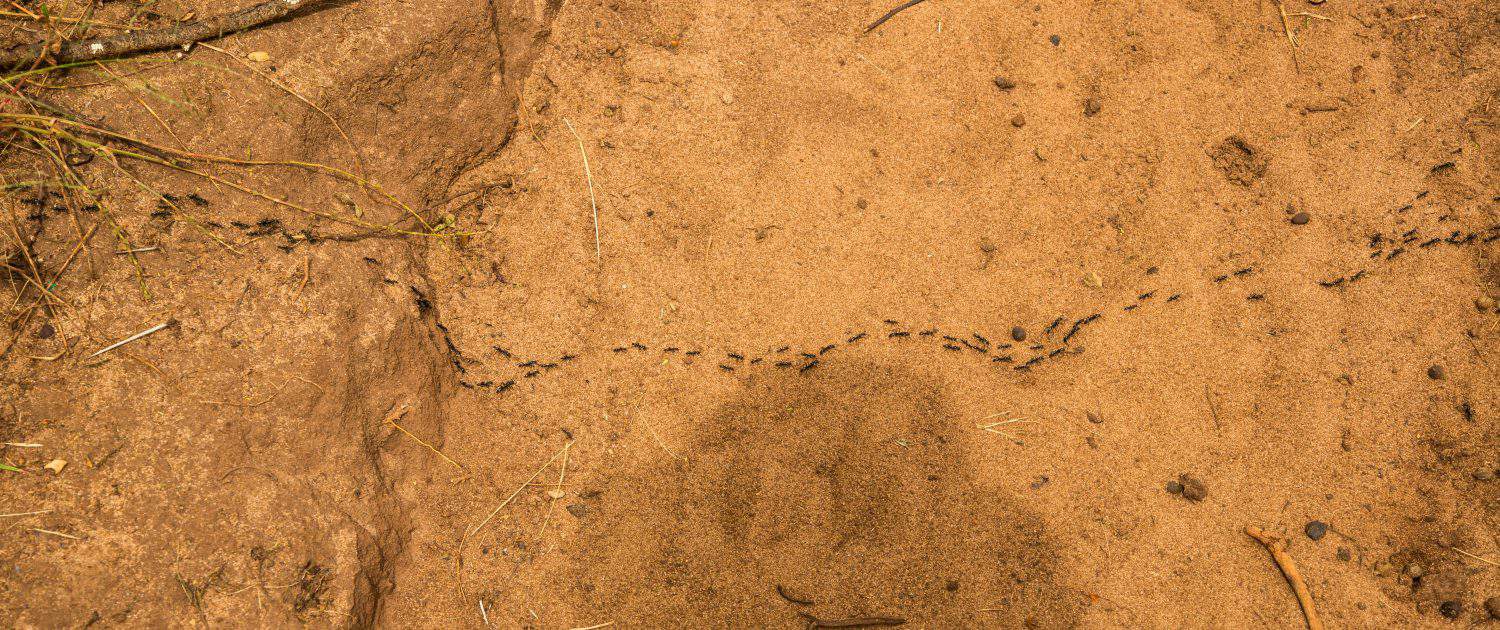
You are more likely to see ant activity outside of an ant hill, while termites tend to stay hidden underground.
©Bob Pool/Shutterstock.com
When you spot an ant hill, you will usually observe a high level of activity, with resident ants moving in and out of the tunnels. Termites are usually more elusive and stay hidden most of the time. You may also find mud tubes or tunnels built by termites that lead to the mound.
Depth
Both have been discovered with tunnels extending as deep as 20 feet underground.