
If you’re ever walking through the woods and you suddenly hear a nearby animal barking at you, there are likely several scenarios that may run through your head. Are you hearing a wolf or a wild dog? The last thing you’d probably expect is what you’ll see and hear in this wild YouTube video. Your eyes aren’t deceiving you; that is a small barking deer! You may be wondering why that deer looks so unique and what makes it produce those peculiar noises. Let’s explore more about this unique creature.
What Type of Deer is That?
The creature you’re looking at in that video is known as the muntjac deer (Muntiacus reevesi). Technically, the deer is originally from China. However, after it was introduced in Bedfordshire in the early 20th century, the deer is now most commonly found in numerous areas of the United Kingdom.
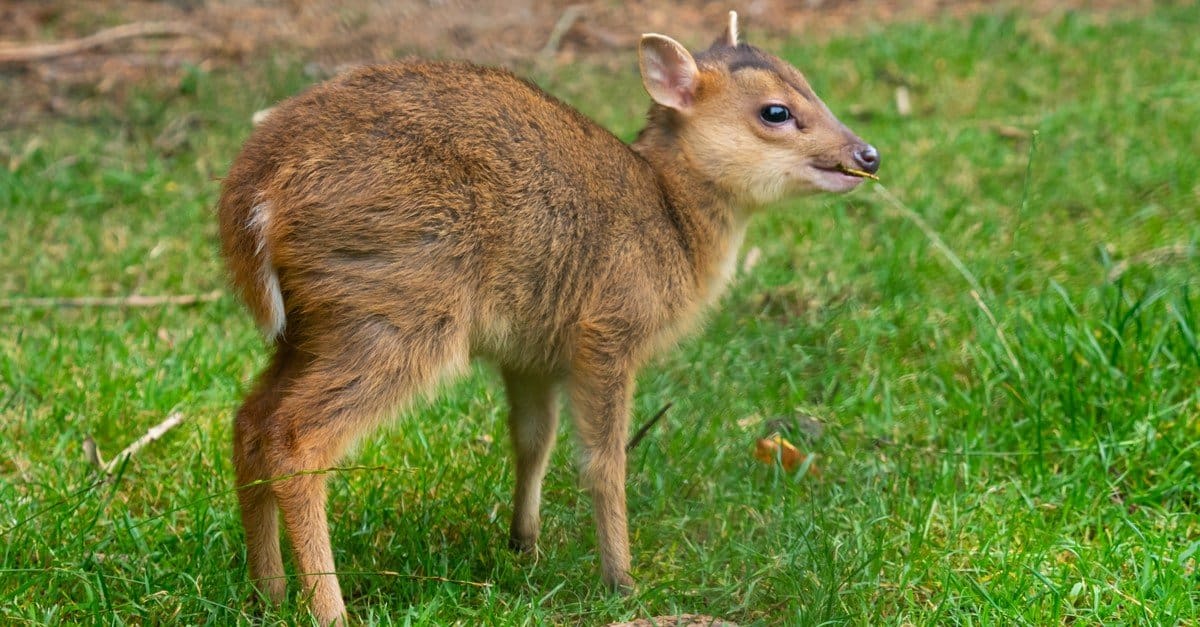
If you only saw the muntjac deer and hadn’t yet heard it, you would still be forgiven if you mistook it for a dog. That’s because, with an average shoulder height of 45-52cm, this special deer is about the same height as a medium-sized dog. Upon further inspection, you’ll see that the muntjac looks more like a deer than you realized due to its gingery-brown fur and small single-pointed antlers.
Unique Characteristics

The muntjac deer’s appearance is very unique with small antlers, scent glands on their face, and more.
©22August/Shutterstock.com
Besides their barking sound, muntjac deer have other unique characteristics that further distinguish them from typical dogs. For instance, upon closer inspection, you’ll notice that many muntjac deer appear to have fangs. In reality, males have elongated canine teeth, while females also have them, but they are much smaller. Males primarily use their teeth during mating rituals, but they can also be used as a weapon when threatened or involved in a territorial dispute.
The muntjac deer are also famous for the noticeable scent glands on their faces. The glands appear on their forehead and in front of their eyes. Sometimes, the muntjac will lick its scent glands to re-familiarize itself with its own scent. The scent glands often open when the deer is courting, defecating, or urinating. The scent that is emitted is incredibly informative. It tells other nearby deer about its age, sex, reproductive status, and more.
What’s Up With the Barking?
Of course, the main reason why someone may instinctively think they’re hearing a dog is because of the unique bark that the muntjac deer makes. Many people are unaware of the sounds that deer make. Most white-tailed deer make sounds such as squeals, hisses, cries, or bleats. However, very few of them bark like the muntjac deer. There are many reasons why you may hear the deer make that noise:
- When Threatened – Typically coming in at just over one foot tall, the muntjac deer is often in danger, so it will bark when it feels it’s in trouble. This alert can scare away a potential predator or warn other deer of the threat. Sadly, muntjac deer have many predators in the wild, including tigers, jackals, crocodiles, pythons, leopards, foxes, and some larger dogs.
- Marking Their Territory – The male deer will often bark when marking its territory.
- Attracting Mates – Male muntjac deer will sometimes bark as a show to the females during mating season. However, female muntjac deer may also bark to inform potential mates that they’ll be available again soon for a new partner.
When muntjac deer start barking, it often takes a while for them to calm down. When they sense a threat, they may continue barking for over an hour in an attempt to make predators go elsewhere. Even when the deer are babies, they’re very vocal and communicate via a series of squeaks. The barking that this animal makes is unique to the muntjac. No other deer or other species sounds quite like them.
Are Barking Deer Rare?

Muntjac deer are incredibly common in parts of Europe to the point that they’ve become invasive.
©Stephan Morris/Shutterstock.com
No, it’s quite the opposite. It may seem like a majestic creature with these unique characteristics would be a rarity. However, the muntjac deer is actually considered to be an invasive species and an alien species in many areas of Europe. The issue is that the deer eat many of the plants and resources that are prized in these areas. Their diet consists of many plants common to various parts of Europe, including a wide range of nuts, seeds, and fruits. Though they are mostly vegetarian, they also occasionally eat snails, insects, and other sources of protein.
Additionally, the deer enjoy chewing on the leaves and small shoots of young trees. They are also accustomed to feeding on many of the crops growing in farmers’ fields. The problem can become so severe that the loss of crops can negatively impact the profits of those who depend on them for their livelihood. Needless to say, the problem has gotten so bad that it’s now illegal in the UK to release new muntjac deer into the wild. In the end, the muntjac deer is a majestic and truly unique addition to the animal kingdom. Just don’t get too close, or you’ll hear its bark. Don’t worry—their bark is worse than their bite.