

Dogs might put on a brave face, but the wrong sound can send even the toughest-looking pup scampering for cover. Our homes and neighborhoods are full of noises that dogs absolutely hate. These reactions are hardwired into canine biology and shaped by their history as predators, protectors, and pack animals. To understand why certain sounds drive dogs crazy, let’s explore just how sensitive their sense of hearing really is. Then, we’ll look at 9 common sounds that bother them most and what to do about it.
The Remarkable Hearing of Dogs

Dogs’ sense of hearing is much more sensitive than that of human beings.
©oasisamuel/Shutterstock.com
A dog’s hearing is remarkably sharp. While humans detect sounds between 20 and 20,000 Hz, dogs can hear from about 40 Hz up to 60,000 Hz, with peak sensitivity in the 3,000–12,000 Hz range, depending upon the breed. This gave their ancestors an edge in survival—spotting prey, avoiding predators, and staying connected with their pack.
In modern homes, though, it means dogs often pick up on noises we barely notice. High-pitched tones, in particular, can feel piercing or even painful to them, even at low volumes. What’s background noise to us may come across as uncomfortably loud, which is why certain everyday sounds trigger such strong reactions in our pets.
Here are 9 common noises that freak out Fido the most.
1. Fireworks

If you’re going to see fireworks, leave your dog at home.
©Billion Photos/Shutterstock.com
Every summer, thousands of dogs cower, tremble, or try to run away at the sound of fireworks. The combination of high-pitched whistles, loud bangs, and yelling from crowds of people creates an all-out assault on their senses. Dogs not only hear the sharp explosions but also feel the vibrations reverberating through the ground and air, which their brains interpret as a sign of danger.
Unlike thunder, which has a natural rhythm and gradual buildup, fireworks are random and startling. To a dog, they represent chaotic and inescapable threats. It’s no wonder many dogs hide for hours during Fourth of July celebrations or New Year’s Eve festivities. If you’re going to see fireworks, by all means leave your dog at home; it will not like it. The American Kennel Club has other tips to help your dog handle fireworks.
2. Thunderstorms

Dogs often want someplace to hide during thunderstorms.
©Irina Kozorog/Shutterstock.com
Thunderstorms, like fireworks, bring intermittent flashes of light and deep booming crashes, sometimes loud enough to create rattling vibrations through your house. But more than that, it also changes the atmosphere with a drop in barometric pressure and an increase in static electricity. Dogs can hear these storms and detect these environmental changes long before humans, so they may start to become anxious before we even notice the sky is clouding over. Some dogs develop storm phobias so intense that they may dig, destroy furniture, or injure themselves in an attempt to find safety. Some owners use ‘thunder vests’ or anxiety wraps to help their dogs feel more secure during storms.
3. Sirens

Loud sirens scare people by design, dogs by accident.
©Artiom Photo/Shutterstock.com
Ambulance, fire truck, and police sirens hit frequencies that overlap with the most sensitive part of a dog’s hearing. Their oscillating, rising-and-falling pattern grabs canine attention immediately. Some dogs howl in response—a throwback to their wolf ancestors, who used howling to signal to the pack. Others pace, whine, or cower, distressed by the painful pitch. Because sirens can start suddenly and echo across neighborhoods, they’re especially hard for dogs to ignore. Even dogs who aren’t generally fearful may find sirens grating and confusing.
4. Vacuum Cleaners

Some dogs attack vacuum cleaners, others hide from them.
©Aleksey Boyko/Shutterstock.com
The dreaded vacuum is one of the most common “villains” in the canine household. For people, it’s just a noisy appliance, but for dogs, it’s a terrifying combination of sound, movement, and vibration. Vacuums roar, whine, and rumble all at once. They roll unpredictably across the floor, invading the dog’s space while spewing unfamiliar smells from deep in the carpet. To a dog’s brain, the vacuum looks and sounds like a chaotic predator—loud, unpredictable, and impossible to control. Some owners find that quieter robotic vacuums, which move systematically across the floor, are less upsetting to their dogs.
5. Smoke Alarms
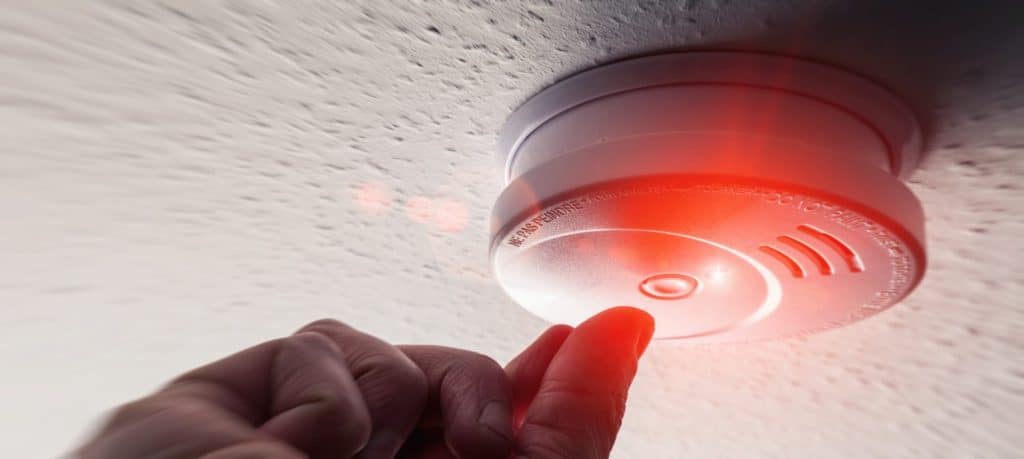
Maybe put your dogs away before you test your fire alarms.
©r.classen/Shutterstock.com
Few sounds are more jarring to humans than a smoke or carbon monoxide alarm, but for dogs, these high-pitched beeps are downright unbearable. The sharp frequency lands squarely in their most sensitive hearing range, and alarms are designed to be impossible to ignore. Dogs often panic when an alarm sounds, running in circles or desperately trying to escape. The memory of the noise can stick, leaving dogs anxious even after the alarm has stopped. For some, just seeing the blinking light of a detector is enough to trigger nervous behavior. Owners should change smoke detector batteries promptly to prevent reminder beeps, and ensure the kitchen is well-ventilated while cooking to avoid setting off alarms.
6. Construction and Power Tools

It’s best to keep dogs in a different room if you’re going to work with power tools.
©Zivica Kerkez/Shutterstock.com
Jackhammers, drills, saws, and other tools make jarring metallic shrieks, rumbles, and vibrations. These kinds of unpredictable and unnatural noises are unnerving for dogs. In the wild, sudden, irregular crashes or grinding sounds usually meant danger—a falling tree, rocks shifting, or enemies approaching. Dogs living near construction zones may show chronic stress from repeated exposure, including barking, pacing, or trying to hide. Even short-term projects inside the home can make dogs uneasy, as the noise invades their safe territory.
7. Car Alarms and Horns

Many doggos are afraid of car horns. A few choose to use them to call their owners!
©Monika Wisniewska/Shutterstock.com
Car alarms and horns are designed to get attention—and for dogs, they succeed too well. Their abrupt, shrill bursts come without warning, which makes them especially upsetting. Car alarms mix rapid pulses with sudden stops and starts, all of which signal conflict or danger in a dog’s survival instincts. Some dogs respond with barking, trying to warn their family of the “intruder,” while others retreat in fear. Either way, the unpredictability makes these noises some of the most aggravating for canine ears.
8. High-Pitched Electronics

We use electronics so often, dogs will get used to and tolerate their high-pitched noises. But it doesn’t mean they like them.
©dba87/Shutterstock.com
Phones, tablets, televisions, and other digital devices often emit sounds we can’t hear but dogs can. Chargers, remote controls, and even some light fixtures produce high-frequency tones above 20,000 Hz—inaudible to most humans but easily heard by dogs. You might notice your dog perk up, whine, or leave the room while you’re using a particular gadget. Over time, they may begin to avoid certain spaces entirely. It’s a reminder that our modern conveniences can sometimes create hidden stressors for pets.
9. Screaming or Yelling

Happy, sad, or angry, children often operate at high volume that can be upsetting to dogs.
©Sonsedska Yuliia/Shutterstock.com
Dogs are acutely tuned to the tone and emotional intensity of human voices. Loud, angry shouting or even excited yelling can sound like conflict to them, and conflict in nature usually means danger. Even if they don’t understand the words, the pitch and volume carry meaning. Many dogs react with fear—tucking their tails, flattening their ears, or hiding. Others may bark, jump, or try to intervene, distressed by what feels like a fight. Sometimes they react similarly to the sounds of conflict on television. For a social species that relies on harmony within the group, raised voices are deeply unsettling.
Why Dogs Are So Bothered By These Sounds

Long-term exposure to noise can create stress reactions and health conditions in dogs.
©Patrick H/Shutterstock.com
From an evolutionary standpoint, loud, high-pitched, or sudden noises almost always signaled danger: predators, natural disasters, or violence between rivals. Canine ancestors that startled easily at strange sounds were more likely to survive. Those instincts are still alive in modern pets. When a dog hears an alarming noise, its body floods with stress hormones. This “fight or flight” reaction can cause panting, pacing, barking, trembling, hiding, or even destructive behavior.
Noise stress can seriously affect canine health. Frequent exposure to loud or high-pitched sounds triggers the release of stress hormones, raising heart rate and blood pressure. Over time, this can cause anxiety, digestive issues, poor sleep, weaker immunity, and heart strain. Constant noise isn’t just irritating—it can physically wear down a dog’s health.
What You Can Do to Help

Hugs and cuddles make everything better, for you and your pup.
©Sorapop Udomsri/Shutterstock.com
No puppy parent wants to see their furry little one suffer. While we can’t shield them from every unexpected loud noise, there are steps we can take to make things easier for them.
- Provide a safe space. A crate draped with a blanket, a closet with soft bedding, or a quiet room can become a retreat during noisy events. Don’t try to pull your pup out of those spaces until they come out on their own.
- Mask the noise. Play calming music, white noise, or a calm TV channel to help muffle triggering sounds.
- Practice desensitization. Gradually expose your dog to the sound at a very low volume, rewarding calm behavior. Over time, you can increase the volume to build tolerance.
- Offer comfort items. Anxiety wraps, pheromone diffusers, or favorite toys can provide additional support.
- Stay calm yourself. Dogs mirror human emotions. If you remain relaxed, your dog may feel reassured.
- Seek professional help. Severe anxiety may require veterinary guidance, behavior therapy, or medication.
At the end of the day, your dog doesn’t need you to eliminate every sound—they need you to be their source of safety. When they know you’ll stand with them through the bangs, booms, and beeps, those scary noises lose much of their power. And that’s the heart of the bond between people and dogs: understanding, protecting, and finding peace together.