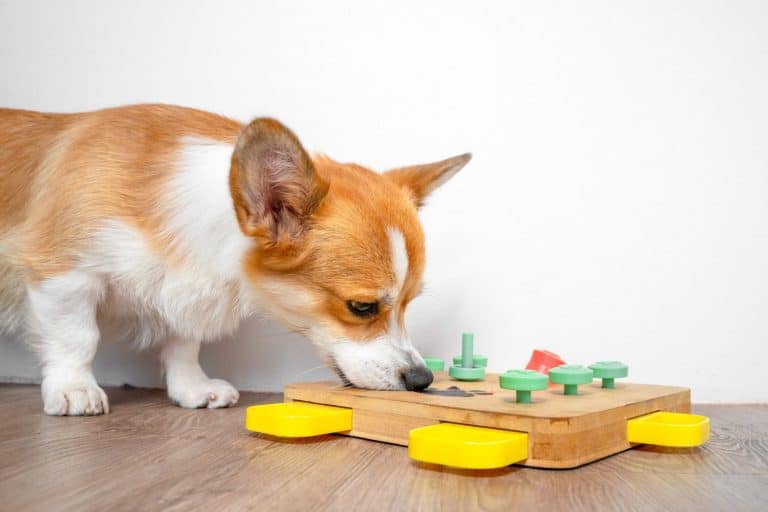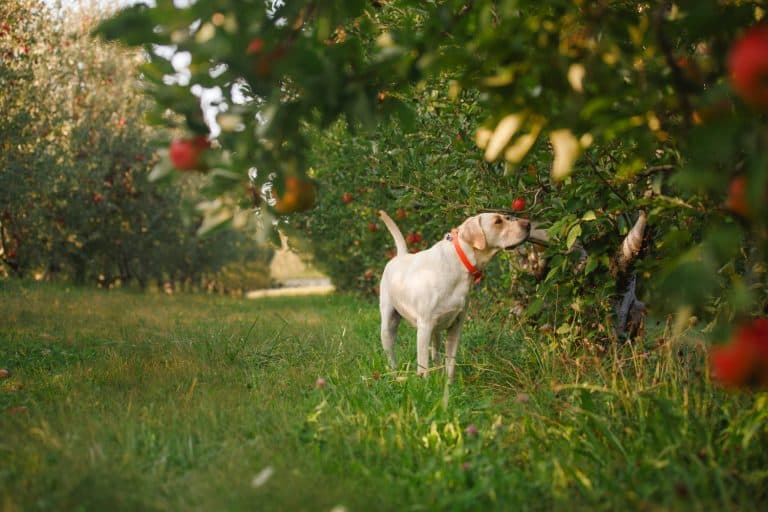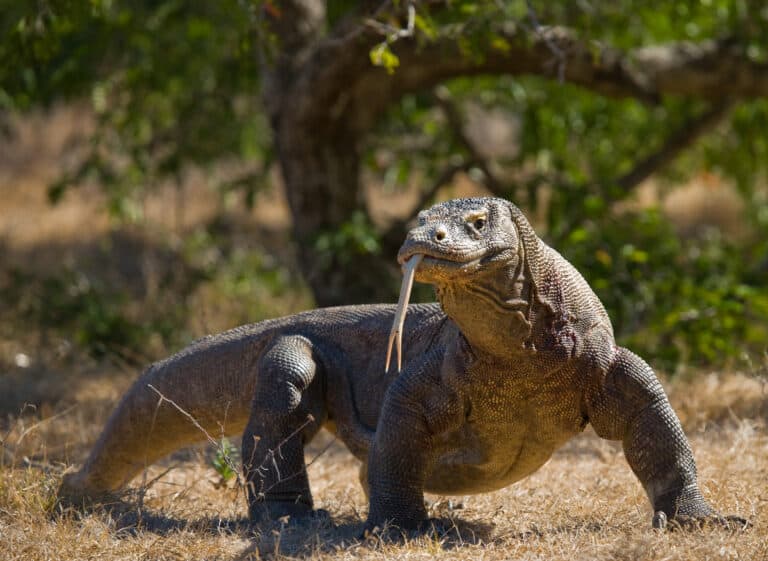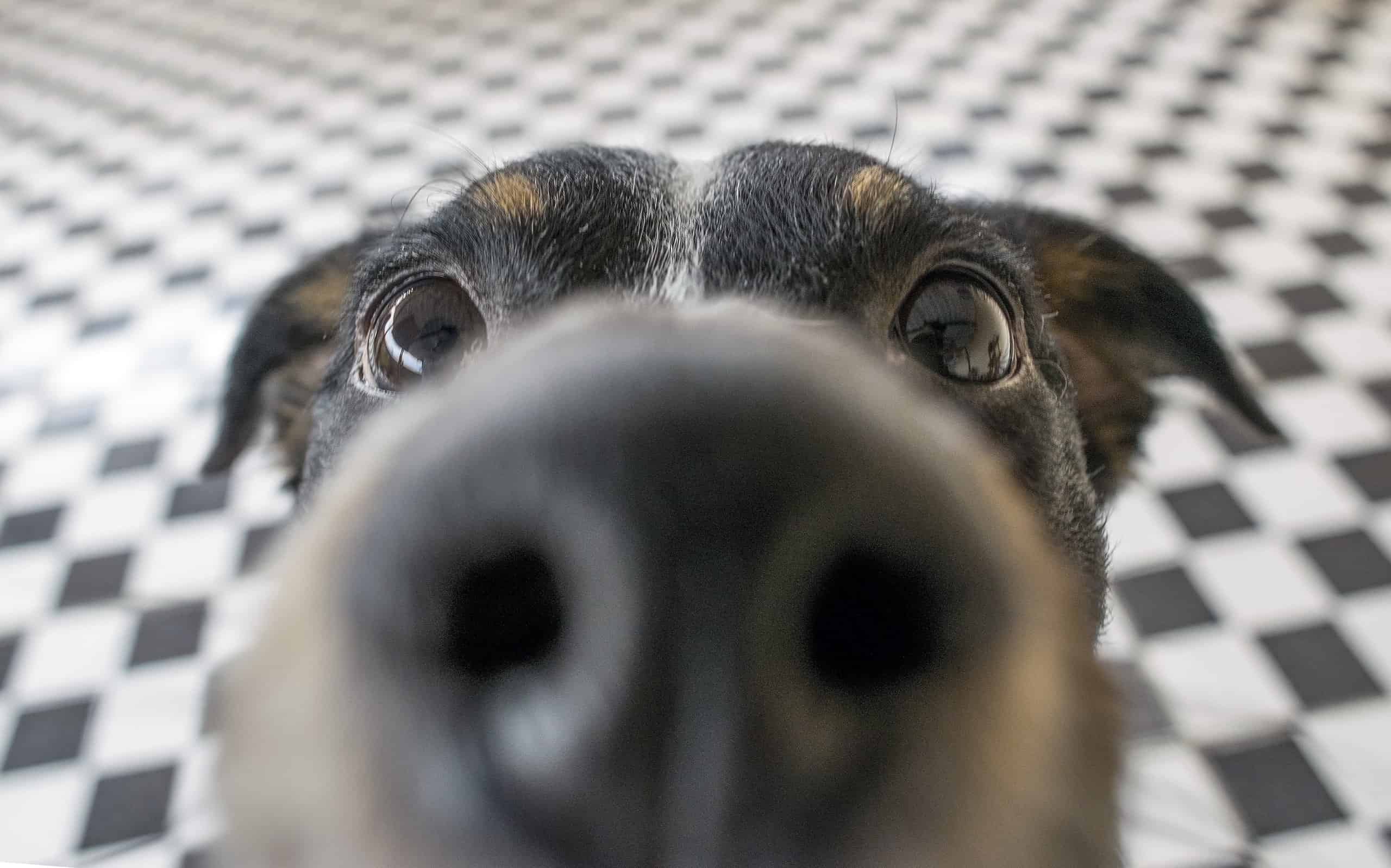

Dogs find out more about their environment using their nose than their eyes or ears. To do this, the anatomy of their nose is very special. Canines evolved to have a superb sense of smell to help them find food, a mate, their pups, and to avoid predators. A dog’s sense of smell is at least 10,000 times better than a human’s, depending on the particular odor. Some breeds, notably the hound breeds, have the best sense of smell, but working dogs such as labradors and German shepherds also score highly when it comes to smelling. On the other hand, the short-faced breeds (the brachycephalic breeds) may have a reduced sense of smell because their airways are so short and therefore compromised.
The scientific word for smelling is olfaction. But let’s not forget that a nose is not just for that purpose. It is also used for breathing (respiration) and regulating body temperature (thermoregulation). Here, we will explore the anatomical layout of a dog’s nose and discover how this makes it perfectly adapted to fulfil all three roles.
Dog Nose – Basic Anatomy
Overall, the canine nasal cavity is divided into two sections. These are the external nares (nostrils) of which dogs have two, and the internal nasal cavity. The external nares are essentially the openings through which the air enters the body. The tip of your dog’s nose, called the rhinarium, is typically cool and a bit moist to the touch.
Internal Nasal Cavities
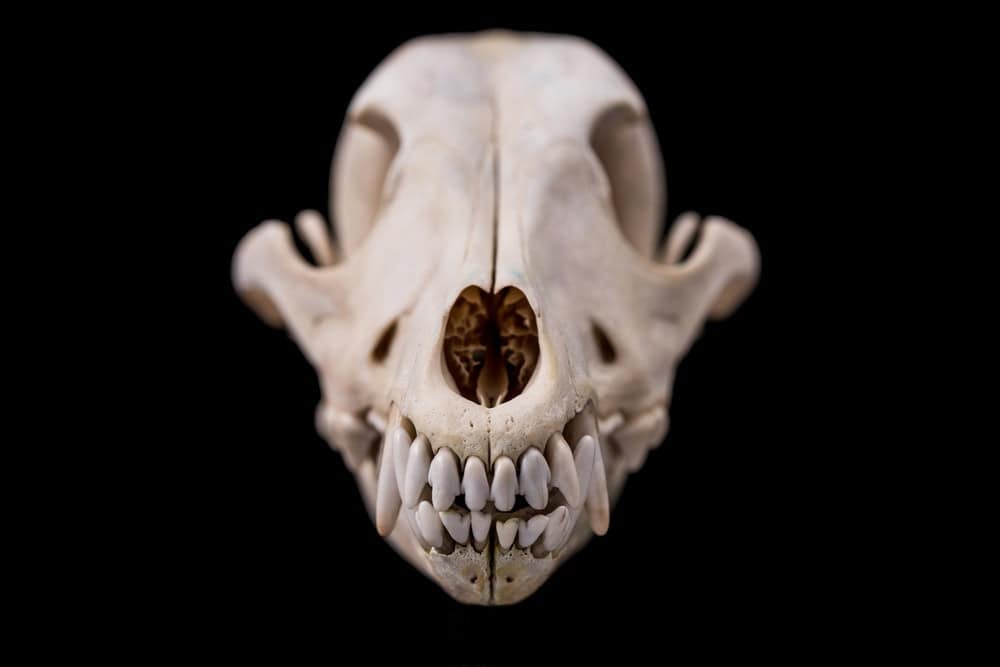
Tiny bones inside the nasal cavity increase the surface area.
©krstrbrt/Shutterstock.com
Located further into the head, the internal nasal cavities are a complex network of airways, mucus membranes, and tissues. There is a labyrinth of thin bones called turbinates, which are lined with an epithelium (a layer of special cells). Having a lot of epithelium-coated bones increases the surface area exposed to the air flow.
These turbinates can also be divided into two major parts. In the anterior part of the nose, there are the maxillomoturbinates (MT), which are responsible for respiration. Here, the turbinates are lined with a mucous-producing epithelium. This mucous humidifies, filters, and warms the air that has been breathed in before it enters the rest of the respiratory system, such as the trachea and the lungs.
In the posterior part of the nose are the more complicated ethmoidal turbinates (ET), which are for olfaction (smelling). Here, there can be up to 300 million olfactory receptors (some breeds have more than others) that recognize odor chemical molecules. Each olfactory receptor is made up of a bipolar neuron (which sticks out into the air flow), a supporting structure, and cells that can multiply. Each olfactory receptor only lasts a few weeks, and then it is replaced. There are also olfactory glands (called Bowman’s glands), that produce secretions that dissolve the odors. To detect odors effectively, the epithelium needs to be in maximum contact with the air. So, it is covered in tiny hair-like projections called cilia.
Sniffing Is Not the Same as Smelling
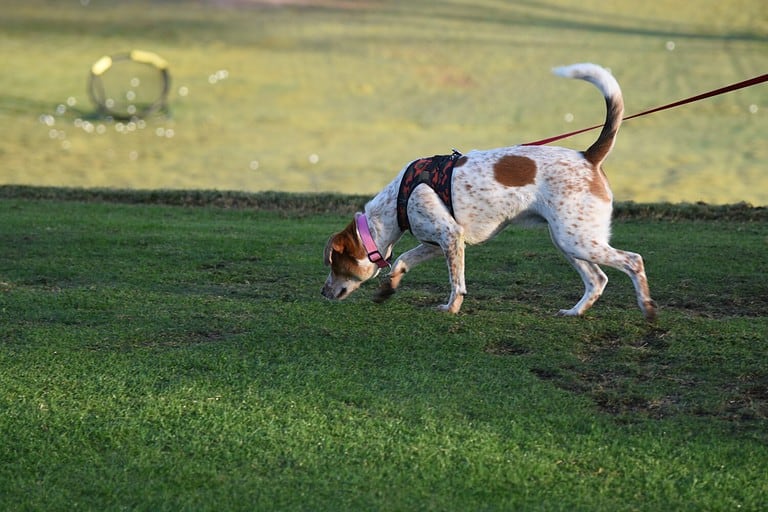
Have you noticed that your dog flares its nostrils when they are sniffing? As the nostrils flare and change shape, they allow the redirection of air into the upper part of the snout and direct airflow to the olfactory area. This is sniffing. It is an explicit behavior that requires both physical effort and cognitive (brain) involvement.
When your dog is simply smelling, on the other hand, it is effortless and just happens alongside breathing. This is when the first dog notices a stimulating ‘smell’ that they go on to actively sniff. Dogs have a ‘sniff cycle’ where they coordinate smelling with their respiration cycle and with brain activity. It is a continuous rhythmic process, scanning the environment. A dog needs to sniff, rather than just smell, to accurately identify an odor and locate the direction it is coming from.
Nose-Brain Relationship
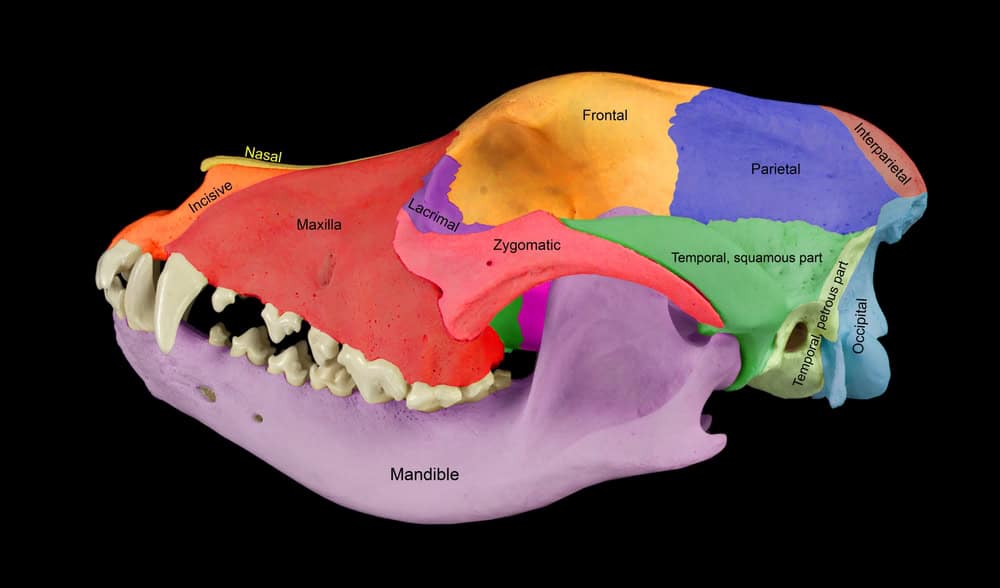
Odors generate impulses to the brain.
©Dr. Aiyan/Shutterstock.com
Dogs can sniff even when they are breathing out! This is because they have a special part of their nose anatomy called the Lamina Transversa. It is a basal plate of bone that creates a recess separate from the rest of the respiratory system. Here, odors accumulate and are held so that accurate identification can take place.
When odors are detected by the olfactory receptors, they generate an impulse that is transmitted via the olfactory nerves to the olfactory bulb (lobe) of the brain. This is an area of the brain dedicated to olfaction, and it is located under the frontal lobes. It works with other specialized areas of the brain to identify the odors. A lot goes on in the olfactory lobe! It processes and filters information from the nose. At the same time, it discriminates between odors and enhances the sensitivity of odor detection by filtering out background odors.
How Do Dogs Detect Odors?
Odors are essentially chemicals suspended in the air, and they all have different chemical properties, including how absorptive they are. So, as the air flows across the olfactory mucosa, it can differentiate between the chemicals based on how readily it can absorb them. What’s more, dogs can manipulate the flow of air to direct it to different olfactory sites in their nasal cavities. Dogs have a sniffing frequency of around 5 Hz, irrespective of their breed or weight. However, it can vary between individual dogs and situations.
Dogs also smell in 3D. When we smell, we simply use both of our nostrils at the same time. However, your dog’s brain can use the separate odor profiles from each nostril, and this is why they are so good at locating where the smell is coming from. They also have a strong right nostril bias. So, when your dogs start to sniff, they will use their right nostril.
If the odor is familiar and non-threatening, such as food, they will shift to using the left nostril. However, if the smell is threatening or very stimulating, the right nostril will continue to do the sniffing job. Dogs can also detect small changes in the concentration of odor molecules over a short time period. This means that they can figure out the direction that a human or animal has gone in by just sniffing the ground.
The Science of Dog Sniffing
An odor can only be detected if the animal smelling it has a receptor for it. Humans have between 5 and 6 million receptors, but dogs have up to 300 million! However, a dog’s nose can recognize more smells than it has receptors for. It uses specific cross-reactions to build up a complex picture pattern of odors.
When a dog sniffs, a portion of each breath—estimated in some studies to be around 12-13 percent—goes to the olfactory region. The odor molecules are deposited and accumulate. They cannot be exhaled. The remainder follows the lower pathway down the pharynx into the lungs. As the dog exhales, the same proportion of air passes back over the olfactory epithelium. So, dogs detect smells as they both inhale and exhale.
Dogs Have an Extra ‘Nose’
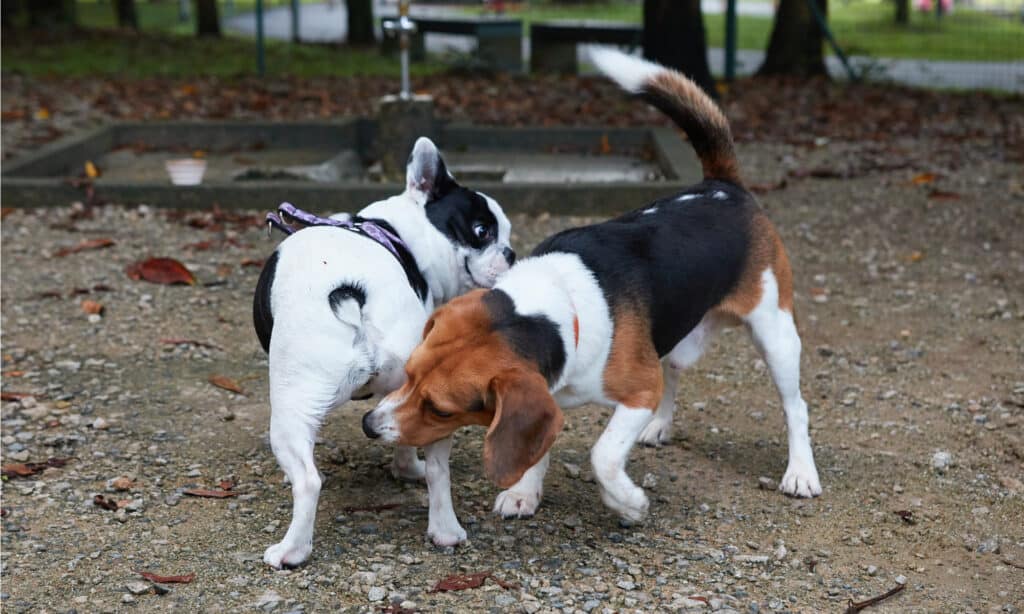
When dogs sniff other dogs’ bottoms, they are detecting pheromones.
©Spiky and I/Shutterstock.com
Dogs have another organ that can detect chemicals in the air. It is called the vomeronasal organ, or Jacobson’s organ. Despite the fact that it was first discovered in 1732, scientists are still discovering new things about it.
In terms of anatomy, we know that it is located near the arms of the vomer bone, which is just above the roof of the mouth. Its entrance is behind the line of the upper incisors. It is tubular and C-shaped, split into two parts separated by the nasal septum. Inside, it is lined with a special type of epithelium packed with receptors.
Dogs do not use their vomeronasal organ for regular smelling. Instead, it is like a sixth sense that they use to detect pheromones produced by other dogs. Pheromones are a special type of chemical produced in the body and normally associated with social communication and reproduction. Have you ever seen a male dog smacking his lips and chattering when he smells a female dog’s urine? This is called the Flehmen response and is most likely his way of directing the pheromones towards his vomeronasal organ.