
Quick Take
- Not all acorns are equally dangerous to dogs, and the riskiest ones are not the ones most people would expect. Which acorns are riskiest →
- Your gut reaction to help a dog that just ate an acorn could actually make the situation significantly worse. Avoid these home mistakes →
- Acorn poisoning can go well beyond an upset stomach, and the most serious consequences aren't immediately obvious. See the full health risks →
- There's a more effective long-term fix for dogs that eat things off the ground than just steering clear of oak trees. Train a lasting solution →
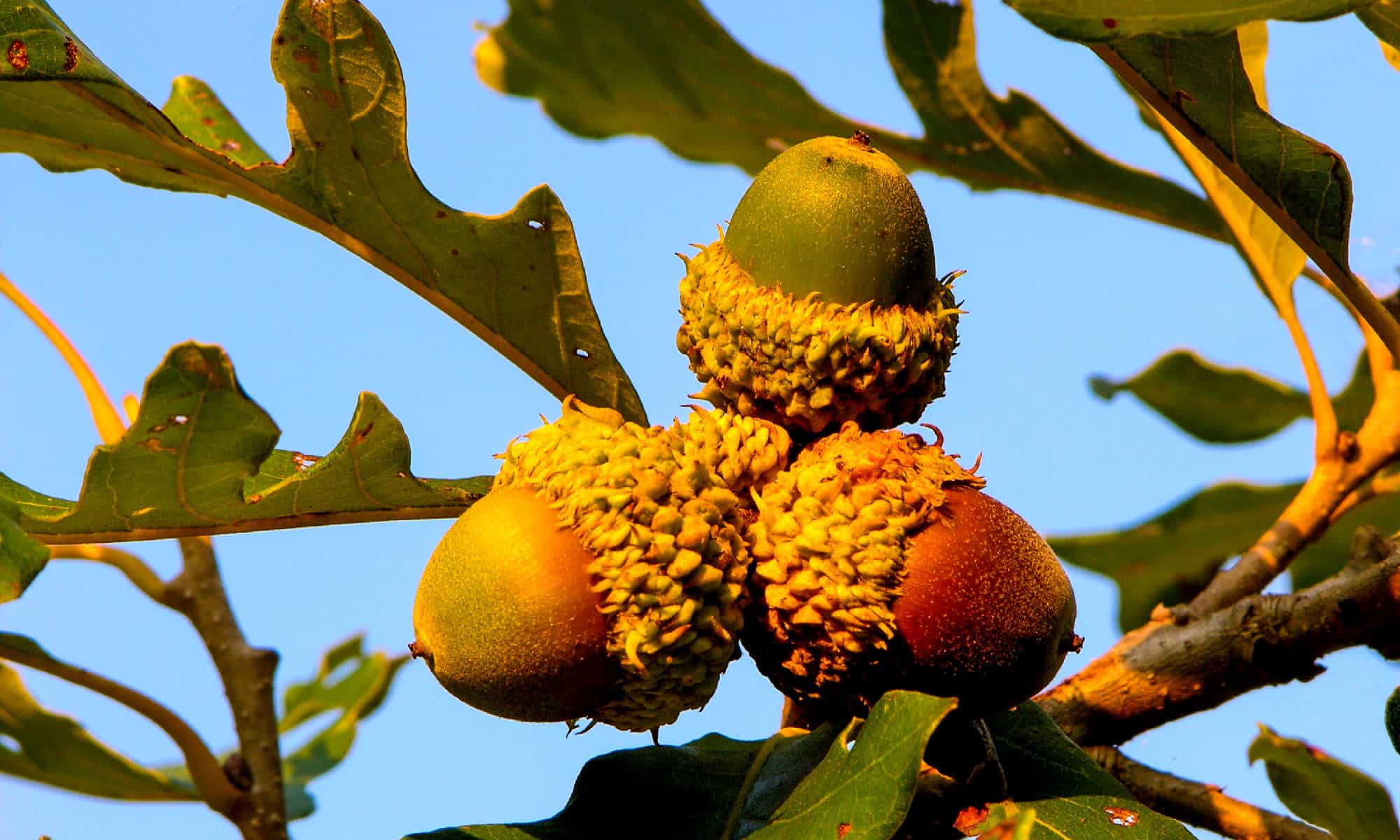
Acorns are the fruit and seeds of oak trees in the genus Quercus. Worldwide, there are between 435 and 450 distinct species of oak trees, or almost 600 when hybridized varieties are included. Oak trees are primarily distributed throughout the temperate zones of the Northern Hemisphere and high altitudes of the tropics. North America is an important hub for this genus; the United States alone has 90 or 91 native oak species, while Mexico holds the highest concentration of varieties globally with approximately 160 native species. Acorns vary significantly in size, shape, and taste. They are generally divided into two groups: the sweet, fast-maturing acorns of the white oak group and the bitter, slow-maturing acorns of the red oak group. Acorns provide nutrients to over 2,300 species of wildlife, fungi, and insects. However, they are not safe for dogs. Continue reading to learn why you should not feed your dog acorns.
Are Acorns Toxic to Dogs?
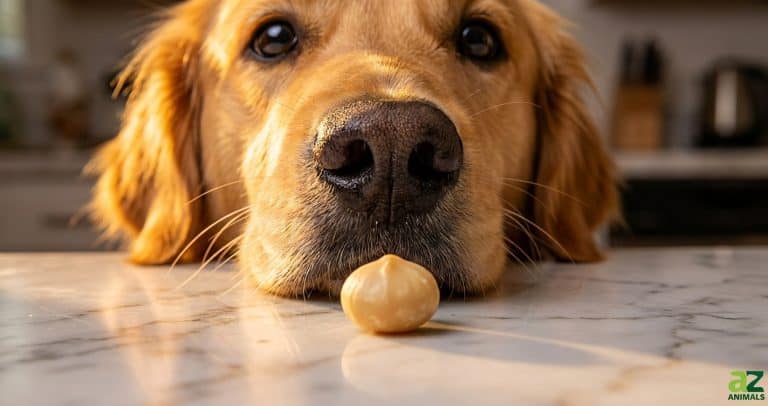
Acorns are toxic to dogs because they contain tannins, chemical compounds found in various plants. Oak leaves also contain tannins. The most dangerous acorns are those that are not yet ripe. These acorns contain the highest concentrations of tannins. However, ripe acorns are still unsafe for your dog to eat. Beyond their toxicity, acorns are also solid and hard for dogs to digest. They pose a choking hazard and can lead to intestinal blockages that require surgery.
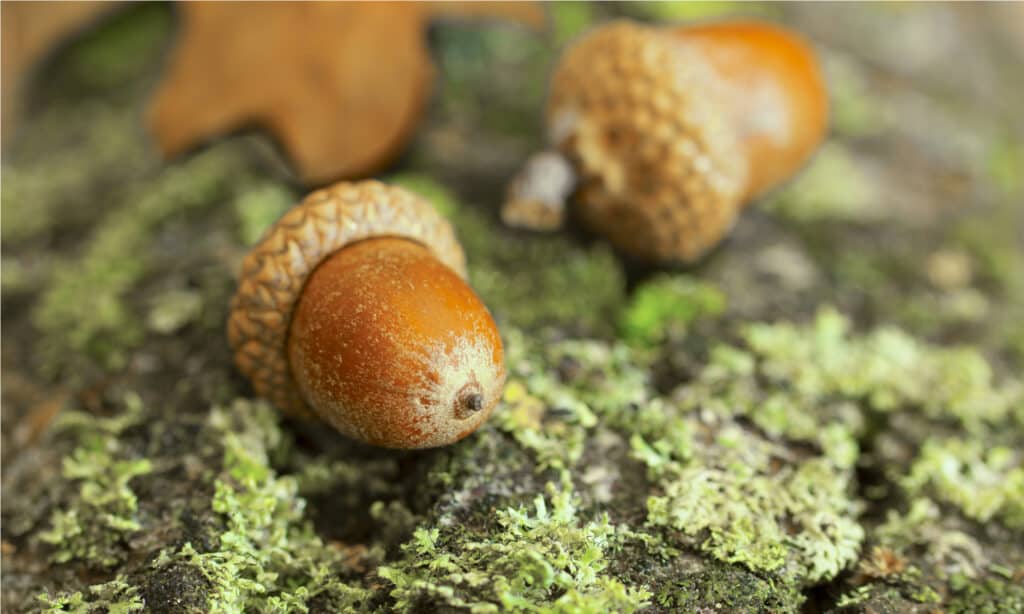
Because of their tannin levels, acorns are toxic to dogs.
©Kasabutskaya Nataliya/Shutterstock.com
It’s difficult to say exactly how many acorns it would take to hurt your dog, considering the number of varieties, but some things to consider include:
- Ripe acorns are less toxic, though they can still be harmful.
- It takes fewer tannins to poison a small dog than a large one, so small dogs are most at-risk.
- Poisoning isn’t the only risk to eating acorns. Your dog could also develop an intestinal blockage.
If you know your dog has ingested an acorn, it’s best to call your vet immediately.
Symptoms of Dogs Eating Acorns
Symptoms of acorn poisoning in dogs include:
- Drooling
- Retching or coughing
- Vomiting
- Diarrhea
- Bloody stool
- Fatigue
- Lack of appetite
- Dehydration
- Excessive thirst and urination
- Stomach pain

If your dog has eaten an acorn, it’s a good idea to see a veterinarian.
©hedgehog94/Shutterstock.com
In extreme cases, dogs can suffer from kidney and liver failure. Although fatalities from acorn poisoning in dogs are very rare, especially if treated promptly by a veterinarian, acorn ingestion can still pose a serious threat and requires immediate attention.
What to Do if a Dog Eats Acorns
If your dog eats acorns, call your veterinarian right away. They will advise you based on your individual dog’s size and weight and he number of acorns they’ve eaten.

If your dog happens to get a hold of acorns, a vet can help you ensure they are safe.
©Olya Maximenko/Shutterstock.com
When you bring your dog to the vet, they’ll first take a verbal history from you. They’ll likely ask how many acorns your dog ate and if they’re showing any symptoms of poisoning.
They’ll perform a visual exam and palpate your dog’s abdomen. Your vet might also suggest bloodwork to see if the acorns have affected your dog’s kidneys or liver, or X-rays to see if there’s a blockage.
To treat your pup, your vet might suggest medication, fluids, or surgery.
Don’t try to treat acorn poisoning at home by making your dog sick, as this can make it worse. Acorns contain tannins, which irritate the stomach lining. Bringing sharp or toxic material back up through the esophagus can cause further burns and tissue damage, as the acorn has been destabilized by stomach acid.
How to Stop a Dog From Eating Acorns
If your dog is prone to eating acorns or other things off the ground, there are steps you can take to curtail this behavior.
If your favorite park has oak trees and your dog is always picking up acorns, try choosing a new place to walk, at least during the fall when acorns are on the ground.
This is the simplest way to keep your dog from eating acorns, though it doesn’t address the underlying issue if your dog frequently eats things they shouldn’t.
If your dog frequently picks up acorns or other objects from the ground, using a muzzle is a humane solution that can help keep them safe.
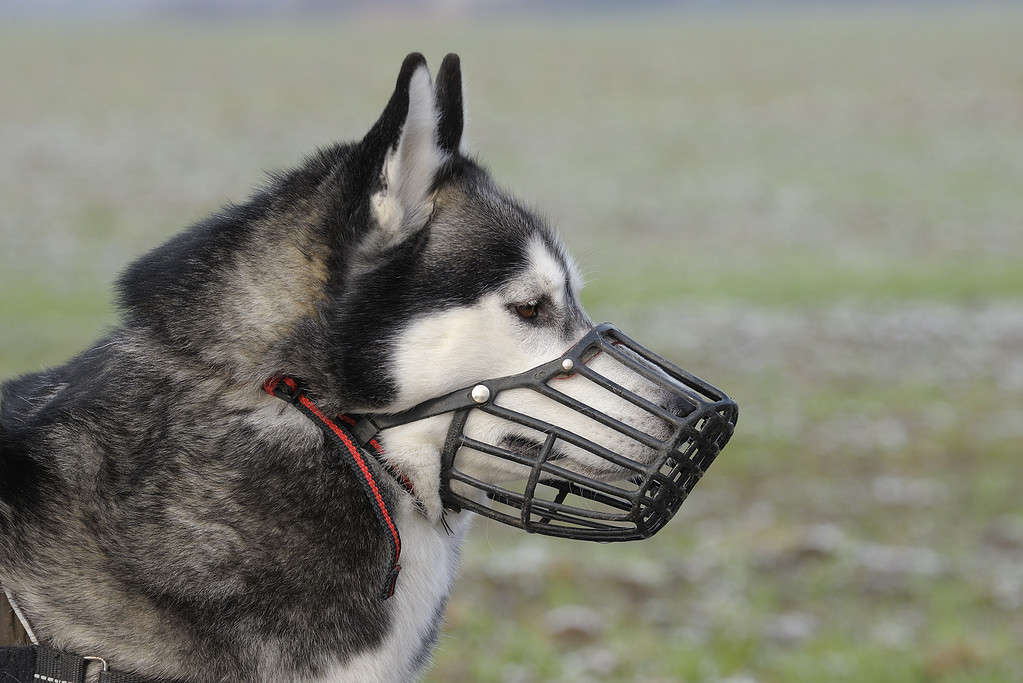
Training a dog to wear a muzzle can be time-consuming.
©Anagramm/iStock via Getty Images
Muzzle training takes time and patience, but it’s worth it in the long run.
Introduce the muzzle slowly and give your pup lots of treats for interacting with it. In time, they’ll learn to put their snout in the muzzle without fear and will stop pawing at it.
If you prefer, you can train your dog the leave-it command and then remove the muzzle once they’ve mastered it.
This command is taught by giving your pup treats as a reward for leaving them alone until you give permission. Teaching your dog to leave a treat alone can help in situations where you need them to avoid a questionable or dangerous item.
You can also teach a release cue, such as okay or get it by allowing your dog to eat the treats on the ground when given the command.
Unlike leave it, which works for items your dog hasn’t picked up yet, drop it trains your dog to put something down.
It’s helpful if your dog already has an acorn in its mouth and you need them to let it go.
One enjoyable way to teach drop it is through a game of fetch. Pair the command with treats to motivate your dog to return to you and drop the toy in exchange for a reward.