
Quick Take
- The Cozumel dwarf fox hadn't been confirmed alive since 2001, until new photographic evidence emerged in 2023. See the rediscovery details →
- Very little is known about the species, including its population size, range, and whether it represents a distinct species or subspecies. Understand the knowledge gap →
- These tiny foxes evolved through insular dwarfism, making them only 60–80% the size of mainland gray foxes. Explore insular dwarfism →
- The rediscovery highlights the danger of quiet extinctions, where rare species can disappear before science fully understands them. See the ongoing threats →
One of the rarest foxes in the world is the Cozumel dwarf fox, which has been in a state of limbo for the last 25 years, during which no one knew if it was alive or extinct. The last sighting was reported in 2001, and evidence of its survival was limited. However, recent images have provided the first-ever photographic proof that these tiny foxes still exist. They also highlight how easily little-known species can vanish.
What We Know About the Cozumel Dwarf Fox
Cozumel dwarf foxes (Urocyon spp.) are endemic to the island of Cozumel, Mexico. They have never been formally described as a species, and very little is known about them. Prior to the new images, the last reported sighting of a Cozumel dwarf fox occurred in 2001, but it was never formally verified. There was also very little physical evidence of these foxes on the island, with most scientific information coming from subfossil remains.
With no sightings of a Cozumel dwarf fox for more than two decades, scientists were uncertain if these foxes still existed. However, recent evidence has come to light, with a photo taken in September 2023 finally capturing one of these elusive foxes on film. The photos were taken close to Cozumel’s coastal highway following reports of a disoriented animal in the area. The Fundación de Parques y Museos de Cozumel responded and found that it was an adult male Cozumel dwarf fox. The fox was captured and taken for a health assessment. It was then released a few days later into the Laguna Colombia State Reserve. This location was chosen because it is farther from roads and closer to suitable habitat.
The sighting is vitally important, as it proves that Cozumel dwarf foxes still exist on the island. However, it is still not known where they live, how many remain, or even if there is a healthy, viable population.
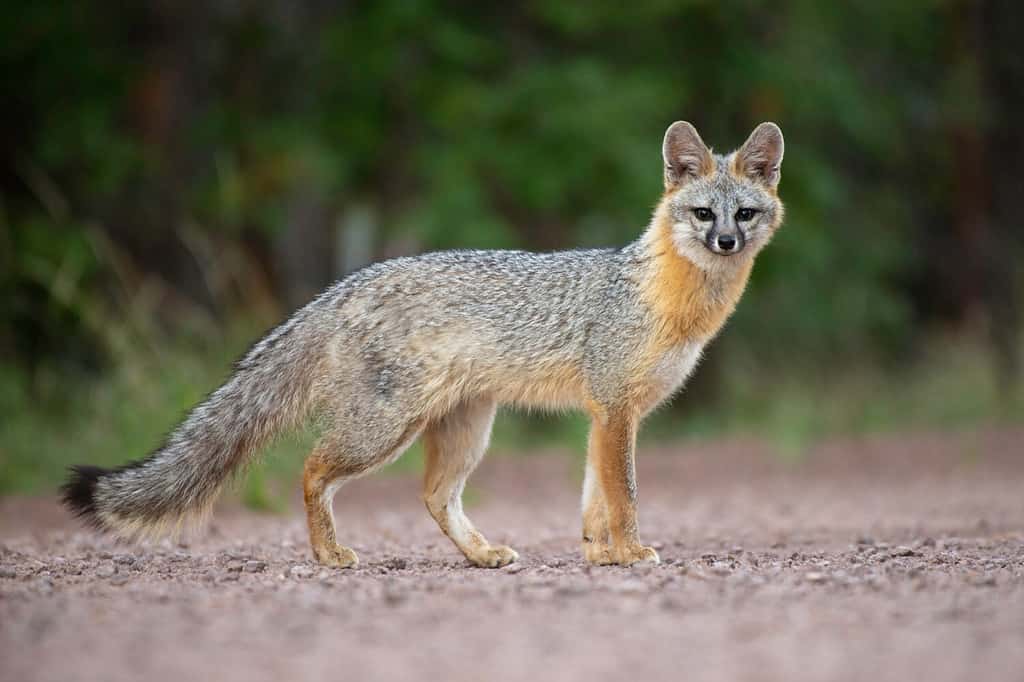
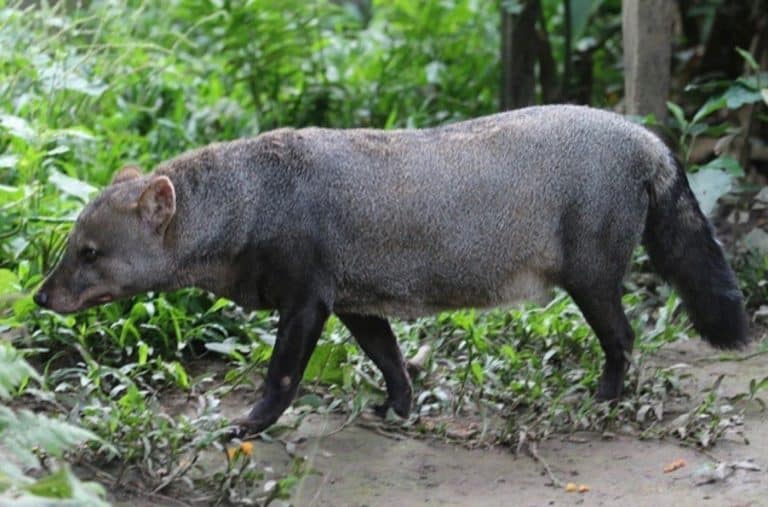
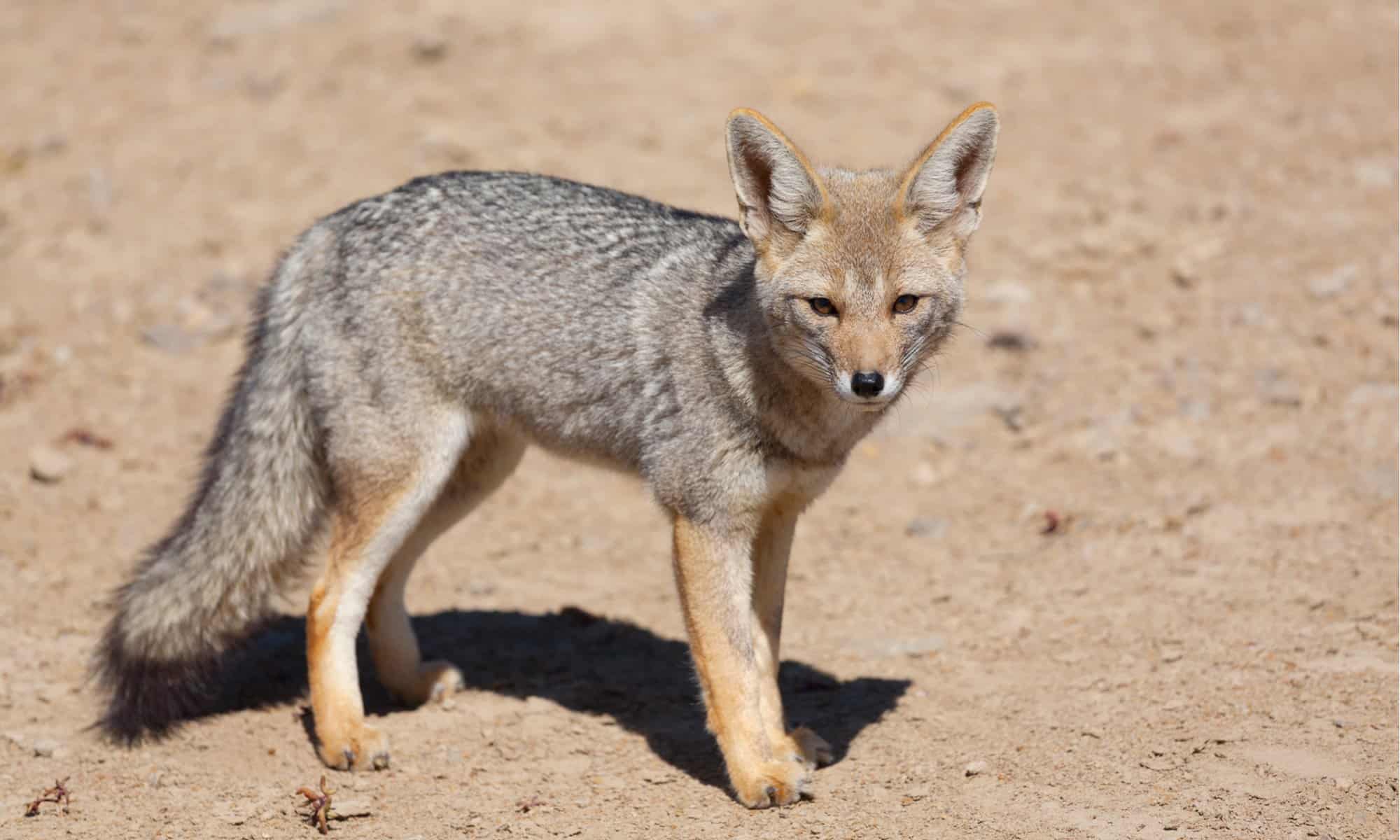
The Cozumel dwarf fox is closely related to the gray fox.
©Sean R. Stubben/Shutterstock.com
Why the Fox Became Smaller on Cozumel
As their name suggests, Cozumel dwarf foxes are tiny because they exhibit insular dwarfism. Insular dwarfism is an evolutionary process in which animals become smaller over generations due to isolation on islands with limited food and predators. One theory suggests that insular dwarfism is a selective process in which only the smaller animals survive. This is because smaller animals don’t need as much energy to survive, allowing them to subsist on less food than their larger counterparts.
Cozumel dwarf foxes are closely related to gray foxes, but are estimated to be only 60 to 80% of their size. Cozumel dwarf foxes evolved from their mainland relatives after becoming isolated on Cozumel thousands of years ago. Therefore, following the rules of insular dwarfism, they have slowly evolved into their small size as an adaptation to their environment.

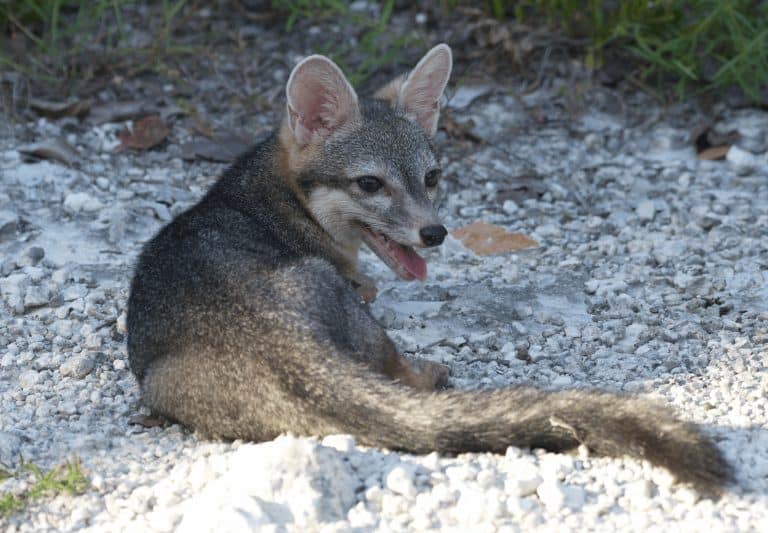
The Cozumel fox exhibits insular dwarfism, similar to the island fox.
©Kelly Nine/Shutterstock.com
Why Rediscovery Does Not Mean Safety
Unfortunately, a single confirmed sighting of a Cozumel dwarf fox does not mean the species is safe. Some extinctions are better known than others, particularly when they involve well-known or popular species whose decline is widely documented. However, other species can disappear slowly and quietly, with very few people even realizing it. Typically, these are lesser-known species or those that live in remote locations.
Cozumel dwarf foxes have never been formally studied, but they are generally regarded as critically endangered and close to extinction. It’s thought that they have a limited distribution, even within the island. Possible pressures they face include habitat loss, particularly from expanding human settlements or changing land use, as well as threats from invasive species.
As so little is known about Cozumel dwarf foxes, it’s possible that they have come close to being one of the rare species that quietly become extinct. The sighting and photograph are a step in the right direction, but more is needed to understand the threats they face so we can try to prevent them from becoming the next extinct species. This includes conducting surveys to determine the actual size of the population and their distribution, as well as implementing measures to protect their habitat.