
Quick Take
- Hatching a moa chick isn't even close to the hardest part of bringing the species back. Explore the remaining hurdles →
- Humans drove the moa to extinction in under 150 years, a backstory that complicates everything about bringing it back. Read the ethical complications →
- Even if the technology works perfectly, scientists aren't sure the giant moa should come back at all. See the bioethicists' concerns →
Chicks hatched in artificial environments aren’t anything new, and it’s usually not newsworthy. For decades, researchers have experimented with crude versions of eggshell alternatives, using materials like plastic film or sacks, to hatch live chicks. They typically do it to study chicken development, then use those findings to aid research for other species, including humans.
But when a biotech company announces that it plans to leverage its success with artificial eggshells to revive a long-extinct giant bird from New Zealand, that tends to grab headlines. That’s exactly what Colossal Biosciences recently did. Previously, Colossal made headlines in 2021 when it announced plans to resurrect the woolly mammoth. Colossal also announced plans in 2025 to pursue the revival of dire wolves.
What Colossal Biosciences Actually Did
Using a 3D-printed lattice structure, Colossal successfully hatched 26 baby chickens. Fertilized eggs were poured into the artificial structure and placed in an incubator. While the printed structure looks like a chicken’s natural egg shell and allows the correct amount of oxygen into the growing environment, it is not identical to the real thing. Calcium had to be added to the fertilized egg mixture to replace the natural calcium that would otherwise be absorbed from a real shell during growth.

Colossus Biosciences announced the hatching of 26 chicks grown in artificial eggs.
©Travis182/Shutterstock.com
In mid-May, the company announced its success, noting that the surviving 26 chicks ranged in age from a few days to several months old.
In a statement to CBS News, Colossal’s CEO Ben Lamm said the chicks were just the start. He envisions using the artificial egg technology to grow genetically tweaked birds that are similar to New Zealand’s extinct 12-foot giant moa that once lived on the country’s South Island. “We wanted to build something that nature has done a pretty good job of developing and make it better and scalable and even more efficient,” he said in the news story.
Why Scientists Are Skeptical
The biggest flaw scientists point out is that the environment in which the chicks were hatched is not a true artificial egg. The artificial environment lacked certain components, such as temporary organs that help the chick grow and remove waste, which are present in natural eggs. These elements would likely be required to bring back any extinct species.
As Vincent Lynch, an evolutionary biologist at the University of Buffalo, said in the same news article, “That’s not an artificial egg because you’ve poured in all the other parts that make it an egg. It’s an artificial eggshell.”
Are Extinct Birds Coming Back?
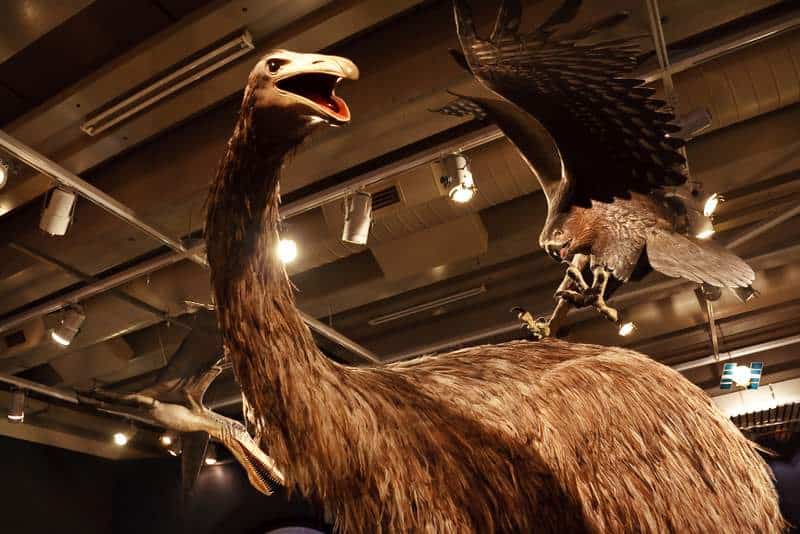
Beyond the quality of the shell, critics have a bigger concern. Even if the artificial shell technology exists that could support the resurrection of the long-extinct giant moa, other key issues still have to be solved. Scientists need to identify existing bird species with DNA compatible with that found in giant moa bones, a process that will take time.
The artificial shell would also need to be significantly larger.
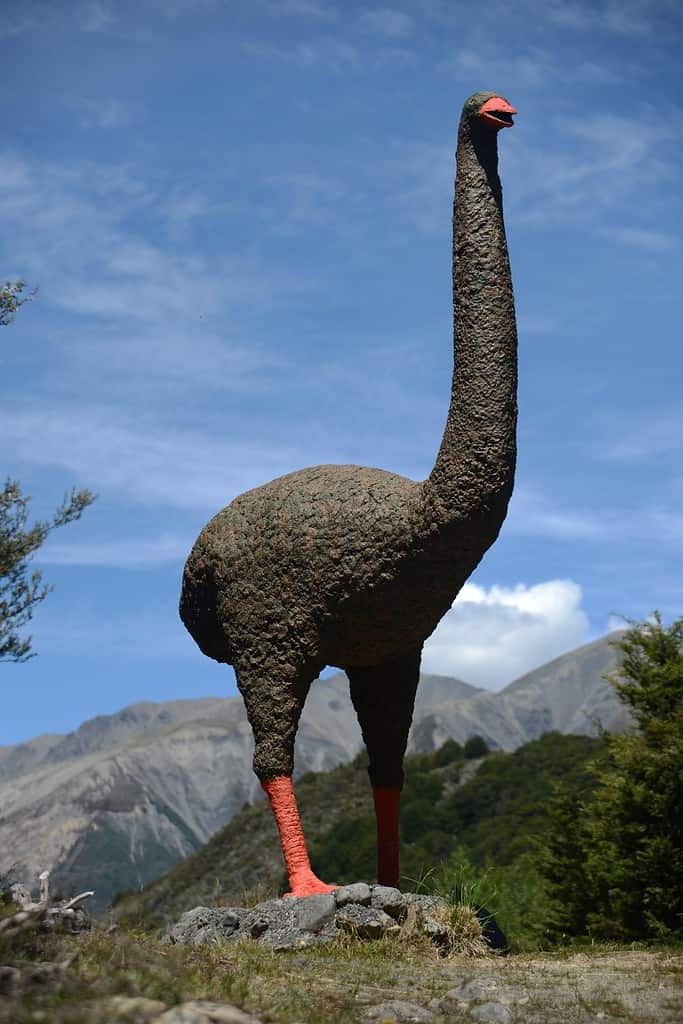
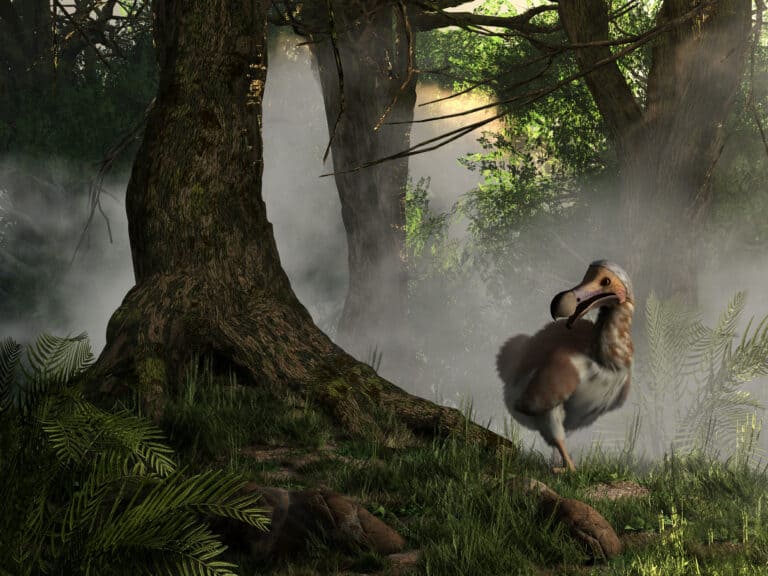
The giant moa was a 12-foot-tall bird that went extinct 600 years ago.
©Lakeview Images/Shutterstock.com
Even Colossal agrees that the road to bringing back the giant moa is going to be long. But the company sees value in laying the groundwork now. “We didn’t want to wait until we were ready to birth a giant moa,” said Lamm in the news story. “We actually wanted to start working on the engineering challenges for surrogacy and birth now.”
Should It Even Be Done?
Even if the technology develops that allows companies like Colossal to bring back extinct species like the giant moa, bioethicists, including Arthur Caplan at New York University’s Grossman School of Medicine, aren’t sure it should be done.
“The big challenge is, what environment is this animal going to live in?” Caplan said in the same news story.
That concern is valid. The environments available today for wild animals look nothing like the places where these species originally roamed the earth. For species like the giant moa, that is a significant concern.

New Zealand’s South Island looks very different today compared to when giant moa roamed the land.
©wnjay_wootthisak/ via Getty Images
Unlike dinosaurs that went extinct due to a cataclysmic event, the moa’s disappearance was different. There were once nine species of moa that lived for millions of years in what is now New Zealand. Polynesian settlers arrived on the island in the late 13th century, and all moa species were gone by about 1440. This marked one of the most rapid extinctions on record.
Scientists are in agreement as to the cause: human encroachment and habitat loss.
If Colossal is successful in de-extincting the giant moa, there is no clear answer as to where or how the species would survive today.