
Quick Take
- Oarfish have long been believed to be signs of an impending seismic event.
- With over 360 sightings of oarfish in nearly a century, only one was seen before an earthquake occurred in 2007.
- Oarfish are one of the longest bony fish in the ocean.
- Unfortunately, oarfish have not been shown to be able to predict earthquakes or tsunamis.
Imagine if there were a creature capable of providing a warning that an impending cataclysmic seismic event was about to occur. For centuries, mythology has said such a creature exists in the form of the oarfish that can (supposedly) predict earthquakes. Given that this fish makes itself more visible in the months before an earthquake or tsunami, many believe it is necessary to heed the warning of the massive fish. However, others believe that seeing an oarfish is not a sign of natural disaster, but instead, is a reflection of the state of the ocean. So, can oarfish really predict seismic events?
Oarfish Are Said to Predict Earthquakes
Oarfish are one of the largest bony fish in the world. With measurements of up to 30 feet in length, these long, eel-like fish are quite nightmarish. But just because they can be massive, does not mean they pose a threat to people. Instead, some believe the oarfish can actually help humankind by predicting earthquakes.
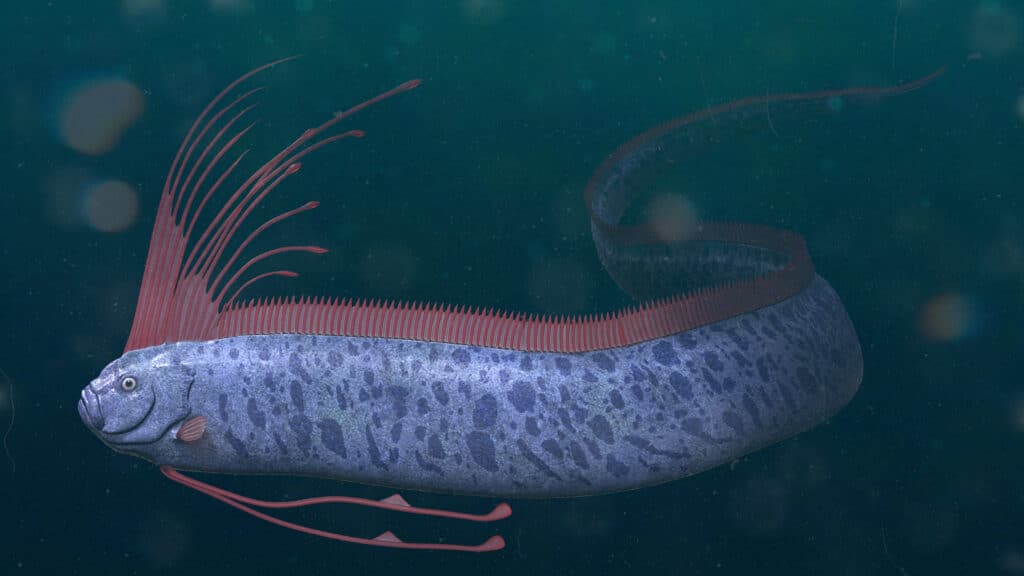
Oarfish are said to be predictors of earthquakes and tsunamis.
©Dotted Yeti/Shutterstock.com
Very few people ever see an oarfish while it is alive, as these fish prefer to live hundreds, if not thousands, of feet below the ocean surface. Typically, when the silvery-scaled oarfish are seen, it is after they have beached themselves and died.
Because of the few sightings worldwide over the past century, those who do spot them believe they are an omen of doom. Specifically, these fish are a warning sign of an upcoming earthquake and/or tsunami. Since there have been instances of oarfish spotted months before a seismic event, does that mean they can sense something in the water that makes them predictors of such events? If the answer were yes, these special fish might have the power to save thousands of lives. Scientists took a closer look to see if there was any real connection between oarfish and earthquakes.
Can Oarfish Predict Earthquakes?
There is no denying that oarfish are seen with more frequency in the months leading up to a seismic event. Coincidence, some say. Others say it is a warning that should be heeded. If there were a connection, these fish could serve as a natural warning system, helping those in the line of disaster better prepare. Could a massive serpentine fish be the key to saving lives before an earthquake hits?
A 2019 study published in the Bulletin of the Seismological Society of America examined records from the previous 90 years to determine whether sightings of oarfish always occurred shortly before an earthquake or tsunami.
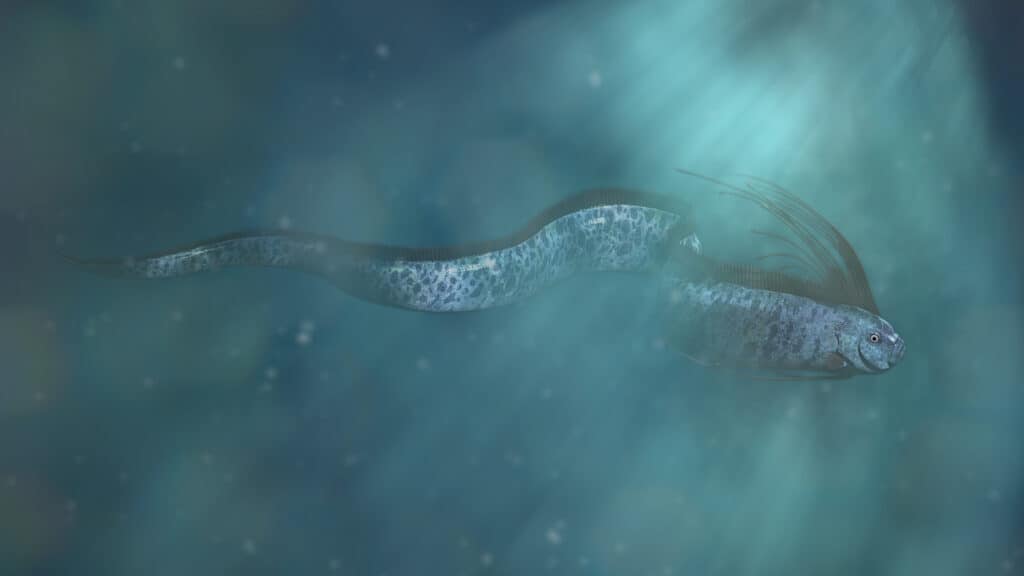
It has been determined that oarfish are not capable of predicting earthquakes or tsunamis.
©Dotted Yeti/Shutterstock.com
In total, there were over 360 sightings of oarfish recorded from 1928 forward. Of those sightings, only one occurred directly before a documented earthquake. That was in 2007. Consequently, and disappointingly, scientists had to conclude that there was no connection between an oarfish sighting and an upcoming earthquake.
“We thought that if we could understand the connection, it would be useful for disaster prevention,” Yoshiaki Orihara of Tokai University’s Institute of Oceanic Research and Development explained to Kyodo. “It was disappointing to find no correlation, but we also want to investigate any connection between mass beachings of dolphins and whales with earthquakes in the future.
If there is zero connection between earthquakes and oarfish sightings, it raises the question of where this myth originated in the first place?
Where the Myth of Oarfish Predicting Earthquakes Came From
Oarfish can grow to substantial sizes. With some measuring 26 feet or longer, it is believed that these fish are the “monstrous sea serpents” in tales from sailors of years past. The oarfish are deeply embedded in Japanese mythology, and thanks to a series of coincidences, they have become known as “doomsday fish.”
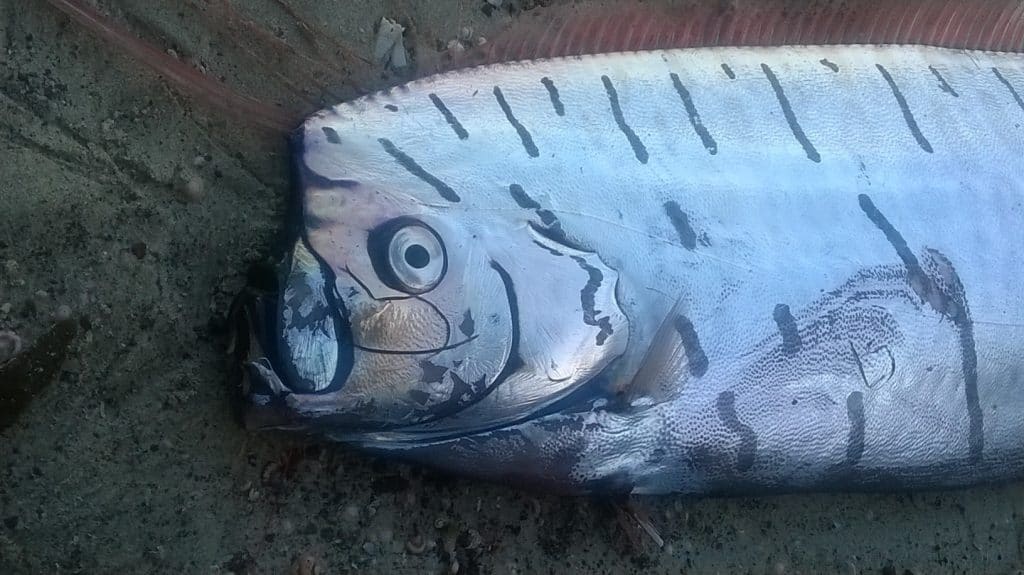
The belief that oarfish are messengers of an impending seismic event is rooted in Japanese mythology.
©John Barkla / CC BY 4.0 / Wikimedia Commons – Original / License
The Japanese refer to oarfish as “ryugu no tsukai.” Roughly translated, this means, “messenger from the sea god’s palace.” The oarfish are seen as messengers from the dragon sea god, Ryūjin. When they bring themselves to the surface or beach themselves, it is seen as a sign that a threat is not far off. According to Japanese mythology, the oarfish warn of earthquakes and tsunamis.
As with all good mythology, there are cases in which the oarfish came to the surface directly before catastrophic events. The most recent example is the 2011 tsunami that devastated major portions of Japan. In the months, weeks, and days leading up to the tsunami, multiple oarfish were found washed up along the Japanese coastline. Those who perished were accused of not heeding the warning from Ryūjin.
Why Do Oarfish Come to the Surface?
It can be a startling sight to see an oarfish, whether washed up on the shoreline or swimming in shallow waters. Healthy oarfish are not meant to be anywhere other than in the depths of the ocean. Not only is there no food source near the surface, but the temperature of the water here is far warmer than they like. Oarfish that end up near the surface are believed to have gotten caught up in currents and become too exhausted to swim out.
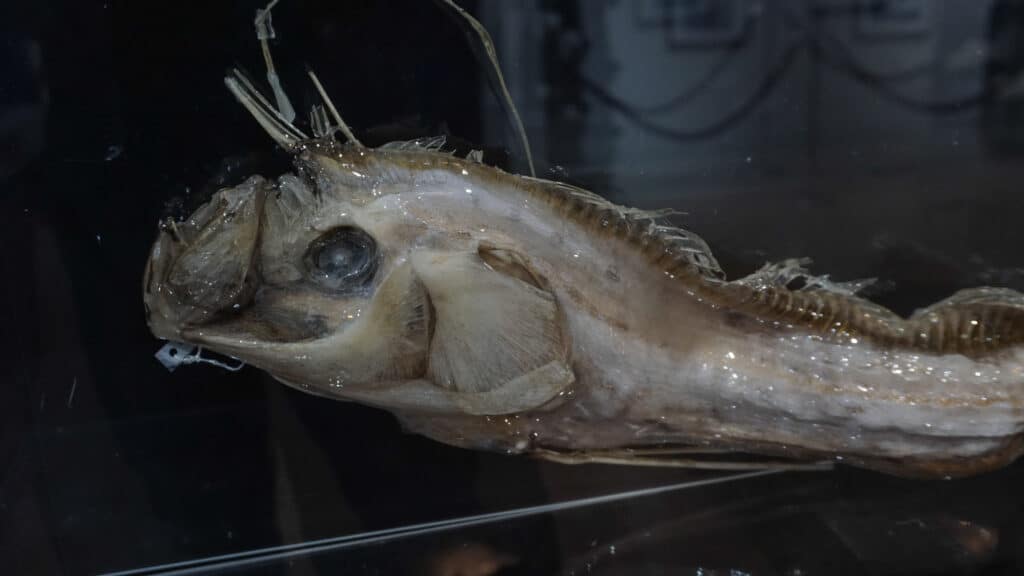
Oarfish come to the surface when they are ill, injured, or have gotten caught in a current and are too exhausted to swim back down to deeper parts of the ocean.
©Lokman Hamid/Shutterstock.com
Oarfish that intentionally make their way to shallower waters are unhealthy. It is believed that these fish, which retreat out of their deep ocean environments, become disoriented. Instead of swimming down, they swim up. Whether from disease, illness, or injury, oarfish near the water’s surface are not likely to survive for long.
Little is known about these fish because they cannot be kept in captivity. Because they must live in epipelagic and mesopelagic zones, it is difficult for biologists to study them in their natural aquatic environments. What is known about oarfish has largely come from the unhealthy specimens that come to the surface, showing just how little is truly known about life in the deep blue sea.
Threats Oarfish Face
Oarfish are rarely seen, given their preferred aquatic habitat is 656 feet to 3,280 feet below the surface of the ocean. They live in a region of the ocean that has been the least explored. Because of this, the IUCN provides no indication of the population trend. The organization states that oarfish are a “species of least concern,” given they are widely distributed. But even with this categorization, oarfish do still face threats that one day may be the catalyst to their undoing.
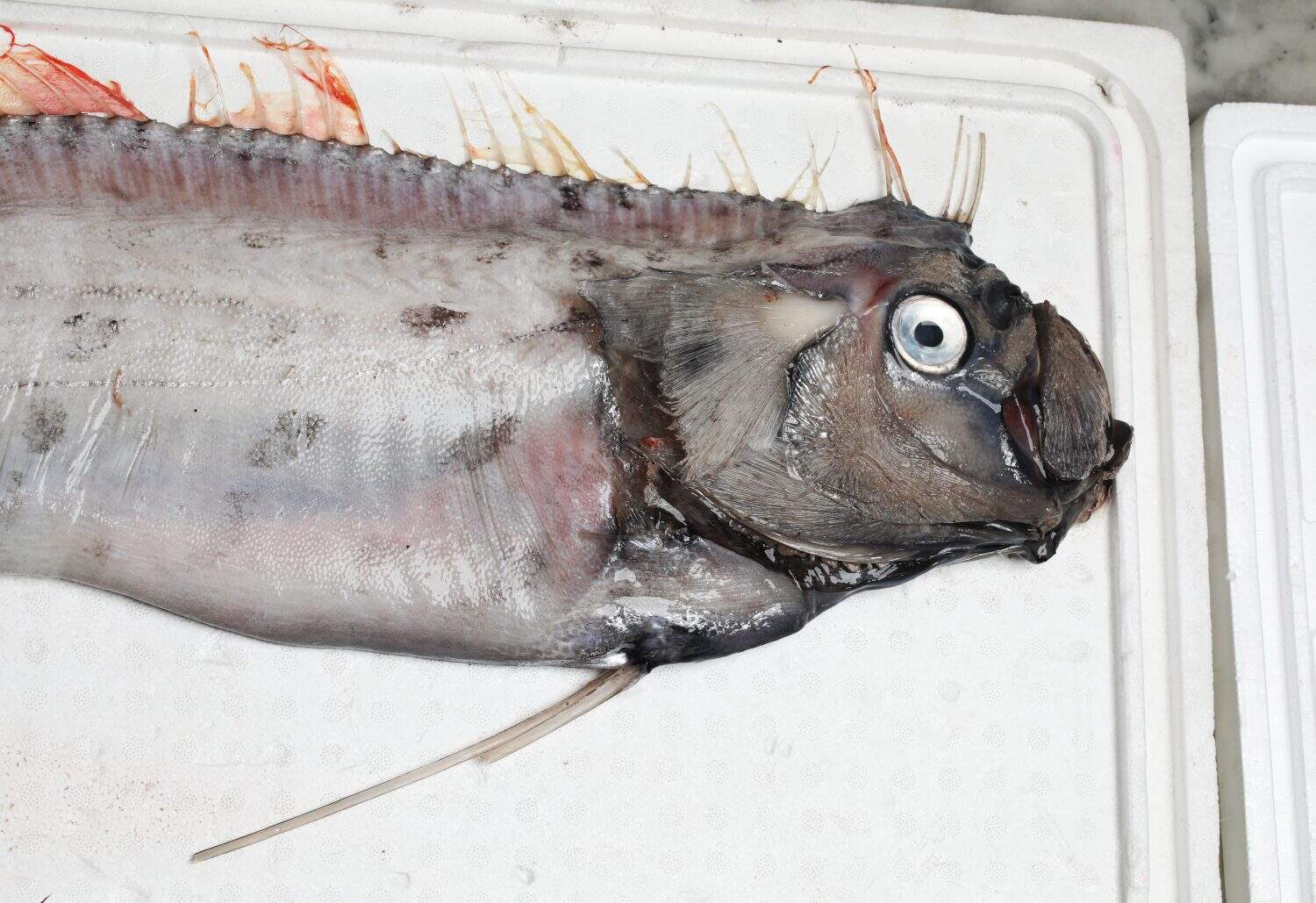
Oarfish are threatened by pollution, climate change, and deep-sea mining.
©Pavaphon Supanantananont/Shutterstock.com
There are several threats that oarfish face. Those threats include:
- Climate change
- Water pollution
- Deep-sea mining
Unlike other fish, which face the unfortunate threat of becoming bycatch, oarfish do not have that problem thanks to how deep in the ocean they live. However, with climate change increasing the temperature of the water, microplastics in the ocean, and deep-sea mining, oarfish have plenty of threats to combat.
The exact number of oarfish is not known. However, with more washing ashore, as they did in Cabo San Lucas recently, oarfish may be struggling. Though little is known about the serpentine fish, steps can still be taken to protect it. Reducing plastic use, working to lower planetary temperatures, and avoiding mining could go a long way toward saving oarfish. It turns out these swimmers are not doomsday fish, but simply creatures trying to survive in an ever-changing ocean environment.