
Today, it is not uncommon for wild and domestic animals to share some of the same territory. Because of this, when people come across animal tracks, it can be challenging to determine just what animal the tracks belong to. This is especially true for animals of the same family genus, such as those of domesticated dogs and coyotes. However, when it comes to coyote tracks versus dog tracks, there are key clues for identification that help people recognize whether a dog has been walking or if a coyote is nearby.
Coyote Tracks Are Generally Smaller Than Dog Tracks
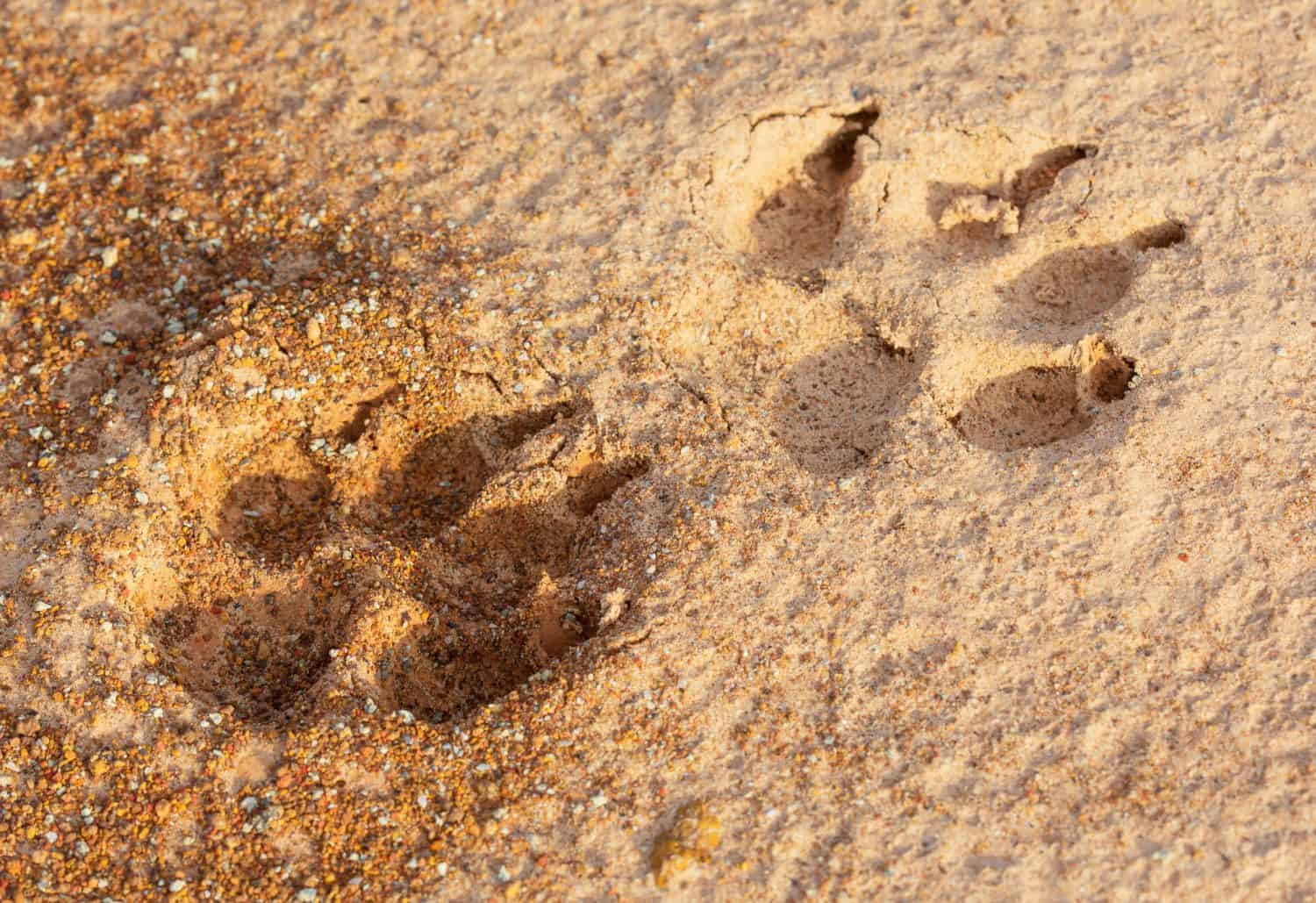
A coyote’s footprint tends to be smaller than most domestic dogs of the same size.
©pittaya/Shutterstock.com
Dogs come in a variety of shapes and sizes. While some dogs may weigh as little as five pounds, others may weigh as much as 150 pounds or more. When looking at tracks, those that are smaller would never be confused for being tracks that belong to a coyote. Therefore, a comparison between dog and coyote tracks should be made using canines of the same size.
In general, coyotes weigh between 20 and 50 pounds. The average weight, however, is more often between 25 and 35 pounds. These weight ranges are the same for what is considered a medium-sized dog. Some dogs that are considered to be medium-sized dogs include:
- Labrador Retriever
- Border Collie
- Shetland Sheepdog
- Australian Shepherd
- Basset Hound
- Bulldog
- Dalmation
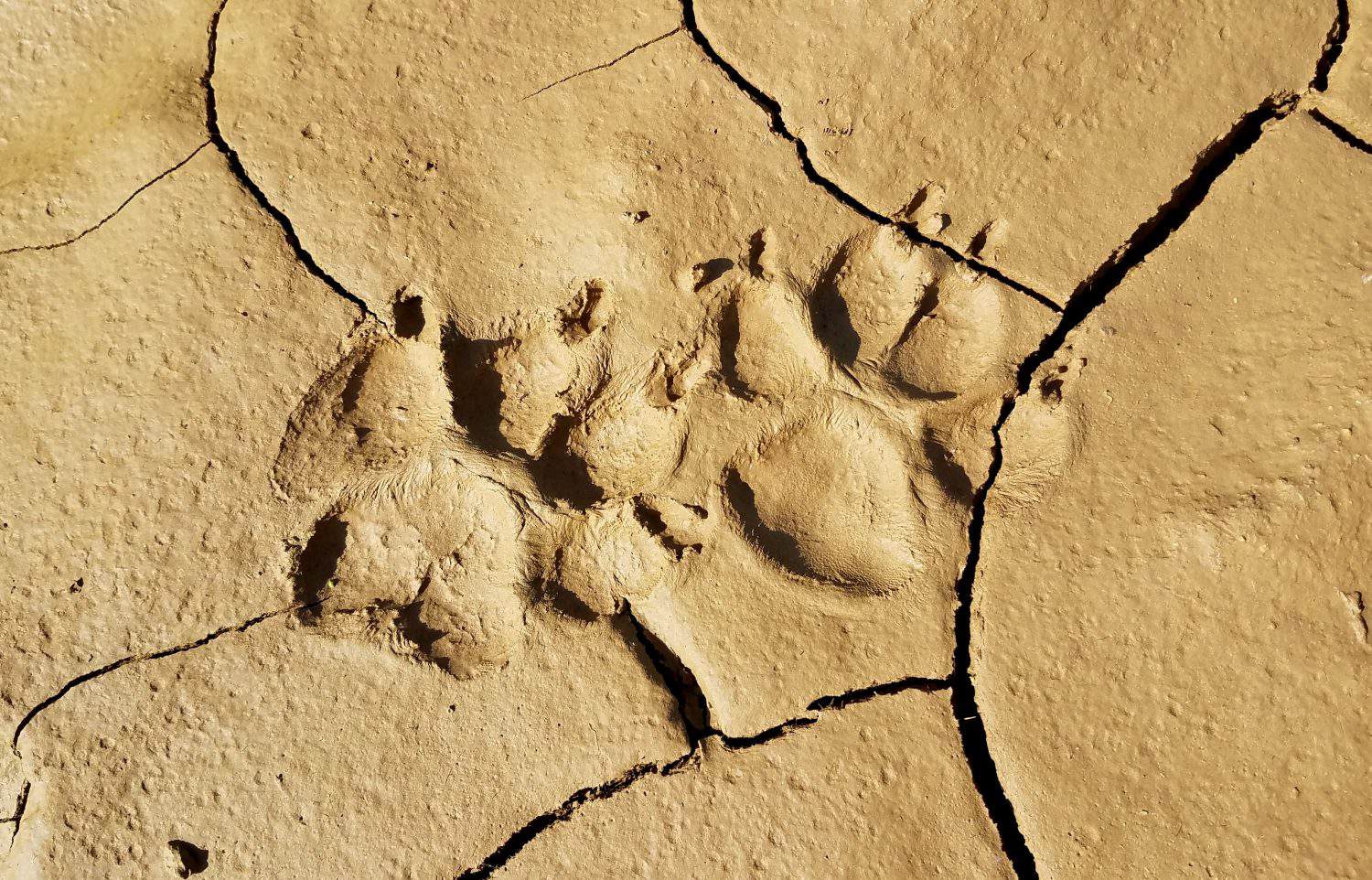
If a coyote’s tracks were compared to any of these dogs’ tracks, the coyote’s tracks would be smaller. Coyotes’ tracks measure approximately two inches across by three inches vertically. Dogs have slightly larger prints, with a medium-sized dog 2.5 inches to 3.5 inches in width and 2.5 to 3.5 inches in length. However, because these measurements are so similar, they are only one factor to take into consideration when looking at animal tracks to determine if they belong to a coyote or a dog.
Dogs’ Tracks Have Shorter Strides Than Coyote Tracks
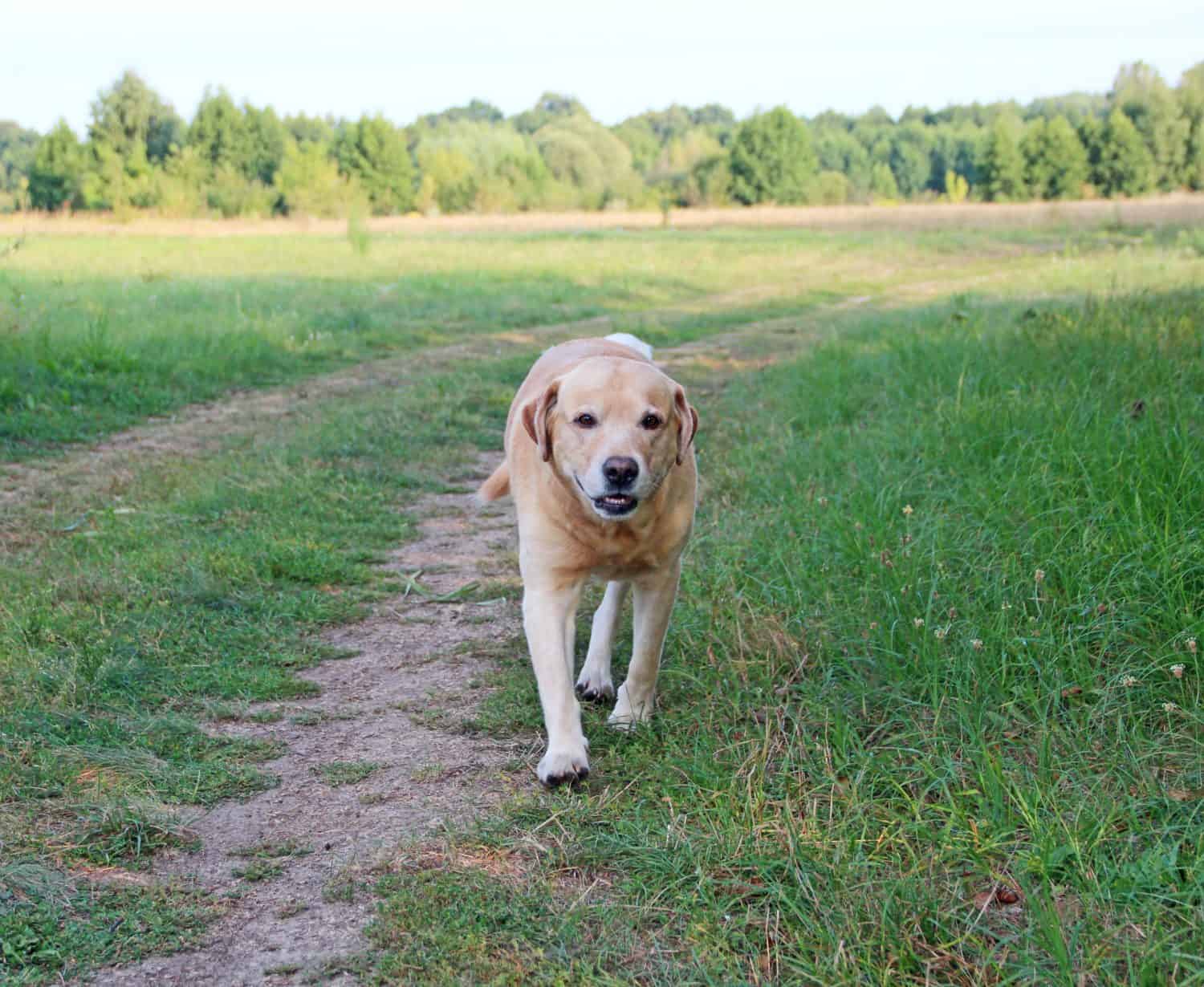
Dogs tend to walk with a smaller stride than coyotes do.
©alexmak7/Shutterstock.com
While dogs and coyotes are both canines, the two species have evolved in distinct ways. Because of this, each has a different stride than the other, making stride marks a key clue in identifying whether the tracks belong to a dog or a coyote. Coyotes are far leaner than dogs are. Additionally, their legs are longer, which allows coyotes to cover more ground in short periods. What this means when coyotes leave tracks behind is that they will be further spaced apart than a dog’s tracks would be.
The tracks that dogs leave behind have a smaller stride because dogs are more compact and muscular. Their legs are shorter to accommodate the muscle mass. The larger amount of muscle in dogs is attributed to their domestication over centuries and the various jobs they performed. While these dogs worked, they also received regular meals that coyotes have never had access to. Coyotes, instead, are opportunistic eaters. The same food or caloric intake may not be available. This has led the coyotes to become leaner canines as they evolved.
Coyote Tracks Are Pointy, Whereas Dog Tracks Are Rounded
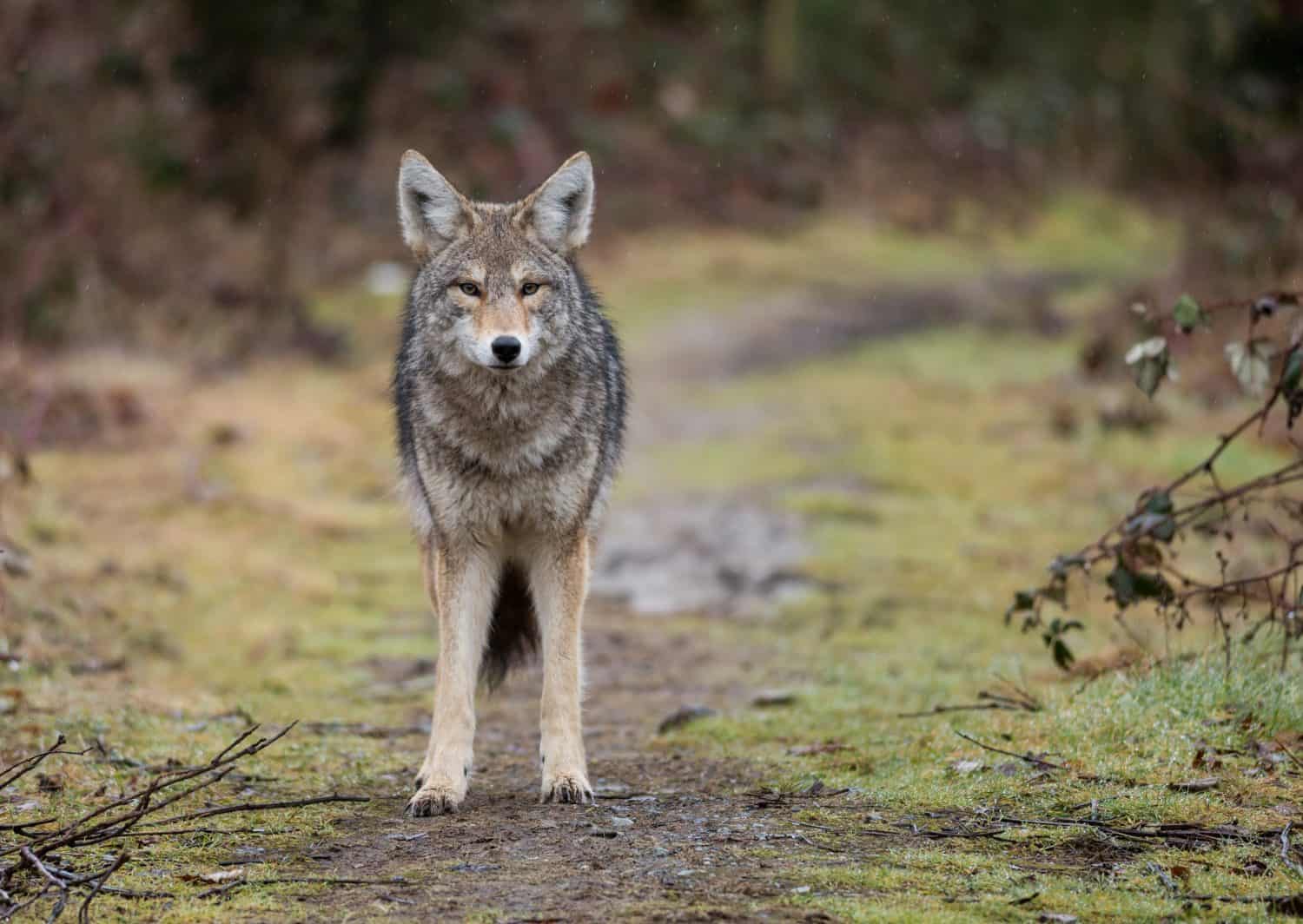
Coyotes have slimmer paws and paw pads, giving their tracks an angular look, versus dog tracks that are wider and more rounded.
©Harry Collins Photography/Shutterstock.com
If a person were to look at the paw pads of both a coyote and a dog, there would be visible differences. These distinctions are also present in the track marks the animals leave behind. Coyotes have a narrow foot. The foot also takes on a pointed shape, tapering to the claws. Therefore, when a track is left, the pads on the foot tend to be angular and slim. On the other hand, dogs have rounded paw pads. This is due to dogs having a wider foot than coyotes. As the print is made, the overall look is circular, leaving no doubt that the track belongs to a dog rather than a coyote.
Dog Tracks May Be More Erratic Than Coyote Tracks
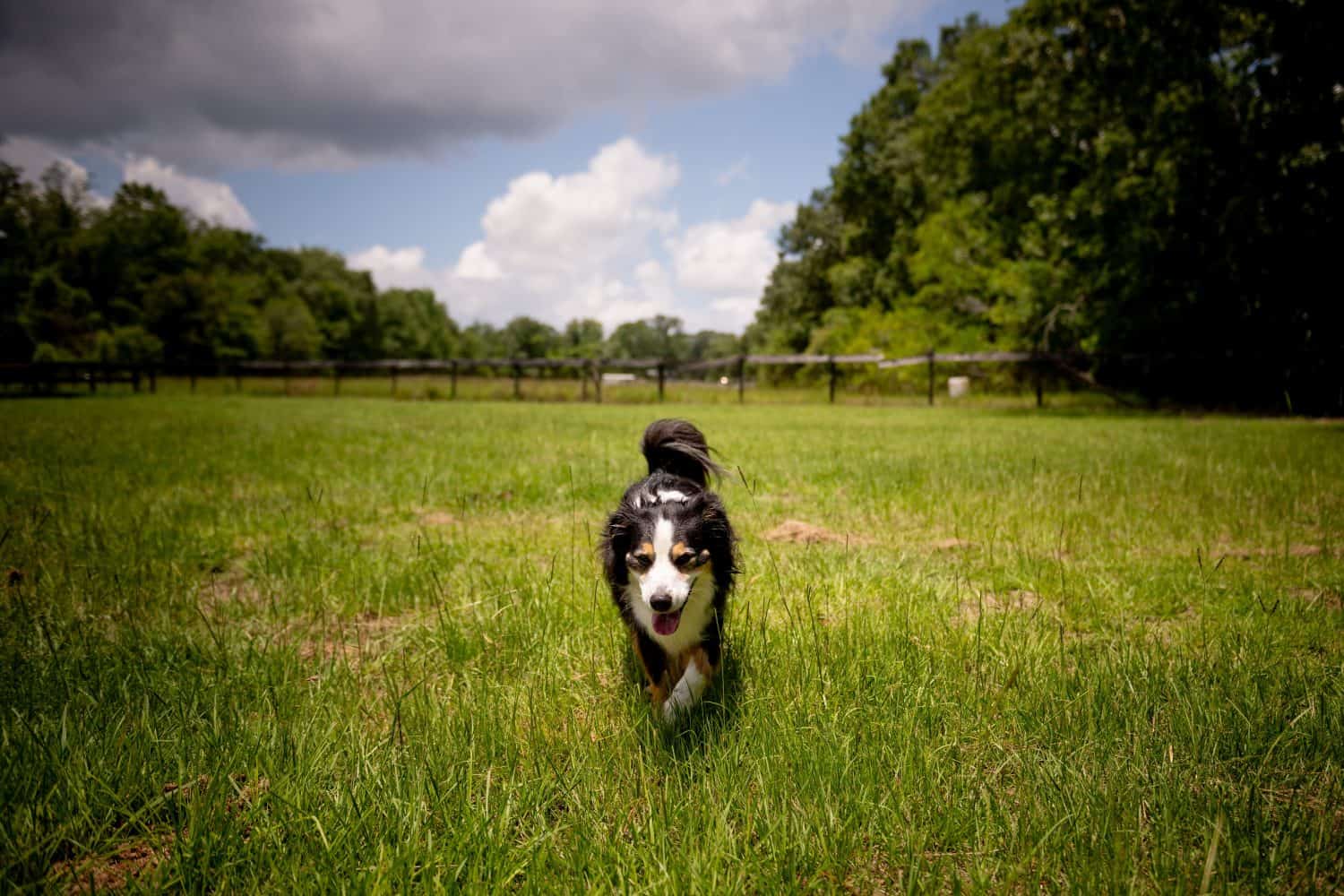
Domestic dogs tend to veer off the path to investigate smells, whereas coyotes will stay the course, creating a straight track trail.
©Cavan-Images/Shutterstock.com
When examining the tracks in question for identification, if there are enough of them, a pattern will emerge. This pattern will either be relatively straight or somewhat irregular. This will be a key clue in whether a coyote or a dog has been in the area recently.
If the tracks are erratic in nature, meaning they go in a straight line for a short period, but tend to veer off to one side or the other before continuing on, the tracks are those of a dog. This is because dogs want to smell different scents while out on a walk. If there is one that is especially interesting, they will investigate until their curiosity is satisfied before moving forward toward their ultimate destination.
Coyotes, too, may want to investigate a smell. However, given that they have a purpose in making their way from Point A to Point B, there is less meandering along the way. This causes the tracks to be in a straight line, which is a fairly solid indicator that the tracks belong to those of a coyote rather than a domesticated dog.
Coyote Tracks Have More Defined Claw Marks Than Dog Tracks
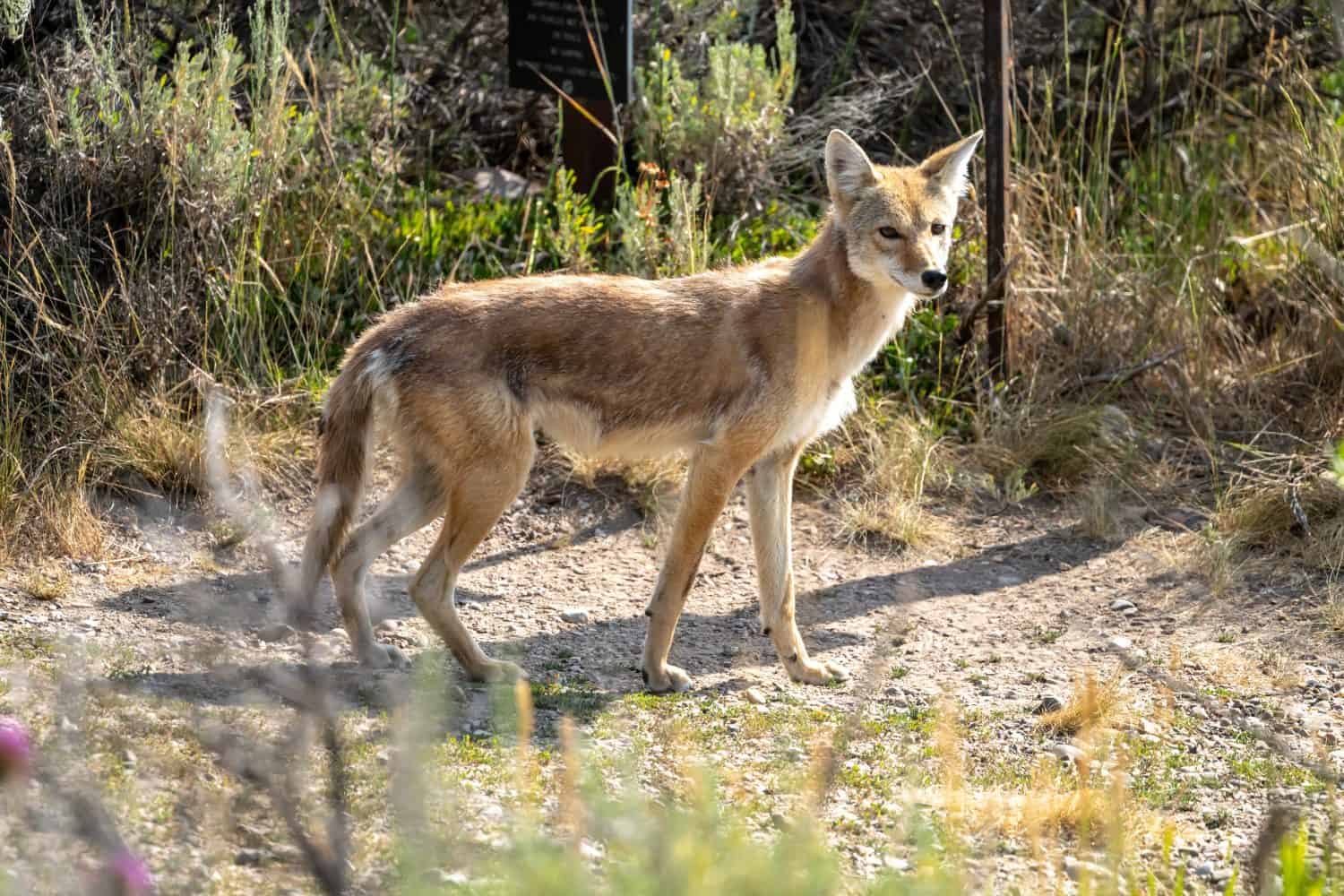
Coyotes have sharper claws than dogs, making their claws more defined in tracks left behind.
©Kelly vanDellen/Shutterstock.com
Unlike felines, who have retractable claws, dogs and coyotes have claws that remain out at all times. Therefore, this alone is not a distinguishing trait between the two. However, if the track marks are examined further, just how those claw marks look can help determine if a dog was walking through the area or a coyote.
Claw marks can reveal a great deal about whether a dog or coyote was present. This is because dogs tend to have duller and blunter claws. This means they will be less defined in the track marks they leave behind. Conversely, coyotes have sharp claws. This is because coyotes are master diggers. They need their claws to tear through the earth as they hunt for prey. The more pointed claw marks will be quite visible in the track marks, indicating that the tracks belong to a coyote.
Location Matters
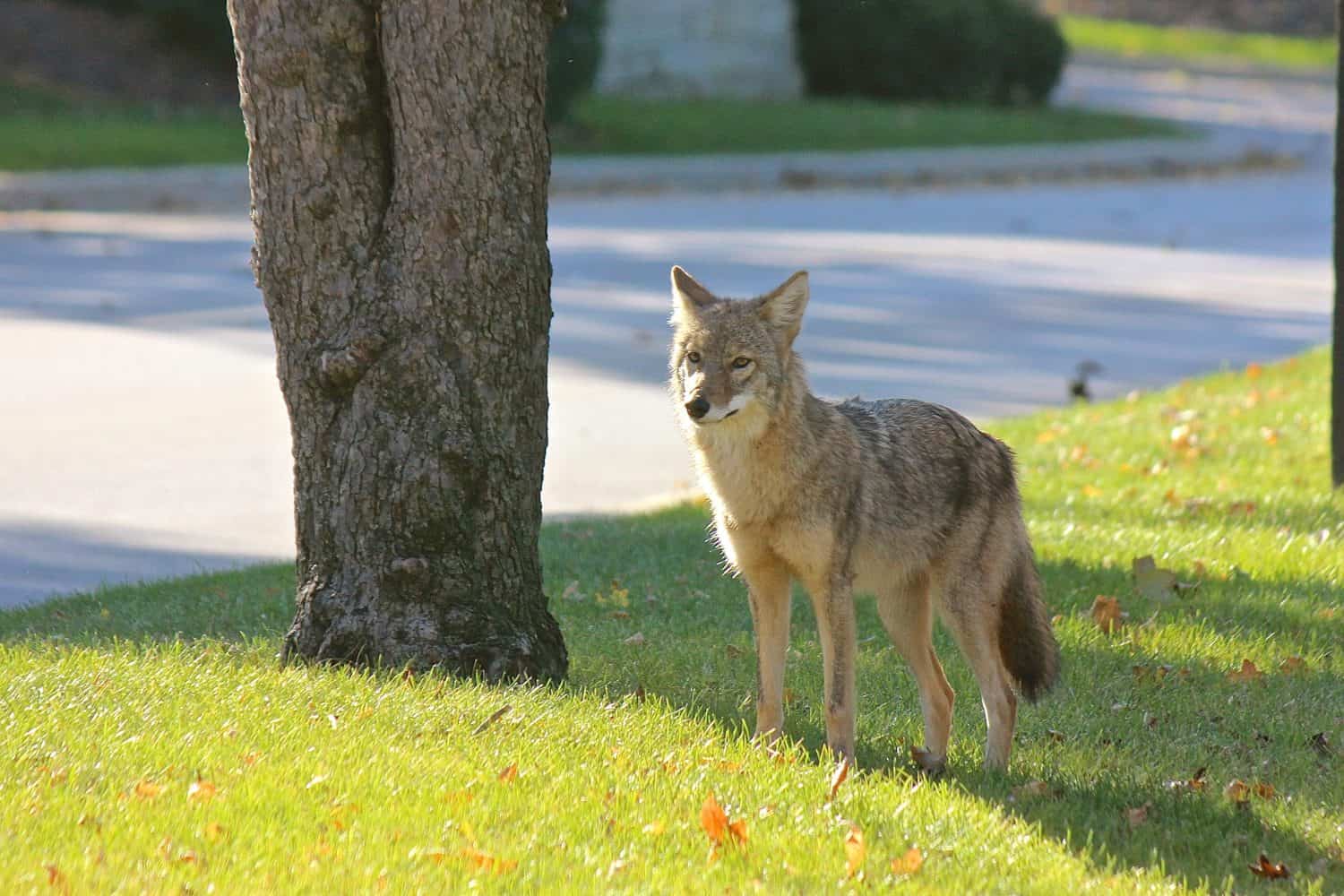
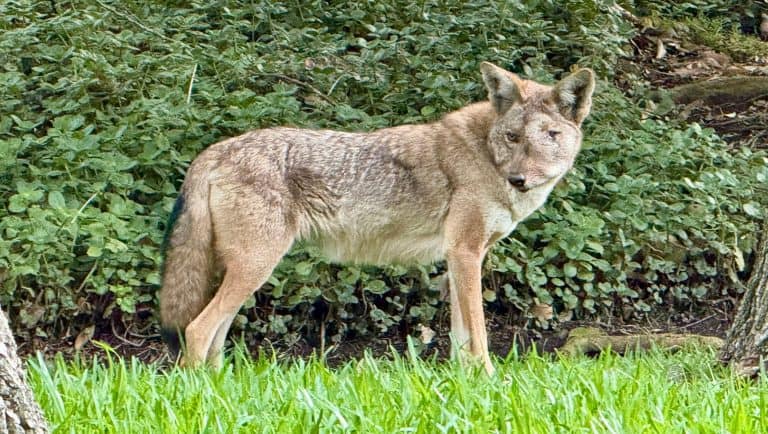
As coyotes have become more prevalent in suburban areas, it has become increasingly challenging to determine whether tracks belong to dogs or coyotes.
©Michael Heimlich/Shutterstock.com
In years past, the location of the tracks was an easy indicator of whether they belonged to a coyote or a dog. However, with more houses being developed in areas where coyotes traditionally lived, this is not necessarily the case any longer.
Forests, grasslands, and even portions of the desert were areas that coyotes called home. Over the years, all of these areas have been developed. While in some instances, this has caused habitat fragmentation, in others, coyotes have learned to adapt. Coyotes may still be shy when it comes to getting too close to people, but they have also realized that people come with trash, which is associated with discarded food. This makes for an easy meal for coyotes, who are opportunistic feeders.
Therefore, if in a desolate area, it is likely that the tracks are those of a coyote rather than a dog. However, in a suburban environment known for having coyotes, factors other than just location will need to be considered when determining if the tracks being examined are those of a domesticated dog or a coyote.