
Quick Take
- Crocodiles have a third eyelid that moves in a direction you'd never expect, a surprising feature that makes them such deadly underwater hunters. See the third eyelid →
- Their pupils work more like a cat's than a reptile's, and that quirk gives them a predatory edge most people don't realize they have. Discover the slit pupils →
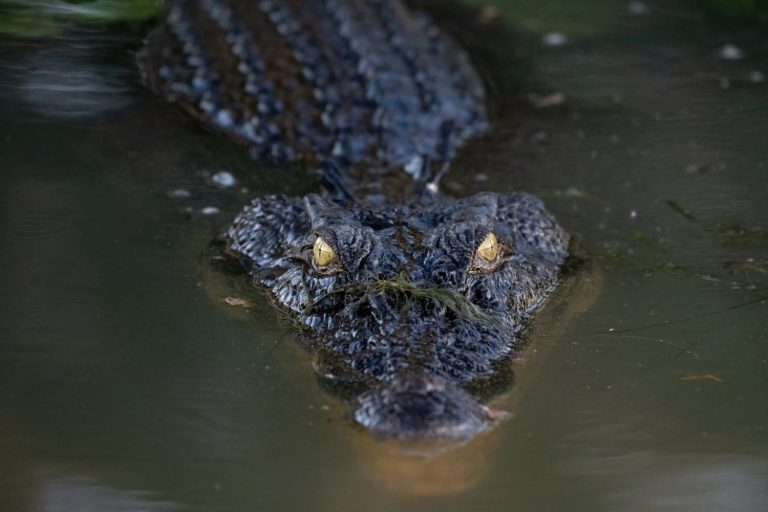
- The position of a crocodile's eyes on its skull is far from random. It is the key to a hunting strategy that keeps prey completely unaware. Explore eye placement →
- Crocodile eyes are built for land, yet they see just fine underwater. Here is the built-in feature that makes that possible. See underwater vision explained →
Each animal in nature has undergone thousands of years of evolution to reach its current form. This has resulted in some amazing adaptations and specializations for a wide variety of environments. One example is the crocodile, which has extremely complex eyes that work both above ground and in the water. This YouTube video from Gatorland VLOGS (GatorlandTV) shows a crocodile opening its eye up close, and it’s an amazing sight. Read here to learn more about crocodiles’ eyes.
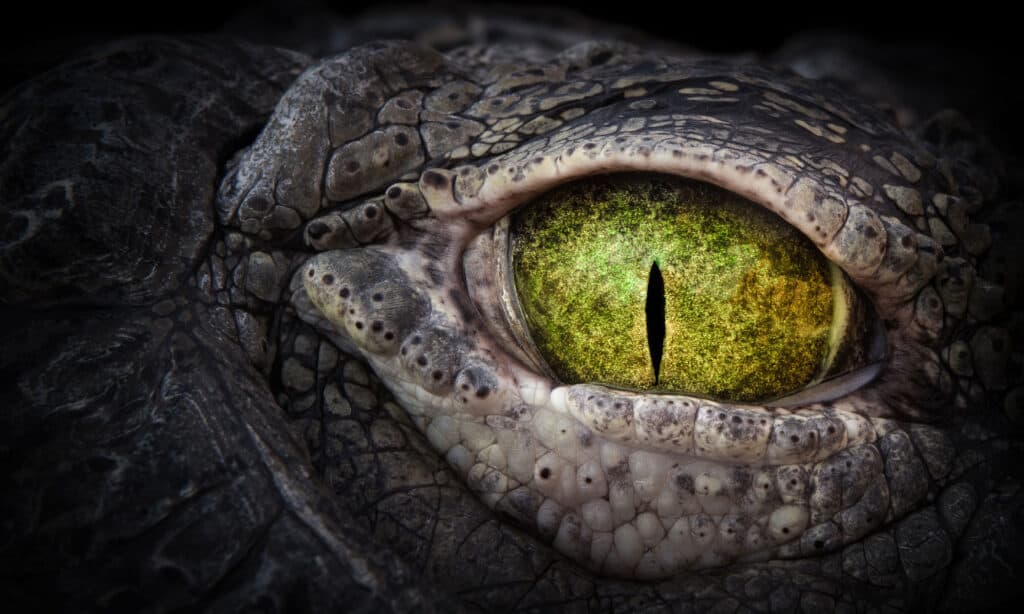
Some crocodilians, such as certain alligators and caimans, have slit-like pupils, while most true crocodiles have more rounded or oval pupils. These adaptations help them see in both bright and low-light conditions.
©iStock.com/Jeroen Mikkers
About Crocodile Eyes
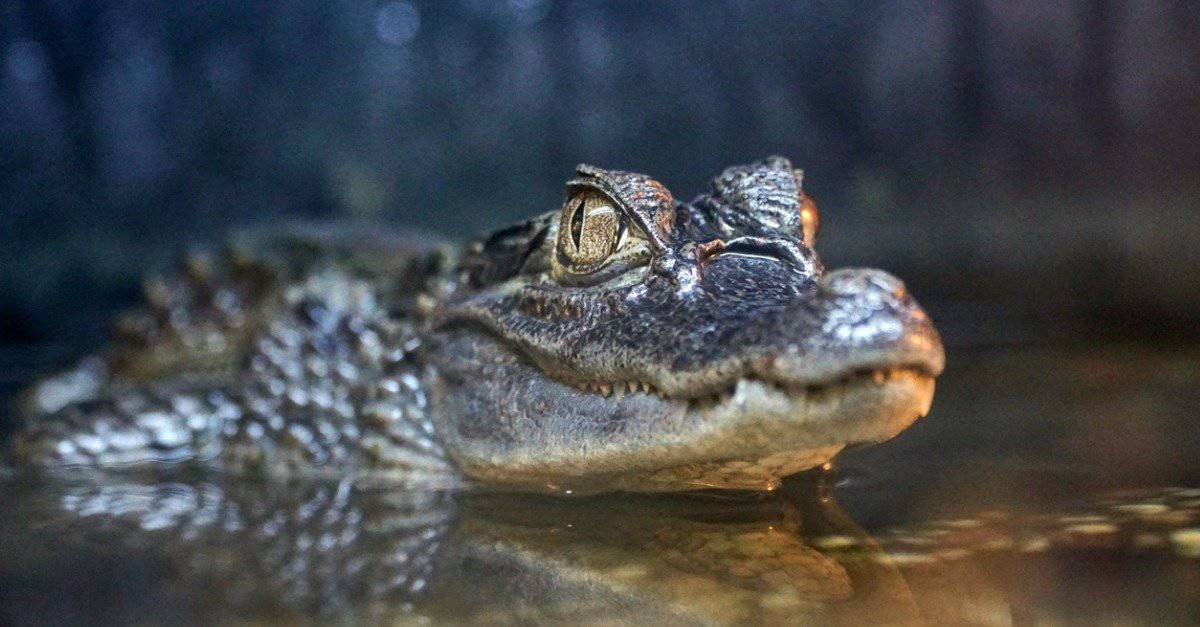
Crocodiles have some of the best eyes in nature, given the variety of environments in which they use them. Crocodiles move between bright sunlight, murky waters, and nighttime hunting, so their vision needs to adapt to these conditions. One of the most important adaptations of their eyes is their placement. Crocodiles’ eyes are located on the top of their heads. Because of this, they can keep their nose and eyes above water for basic functions while the rest of their body remains hidden underwater. This is what allows them to be such great hunters. However, they can still see underwater when necessary. Although their eyes are adapted for seeing above ground, they also have a special membrane that allows them to see underwater and protects their eyes. This is the nictitating membrane, which is the cloudy layer visible in the video above. Unlike the upper and lower eyelids, which move up and down, this membrane moves horizontally across the eye, which can appear unusual the first time you see it.
This third eyelid acts like built-in goggles for swimming. It helps protect the eye underwater and also keeps debris from reaching the cornea. So even when they are moving quickly or thrashing around, their vision is not significantly impacted. One of the most unusual features of their eyes is their pupil. Similar to a cat’s eyes, the pupil is a vertical slit that can expand in low light conditions. Crocodiles have great low-light vision thanks to this shape, and can hunt at night with remarkable skill. It also provides strong depth perception for ambush attacks. All of these adaptations result in some of the best vision found in nature. Using all of these adaptations simultaneously makes crocodiles fearsome and highly skilled predators.