
Quick Take
- Scientists have known this whale exists for over 150 years, yet they have never once seen it alive. See the 150-year mystery →
- Everything researchers know about this species comes from dead bodies, and what those bodies contain is genuinely strange. Explore the strange findings →
- Its ability to vanish is so remarkable that it makes this whale almost impossible to protect. Discover the conservation challenge →
- The whale's jaw tells a story scientists didn't expect, and it rewrites assumptions about its evolutionary past. Read about the jaw's secrets →
Far beneath the ocean surface, an elusive, shadowy figure slips through the depths, evading even the most determined human observers. Its shape and general appearance are known, but nearly everything else about it, how it lives, how many exist, remains shrouded in total mystery. For scientists, this creature has become the very symbol of the ocean’s uncharted unknowns, fascinating researchers for well over a century.
First Encounter with an Enigma
The story began in 1872, when Henry Travers detected something unusual during his explorations. His discovery wasn’t of a living animal, but bone fragments, evidence enough to confirm that a new species lurked beyond the reach of human sight. Travers’ name would eventually be lent to this enigmatic species, but it wouldn’t bring experts much closer to understanding it.
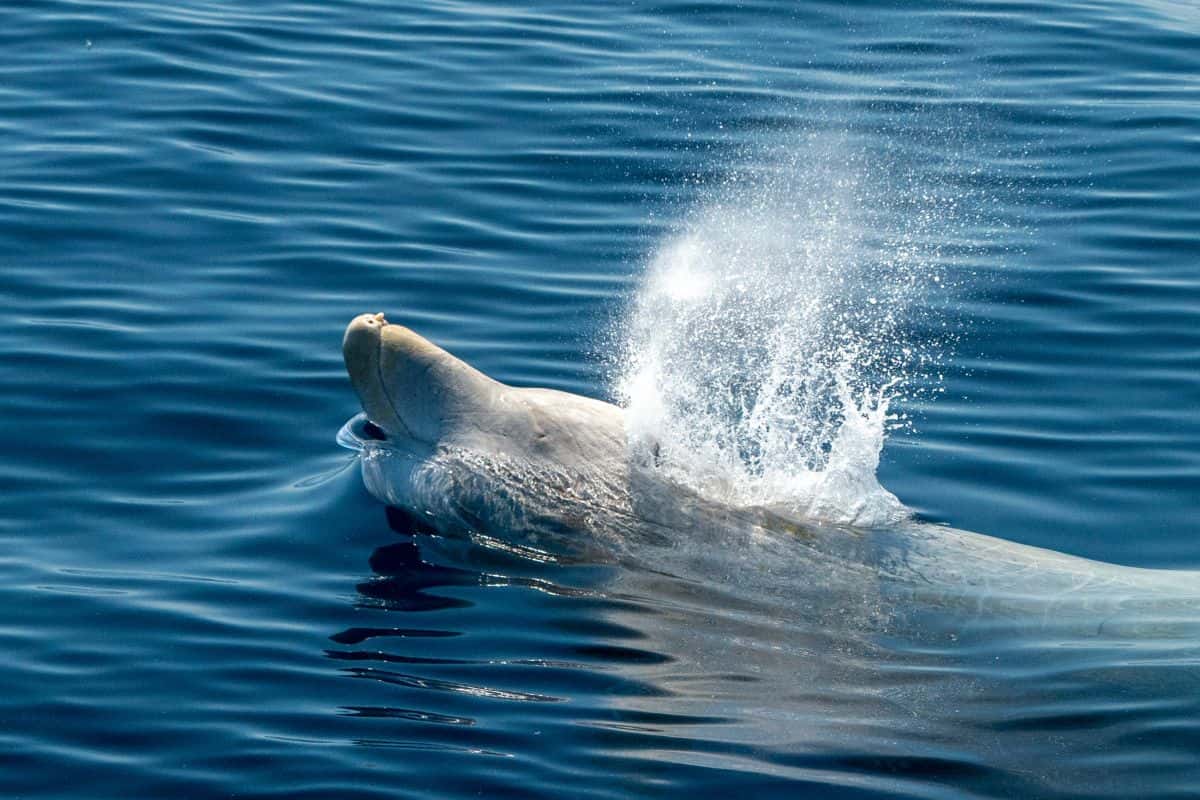
More than 150 years later, the animal remains a virtual ghost. Though scientists know what it looks like, no human has ever observed a living specimen in the wild. In the expanse of the world’s oceans, this giant has slipped past every survey, defying those who seek to peer into its world.
Life in the Deep: The Mysterious Ziphiids
This creature belongs to the Ziphiidae family, a group of deep-diving cetaceans unparalleled in their ability to vanish into the abyss. Members of this family can descend beyond 3,000 meters beneath the surface and remain underwater for hours at a time, traits that make them some of the most elusive mammals on the planet.
For this particular species, the veil of secrecy is especially thick. Over the past century and a half, only six individuals have ever been found, and all were washed ashore on Pacific beaches, already dead. These rare stranding events have provided the only solid proof of the animal’s existence and allowed scientists brief glimpses at its anatomy and possible behaviors.
What the Dead Reveal
The specimens that do surface offer precious clues. Measuring up to five meters in length, the Travers’ beaked whale, so named for its discoverer, features a dark back, a pale underside, and prominent lower jaw teeth that protrude visibly. The contrast between its dark and light coloring is striking, but even more compelling are the details hidden inside.
Dissections have exposed a digestive system of remarkable complexity, with nine separate stomachs. Inside, researchers have found remnants of squid and even parasitic worms, shedding light on the whale’s diet and its role in the deep-sea ecosystem. Perhaps most surprising are vestigial upper jaw teeth, unexpected evolutionary leftovers that hint at a different past. Some stranded specimens have shown clear signs of trauma and even fractured jaws, potential evidence of what may have caused their demise.
Persistent Mysteries and Conservation Hurdles
Every discovery peels back another layer, yet leaves the central mystery intact. Very little is known about the Travers’ beaked whale’s behavior, population, or social structure. Still, each find gives researchers new information about the species’ evolution, and about the broader family of Ziphiidae, whose members are all masters of deep-ocean survival.
The scarcity of observations carries consequences. Because so little is known, the International Union for Conservation of Nature (IUCN) lists the Travers’ beaked whale as “data deficient.” Without more sightings, alive or stranded, scientists cannot assess the whale’s vulnerability or the threats it may face in the modern ocean.
The Travers’ beaked whale’s story is a reminder: for all that is charted and catalogued, the ocean’s depths still hold giants whose lives and secrets remain almost entirely unseen, fueling both scientific curiosity and a deeper respect for what remains undiscovered in our world.