
Quick Take
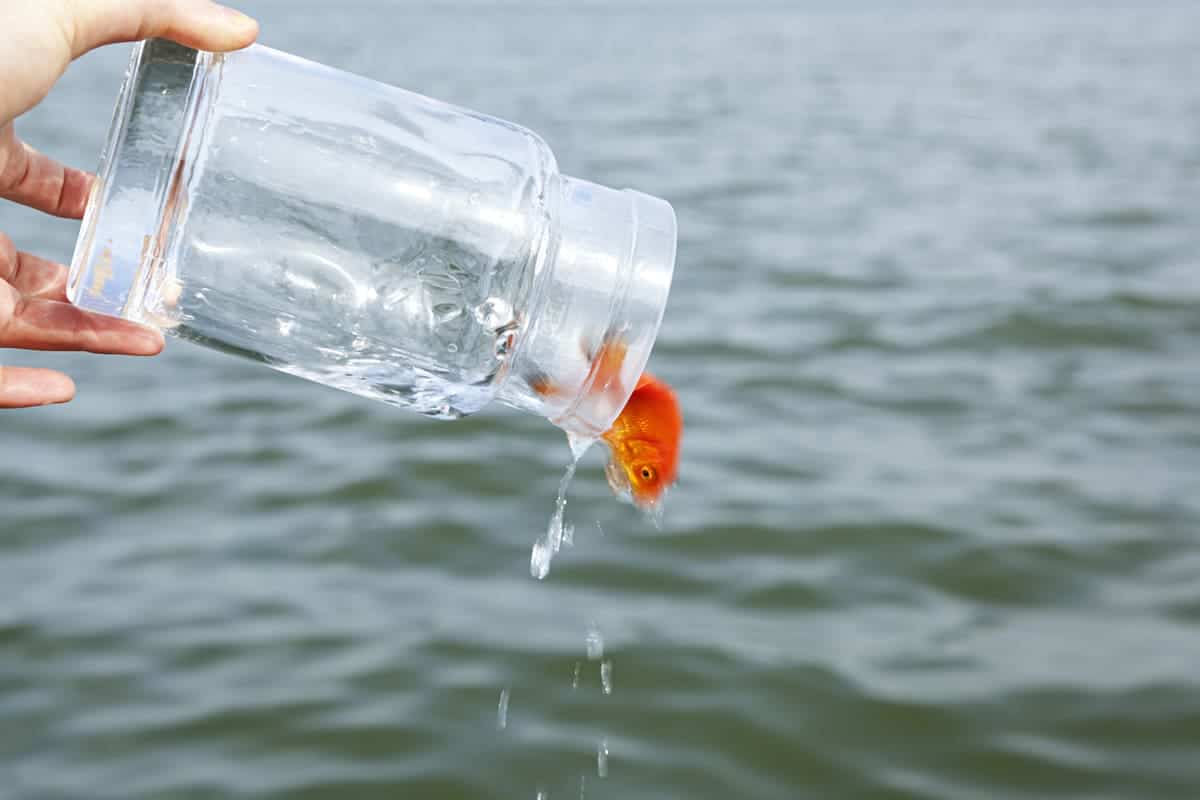
- What most pet owners believe is a compassionate farewell for their goldfish turns out to be anything but kind to the ecosystem receiving them. See the responsible alternatives →
- Scientists found a specific tipping point that goldfish can trigger in lakes, and once that threshold is crossed, reversing it is a battle few ecosystems win. Explore the tipping point →
- The goldfish you recognize from a bowl barely resembles what it becomes once it reaches open water. Discover how goldfish transform →
- Researchers tested every type of lake condition they could think of, and goldfish caused problems in every single one. See the mesocosm findings →
On the surface, goldfish often seem like the most harmless houseguests imaginable. Yet, new research from a collaboration between The University of Toledo and the University of Missouri is forcing scientists and pet owners alike to take a closer look at these familiar aquarium residents, especially when they find their way into lakes and rivers.
Continue reading
Published in the Journal of Animal Ecology, the study lays out stark consequences for freshwater ecosystems when pet goldfish enter the wild. The evidence is mounting: the seemingly kind act of releasing these unwanted pets can set off rapid, far-reaching changes beneath the water’s surface.
When Small Fish Become a Big Threat
Dr. William Hintz, an associate professor at Toledo’s Department of Environmental Sciences and Lake Erie Center, led the research team. He explained that while many release their goldfish thinking it’s an act of compassion, this can launch an ecological cascade that is anything but gentle. “It is critically important to inform the public that their pets can become pests that will harm freshwater ecosystems,” Hintz emphasized.
The experiment unfolded in large outdoor mesocosms, controlled mini-ecosystems designed to mimic real natural lakes. The team introduced goldfish and closely tracked their effects, measuring how quickly and dramatically these fish could shake up delicate aquatic balances.
Crossing the Point of No Return
The scientists were most concerned about a phenomenon called a “regime shift.” In their trials, goldfish didn’t just blend in, they triggered tipping points where the entire system reorganized itself, usually for the worse. Once this threshold is passed, researchers warn, bringing a lake back to its original state is an uphill and expensive battle.
Rick Reylea, a co-author based at the University of Missouri, outlined the scale of the disruption. In the wild, goldfish don’t remain the small, quiet pets people remember from their living rooms. “They rapidly grow into very large fish that stir up lake sediments, consume large numbers of prey and compete with native fish,” Reylea noted.
The experiment evaluated various scenarios, examining both nutrient-poor (oligotrophic) and nutrient-rich (eutrophic) conditions. Across all tests, goldfish left their mark, reducing water quality, shifting the populations of algae and invertebrates, and putting pressure on native fish communities.
The Case for Prevention
The team’s findings deliver a clear call to action. Goldfish, they assert, must be managed as a high-priority invasive species. That means swift prevention, early detection, and rapid response, especially before populations establish themselves beyond control.
For pet owners facing the dilemma of no longer wanting their fish, the researchers urge alternatives: bring them back to a pet store, find a new aquarium home, or reach out to wildlife authorities. Dumping them in a local stream or pond is now known to carry consequences far beyond the driveway curb.
Study authors Dr. William Hintz, Hannah Barrett, and Dr. Rick Reylea believe this research closes a critical knowledge gap. It adds to a growing recognition that actions deemed kind or insignificant on shore can echo across entire ecosystems underwater.
A Familiar Face, an Unfamiliar Impact
Goldfish are one of the world’s most popular pets, sitting in countless American homes. Yet their journey from bowl to lake tells a cautionary tale. What looks innocent in a glass tank can, in the wild, become an engine of ecological change, fast, unpredictable, and often permanent. If the story of goldfish in the wild teaches anything, it’s that nature rarely reacts on the scale we expect when we set something free.