
The ocean is full of strange anomalies, many of which are still unexplained. But when those oddities literally breach the surface, as in this case, they draw attention. On January 4th, the U.S. Coast Guard contacted wildlife officials around 11:15 PM about an unusual situation. When the officials arrived, they found something bizarre beyond words.
How Did an Endangered Whale End Up On a Cargo Ship?
Fin whales are listed as endangered in the U.S. under the Endangered Species Act and are also protected by the Marine Mammal Protection Act. On the IUCN Red List, they’re listed as Vulnerable, but their populations vary across regions. Given this information, officials are struggling to figure out how one of these threatened whales ended up on the bow of a cargo ship in New Jersey. This whale species, which was almost eradicated by commercial whaling during the 1800s, typically prefers deep offshore waters. Even more concerning is that most fin whales migrate to warmer waters during the winter, so the timing of this whale encounter further confounds experts.
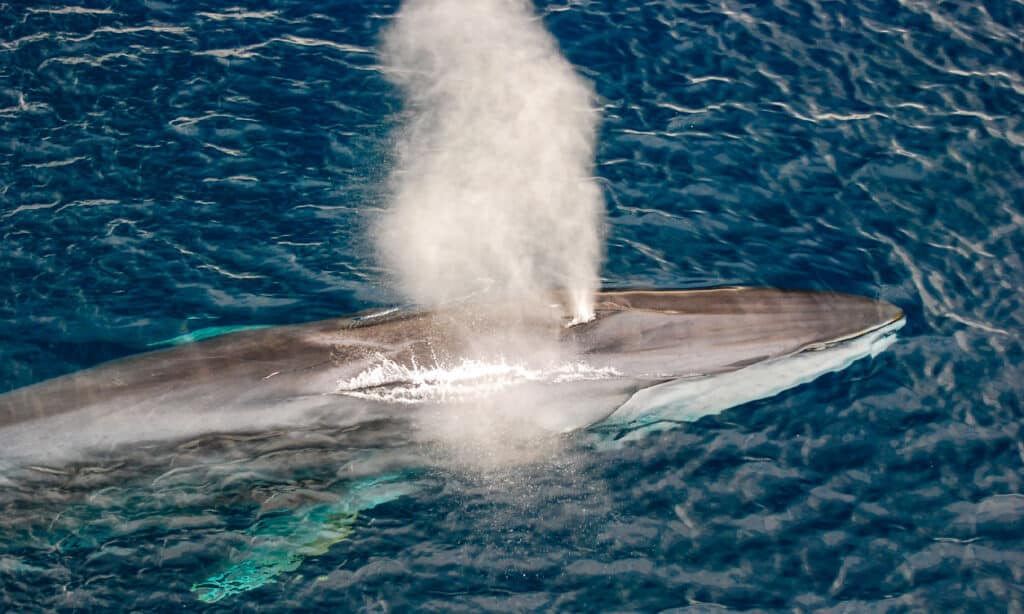
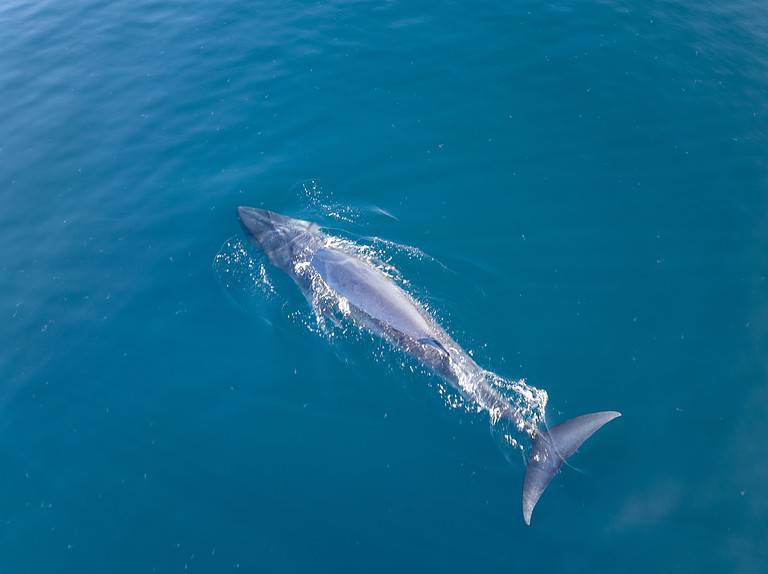
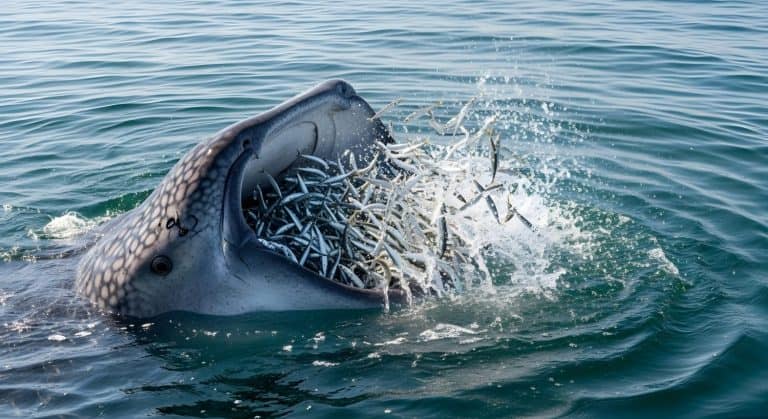
The whale found at the bow of the cargo ship was likely an endangered fin whale.
©iStock.com/JG1153
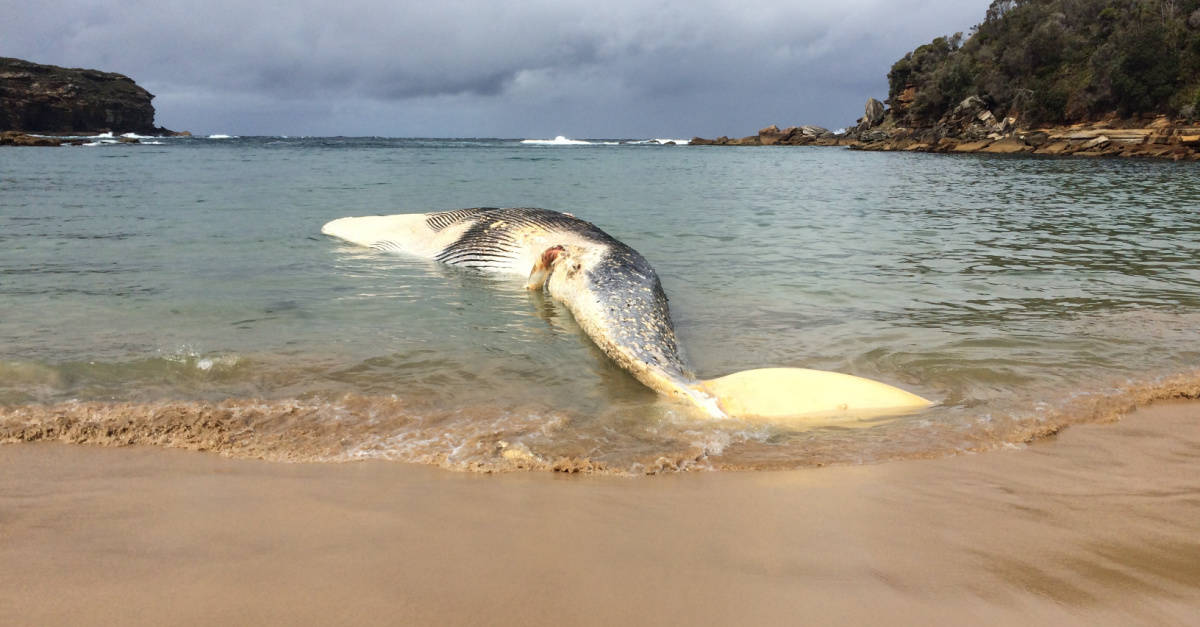
Whereas most fin whales are headed toward warm climates such as the West Indies this time of the year, this one was found in Gloucester City. Even stranger is how the whale was discovered: slumped over the side of the cargo ship’s bow. A post shared by the Marine Mammal Stranding Center shows the whale’s carcass, with half of its body on the ship’s deck and the other half hanging over the side. Judging by the photo, there are no obvious wounds, and it doesn’t appear to be injured except for being beached. The whale is approximately 25-30 feet long, leading many to wonder how such an animal could have made it so far out of the water.
What Caused the Whale to Jump?
The situation is currently undergoing investigation, and wildlife officials have yet to determine the cause of the accident. It has been confirmed that the cargo ship was en route from South America before docking in New Jersey. It’s unclear when the ship collided with the whale, if that was the case. No timeline has been provided for the whale’s time of death or how long it remained slumped over the bow of the ship. Given the fin whale’s migration patterns, however, it’s entirely possible that the ship collided with the whale with enough force to impale it on the bow.
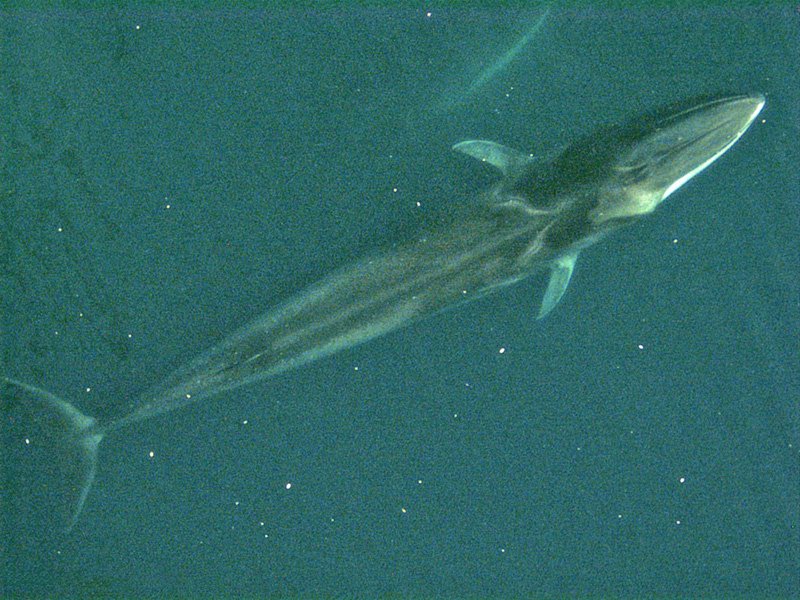
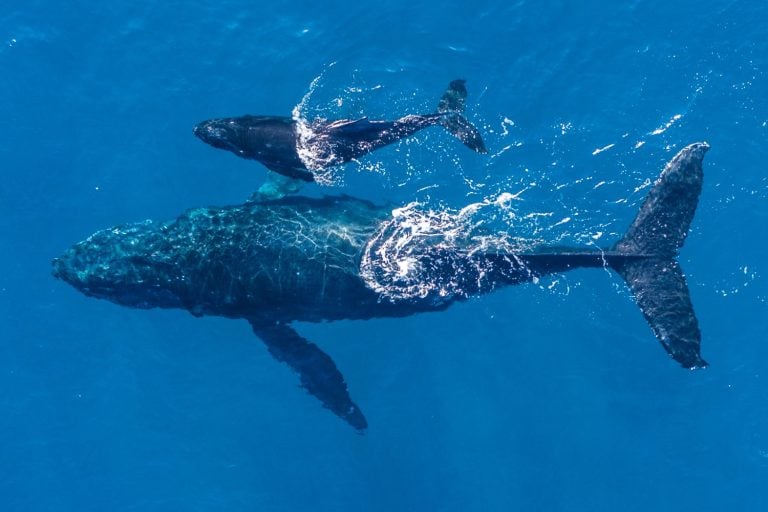
Fin whales can grow up to 85 feet in length.
Experts are currently performing a necropsy on the whale to determine its manner of death. If the species of whale is confirmed, it can be presumed that this was a younger fin whale. Fully matured, fin whales can grow up to 85 feet in length. Considering this whale’s small size, it’s likely that it had not reached full maturity. All of these details are raising concerns among conservation groups. Many are demanding greater attention to ship-whale collisions, which occur more frequently than most realize.
The Danger Ships Pose to Whales and Other Marine Life
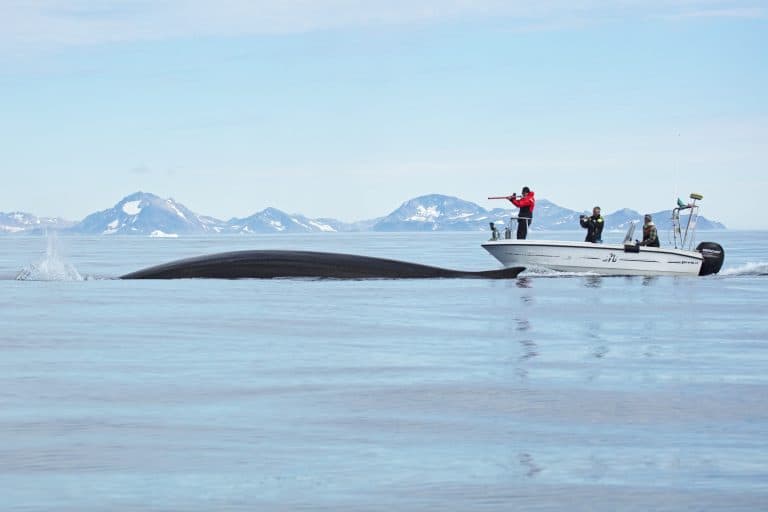
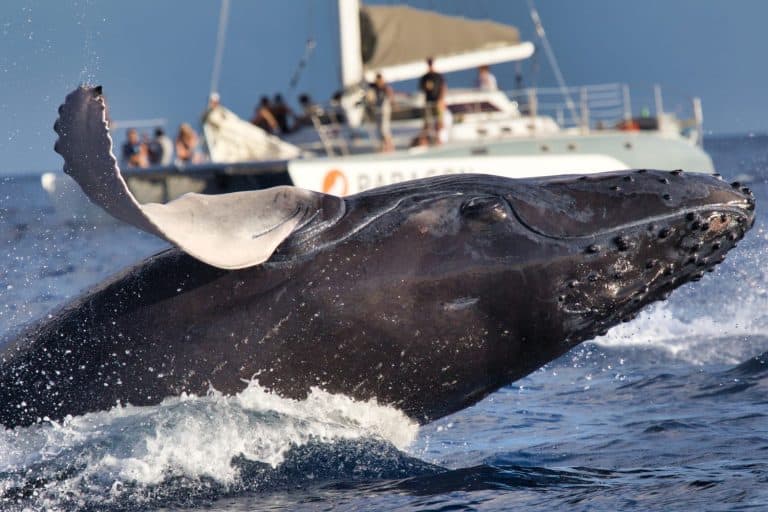
According to the World Cetacean Alliance, ships kill approximately 20,000 whales per year. Some estimates go as high as 30,000, which includes whales that are injured and maimed by vessel collisions. In reality, that number could be even larger, considering the number of whale carcasses that sink after being hit by ships. While many of these incidents happen in regions of high whale migrations, such as California, they occur worldwide. Fin whales are one of several species threatened by vessel collisions, along with humpbacks and North Atlantic right whales.
These collisions sometimes cause damage to ships, but, more often than not, are fatal for whales. The International Marine Mammal Project highlighted this issue in a 2025 report, continuing their longstanding advocacy on ship strikes. During its call to action, the primary goals were to increase awareness, improve technology, and enable faster signaling. Vessel-whale collisions often happen due to a “null” area at the front of the ship, which is silent underwater. If whales are traveling toward a vessel and swim in this area of the water, they can’t hear the ship coming toward them.
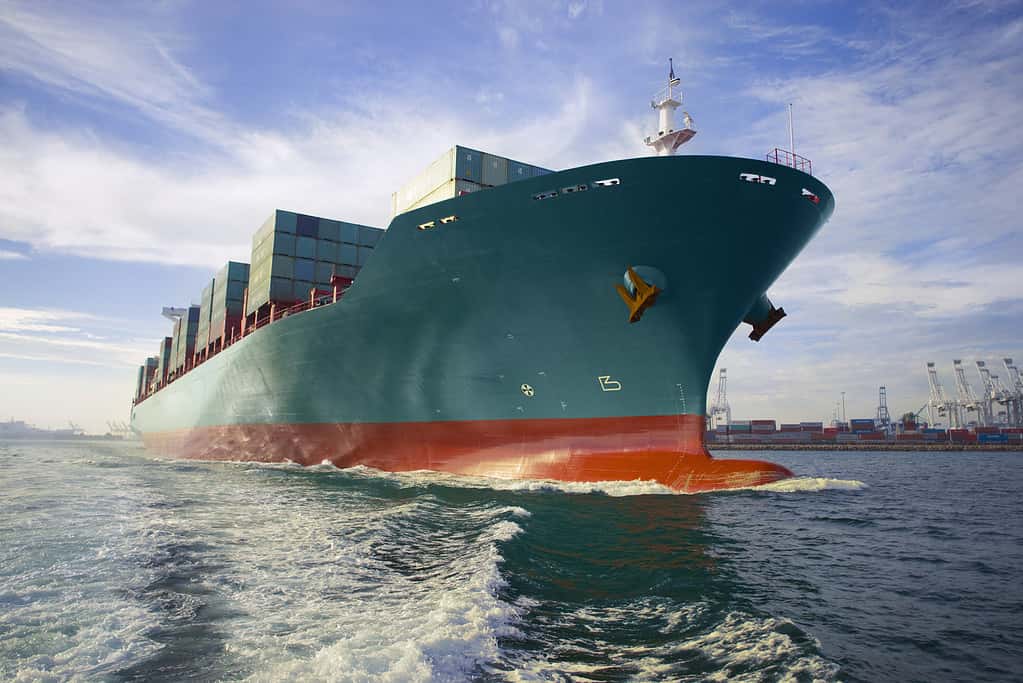
Cargo ships are responsible for as many as 30,000 whale deaths and injuries annually.
©Stephen Schauer/DigitalVision via Getty Images
To prevent this, real-time alert systems with acoustic monitoring, aerial surveys, thermal imaging, and satellite imagery are now used to reduce collisions. While this is a step in the right direction, it’s far from being a permanent solution. Ship speed, slower technology, and outdated radar systems are still issues on many vessels. In California, specifically, one crucial solution is also missing: Voluntary Vessel Speed Reduction (VSR) Zones. These encourage ships weighing more than 300 tons (cargo ships) to slow to at least 10 knots. Unfortunately, the guideline is not enforced by law.