
Migration is an instinctual behavior for many animals, including birds. Each autumn, billions of birds flee the cold weather and head south for winter. This is primarily due to their need for available food sources and suitable breeding grounds. As a result, many migratory birds from the Northeast find success in warmer southeastern states during winter, returning home to the North once spring arrives.
This article highlights some of the most common birds you might see migrating throughout the southeast during October. Learn all about why they migrate, where they escape to, and how you can spot them along their journeys.
Bird Species That Migrate Throughout the Southeast
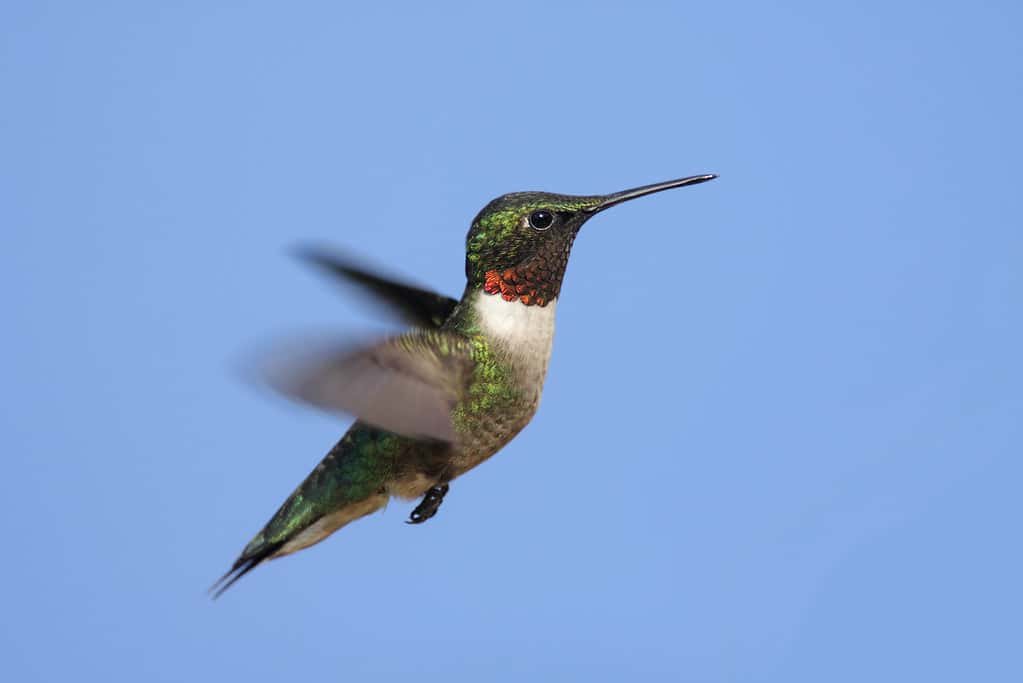
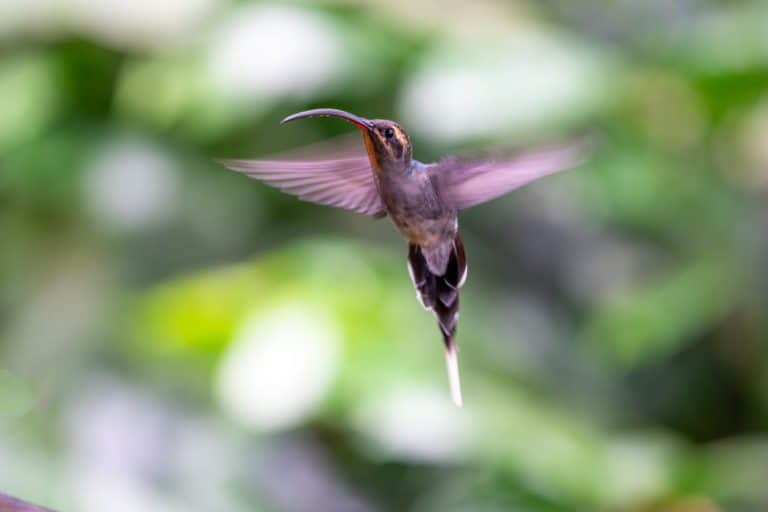
The ruby-throated hummingbird is one hummingbird species that migrates each winter.
©© Steve Byland/iStock via Getty Images
Countless migratory birds fly south every autumn. According to Lisa Kelly, Animal Care Supervisor at Teatown Lake Reservation, “It would be impossible to name all the birds that migrate from the northeast, as the number of migratory birds is in the billions.”
In fact, she notes that peak migration nights can sometimes see 400 million birds fleeing the cold to the southeast. Some of these species include broad-winged hawks, ruby-throated hummingbirds, warblers, barn swallows, and yellow-bellied sapsuckers.
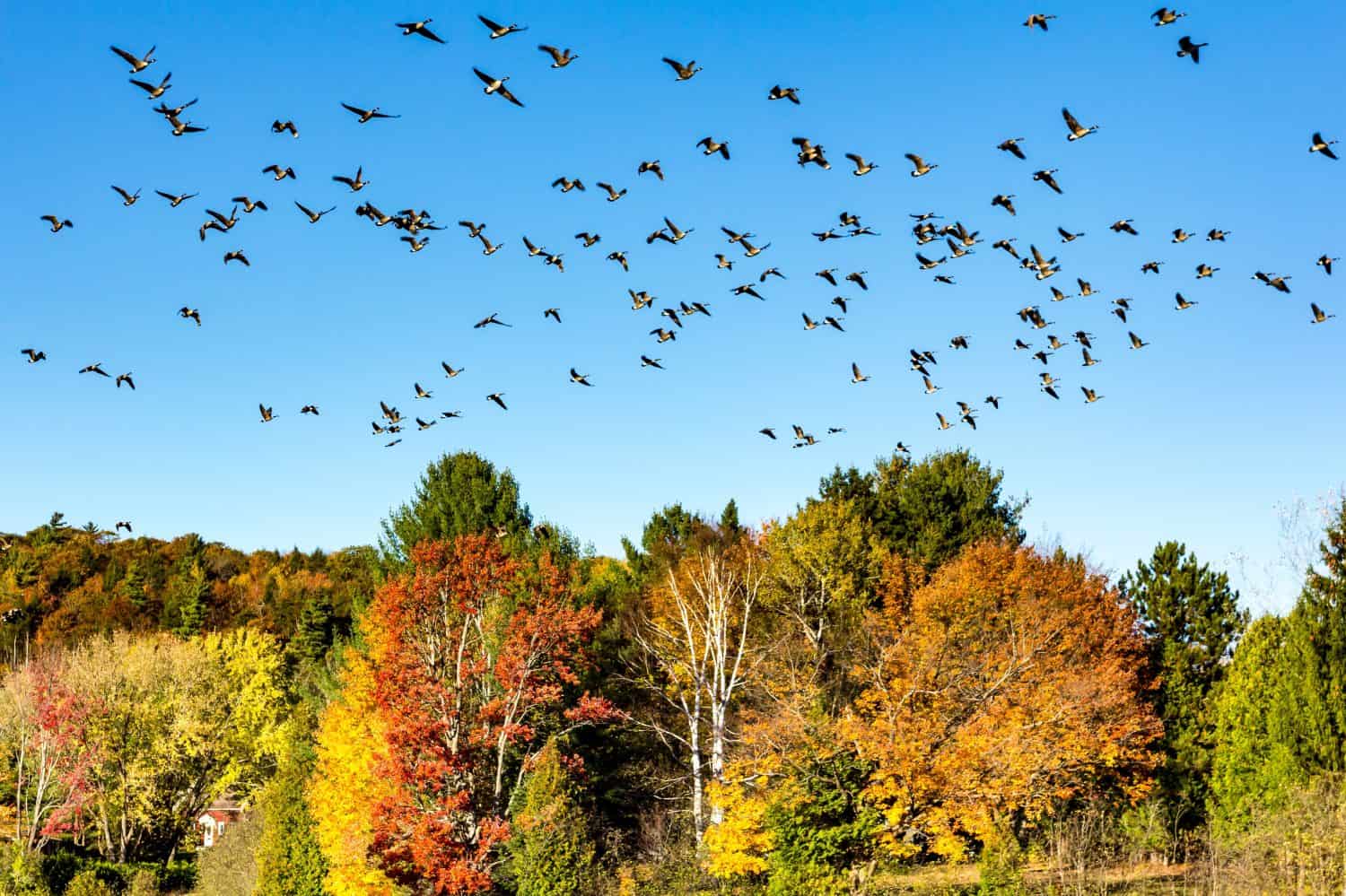
“Many migratory birds include the category of ‘song birds,’” adds David Burrows, founder of Arkearth.org. “Geese are frequently sighted during migration because of their majestic flight patterns and V-shaped groups. Other popular sightings include varieties of orioles, warblers, and the American robin.”
However, he notes that some birds in those categories—especially American robins—choose to overwinter. Overwintering involves remaining in the same region throughout the winter. These birds simply adapt to harsh temperatures and weather conditions, often through insulation, energy conservation, and seeking shelter.
“Migrating species include the barn swallow, eastern kingbird, and American goldfinch,” Burrows continues. “Other migrating birds that pollinate time their trips along paths of blooming plants and cacti. White wing doves, woodpeckers, and some finches are included in this group.”
Why Do Birds Migrate?
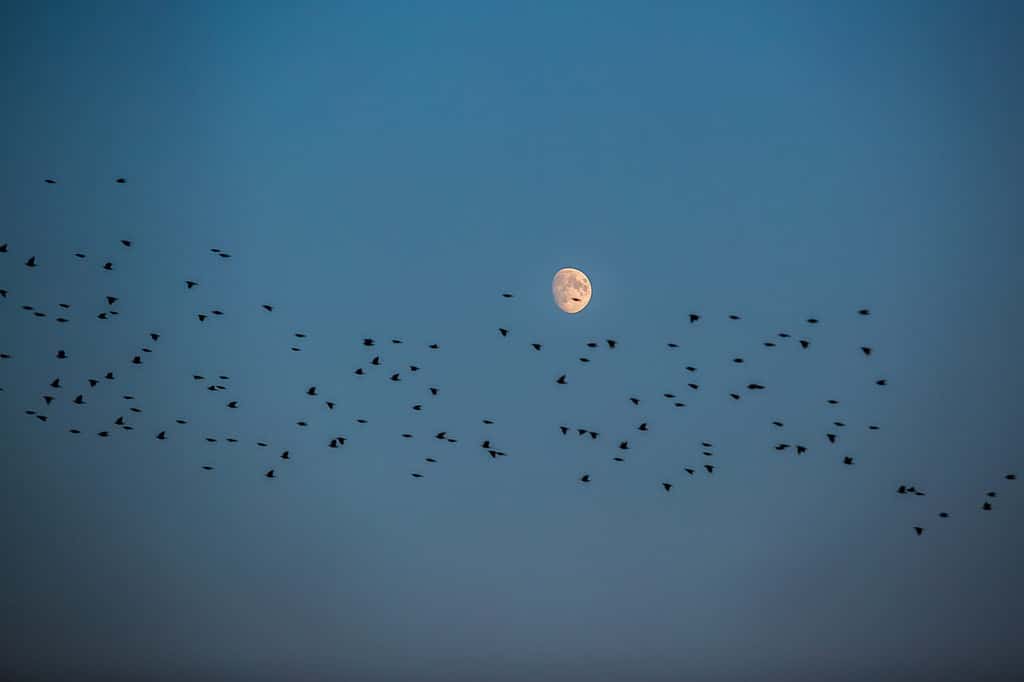
Bird migration is common during the month of October.
©Lioneska/Shutterstock.com
There are many reasons why birds fly south for the winter—and it’s not just due to cold temperatures affecting their health. Mainly, these birds migrate for food and breeding purposes. Because winter often results in scarce insect and plant life, many birds must seek food in warmer locations down south.
“Triggered by a combination of internal biological clocks, daylight changes, and environmental factors like the availability of food, [migratory] species … start their journey from the northeast and head to Mexico, Central, and South America,” says Kelly. “Come spring, they will make the long journey back north to their breeding grounds.”
According to Burrows, this migration back up north usually occurs during March, April, and May.
Contrary to what some might believe, bird migration isn’t just a north-to-south flight. Once warmer weather arrives, many birds will return north for its abundance of food sources.
Consider it this way: if you, yourself, were born in a northern state, you might crave the warmth during winter and flee to a southern state. However, once the weather warms back up in your hometown, you might feel eager to return to your roots. This is often how these migratory birds operate. Once the northeastern states experience warm weather and longer days, the birds are empowered to fly back to their original breeding grounds. Of course, birds have a more instinctual and survival-based reason for migrating.
Come spring, they will make the long journey back north to their breeding grounds.
Lisa Kelly, Animal Care Supervisor at Teatown Lake Reservation
Where Do These Birds Flee To?

It’s easy to see why migratory birds settle in Florida for the winter.
©Timothy OLeary/Shutterstock.com
Now that you know why birds fly south for the winter, you might be wondering where, exactly, they settle during those colder months.
“Birds will migrate from as far as Ontario, Canada, down through the central states, and down into Mexico and even across the Gulf,” says Burrow.
However, they don’t migrate all the way south in one single night. In fact, many birds will stop along their days- and sometimes weeks-long trips. This makes autumn the perfect season for birdwatching, as birds travel along the Atlantic Flyway, which includes all East Coast states, some bordering states, and parts of Canada and the Caribbean.
According to Kelly, “Visiting bird migration hot spots along the Atlantic Flyway: Cape May, New Jersey; Magee Marsh Wildlife Area, Ohio; Central Park, New York City; Blackwater National Wildlife Refuge, Maryland; and Dry Tortugas National Park, Florida during peak migration season is a wonderful way [to] spot many different species as they stop for a much needed rest.”
If you’re looking for a wholesome activity, consider bird-watching in one of these prime locations—you won’t be disappointed.