
Quick Take
- A wheel bug's beak does two completely different jobs, and only one of them involves injecting venom. See how the beak works →
- Wheel bugs will attack prey larger than themselves, and sometimes something even closer to home. Discover their prey choices →
- After a wheel bug finishes feeding, the leftover shell of its victim sticks around far longer than you'd expect, and the reason behind this is surprisingly curious. See what gets left behind →
- Gardeners who spot a wheel bug should think twice before reaching for the pesticide, and the reason why might change how you manage your garden.
As part of the assassin bug family, which includes 200 species found throughout North America, wheel bugs are stealthy killers. They melt their prey alive and consume it from the inside out within moments. Consequently, wheel bugs are among the most revered bugs in the insect world.
Continue reading
Wheel Bug Melts Its Prey from the Inside Out
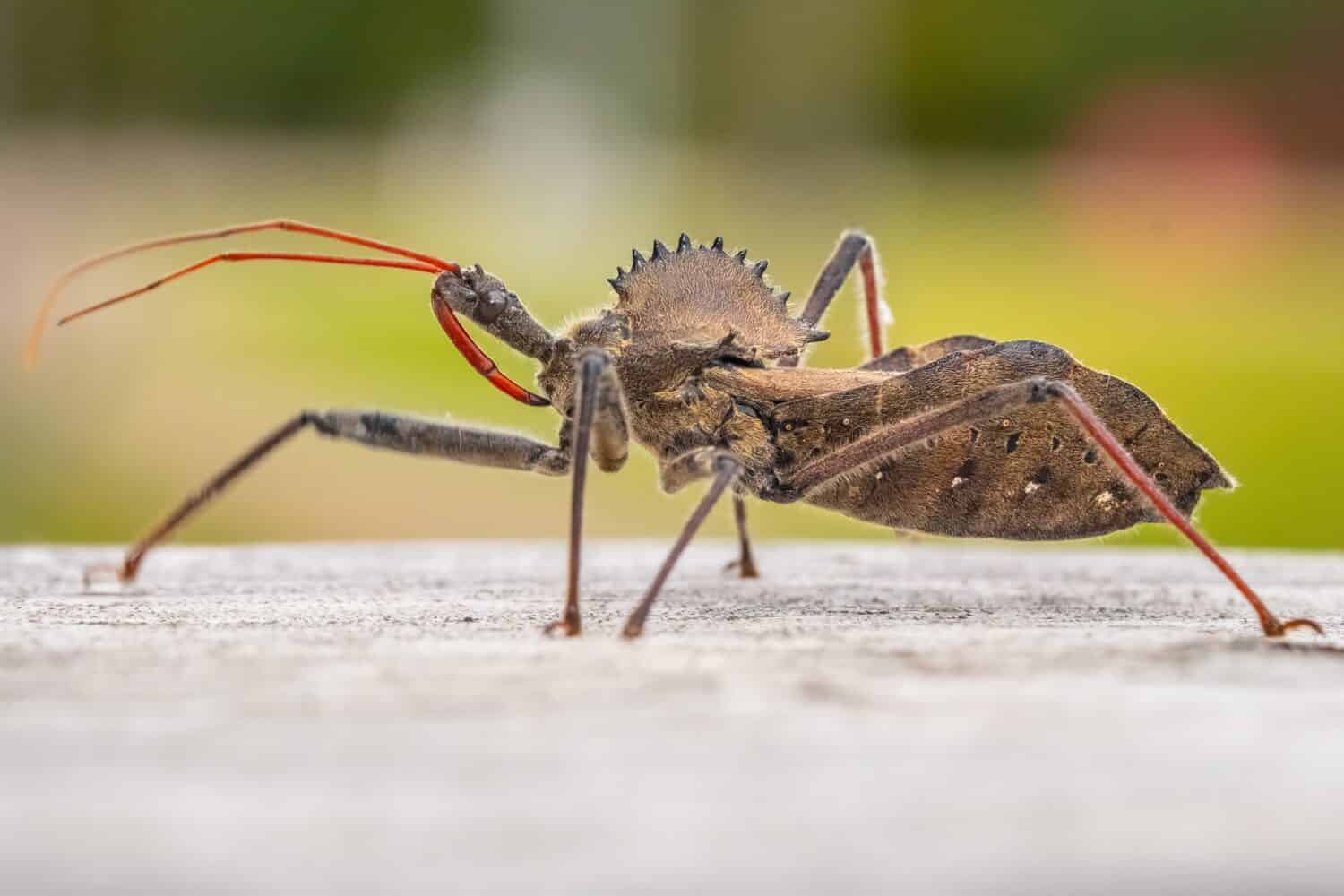
Wheel bugs are 1.5-inch fearsome ambush predators. Consequently, they rely on their keen eyesight to find their prey. Once an insect is located, wheel bugs move slowly until they are within striking distance to grab their victim before it even realizes what happened.
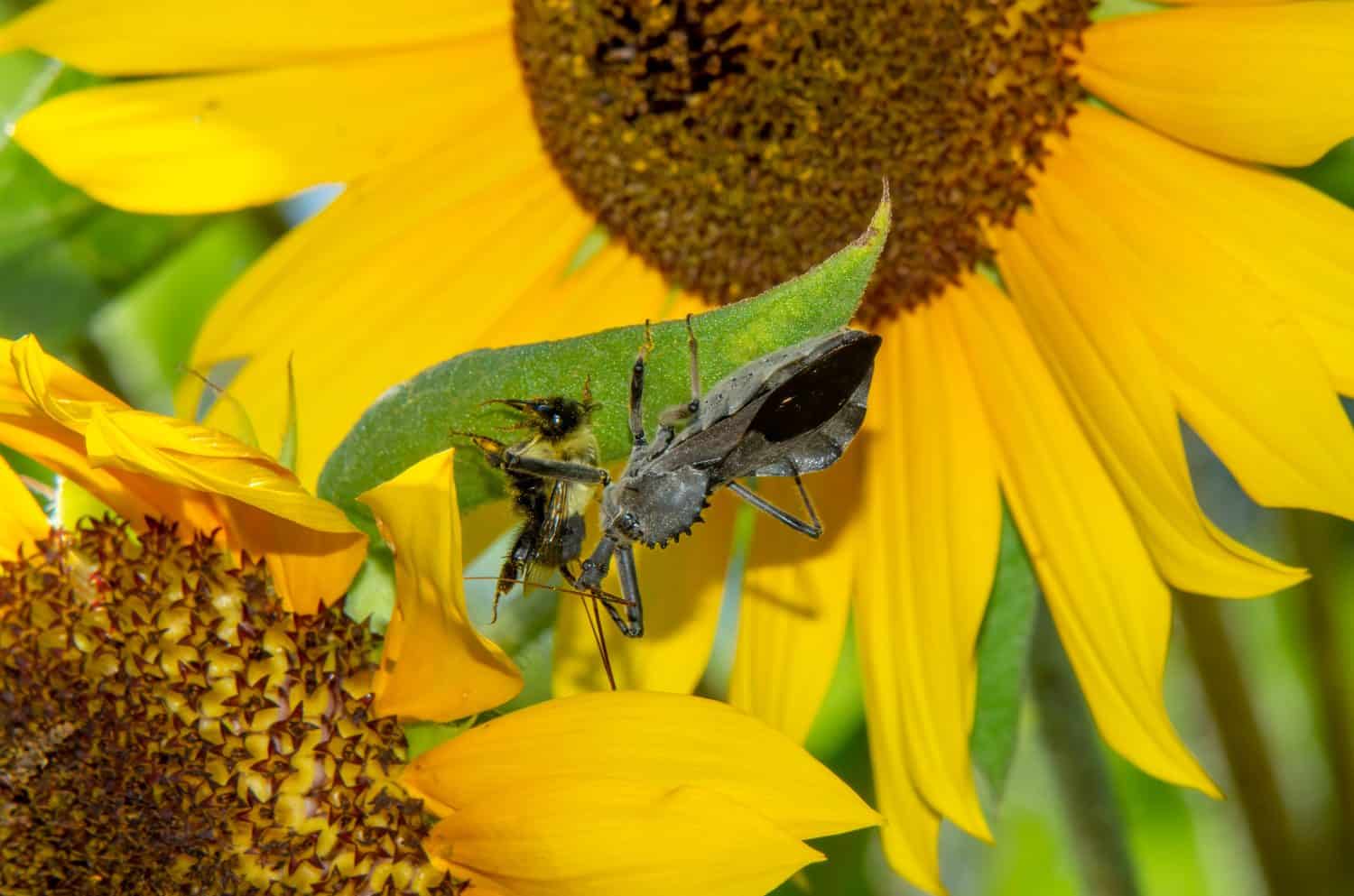
Wheel bugs use their beak to pierce the prey’s skin to inject a combination of enzymes and toxins to paralyze the prey and break down internal tissue.
©Georgi Baird/Shutterstock.com
After the prey is grasped by the wheel bug’s raptorial or clutching front legs, the wheel bug uses its beak, comprised of three segments, to pierce the prey’s skin. The wheel bug then injects enzymes and toxins that both paralyze the prey and break it down internally.
The wheel bug waits until the internal tissue is liquified, then sucks it out with the unused segment of its beak. The meal goes directly to the wheel bug’s stomach, a process that takes only minutes to complete from start to finish.
How Do Wheel Bugs Target Their Prey?
Wheel bugs are not discerning when it comes to prey. They are generalist predators, meaning they will take on prey both smaller and larger than themselves.
Some of the prey that wheel bugs are known to commonly target include:
- Aphids
- Beetles
- Caterpillars
- Flies
- Leafhoppers
- Moths
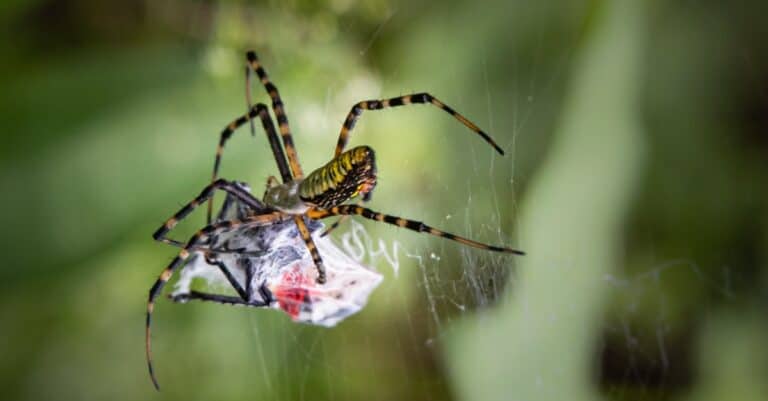
- Spiders
- Stink bugs
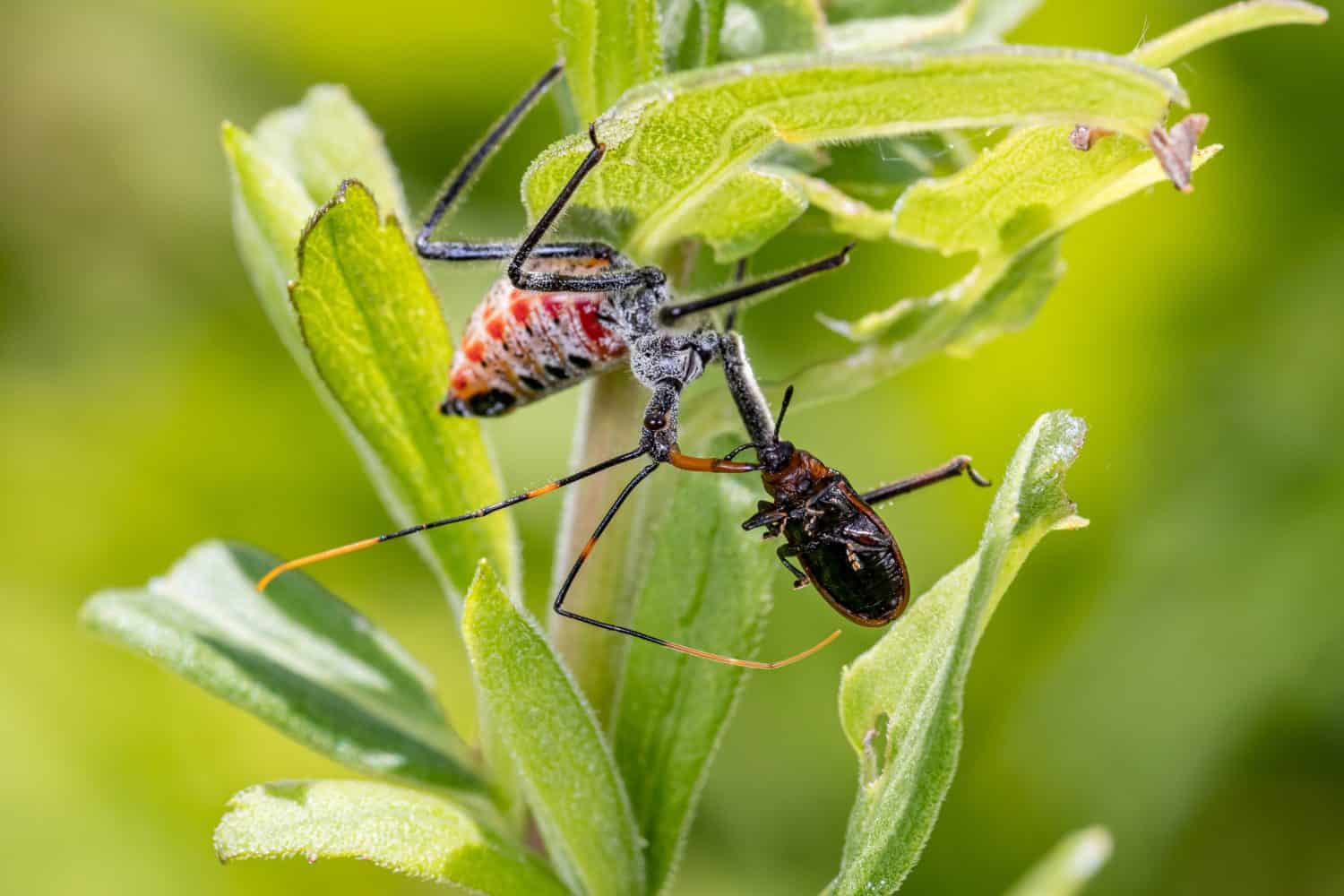
Wheel bugs eat a variety of insects and even other wheel bugs, if the opportunity presents.
©J.J. Gouin/Shutterstock.com
Wheel bugs are cannibalistic. Therefore, they will go after other wheel bugs if presented with the opportunity.
Given the wheel bug’s diet, it is easy to see why they are seen as a welcome insect rather than a pest, especially for those who choose to garden without pesticides. The wheel bug is a terrifying predator to many different species.
What Wheel Bugs Do with Their Prey’s Remains
After the wheel bug is done consuming the inside of its prey, they do not use the remains. Instead, the victim’s exoskeleton is unceremoniously tossed aside as the assassin bug looks for its next victim.
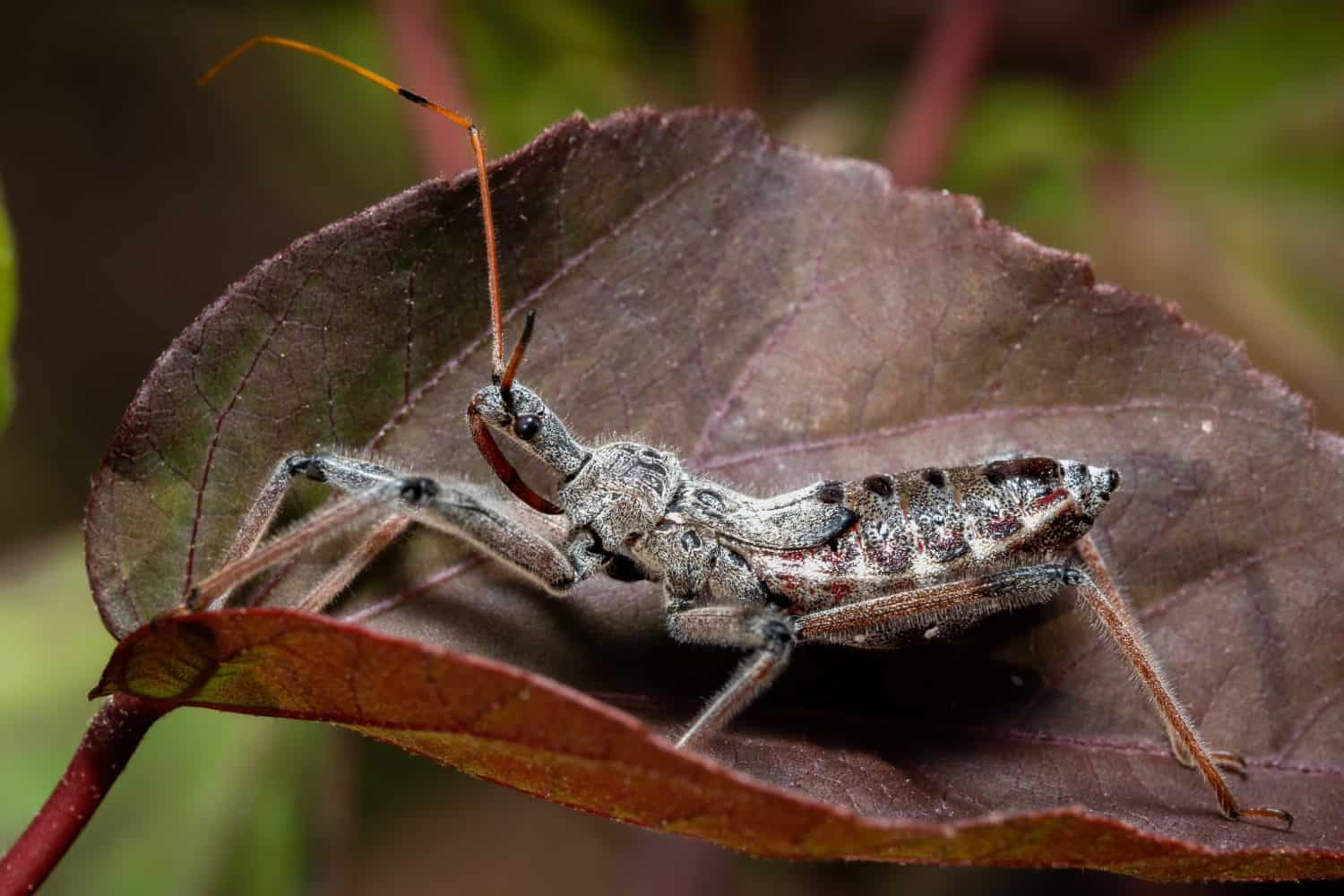
When they are done feeding, wheel bugs discard their prey’s exoskeleton.
©samray/Shutterstock.com
Once the prey is captured and immobilized, it is just a matter of moments before the outer portion of its body becomes nothing more than a near-empty vessel. This typically consists of the exoskeleton and internal structures that were not broken down by the wheel bug’s digestive enzymes.
After the liquefied internal tissues are consumed, the rest of the prey is discarded. Because what remains is only mineralized, it will not break down quickly. Instead, it will take microorganisms to break down the prey’s exoskeleton, and the resulting nutrients will eventually be returned to the earth, making the soil more fertile.