
Quick Take
- A sidewalk gave away a python's secret nursery, and getting her out of it came with a painful price for the person who tried. See the discovery details →
- When a Burmese python chose a manmade structure over natural terrain, it was not random. There was a calculated reason behind hiding under concrete. Why concrete makes ideal nesting →
- Florida's invasive python problem is bigger than most people realize, and nesting season makes it dramatically worse. Explore Florida's python problem →
- Mother Burmese pythons display a level of parental devotion that most people would never expect from a reptile. See python maternal behavior →
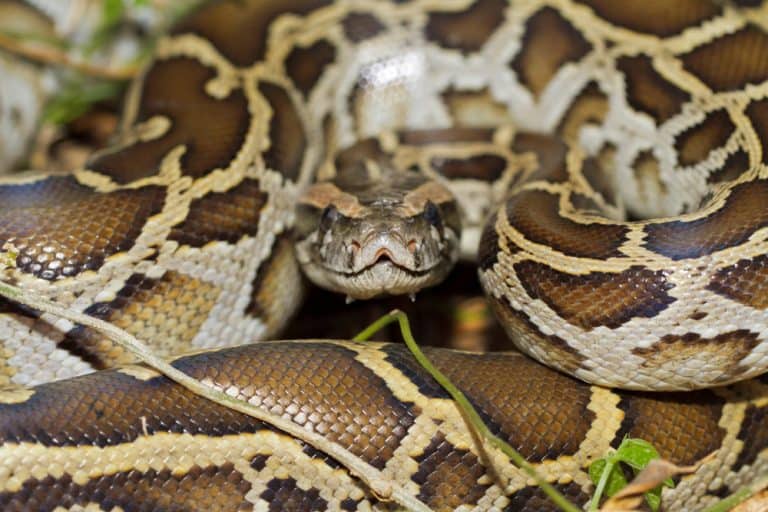
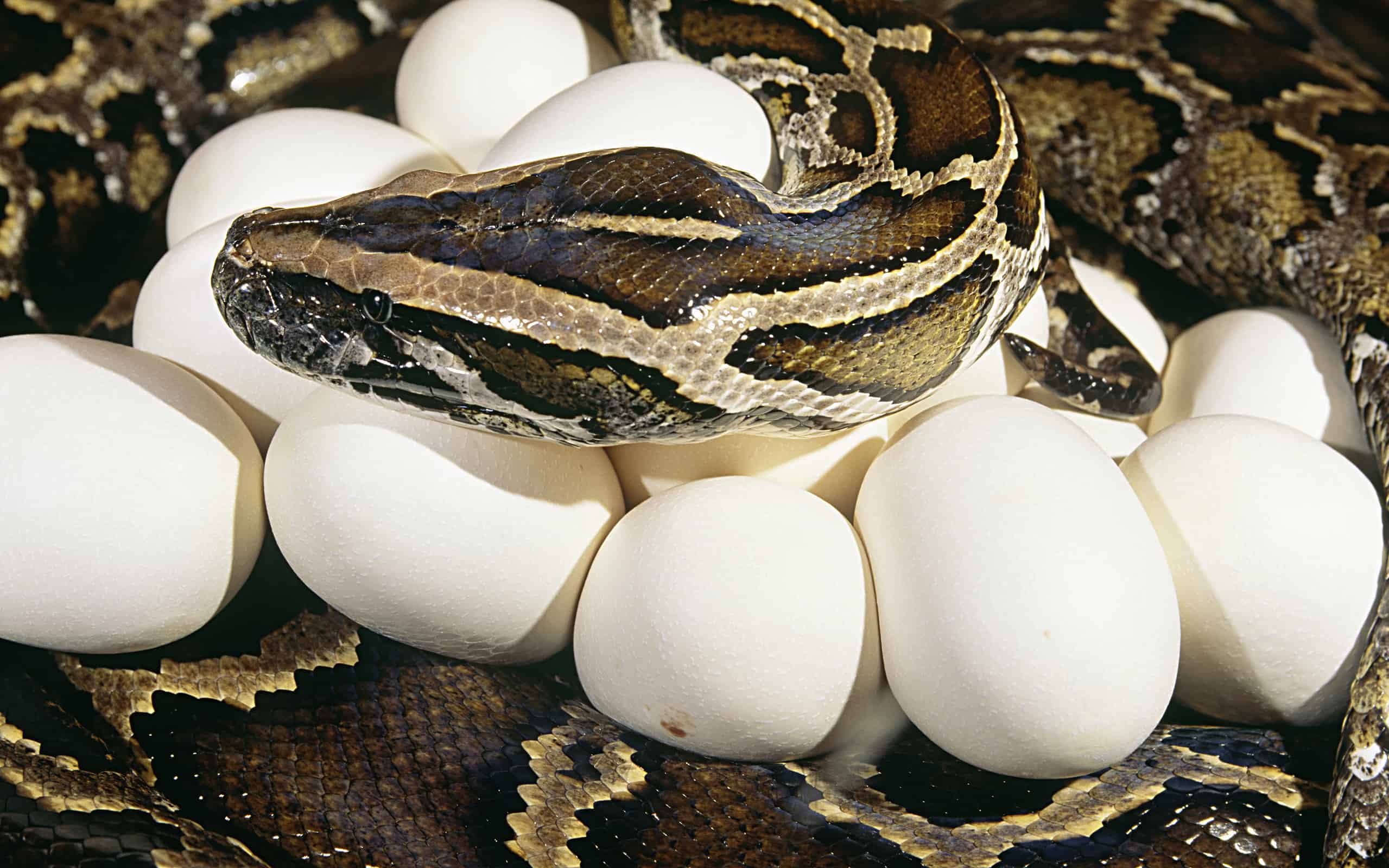
Some movement beneath a concrete sidewalk in South Florida turned out to be a mother Burmese python and her 20 eggs, according to a Miami Herald news report. We explain how this remarkable discovery was made and whether this is typical behavior for this invasive species.
How Was the Python Found Under a Sidewalk?
A local resident, Eyi Danielo, was strolling along Southwest 216th Street in Cutler Bay, Miami-Dade County, in late May when he noticed the extraordinary sight of half a snake’s body along a fence. The other half was beneath the concrete sidewalk. He posted footage of the scene on his social media account and alerted the Florida Fish and Wildlife Conservation Commission (FWC).
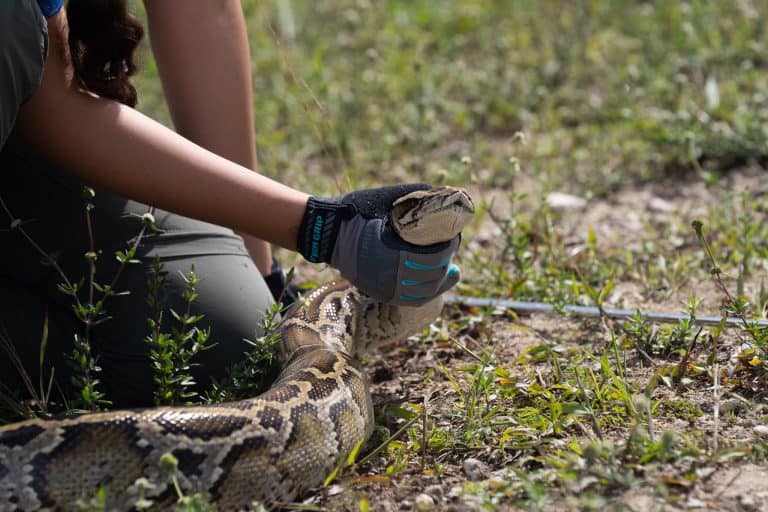
Guillermo Tapanes, an experienced contractor with the South Florida Water Management District’s (SFWMD) python removal program, arrived to remove the snake, but she put up a fight. The protective mother bit Tapanes on his right hand as he tried to get her out from under the sidewalk. A bit later, he found 20 eggs.
According to the SFWMD python removal program, Burmese pythons are a regulated species and must be humanely euthanized after capture. Eggs are also typically destroyed to prevent further spread of the species.
Burmese Python Nesting Season in Florida
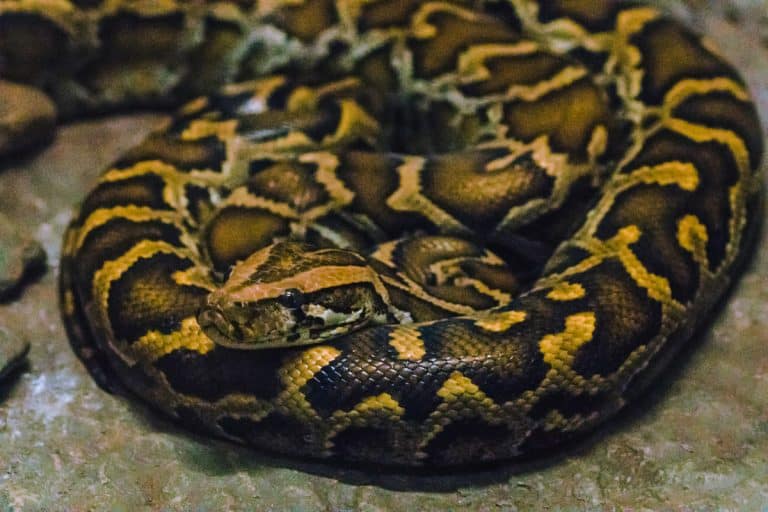
Invasive Burmese pythons thrive in the subtropical climate and habitats in Florida and are happy to breed and nest here. The females are larger than the males and can reach 19 feet in length! They mature at between 24 and 36 months of age and can have their first clutch of eggs when they are around three years old. Larger mothers have larger clutch sizes, and some have had nests with up to 80 eggs in them.
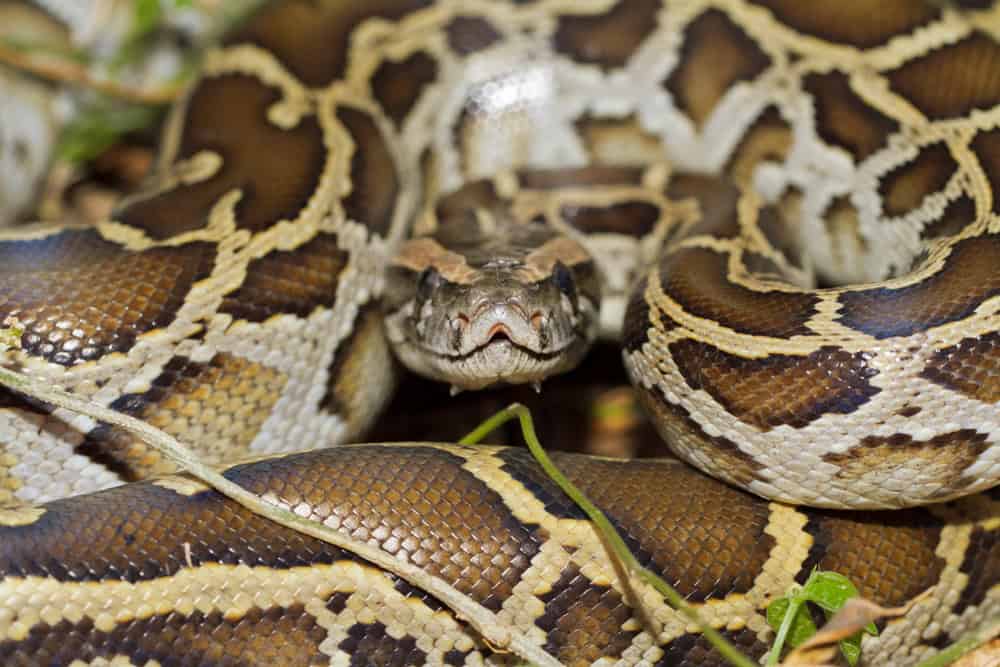
Burmese python mothers defend their nests.
©dwi putra stock/Shutterstock.com
Nesting in manmade structures such as concrete pipes has been recorded in these snakes before. One study describes how this sort of nesting site provides a secure and defendable location for a nest. When a snake is in a pipe, threats can only come from two directions, making it easier for her to focus on keeping the eggs warm.
Springtime is peak nesting season. The python mothers show a high degree of parental care. They maintain the nest temperature, prevent the eggs from drying out, and will vigorously protect the eggs from predators. As Guillermo Tapanes found out firsthand!