
Quick Take
- The same weather that makes summer feel perfect is exactly what's behind the yellowjacket explosion, and the connection turns out to be more counterintuitive than it looks. See the weather connection →
- Most people assume a yellowjacket sting works like a bee sting, but they are wrong, and the difference matters a lot this summer. Understand the sting danger →
- Dry conditions aren't just uncomfortable. They're pushing yellowjackets into your yard in ways that make a sting far more likely than usual. See how dry conditions help →
- If you spot yellowjackets clustering near one spot on your property, your first instinct about what to do is probably the worst move you can make. Find the safer response →
Pacific Northwest residents may need to rethink their outdoor plans this summer. Yellowjackets are surging across the Pacific Northwest, forming colonies at unprecedented rates, leaving many wondering why the population boom is happening now.
Yellowjacket Colonies Are Increasing at an Alarming Rate in the Pacific Northwest
Just as summer began to get underway, residents of the Pacific Northwest found themselves inundated with what felt like more yellowjackets than in past years. This was not just a figment of their imagination. Yellowjacket colonies have surged this summer in the region.
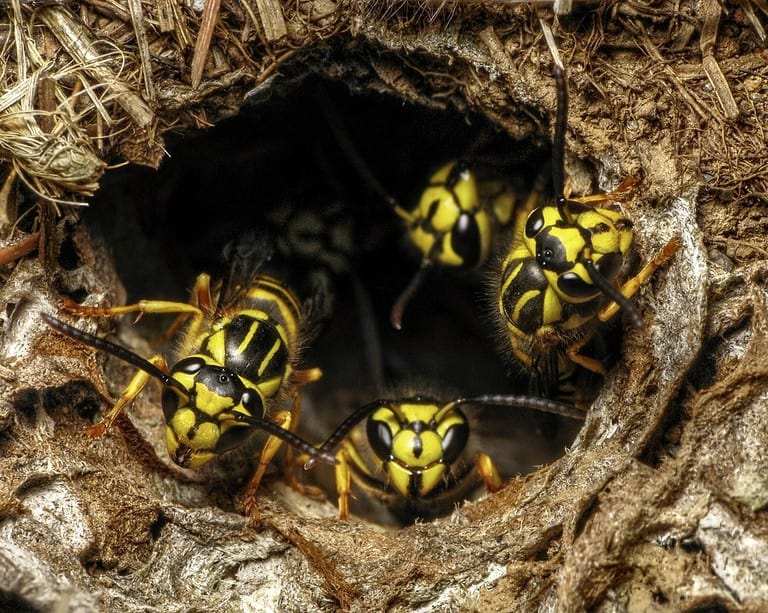
Once a colony is established, it can grow rapidly. Bill Ruhl, owner of Bee Control Northwest, recently removed a colony in Northwest Portland that was producing 100 new yellowjackets each day. This not only increases the local yellowjacket population but also makes the insects more aggressive and active.
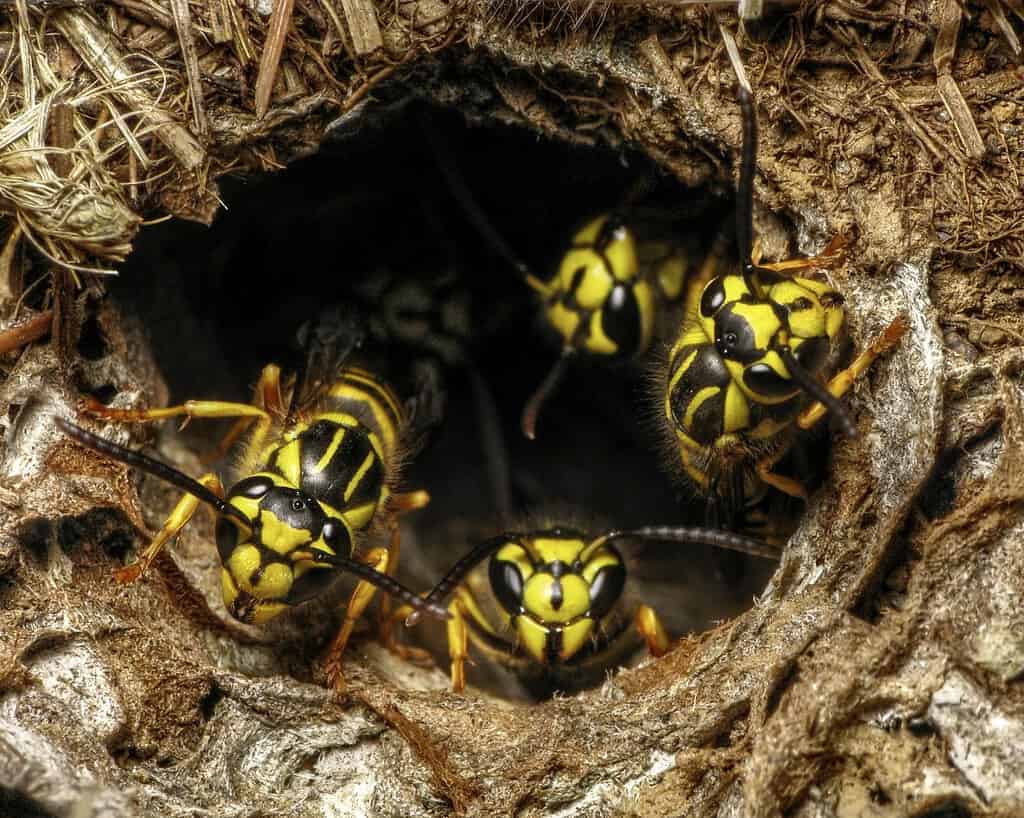
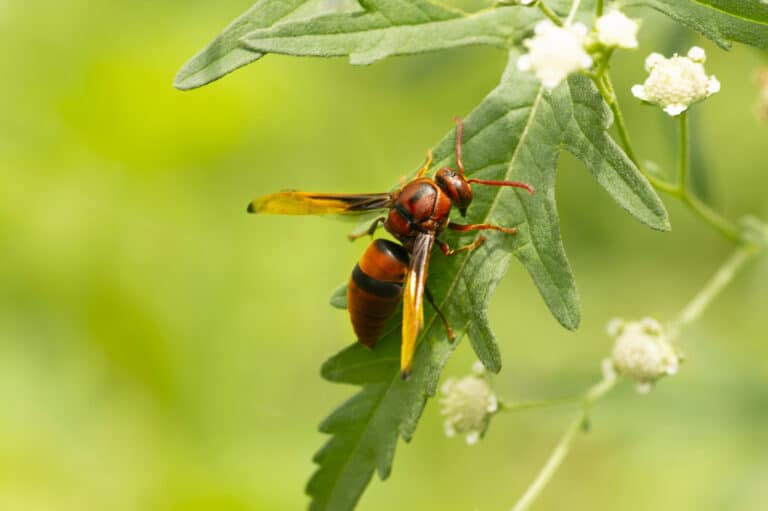
An unprecedented number of yellowjacket nests are popping up across the Pacific Northwest.
©Sean McVey/Shutterstock.com
“The nests get more and more aggressive because they have all these extra mouths to feed,” Ruhl explained to KGW8. “Then they just become annoying.”
For some, yellowjackets are not only annoying but also life-threatening. Those allergic to stings need to be especially careful this summer, as yellowjackets, unlike honeybees, can sting repeatedly. Not only can they sting up to six times in a row before their venom is gone, but they also regenerate venom to sting another day.
Warm, Dry Weather Led to Strong, Healthy Colonies
The Pacific Northwest is not typically known for warm, dry weather. This spring, however, the region experienced this weather. The result is now an overwhelming number of yellowjackets.
When the weather is wet and cool, queen yellowjackets do not always survive the winter. But because the Pacific Northwest had higher-than-average temperatures in the winter and less snowfall, more queens survived. As spring arrived, these queens emerged.
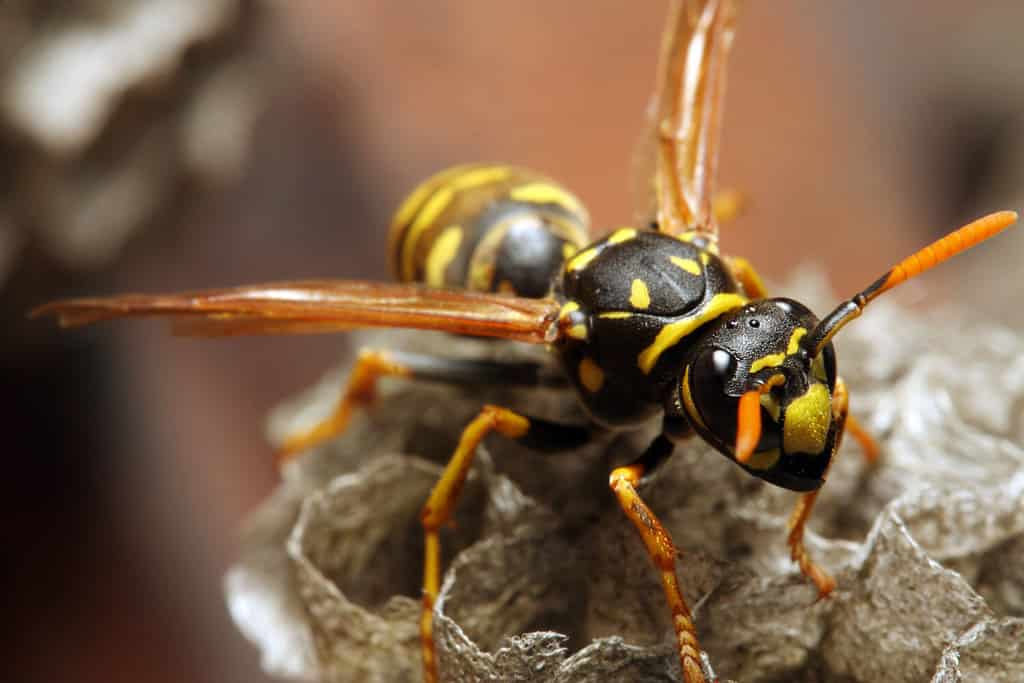
Thanks to a mild winter, more yellowjacket queens survived and could begin building nests earlier.
©Kletr/Shutterstock.com
The mild winter led to a spring with warmer temperatures and below-average rainfall. Queen yellowjackets were able to begin building their nests and foraging early. As a result, peak yellowjacket season arrived much earlier than usual, rather than at the end of summer or the beginning of fall.
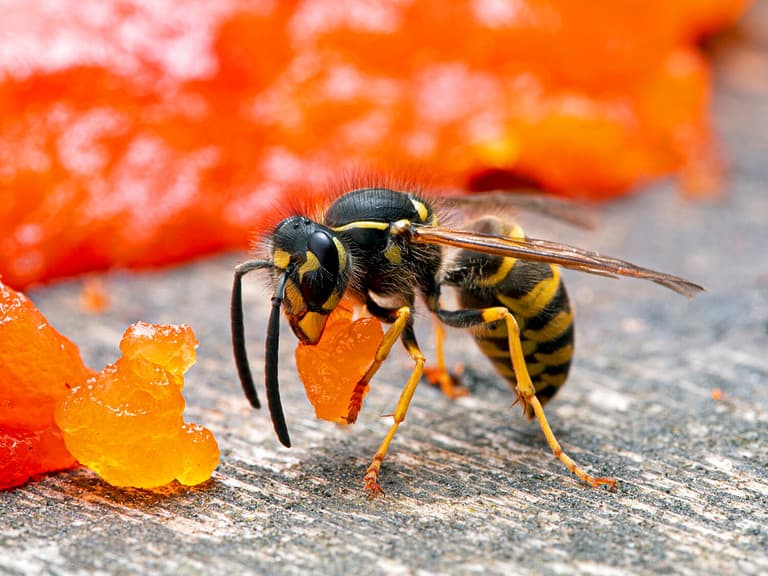
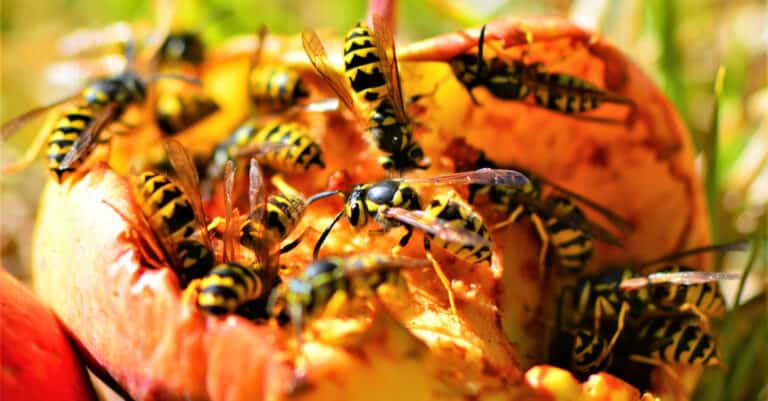
Due to the dry weather, there is less natural food available for yellowjackets to forage. As a result, they are more likely to scavenge for food in places like trash cans, picnics, or around sugary drinks. This increases the chances of yellowjacket-human conflict and the potential for homeowners to be stung.
What Can Homeowners Do to Protect Themselves From Yellowjackets?
Yellowjackets are widespread across the United States. This means that homeowners not only in the Pacific Northwest but also in other parts of the country should understand how to protect themselves from yellowjackets this summer.
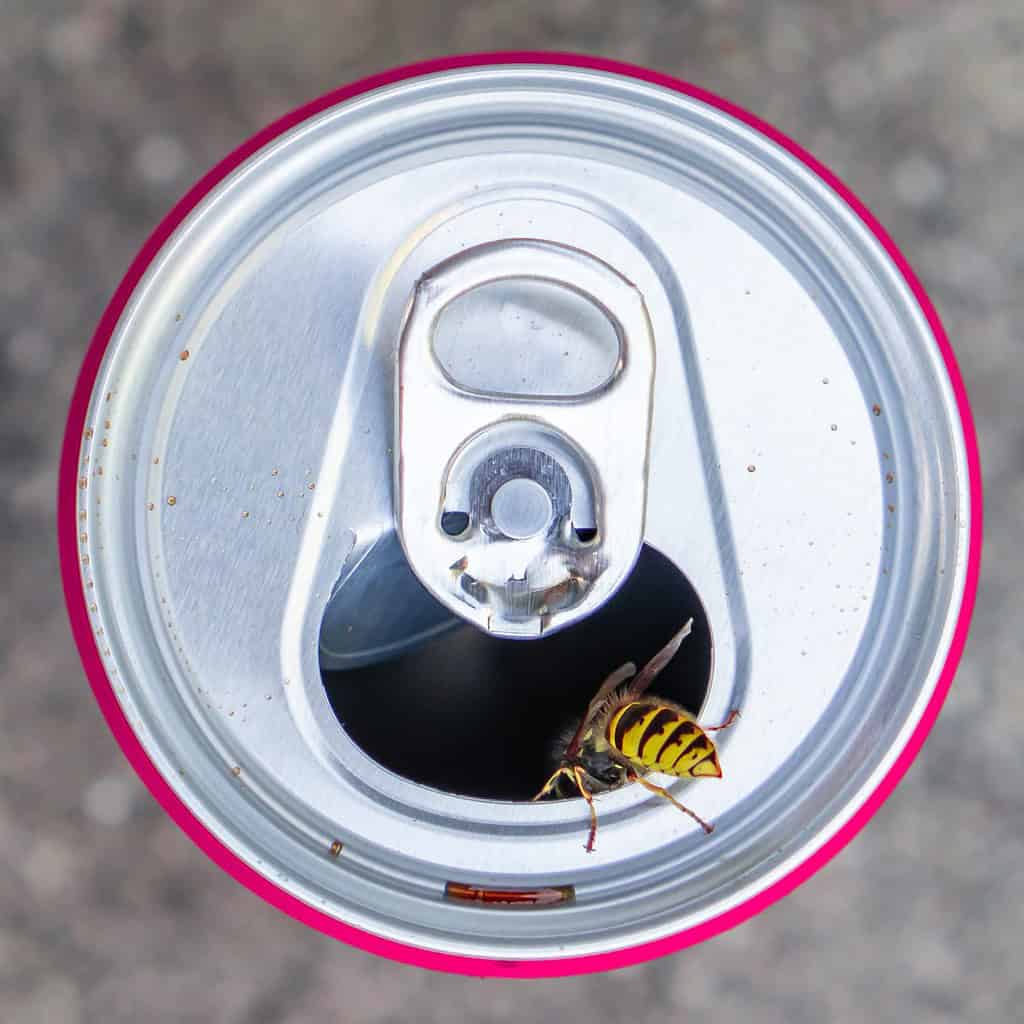
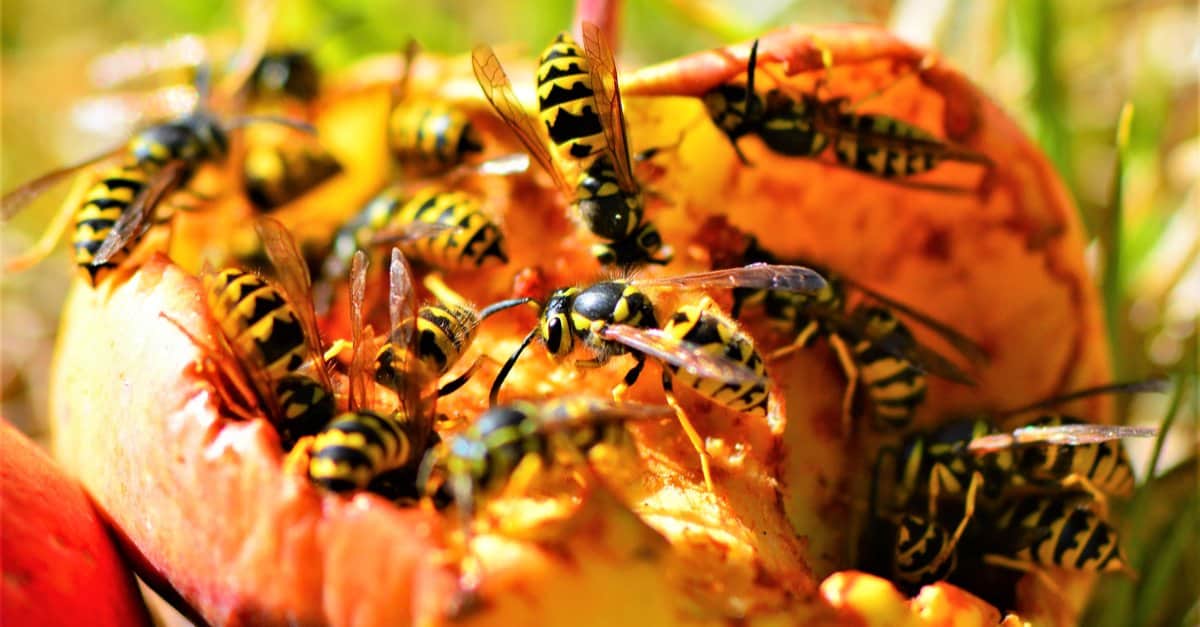
Removing trash, bringing in pet food, and not allowing standing water in the yard can reduce interactions with yellowjackets.
©A. Kiro/Shutterstock.com
The best ways to keep yellowjackets from attacking this summer include:
- Bring pet food indoors
- Clean up food and drink, especially protein and sugary foods, immediately when outdoors
- Keep yards clear of leaf debris
- Trim shrubbery
- Use multiple traps around the home
- Do not allow standing water in the yard
- Repair leaky pipes
- Seal any entry points into a home that yellowjackets can squeeze into
If you notice multiple yellowjackets returning to the same location after investigating, it likely means there is a colony present. Homeowners should not attempt to remove the colony themselves, as this can make the yellowjackets more aggressive. Instead, contact a professional to eliminate the colony before it grows larger.