Moths are a group of insects in the Lepidoptera order and are often viewed as the plainer relatives of the more glamorous butterfly. However, moths are important animals in their own right. They play a vital role in ecosystems as pollinators and pest controllers, and they are also an important food source for many birds, mammals, reptiles, and other insects. Of course, becoming a meal for another animal is not exactly good for the moth! So, many of them have evolved elaborate appearances that make them look like inedible objects or even predators. Let’s meet just a few of the genius moths that are masters of disguise!
Buff-Tip Moth (Phalera bucephala)
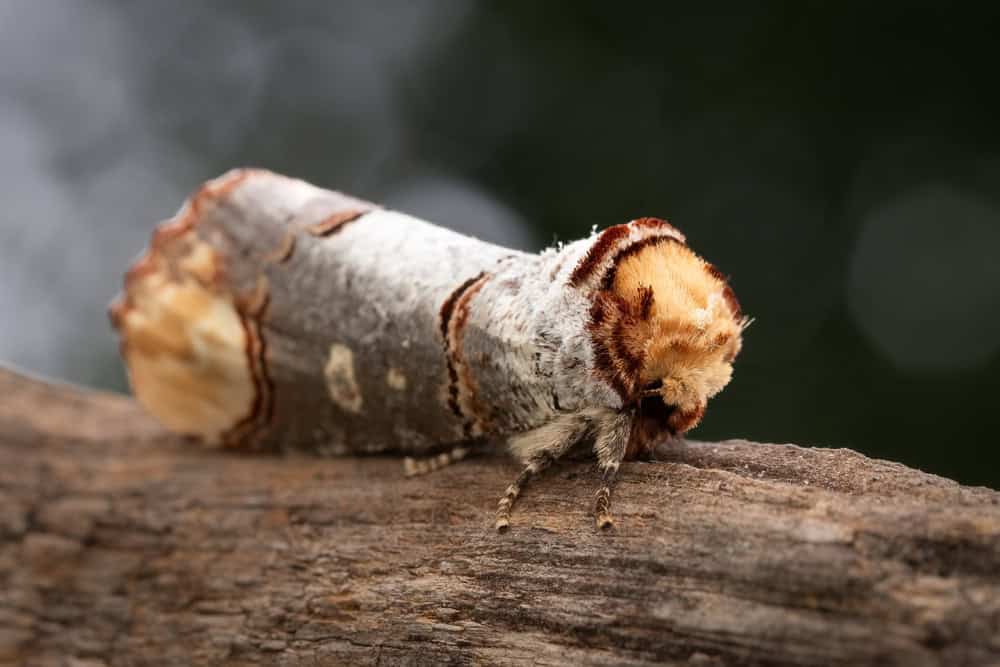
A birch twig or a buff-tip moth?
©Noppe Herlinde/Shutterstock.com
The buff-tip moth occurs throughout Europe and extends into Asia as far as eastern Siberia. The adult moths have a wingspan of between 1.7 and 2.6 inches. They are seen in their range between May and July and fly around at night. You may see them in grasslands, farmland, wetlands, woodland, and in towns and gardens. However, you are very likely to miss them altogether. When they hold their wings against their body, they look exactly like a broken birch twig, thanks to their silvery-grey color, square-cut, buffy head, and a buff patch at the end of the wings. This appearance is designed to deter birds, bats, and rodents that feed on them.
Owl Moth (Brahmaea wallichii)
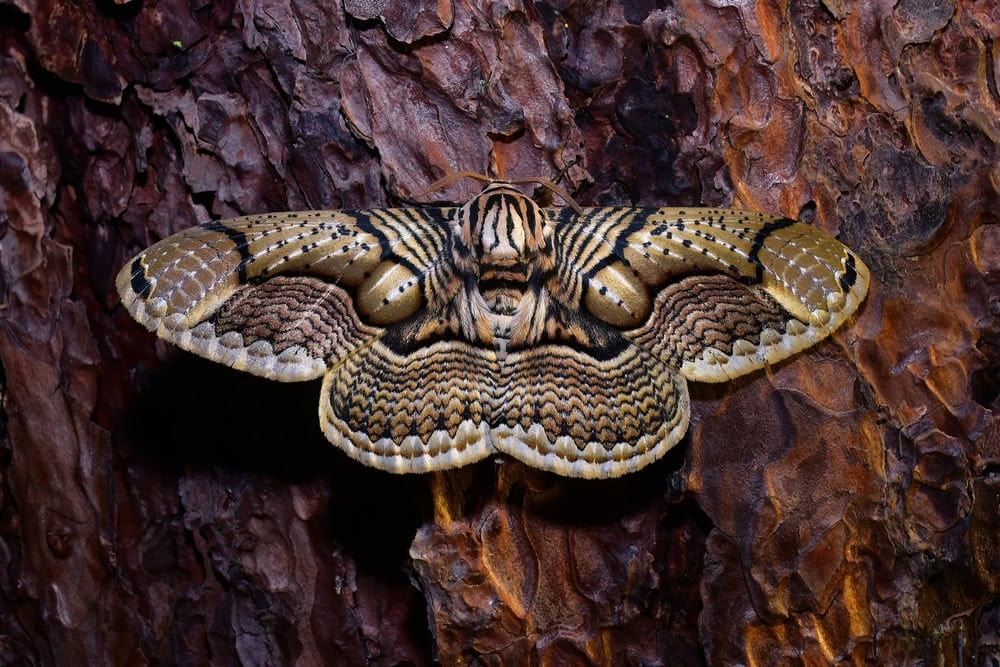
Owl moths have scary eyes.
©Butterfly Hunter/Shutterstock.com
Several different species are called owl moths, but here we are focusing on one of the largest Brahmin moths. It is found in India, Nepal, Bhutan, Myanmar, China, Taiwan, and Japan. Their wingspan is between 3.5 and 6.25 inches, and they are active at night. Their habitats are tropical and temperate forests. During the day, they rest with their wings outstretched on trees or on the ground. They rely on the pattern on their wings to keep them safe.
Their well-developed eyespot markings stand out against a black-brown striped pattern with light-brown margins. If they are disturbed, they shake violently. This puts predators off by making them look like a frightening creature. The eyespots may also draw attention away from the more vital parts of their body.
Hummingbird Hawk-Moth (Macroglossum stellatarum)
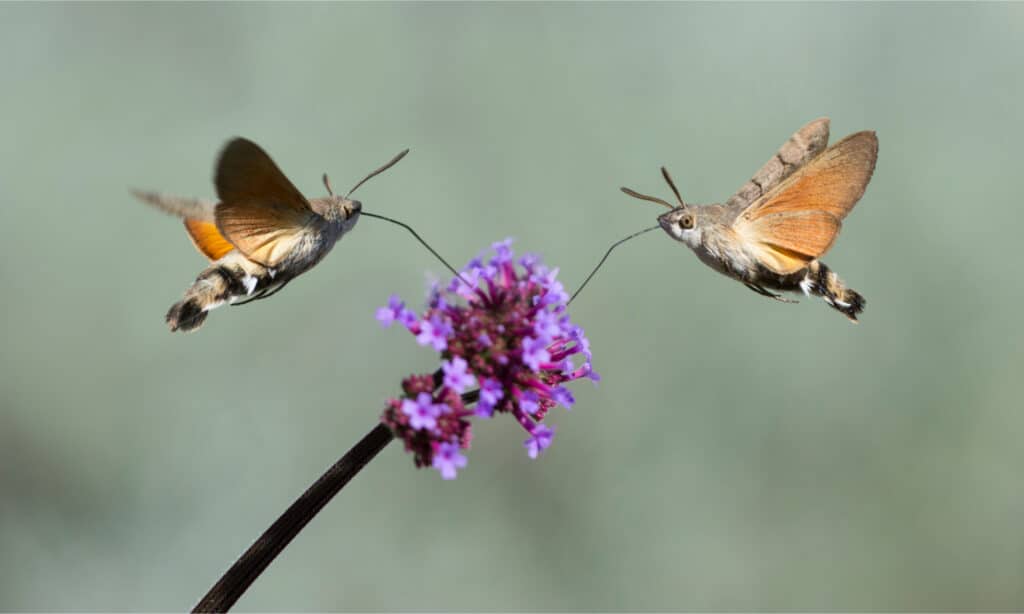
Hummingbird hawk-moths feed on nectar.
©Kuttelvaserova Stuchelova/Shutterstock.com
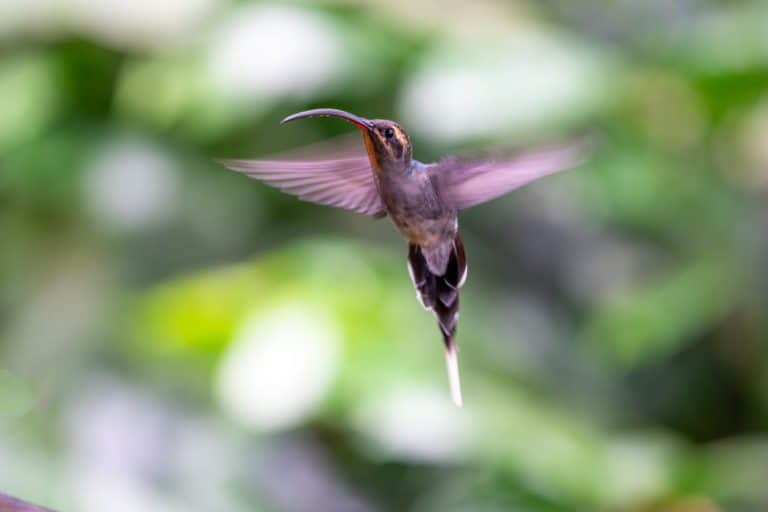
No prizes for guessing what the hummingbird hawk moth looks like! They are found across the temperate regions of Eurasia, from Portugal to Japan. These moths live in woodlands, bushes, parks, and gardens. Their forewings are brown, but their hindwings are orange with a black edge. They also have a broad abdomen that makes them look even more like a bird. Not only do these moths look like hummingbirds, but they also behave like them. They hover in front of flowers and use their long proboscis to feed on nectar.
Hornet Moth (Sesia apiformis)
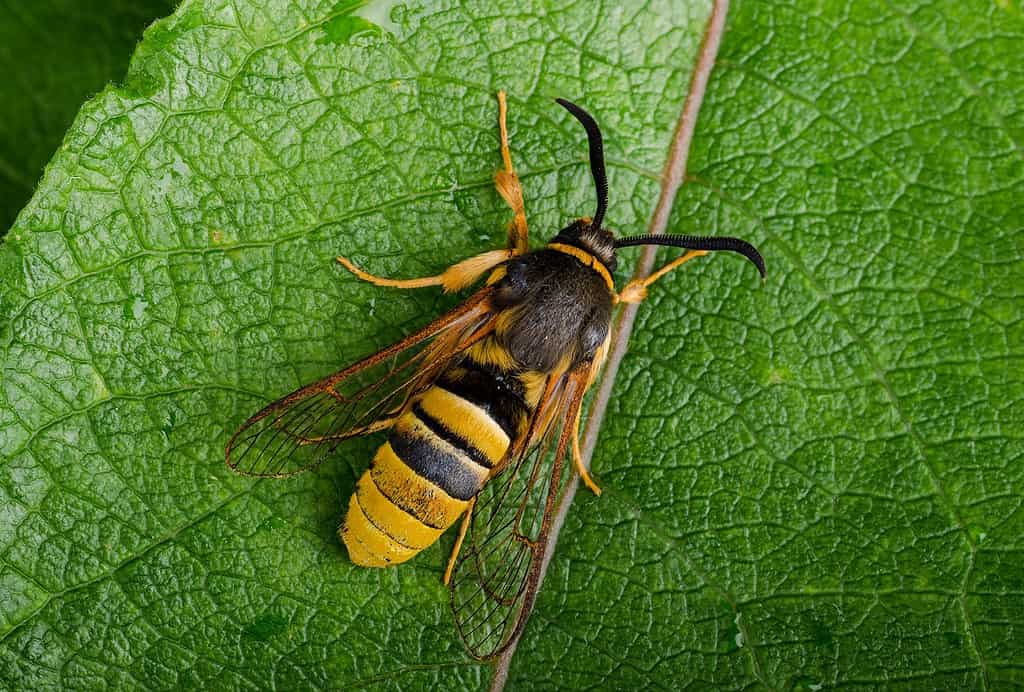
Hornet moths lack a waist.
©DJTaylor/Shutterstock.com
Also called hornet clearwings, these moths are a native species of Europe and the Middle East, but they have also been introduced to North America. Their preference is for open areas, so you can spot them on golf courses and parks as well as in marshy areas. Adult hornet moths emerge between mid-June and July and look startlingly similar to hornets! They are the same size and fly in a similar way, but if you look closely, there are subtle differences. The moth does not have the waist between the abdomen and thorax that you see in a hornet. Nevertheless, this is a superb example of Batesian mimicry, when a harmless animal impersonates a dangerous one in order to avoid attackers.
Beautiful Wood-Nymph (Eudryas grata)
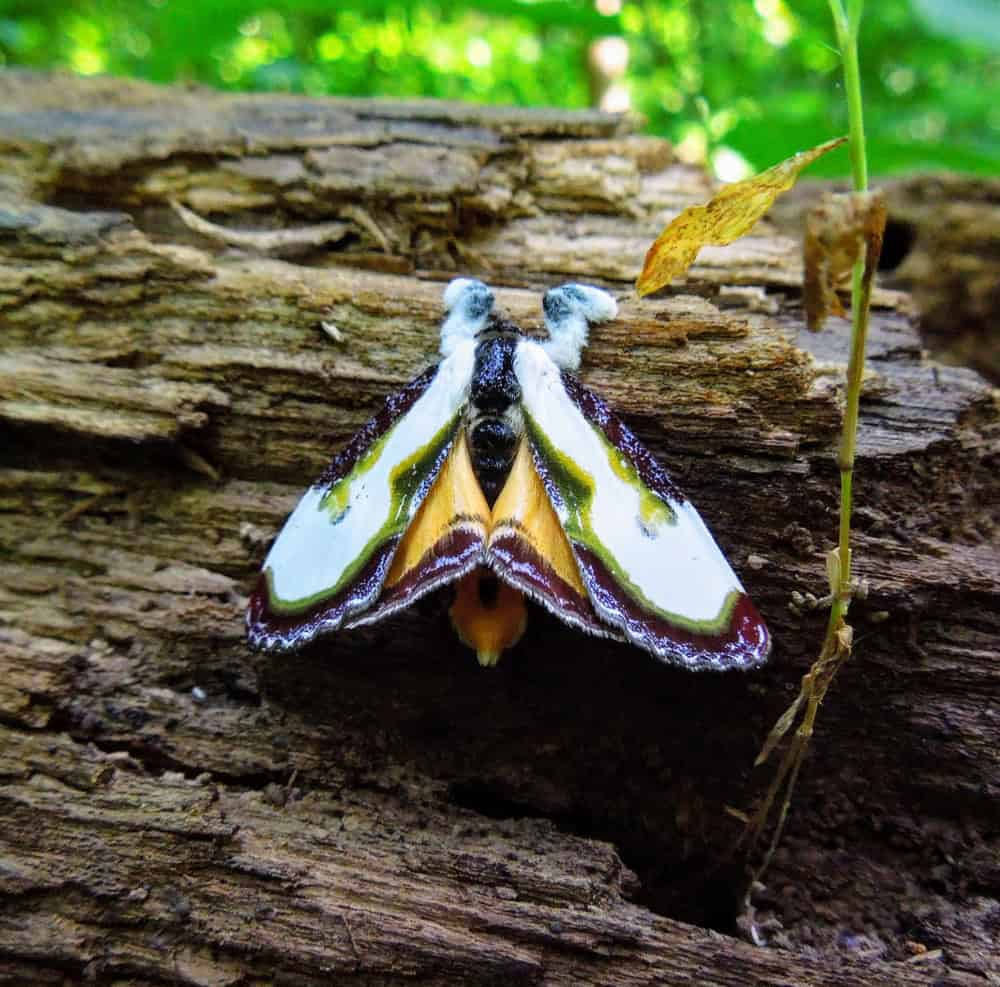
Predators are unlikely to investigate bird poop.
©daniellepricephotography/Shutterstock.com
Despite its slightly misleading name, the beautiful wood nymph is not what most would consider classically beautiful. It resembles a dollop of bird poop! These moths are found from Nova Scotia to Florida and west through southern Ontario to Minnesota, ranging south to Texas. In the northern part of their range, they have one flight that takes place between May and August. When at rest, they roll up their wings into an elongated shape that resembles bird poop. The rather haphazard arrangement of browns, yellows, whites, and blacks on their wings, together with a total length of around 1.3 inches to 1.8 inches, creates a very convincing representation of bird feces. Predators are unlikely to investigate a pile of bird droppings, as it has little nutritional value for them. This is a great example of hiding in plain sight.
Metalmark Moth (Brenthia coronigera)
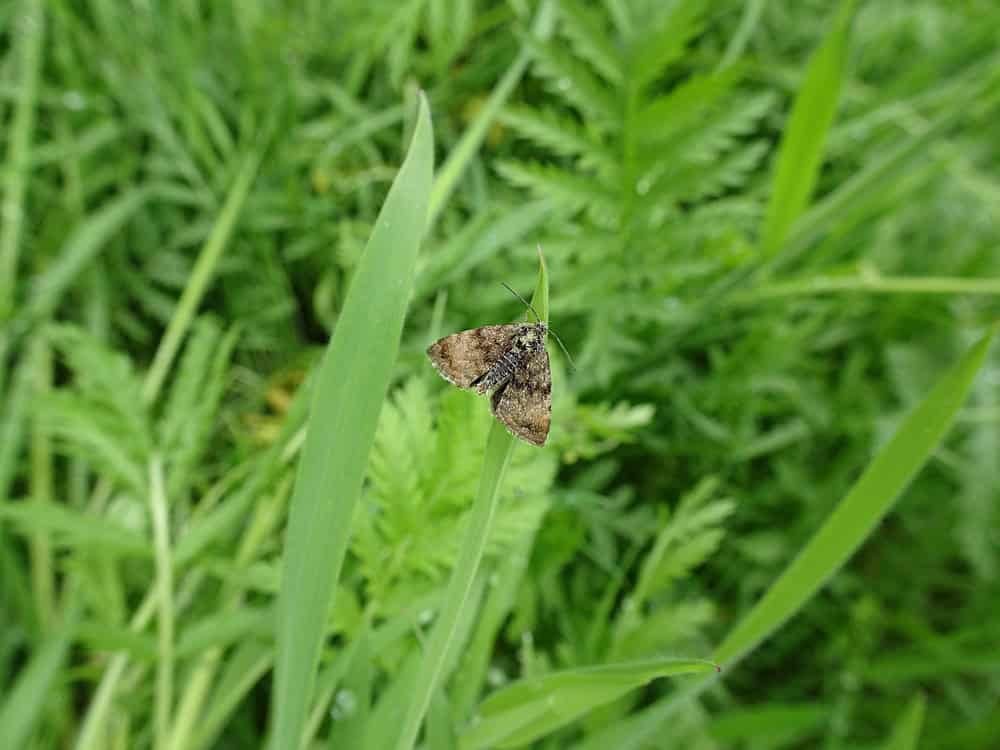
Mimicking its attacker keeps the metalmark moth safe.
©Christoph Bunte/Shutterstock.com
What better way to evade an enemy than by mimicking that same would-be attacker? The metalmark moth looks and acts so much like its spider predator that it even receives romantic advances from male spiders! This fascinating moth has ‘eyes’ on its wings on both sides, so it looks like a spider from both directions. It also has a contorted, striped pattern that mimics hairy legs, and makes jerky spider-like movements.