
Birds are found all over the world, and in virtually every habitat. They are some of the most beautiful animals, soaring through the sky. But did you know that some birds have wingspans almost as long as a Mini Cooper car? So, let’s find out exactly which birds are the largest flying birds in the world!
10. Northern Royal Albatross
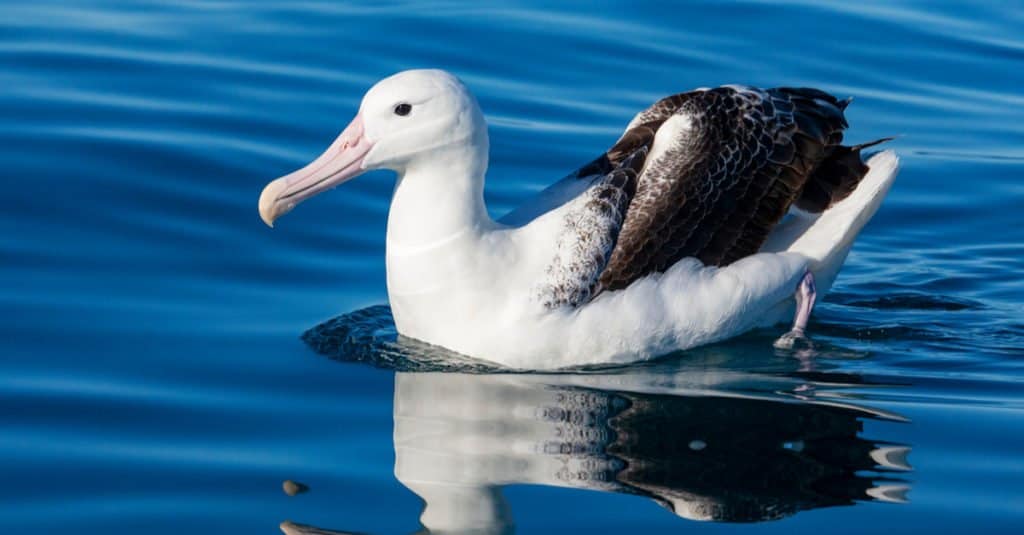
The northern royal albatross usually mates for life.
©iStock.com/AGAMI stock
The tenth-largest flying bird in the world is the endangered northern royal albatross. Northern royal albatrosses (Diomedea sanfordi) have a wingspan of up to ten feet. They are white with black coloration on the upper side of their wings. As seabirds, they prey on a range of fish, cephalopods, and crustaceans. They lay a single egg each breeding season, which hatches after approximately 80 days. Northern royal albatrosses usually mate for life and perform elaborate courtship displays when choosing a mate. These displays include touching beaks, preening each other, skypointing, and skycalling. The latter two involve first lowering their head and then pointing it upwards towards the sky, as well as extending their wings. Northern royal albatrosses have a limited range around New Zealand, which contributes to their endangered status.
9. Marabou Stork
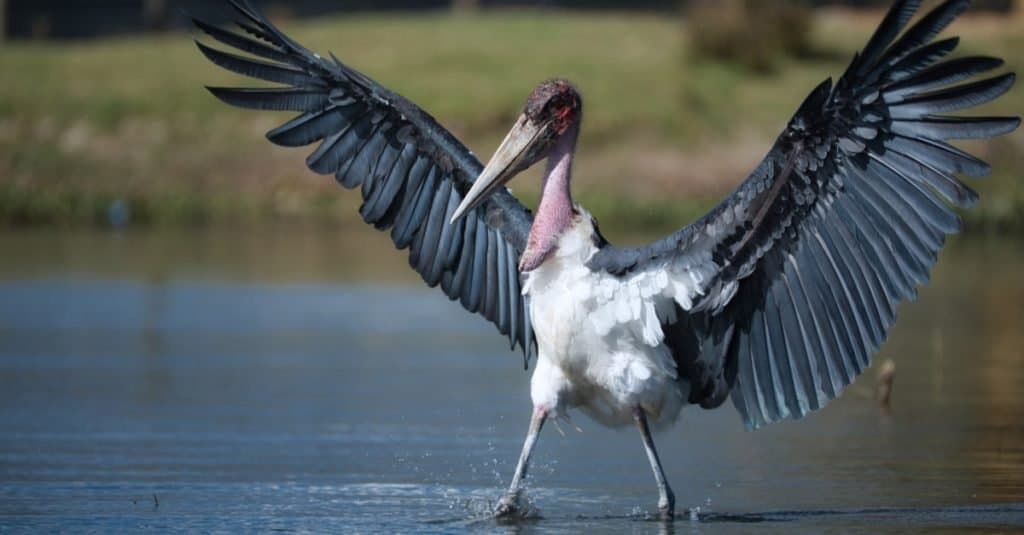
Marabou storks have a huge wingspan of 10.5 feet.
©Blount Photography/Shutterstock.com
The next bird on the list is the marabou stork, which has a wingspan of 10ft 6in. Marabou storks (Leptoptilos crumenifer) are native to sub-Saharan Africa, where they inhabit areas around swamps, lakes, and rivers. Although they are wading birds, marabou storks are powerful fliers and are known for flying with their necks retracted rather than extended. Marabou storks have a distinctive bald head and neck, as well as a black back and white undercarriage. They breed in colonies and lay two to three eggs each season, which hatch after a thirty-day incubation period. As adults, Marabou storks face few predators, but animals such as lions, jackals, and some birds of prey may kill juveniles.
8. Antipodean Albatross
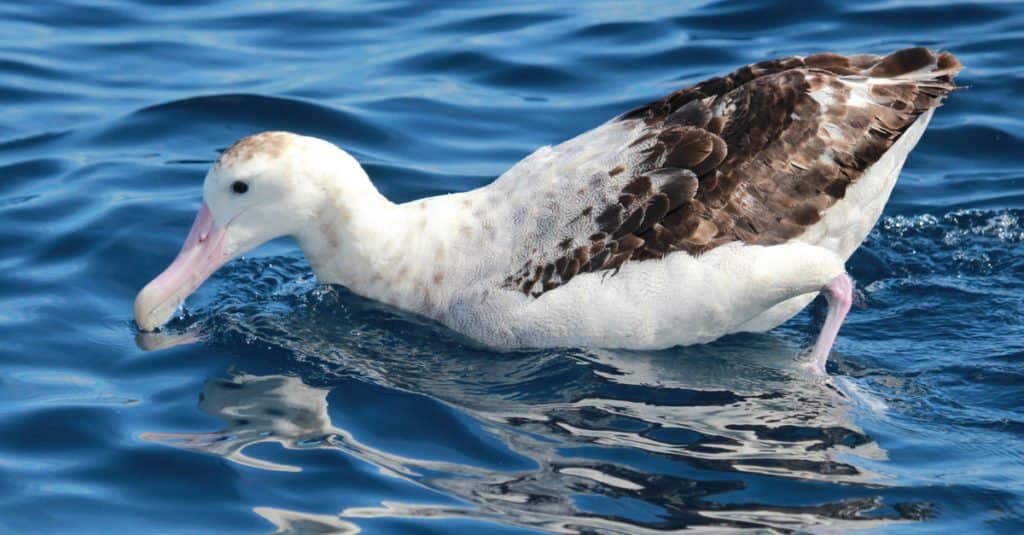
Antipodean albatrosses are classified as an endangered species.
©Imogen Warren/Shutterstock.com
Another large seabird is the Antipodean albatross (Diomedea antipodensis), which has a wingspan of 10ft 10in. The appearance of these birds varies, with some being predominantly white and others being brown and white. Antipodean albatrosses live across the south Pacific and breed on small islands, such as the Antipodes Islands and the Auckland Islands. They lay a single egg, which hatches after approximately 79 days, and the chicks fledge when they are eight to nine months old. They are an endangered species, owing to factors such as predators on the islands and their low reproduction rate.
7. Andean Condor
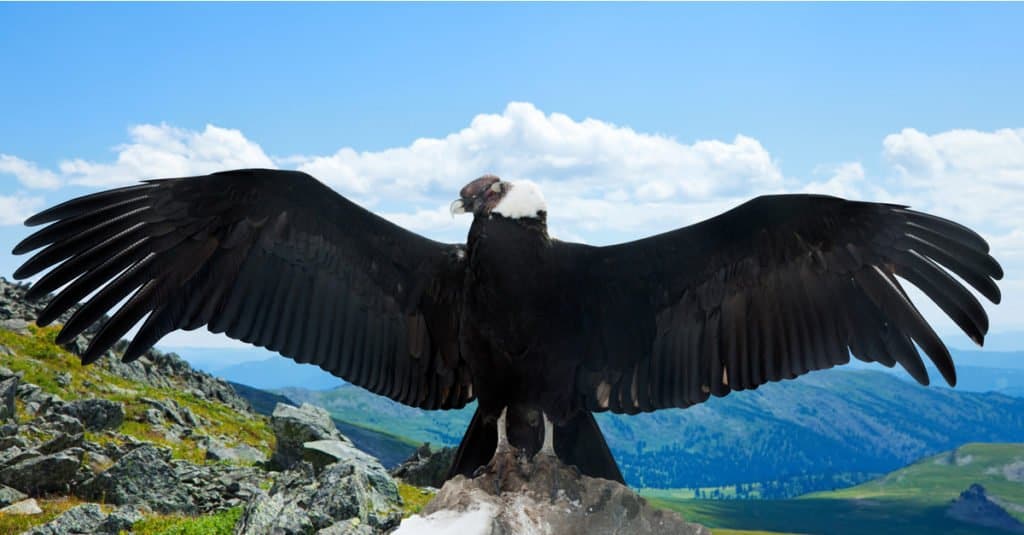
The Andean condor is a vulture living in the Andes mountains.
©BearFotos/Shutterstock.com
Andean condors (Vultur gryphus) are a species of New World vulture inhabiting the Andes mountains and nearby regions in South America. They have a huge wingspan of up to 10ft 10in, but are heavier than the Antipodean albatross and are considered to be the largest land bird capable of flight. Andean condors are black, with the exception of a collar of white around their neck and white markings on their wings. They also have a completely bald head. Andean condors are primarily scavengers and eat a variety of carrion. They don’t reach sexual maturity until they are approximately six years old, and they typically mate for life.
6. Amsterdam Albatross
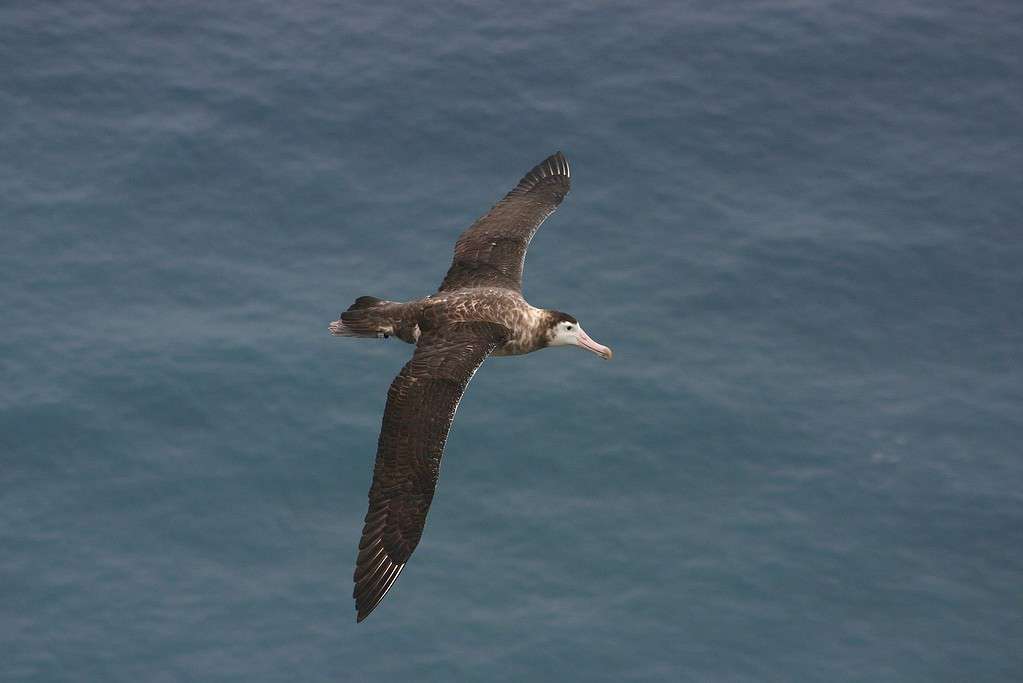
The Amsterdam albatross nests on only a single island.
©Vincent Legendre, CC BY-SA 3.0, via Wikimedia Commons – Original / License
The Amsterdam albatross (Diomedea amsterdamensis) is named after the one island that it breeds on — Amsterdam Island. These birds are brown with white markings on their face, throat, chest, and belly. Amsterdam albatrosses have a vast wingspan of up to 11 feet and are capable of flying long distances. They nest out in the open in wetland areas, with both parents taking turns looking after the single egg during the 80-day incubation period. Given their very small nesting range, Amsterdam albatrosses are classified as an endangered species.
5. Tristan Albatross
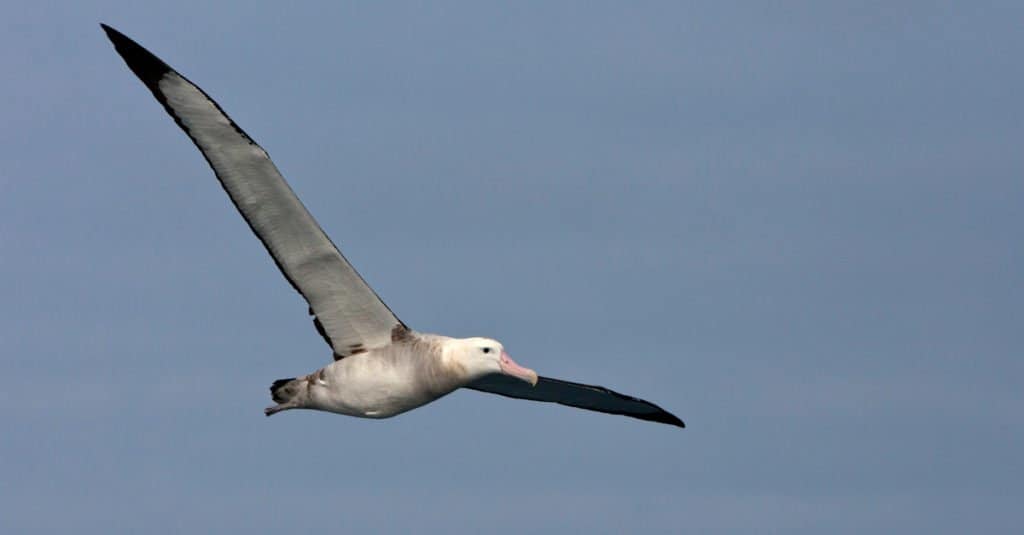
The Tristan albatross doesn’t mature until it becomes 10 years old.
©Agami Photo Agency/Shutterstock.com
Also with a wingspan of up to 11 feet is the Tristan albatross (Diomedea dabbenena). They have a white head and neck and black coloration on their wings and tail. Tristan albatrosses range across the South Pacific when they are at sea, but their breeding populations are restricted to the Tristan da Cunha islands, with the majority being found on Gough Island. Tristan albatrosses are critically endangered, and predators are one of the main threats to their population. Their initial threat came from animals such as cats and rats on the islands where they nest. However, these predators were removed, which resulted in the population of mice increasing. These mice are now a significant threat to the chicks while they are in the nests.
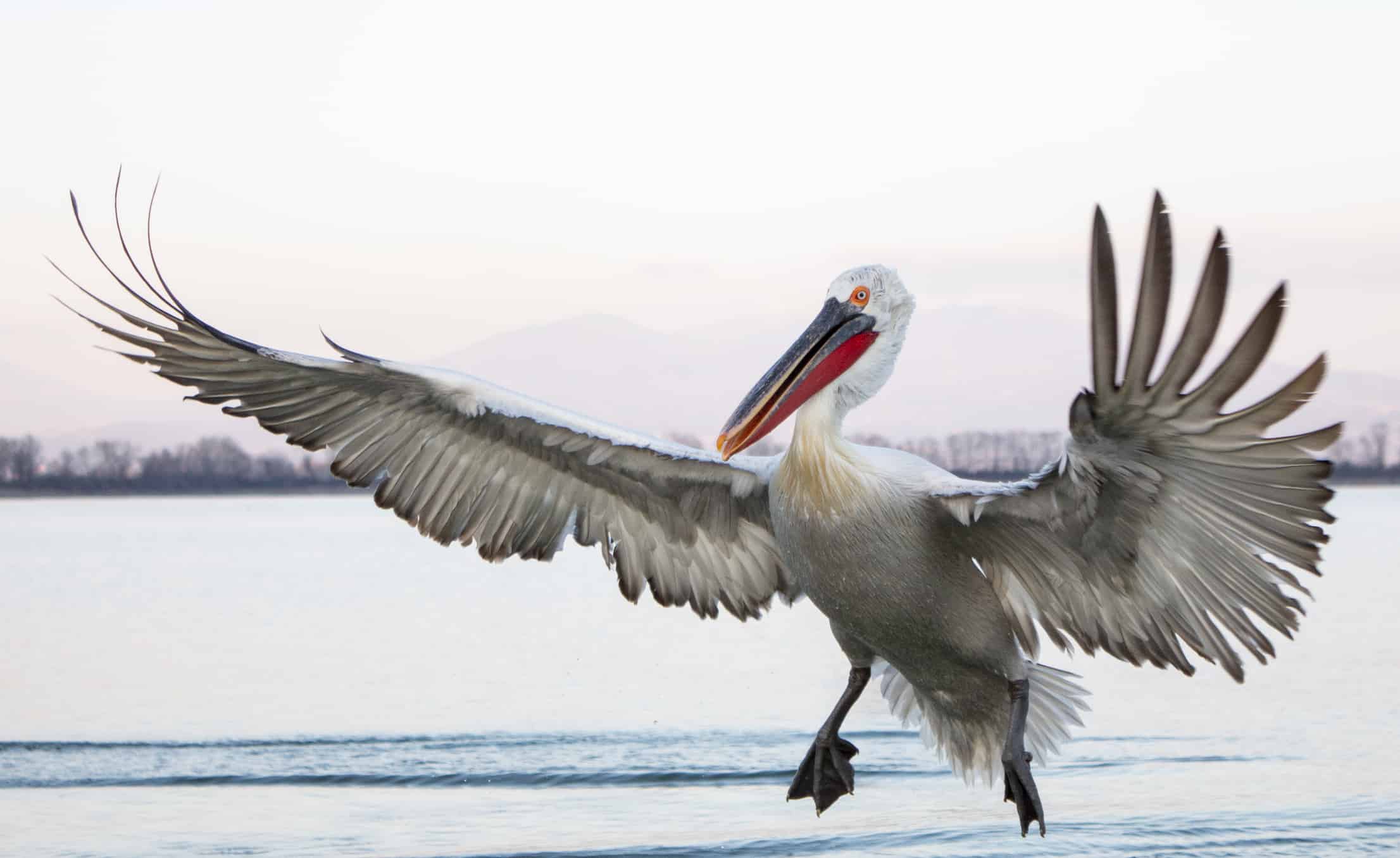
4. Dalmatian Pelican
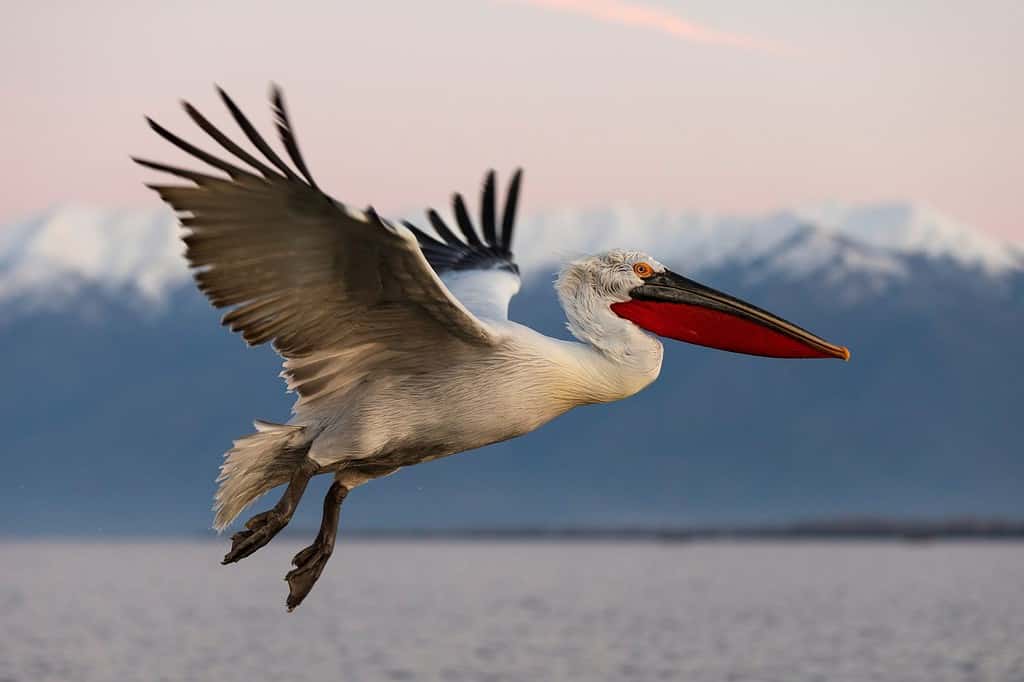
Dalmatian pelicans have a wingspan of up to 11.5 feet.
©Michal Dobes com/Shutterstock.com
Another large flying bird is the Dalmatian pelican (Pelecanus crispus), which has a maximum wingspan of 11 to 11.5 feet. Dalmatian pelicans have a whitish appearance with a crest of feathers on the back of their head. They have a huge bill that is up to 18 inches long, which they use to scoop up fish. Dalmatian pelicans live across Asia and Europe and can be found around most wetland habitats. They nest on the ground, building their nests out of grass and sticks. They lay one to six eggs per clutch, which hatch after an incubation period of approximately 30 to 34 days.
3. Southern Royal Albatross
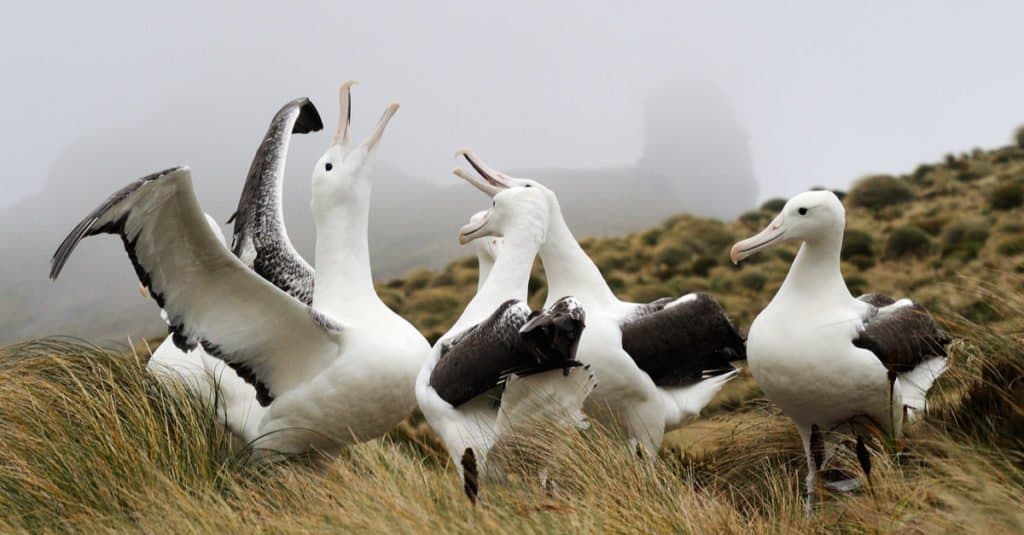
The Southern Royal Albatross only lays one egg every two years.
©AndreAnita/Shutterstock.com
Southern royal albatrosses (Diomedea epomophora) inhabit the coastal regions of Australia, New Zealand, and South America. More than 8,000 pairs of them nest on Campbell Island alone, laying a single egg every two years. Southern royal albatrosses have a maximum wingspan of around 11ft 6in and an average weight of 19 pounds. They have a similar appearance to the northern royal albatross but can be distinguished by the black and white markings on their wings. According to the IUCN Red List, Southern royal albatrosses are classified as Vulnerable, primarily due to their small breeding range and additional threats from the fishing industry.
2. Great White Pelican
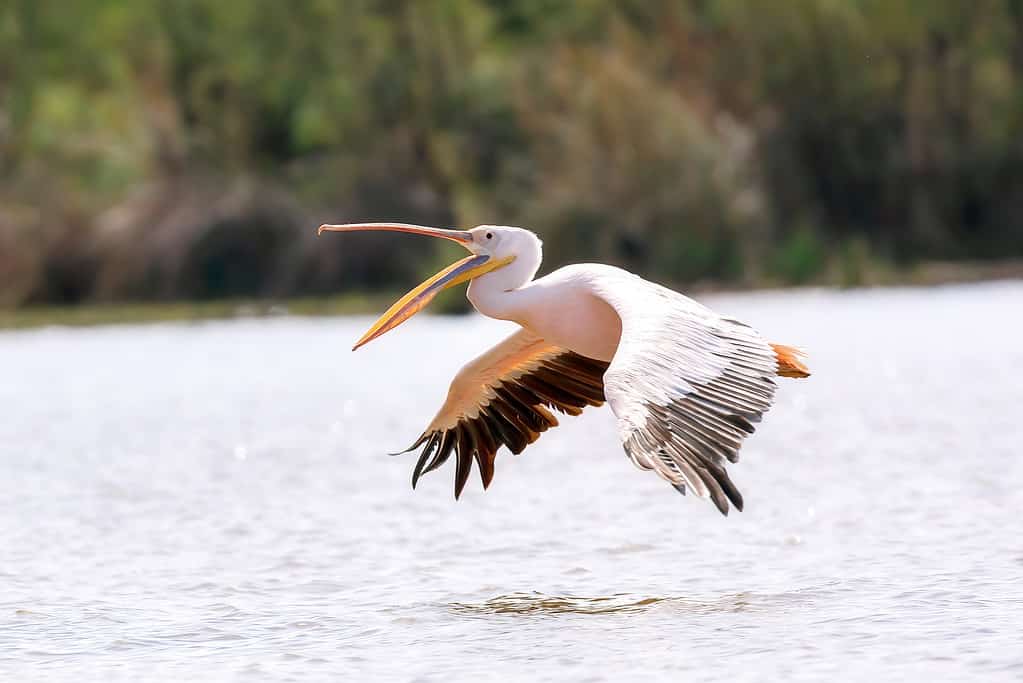
Great white pelicans can weigh up to 33 pounds.
©iStock.com/
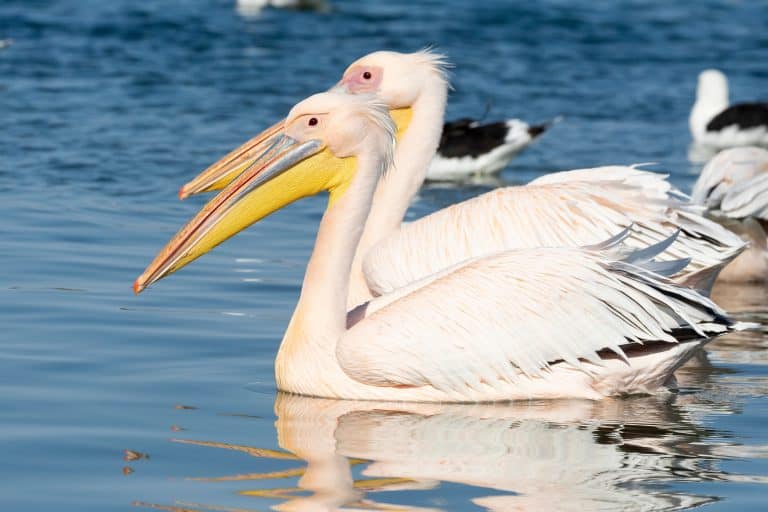
The second spot goes to the great white pelican, which has a wingspan of up to 11ft 10in. They are white with black flight feathers and can weigh up to 33 pounds, although the females are lighter than the males. Great white pelicans (Pelecanus onocrotalus) live across Africa, Asia, and Europe. They prefer areas of shallow water, where they can easily prey on a range of different fish. Great white pelicans usually nest in depressions on the ground but may sometimes nest in trees. They lay up to four eggs each season, and the chicks hatch after an incubation period of 29 to 36 days. Incredibly, they are born without feathers but develop them within a few weeks of hatching.
1. Wandering Albatross
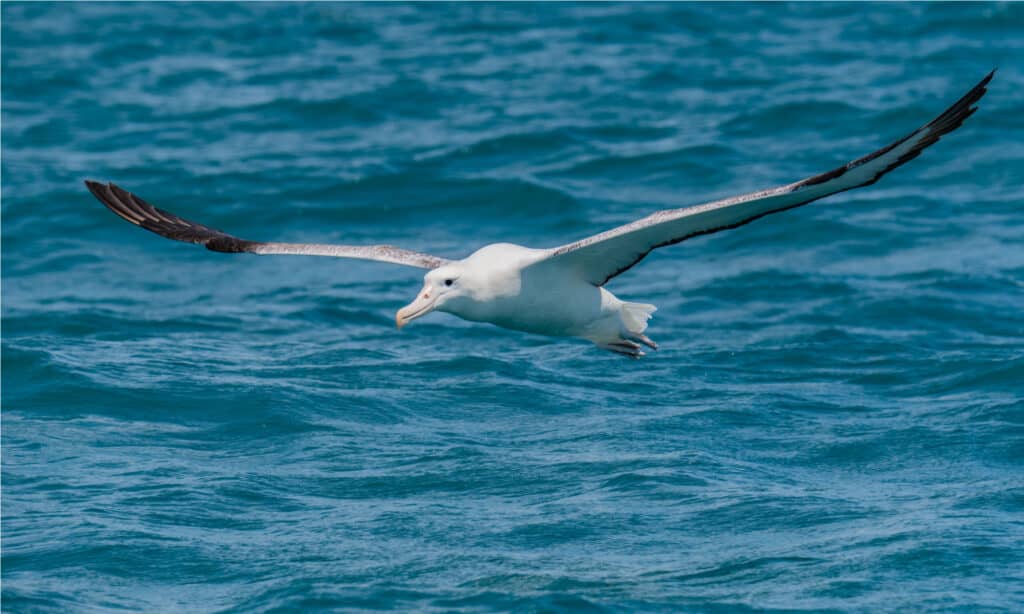
Wandering albatrosses have the largest wingspan of any flying bird.
©Kerry Hargrove/Shutterstock.com
The largest flying bird in the world is the wandering albatross, which has a massive wingspan of 12ft 2in. They also have a body weight of up to 28 pounds. Wandering albatrosses (Diomedea exulans) are also known as snowy albatrosses and are white, with a combination of black and white markings on their wings. Wandering albatrosses are seabirds and inhabit the area across the Antarctic Ocean. They are powerful fliers and are capable of travelling long distances across the ocean to find food. Their diet consists of a variety of fish, cephalopods, and crustaceans.
During the breeding period, they usually form colonies on small islands, where they build nests from vegetation. Considering the size of these birds, it’s unsurprising that their nests are pretty large too, being a little over three feet wide. They lay one egg every two years, and the incubation period is the longest of any bird, lasting around 11 weeks.