
Quick Take
- Mudskippers breathe on land, but their survival depends on a surprisingly low-tech trick that breaks down the moment their skin dries out. How skin breathing works →
- Scientists only just figured out how mudskippers actually walk, and the real answer contradicts what researchers assumed for years. See the crutching discovery →
- Mudskippers do something with their eyes that no other fish on Earth can do, solving a problem you'd never expect a fish to have. Explore their unique eyes →
- One structural difference inside mudskipper fins makes land movement possible, though it is not what any anatomist predicted. See the fin anatomy →
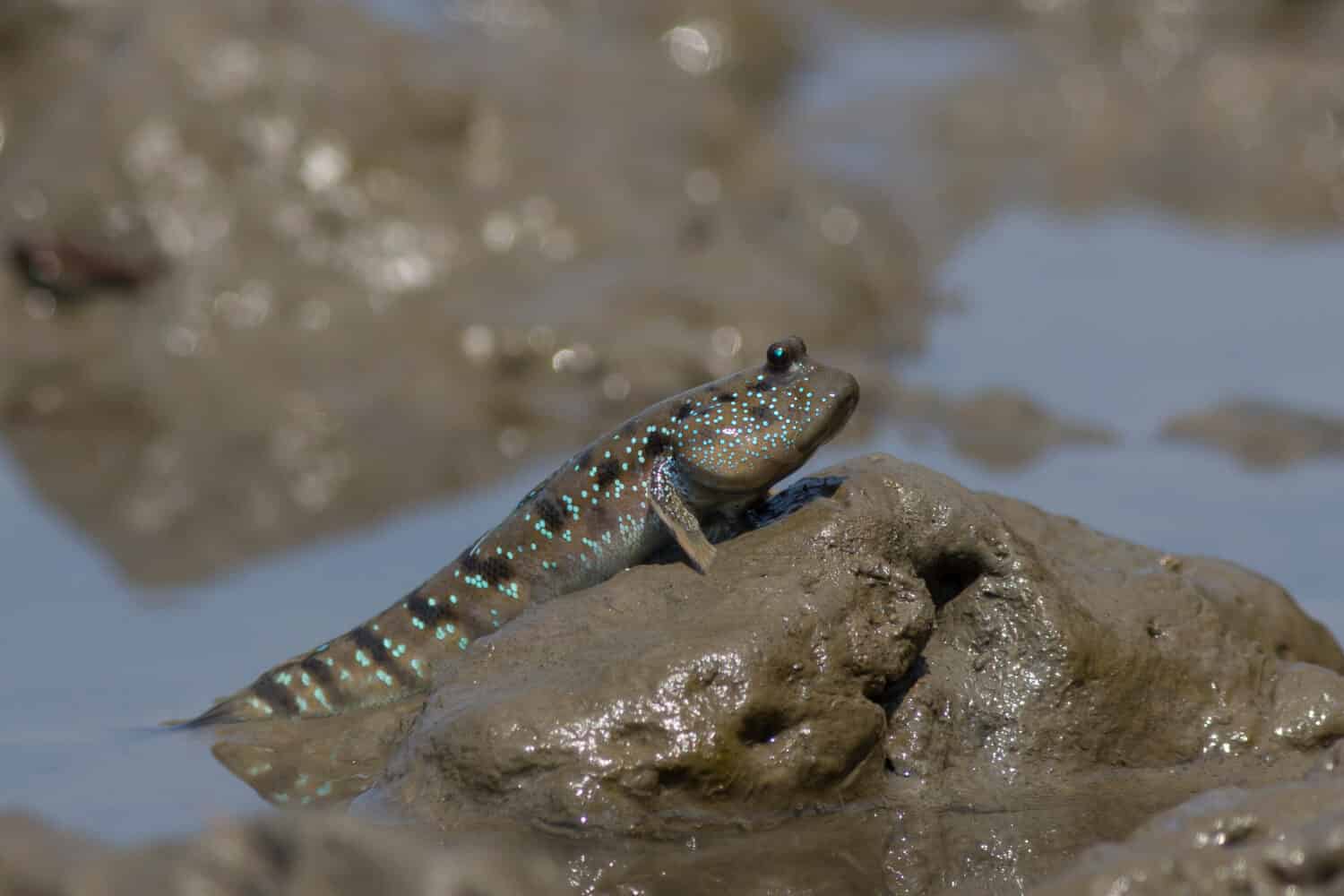
Fish are often considered exclusively aquatic creatures. However, the mudskipper is a unique fish that spends most of its life on land. It not only breathes air but also walks and hunts outside of the water. Since fish typically extract oxygen from water as it flows over their gills, how is it possible for mudskippers to survive on land?
Mudskippers Walk, Breathe and Hunt on Dry Land
Imagine a fish that is capable of not only walking on land but thriving outside of the water for hours at a time. This fish is not imaginary. Instead, it is the mudskipper.
Mudskippers are fish that spend nearly all of their lives out of the water. They evolved to do this by developing the ability to breathe on land. This is done via cutaneous respiration, or the capture of oxygen through the skin. To make this possible, the mudskipper’s skin has to remain wet. Therefore, when these land-loving fish feel their skin drying out, they roll around in puddles to keep it moist.
Additionally, mudskippers can gulp large quantities of air into their mouths. The oxygen is then absorbed through the lining of the pharynx and buccal cavity and released into the bloodstream.
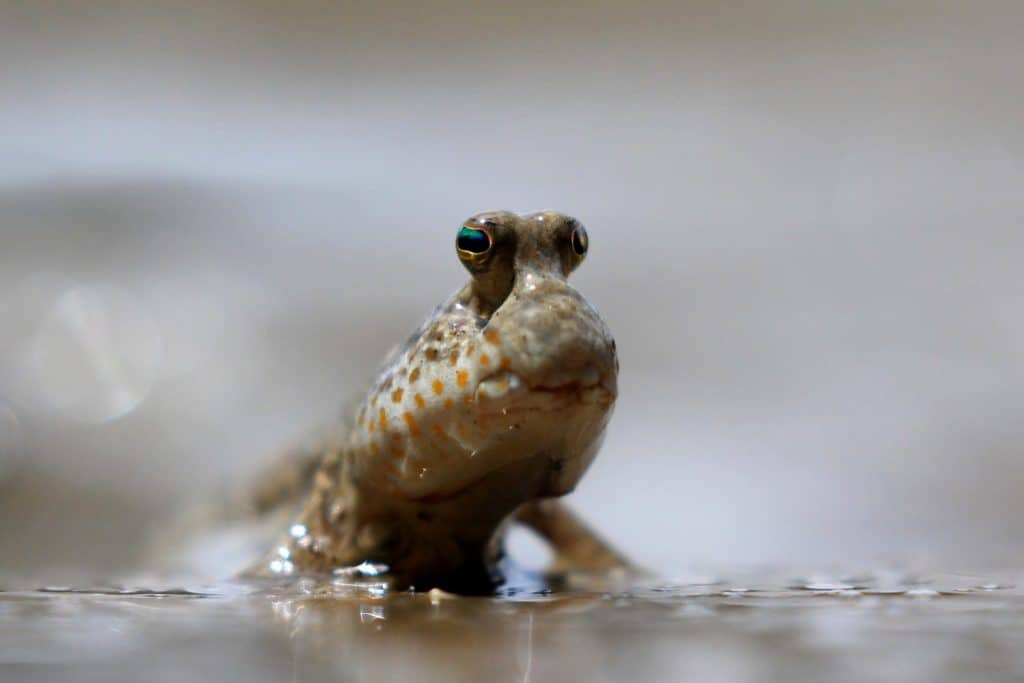
Mudskippers can walk, breathe, and hunt on land.
©Rich Carey/Shutterstock.com
The ability to breathe on land is necessary because this is where mudskippers hunt. Different species of mudskippers target a variety of prey. However, one thing remains the same, and that is that mudskippers wait until the tide goes out to hunt. They hunt not in the water but on the mudflats, which requires them to leave the water.
Some mudskippers lie in wait in their burrows for prey to approach, then pounce when it is within reach. Others move continuously across the mud, eating algae from puddles. Both techniques require mudskippers to walk on land, which they do with ease.
How Mudskippers Use “Crutching” to Walk
Mudskippers do walk on land, but not like humans. Instead of alternating legs, they use a method called “crutching” to propel themselves forward.
For years, it was unclear how mudskippers’ fins enabled them to walk on land. It was not until a 2024 study was conducted that crutching was discovered. This means that, similar to how crutches support an injured leg, the mudskipper’s fins move together to help it move across land.
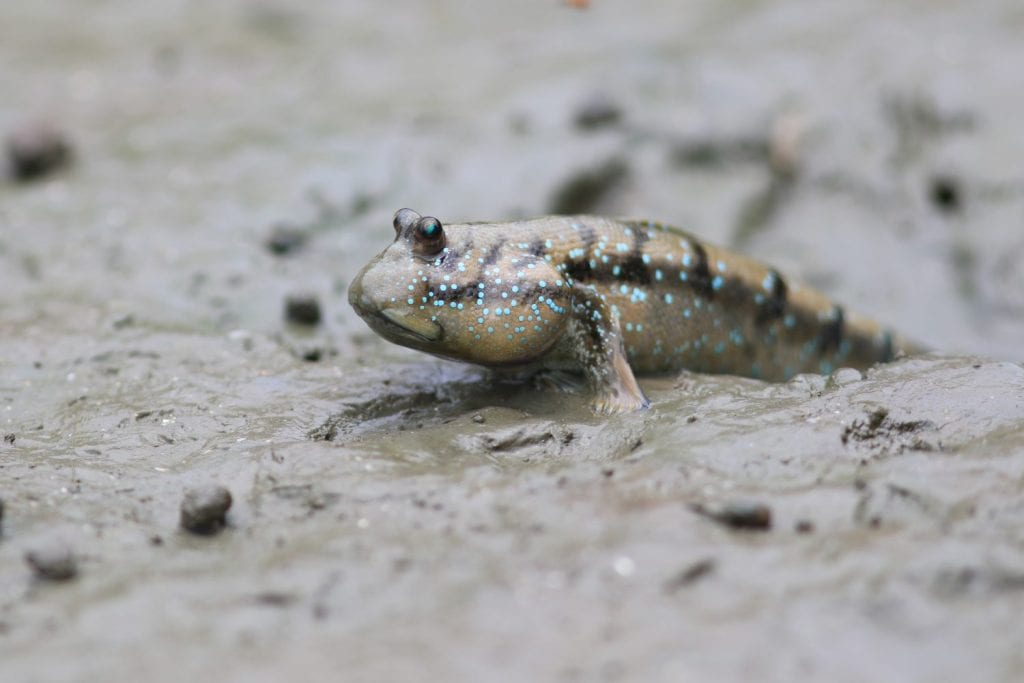
Mudskippers use the crutching technique to walk across mudflats.
©Polbkt/Shutterstock.com
The study further looked into the anatomy of the mudskipper’s fins. Researchers found that the pectoral fins and the muscles surrounding them are larger than those of water-bound fish. The shoulder girdle, which connects the fins to each side of the body, was also larger.
Even more surprisingly, the tissue connecting the fins to the bone is not tendons but fascia. According to researchers, this likely evolved to give mudskippers greater stability and strength for moving on land.
Why Are Mudskippers’ Eyes on Top of Their Heads?
Unlike most fish, which have one eye on each side of their head, mudskippers have eyes on top of their heads. This adaptation allows them to see above the water’s surface, even when their bodies are submerged, to spot predators. Their eyes function like periscopes and can move independently of each other.
Even more interesting, mudskippers blink—a behavior not seen in other fish but common in tetrapods and other land-dwelling animals.
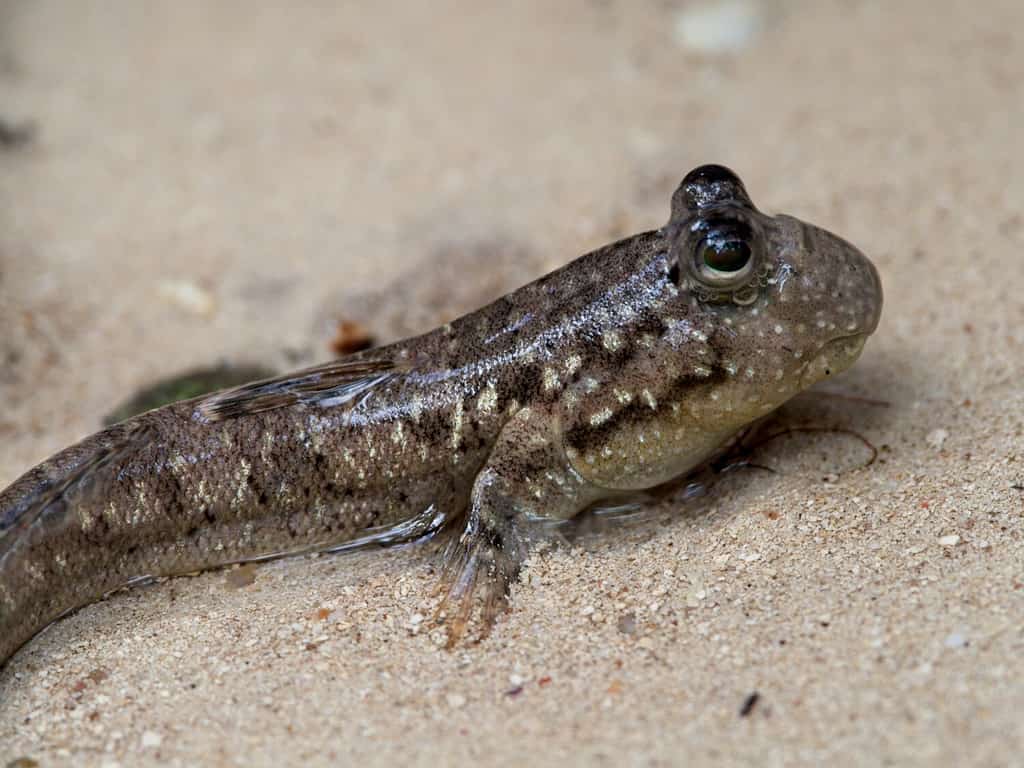
Mudskippers have eyes on top of their heads that help them to see prey and predators.
©Tristan Barrington/Shutterstock.com
According to a 2023 study, mudskippers blink to keep their eyes moist, protect them from injury, and clear debris from their eyes. Their eyes briefly dip into the sockets, where a film covers and moisturizes them—all without the use of tear ducts.
Mudskippers have evolved to spend 90% of their lives out of the water, thriving in a way no other fish species can. As we learn more about these amazing fish, perhaps the saying “fish out of water” should be seen in a more positive light.