
Feral cats, feral dogs, feral hogs – these are all creatures that live in the wild but are descended from domesticated animals. What about feral burros? A recent news release from the Arizona Game and Fish Department has assessed the impact that these animals are having on some keystone plant species in Arizona’s Sonoran Desert landscape. Let’s find out more about this potential conflict.
What Exactly Is a Burro?
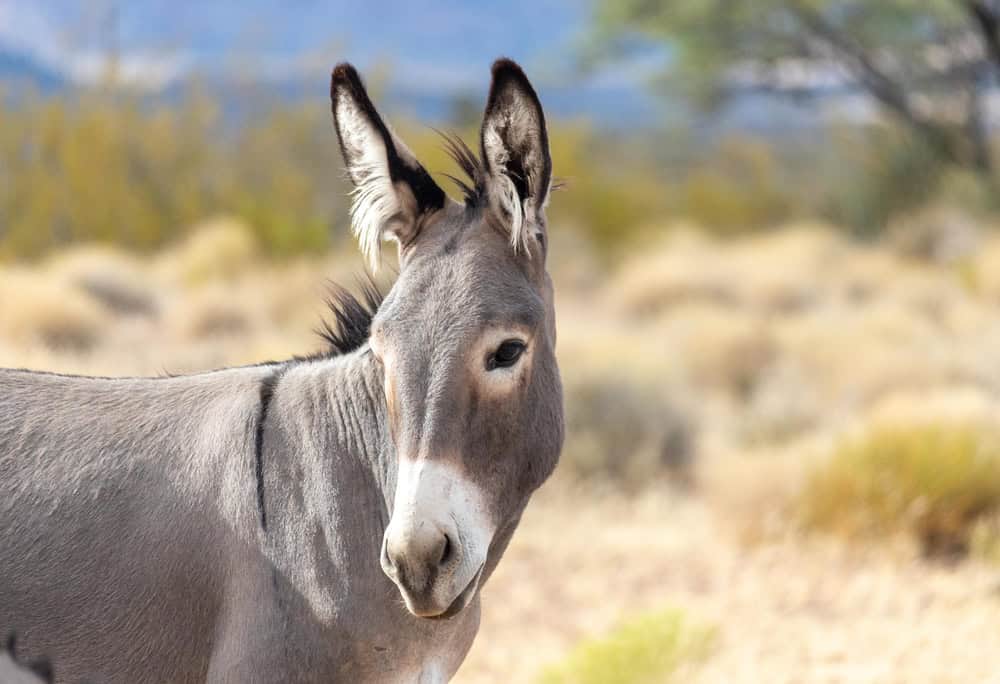
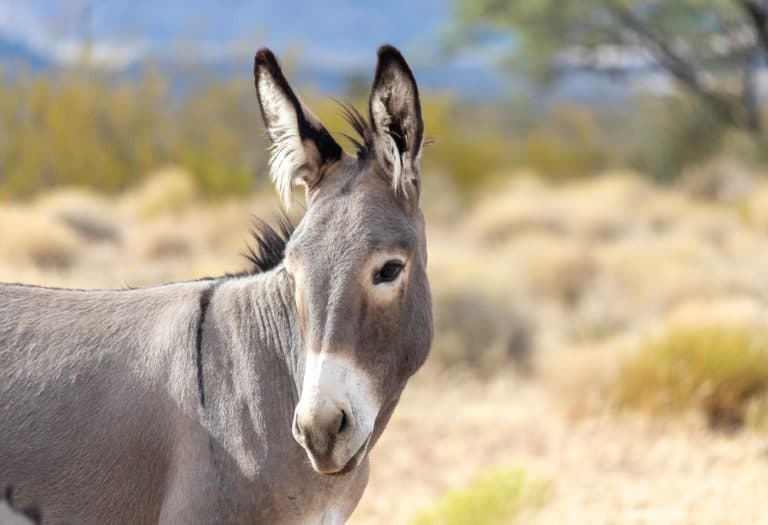
Feral burros descend from domestic donkeys.
©B.L.Bowen Photography/Shutterstock.com
The terms donkey, jackass, and burro are commonly used interchangeably, but they are not all the same animal. Whilst it’s true that they are all in the Equidae family, there are some important differences. Donkeys (Equus asinus) are domestic animals descended from the African wild ass. They are generally stockier, stronger, and shorter than horses and are better suited for domestic work as they do not startle easily. Strictly speaking, therefore, they are not a native American species, although this subject is controversial. Burros are essentially wild donkeys. They are descended from domesticated donkeys that were either released or escaped and started breeding in the wild. The word ‘burro’ is the Spanish term for a working donkey in Spain and Mexico. The Spaniards brought burros to America’s southwest in the 1500s.
Some argue that burros born in the wild should be considered wild animals. Additionally, evidence suggests that horse-like animals evolved in North America but went extinct during the Paleolithic era. These equines were later crossbred with Eurasian horses for hundreds of thousands of years. As a result, some scientists refer to horses as being ‘reintroduced’ to America.
Sampling Plant Damage
The study carried out by biologists at the Arizona Game and Fish Department (AZGFD) aimed to collect data on the impact that feral burros have on plant species in the habitats where they live. The study took place specifically around Lake Havasu and Lake Pleasant in Arizona’s Sonoran Desert. The two areas have similar vegetation, but only one has a herd of burros nearby. This provided an ideal situation for a comparison study.
Using lines across the habitat (transects), the researchers designated several sampling sites where they recorded data on the vegetation species. This included size, density, foliage density, and, in some cases, age structure. Evidence of other animals (deer, bighorn sheep, other mammals, reptiles, and birds) was also collected, including tracks and dung piles.
Burro Damage Recorded
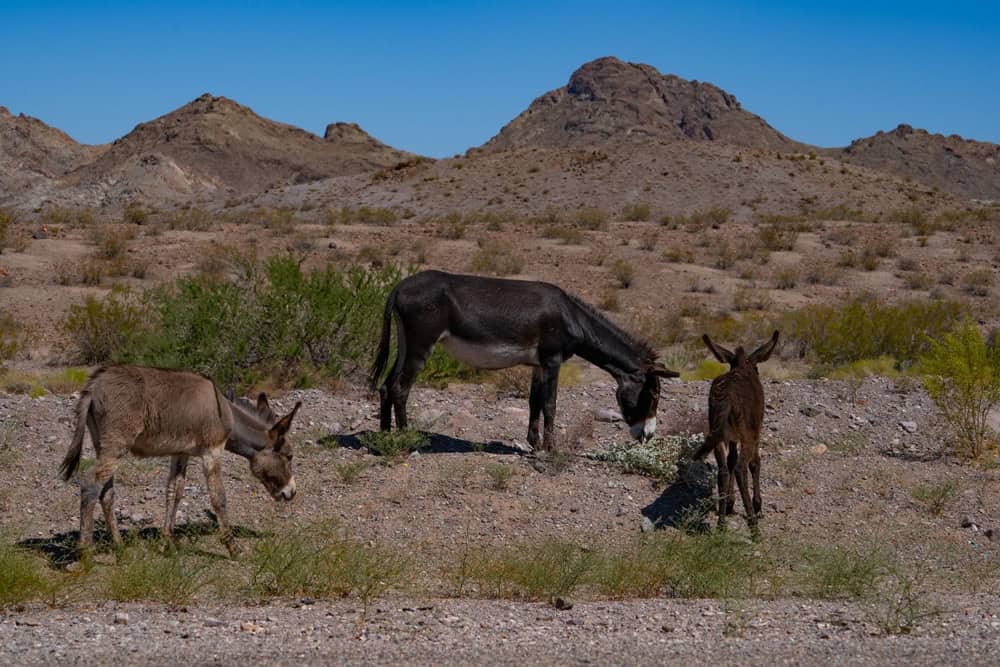
Burros graze on native plants.
©Geoff Wiltshire/Shutterstock.com
“In one of the primary vegetation types, the ground cover was 30% lower in burro areas. Plant and foliage density was also lower, and some of the plant species were smaller, but some of the most concerning findings had to do with palo verde trees, ironwood trees, and saguaro cacti,” explained Esther Rubin, AZGFD Research Branch chief, in this news release on the Arizona Game and Fish Department bulletin website. “When you see these trees in the landscape, everything from burro height down is completely eaten,” Rubin said. “And when you get closer, you can see teeth marks where the burros chewed and ripped the bark away, which can eventually kill the tree.”
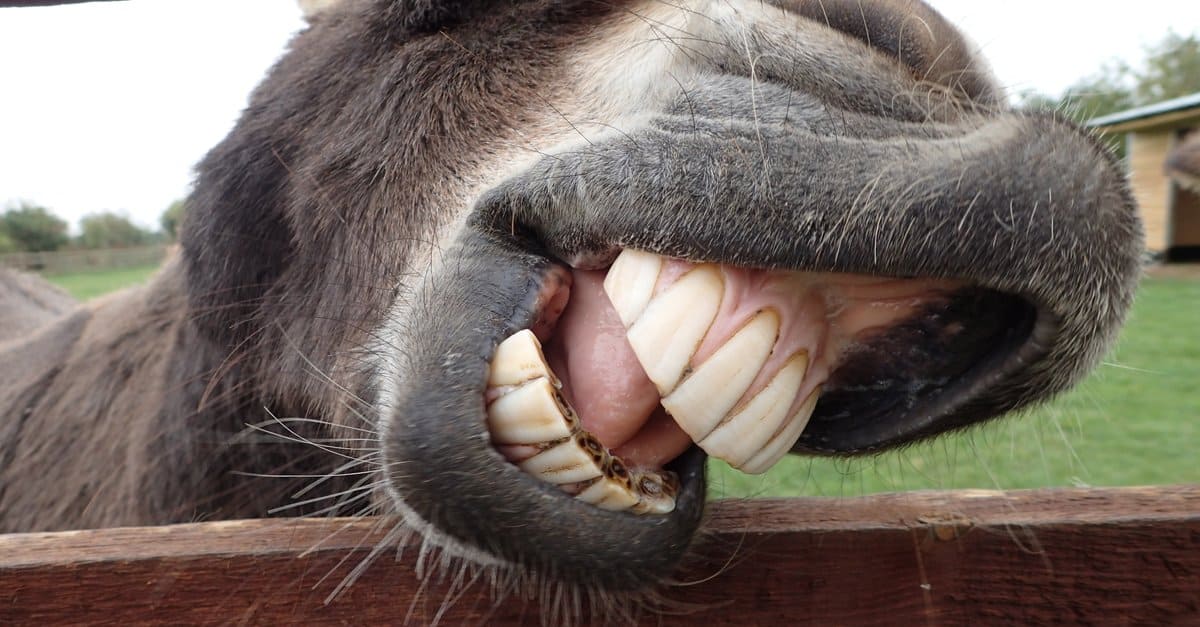
Interestingly, the damage inflicted by burros is different from that caused by native ungulates such as bighorn sheep. Equines have a less efficient digestive system and therefore need to eat more. Also, their upper incisor teeth grab and tear at vegetation in a way that sheep do not.
Why Is This a Potential Problem?
The damaged tree species in the burro-grazed area usually grow to be full and bushy, thereby providing shade and protection for both other plants and wildlife. Without the protection of these so-called ‘nurse plants,’ this habitat is left unprotected and can be destroyed. One plant species particularly affected by this is the iconic saguaro cactus. They take a decade to grow a few inches, and during that time, they rely on the protection afforded by nurse plants. This study found that in the areas where burros were present, there was a 63 percent lower ratio of young to adult saguaros. This decline has a cascading effect on other species. Saguaros provide cover and forage for many animals, so their decline negatively impacts these dependent species as well.
Management of Feral Burros
Burros are designated as wild equines and are protected under the Wild and Free-Roaming Horses and Burros Act of 1971. This means that they are managed by the Bureau of Land Management (BLM) and, in some cases, the U.S. Forest Service.
The BLM established seven herd management areas in Arizona, which are intended to support about 1,400 burros. However, the burro population has exceeded this number, and the animals have spread beyond these designated areas. It may be necessary for burro numbers to be controlled to preserve the ecology of the area. This study provides important data and contributes to the often-heated debate on whether and how feral burro numbers should be controlled in this area.